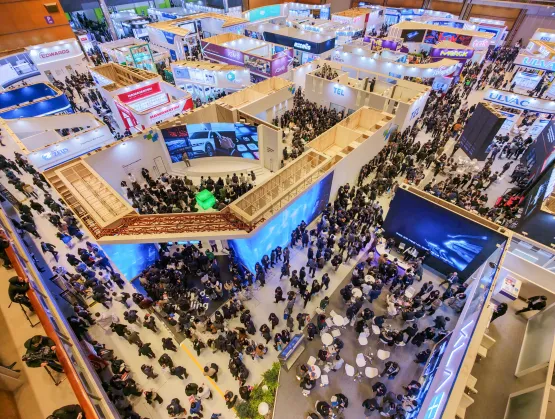
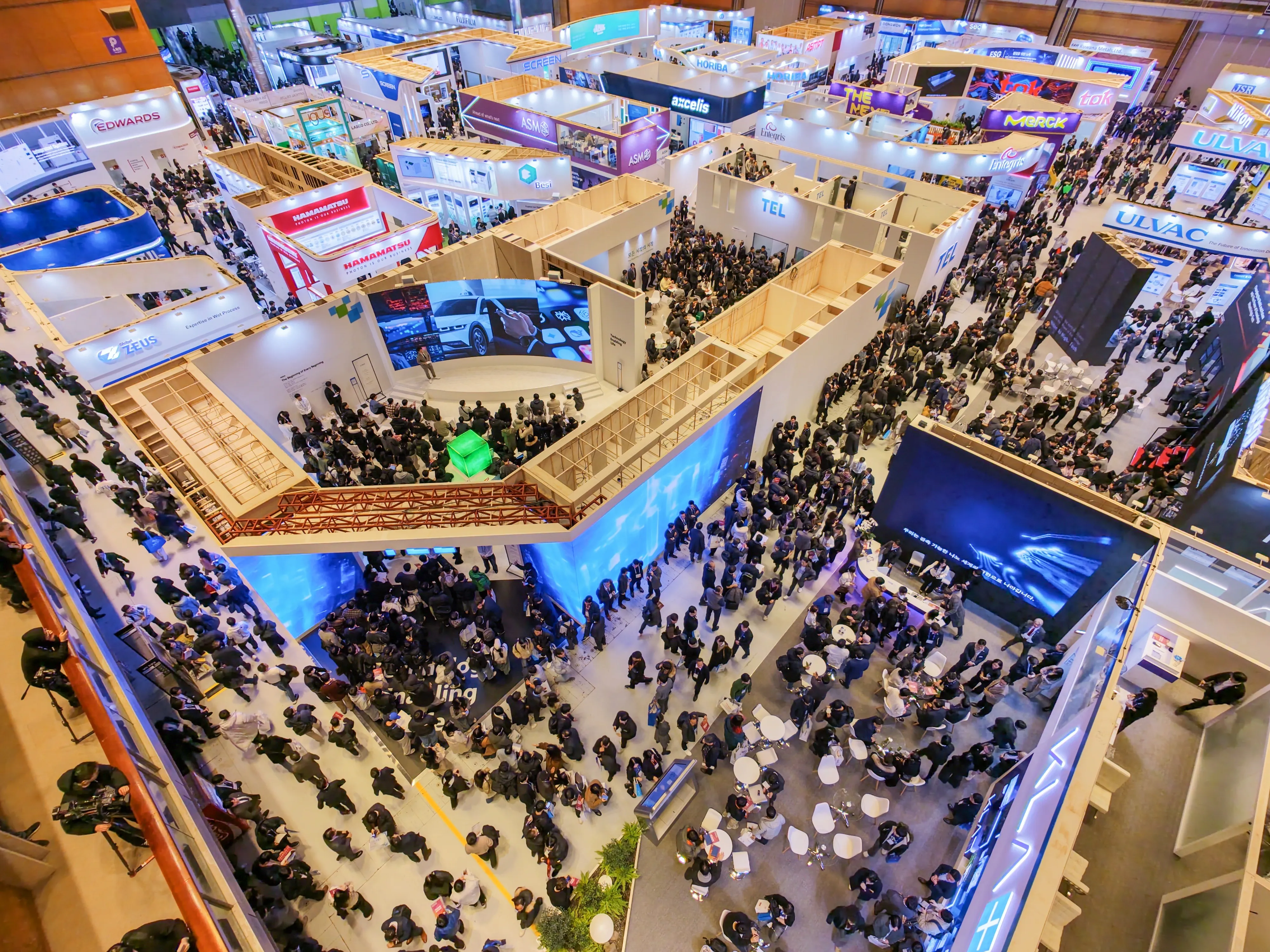
As the global semiconductor industry enters a decisive new phase shaped by artificial intelligence, SEMICON Korea 2026 convened the ecosystem from February 11–13 in Seoul, bringing together the companies, technologies, and talent required to sustain momentum on both sides of the AI equation: using AI to transform semiconductor operations, and advancing semiconductor innovation to enable the next generation of AI systems.At the SEMICON Korea press conference, Hyun Cha, President, SEMI Korea stated that with nearly 550 exhibiting companies and over 2,400 booths, the event underscored how progress now depends on a virtuous cycle of collaboration across the entire value chain—from materials and equipment to design, manufacturing, packaging, and systems integration.Opening Perspectives: Collaboration as the Catalyst In the opening ceremony, Ajit Manocha, President and CEO of SEMI, framed the opportunity and challenge ahead: AI is accelerating the industry’s trajectory toward a trillion-dollar market, but sustaining that growth will require deeper collaboration across an increasingly complex ecosystem.That message was reinforced by YH Lee, Chairman of Wonik, who emphasized the need for alignment across the value chain, “looking side to side, not only forward,” as scaling semiconductor technologies grows more difficult. From a policy perspective, Shinhak Moon, Vice Minister of Korea’s Ministry of Trade, Industry Resources (MOTIR), highlighted the importance of the full ecosystem, including parts, materials, and equipment, while cautioning that resilience will be critical amid economic cycles. Together, these perspectives set the stage for a keynote program focused on how AI and semiconductors are now co-evolving.Opening Keynote: Samsung Electronics on Architecting the Future of AI SystemsThe keynote program opened with Jaihyuk Song, Corporate President and CTO of Samsung Electronics, who examined what comes next for AI systems as compute and memory demands rise exponentially. He described a widening gap between compute performance and memory bandwidth, positioning advanced packaging and architectural innovation as central to closing that gap.Song outlined Samsung’s focus on next-generation memory technologies, including high-bandwidth memory and compute-in-memory approaches, as well as the transition beyond traditional Moore’s Law scaling toward planar, vertical, and stacked architectures. His message was clear: sustaining AI performance gains will depend on tight integration across design, process technology, packaging, and system architecture, reinforcing the need for ecosystem-wide coordination. ASE: From Chip Integration to System OptimizationTien Wu, CEO of ASE, expanded the discussion from devices to systems, arguing that advanced packaging has become a primary driver of system-level performance and efficiency. As AI workloads push power, thermal, and bandwidth limits, Wu described a shift from single-chip packages toward heterogeneous integration, 2.5D and 3D architectures, and co-packaged optics.Wu emphasized that productivity, yield, and throughput will increasingly determine competitiveness as packages grow larger and more complex. His perspective reinforced a central theme of SEMICON Korea 2026: AI-driven demand is forcing tighter coupling between design, manufacturing, and packaging, making collaboration not optional, but essential.Cadence: AI-Enabled Design Across the Value ChainBoyd Phelps, Senior Vice President and General Manager of Silicon Solutions at Cadence Design Systems, highlighted how AI is already reshaping semiconductor design and development. As process scaling slows and cost per transistor rises, Phelps described disaggregation and chiplets as a new abstraction layer that enables continued innovation through customization and configurability.He also pointed to the growing role of AI-driven design automation, noting that a significant portion of recent designs leveraged AI-enabled tools. Cadence’s end-to-end portfolio—from IP and tools to packaging and test—illustrated how AI is becoming both a design accelerant and a necessary response to rising system complexity, reinforcing the industry’s virtuous cycle.Lam Research: Velocity Through AI and AutomationThe theme of operational transformation took center stage with Tim Archer, President and CEO of Lam Research, who introduced “velocity” as the defining imperative of the AI era. As AI-driven demand accelerates product cycles and increases complexity, Archer argued that speed must be matched with direction—enabled by AI, automation, and digital twins.Archer detailed Lam’s progress toward autonomous fabs, equipment intelligence, and collaborative virtual development environments that reduce variability and accelerate process development. These capabilities, he explained, allow the industry to respond faster while preserving quality and resilience—another example of AI improving semiconductor operations even as semiconductor innovation enables AI growth.SK hynix: AI as a Tool for Memory InnovationLooking further into the future, Sunghoon Lee, Senior Vice President and Head of R D Process at SK hynix, addressed the mounting difficulty of sustaining memory technology cadence. As stacking, bonding, and material challenges intensify, Lee described a shift toward AI-based R D models that dramatically accelerate material discovery and optimization.By integrating AI into material exploration and process development, SK hynix is shortening development cycles and enabling new memory architectures. Lee emphasized that realizing the full potential of AI-driven R D will require greater data sharing and collaboration across partners—reinforcing the ecosystem-wide virtuous cycle.NVIDIA: From Chips to AI InfrastructureThe final keynote, delivered by Soyoung Jeong, Head of Korea Business at NVIDIA, framed the transformation of NVIDIA from a GPU company into an AI infrastructure provider. He described how accelerated computing and AI factories are reshaping chip design, manufacturing, packaging, and system integration.From AI-assisted design and simulation to system-level optimization and physical AI, NVIDIA’s approach illustrated how semiconductors and AI are now inseparable, each advancing through the other. Partnerships across memory, equipment, and software ecosystems were highlighted as critical to sustaining this momentum.A Program Aligned Around the Same ThemeBeyond the keynotes, SEMICON Korea 2026 reinforced these messages through technology symposia, AI and smart manufacturing forums, cybersecurity discussions, and workforce development initiatives—all focused on enabling AI-powered innovation across the semiconductor lifecycle.Additional Program Highlights: Extending the Virtuous Cycle Across the EcosystemBeyond the keynote stage, SEMICON Korea 2026 reinforced the same virtuous cycle of AI and semiconductor innovation through a wide range of technical, business, and workforce programs designed to engage every layer of the value chain.AI Summit: Translating Strategy into Industrial ImpactThe AI Summit, co‑hosted by SEMI and KAIST, served as a focal point for aligning academic research, device manufacturers, and equipment leaders around AI-powered industrial innovation. Featuring faculty from KAIST alongside representatives from Samsung Electronics, SK hynix, and global equipment companies, the summit explored technology strategies and future roadmaps aimed at accelerating AI adoption across semiconductor manufacturing and design.The discussions reinforced a central theme of SEMICON Korea 2026: AI is no longer an isolated software layer, but a system-level capability that must be embedded across processes, tools, and infrastructure to unlock its full value.Smart Manufacturing Forum: Advancing the Autonomous FabThe Smart Manufacturing Forum highlighted how AI, digital twins, and real-time data are transforming semiconductor fabs toward more autonomous, resilient operations. Speakers shared trends and success cases demonstrating how advanced analytics and AI-driven decision-making are improving yield, productivity, and operational agility.This forum echoed themes raised by equipment and manufacturing leaders in the keynote program, underscoring how AI-driven manufacturing excellence is becoming a prerequisite for meeting the speed, scale, and quality demands of next-generation AI chips.Startup Summit: Fueling Innovation from the Ground UpThe Startup Summit showcased emerging semiconductor and display startups focused on applying AI to improve chip performance, energy efficiency, and manufacturing processes. By connecting startups with industry leaders and venture capital firms—including Applied Ventures, Intel Capital, Samsung Ventures, and SK hynix—the summit emphasized the importance of nurturing innovation across the ecosystem.These early-stage technologies represent the next wave of ideas feeding into the virtuous cycle, where AI-enabled innovation at the startup level can scale rapidly through collaboration with established players.Cybersecurity Forum: Securing the AI-Driven Semiconductor FutureAs AI becomes deeply embedded in semiconductor operations and data flows, the Cybersecurity Forum addressed the growing need for digital trust across the ecosystem. Global experts examined cybersecurity challenges related to compliance, fab security, and AI data governance, highlighting the importance of collaboration to protect sensitive data and intellectual property.The forum reinforced that secure, trusted infrastructure is a foundational requirement for the AI-driven transformation discussed throughout SEMICON Korea 2026.Conclusion: Advancing TogetherSEMICON Korea 2026 made clear that the next phase of industry growth will not be driven by isolated breakthroughs, but by a virtuous cycle of alignment across the full semiconductor value chain. By integrating AI into design, manufacturing, and operations—and by advancing semiconductor technologies that power AI—the industry is building a foundation for sustained innovation. As the event demonstrated, progress will be fastest when the ecosystem moves forward together.Samer Bahou is Director, Corporate Communications at SEMI. Jaegwan Shim is Senior Specialist, Marketing at SEMI Korea.