downloadGroupGroupnoun_press release_995423_000000 copyGroupnoun_Feed_96767_000000Group 19noun_pictures_1817522_000000Member company iconResource item iconStore item iconGroup 19Group 19noun_Photo_2085192_000000 Copynoun_presentation_2096081_000000Group 19Group Copy 7noun_webinar_692730_000000Path
Skip to main content
Default Banner Image

pandemic

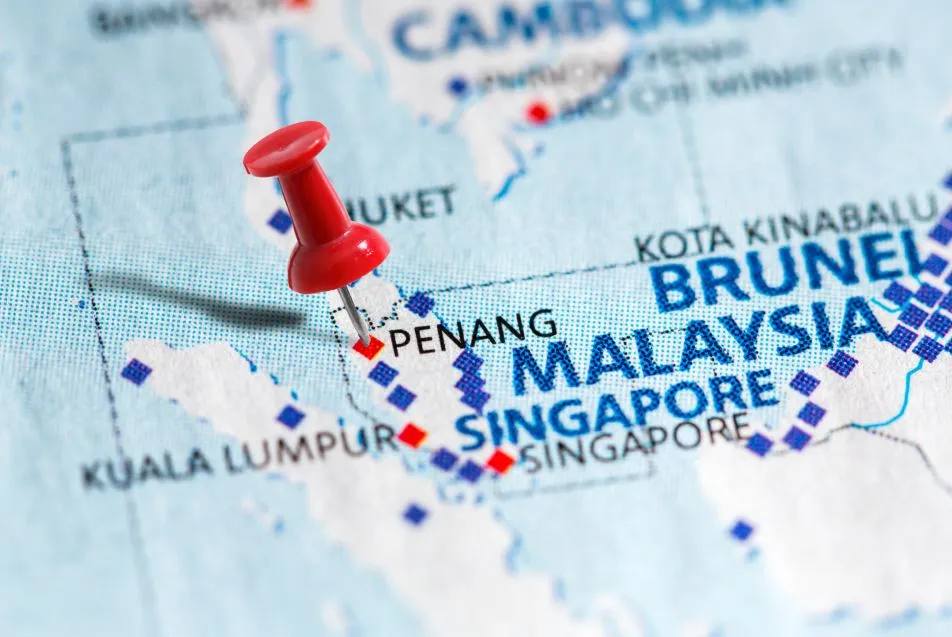
The state of Penang, nestled along the northwest coast of Peninsular Malaysia, needs no introduction in the global electronics manufacturing sector. Despite its diminutive stature with just over 1,000 square kilometers of land area and a 1.8 million-strong population, Penang commanded an estimated 5% of global semiconductor exports in 2019, according to data compiled from the Department of Statistics Malaysia (DOSM) and UN Comtrade. The State’s transformation, from a traditional seaport economy into the Silicon Valley of the East, began in the 1970s, when the establishment of Malaysia’s first free trade zone in the State drew key investments from eight Multinational Corporations (MNCs). These pioneering investors – Intel Corporation, Hewlett Packard (now Keysight Technologies and Agilent Technologies), Robert Bosch, AMD, Litronix (now Osram Opto Semiconductors), Hitachi (now Renesas), Clarion and National Semiconductor[1] – sparked the development of a robust ecosystem of ancillary industries, which formed a foundation for the State’s rise as a prominent, offsite manufacturing hub. Today, Penang houses more than 350 MNCs that are supported by over 3,000 manufacturing-related SMEs. As Penang flourished as a vibrant, regional E E manufacturing hub, the local talent pool steadily accumulated a wealth of business intelligence and technical experience, enabling the robust supply chain to evolve in tandem with technology megatrends. This, in turn, enabled the State to focus on pursuing investments that have propelled the industry up the value chain, away from its beginnings as a low-cost manufacturing hub. Consequently, Penang has seen a proliferation of upstream technology-related investments in high value-added functions in recent years, ranging from research and development (R D), design and knowledge-based solutions, and downstream advanced manufacturing and testing to global business service (GBS) and Centre of Excellence (CoE) activities. Penang’s growing significance in the global E E value chain is demonstrated by its steady and resilient export performance in recent years. From 2014 to 2019, the State’s E E exports grew at a compounded annual rate (CAGR) of 12% to reach RM210 billion (US$51 billion). It has emerged as a hub for professional, scientific and controlling instruments (including medical technology), with exports of these products growing at a 5-year CAGR of 15% to reach RM23 billion (US$6 billion) in 2019. E E products, alongside professional, scientific and controlling instruments, collectively contributed between 77% and 82% of Penang’s total annual exports since 2014, and accounted for 50% of Malaysia’s exports in these two segments during the period. More impressively, despite the disruptions from the COVID-19 pandemic, Penang’s total exports continued to rise in 2020, growing 7% year-on-year to RM310 billion (US$75 billion), and a further 14% year-on-year in January and February 2021, driven by strong global demand for semiconductors. Shaping up as the destination of choice for advanced manufacturing investments As part of efforts to move Penang’s industry up the value chain, the State government has placed emphasis on attracting companies with strong commitments in implementing Industry 4.0 and sustainable investing. These efforts have yielded positive results, with the state having gained traction as a hub for advanced manufacturing investments. This is evidenced by the rising trend in investments per new job creation, which saw a six-fold jump from 2012 to 2020, as well as the number of global heavyweights announcing new investments as well as expansions of existing facilities in the State in 2019 and 2020. Penang attracted RM31 billion (US$7.5 billion) in approved direct manufacturing investment inflows in 2019 and 2020, 88% of which involved investments into the E E, equipment and medical technology industries. Prominent new investments included those from Lam Research, Bosch Group, Ultra Clean Holdings, Dexcom as well as Smith+Nephew. Together with planned expansions by a number of existing MNCs in Penang, these new investments, which are on track to commence operations between 2021 and 2023, are poised to bring Penang’s industry to greater heights and further integrate the State into the global value chain. Recent Notable Direct Manufacturing Investments in Penang Source: InvestPenang and respective companies Penang’s conducive business environment nurtures successful homegrown technology companies Penang’s conducive business environment has not only proven successful in attracting foreign direct investments (FDIs), but also successfully nurtured local E E success stories of locally employed engineers turned technopreneurs, who have founded and built companies that have successfully grown to become internationally renowned in their own right. These homegrown E E companies play crucial roles in the ecosystem, particularly in the areas of automated test equipment (ATE), automation, outsourced semiconductor assembly and testing (OSAT) services, electronics manufacturing services (EMS), precision engineering and tooling. The past five years have also seen the emergence of young, fast-growing Penang-based companies such as Experior, Oppstar Technology and Skyechip, which provide IC design and IC test design services to MNC clients globally. Public-private partnerships cultivate Penang’s talent development roadmap The state is cognisant that the development of a robust and skilled talent pool is imperative to support the growth of strategic industries in Penang. Strong public-private partnerships with concerted efforts in supporting talent development are key to Penang’s continued success. Toward this end, the State government has backed Penang Skills Development Centre’s (PSDC) industry-led training and education efforts, which have helped train over 200,000 of workers to support the industry’s needs since 1989. The State has also coordinated collaboration for industries to provide input to local institutions of higher learning on the relevance of the institutions’ courses, and rallied the industry to support State-run scholarships (Penang Future Foundation) and STEM initiatives. Holistic initiatives to make Penang a world-class investment destination for global frontier companies The dynamics of the global value chain, especially for the technology sector, have evolved rapidly since 2018, particularly amid the complex confluence of trade protectionism, COVID-19 pandemic-driven issues and disruptive technologies. The State government believes that strong, geographically localised industry clusters could help companies mitigate the risks of supply chain disruptions, in addition to improving companies’ time-to-market at a lower cost. To further increase Penang’s attractiveness for high quality investments, the State is focusing on three key strategies: Extending its competitive edge in advanced manufacturing, further strengthening Penang’s industry clusters, which include expediting SMEs’ Industry 4.0 transformation journey, and nurturing more homegrown companies to penetrate the global supply chain Embarking on a continuous drive to develop and recruit talent to the State, as well as cultivate the younger generation’s interest in STEM Enhancing Penang’s liveability with a strong focus on making Penang a smart and green city The State government is committed to continue developing Penang in a holistic manner, with the aim of creating a vibrant business and investment destination with a robust and sustainable economy and high standard of living, creating a conducive environment to “work, live, learn, play and invest.” About InvestPenang InvestPenang is the Penang State Government’s principal agency for promotion of investment. Its objectives are to develop and sustain Penang’s economy by enhancing and continuously supporting business activities in the State through foreign and local investments, including spawning viable new growth centres. To realize its objectives, InvestPenang also runs initiatives like the SMART Penang Centre (providing assistance to SMEs), Penang CAT Centre (for talent attraction and retention) and i4.0 seed fund (a catalyst for the start-up ecosystem). For more information, contact [email protected]. InvestPenang also works closely with various industry associations, including SEMI, to promote Penang’s supply chain and E E ecosystem. InvestPenang is delighted to have collaborated with SEMI on numerous occasions since 2015 and endeavours to sustain the partnership in the years to come, including for the SEMICON SEA 2022 exposition to be held in Penang. [1] No longer present in Penang following a corporate M A exercise.
Read More
U.S. consumers are flush with cash, the American economy is hurtling back from the depths of the COVID-19 pandemic, and the semiconductor industry is flying high on skyrocketing chip demand, with chip equities soaring since the initial outbreak in early 2020 as virus outbreaks worldwide supercharged demand for the digitization of everything from factories to home offices. “Wow, what a difference a year makes,” said Jennie Raubacher, Global Head of Semiconductor Electronics Investment Banking at Wells Fargo, speaking at a recent SEMI webinar. The two rounds of government stimulus payments in 2020 and 2021 gave many U.S. households the safety net to withstand the heaviest blows dealt by the COVID-19 pandemic and stoked consumer spending that has helped lift a hobbled economy. Durable goods spending in the U.S. has also seen a sharp rebound, surging more than 60% from its April 2020 trough, Raubacher said. The twin forces have driven a blistering U.S. economic recovery after GDP shrunk about 10% by the second quarter of 2020 only to bounce back in the first quarter of this year to roughly $19 trillion, regaining the lost ground to match the GDP charted at the end of 2019. With the U.S. economy continuing to gain steam, inflation has, as expected, edged higher, with price increases particularly acute in used vehicle and lumber markets. Despite surging prices, Wells Fargo sees inflation moderating as durable goods demand slows, easing pressure on interest rates, Raubacher said. Equity Valuations at Record Highs Heady semiconductor stock prices are not new. Over the past 15 years, equity prices of chip companies in the S P 500 have grown more than 460%, outpacing the 230% jump in value of the S P 500 index overall, Raubacher said. And chip stocks continue to shine. Since early 2020, when the spread of COVID-19 hit its rapid clip, the recognition of the growing importance of chips to economies around the world has exploded. That dynamic joined secular technology trends including autonomous driving development, industrial and factory automation, 5G infrastructure buildouts, data center expansions, and smart city and smart home innovation fueled by the Internet of Things (IoT) as key drivers of semiconductor stock valuations. With its price/earnings (PE) ratio now at more than 21x, the S P 500 is well above its historical average of 15x PE. “The S P 500 valuation is at record high any way you look at it, and valuation multiples across the board, currently at 3x Next Twelve Months revenue, have increased dramatically from historical averages,” Raubacher said. Semiconductor stock valuations are on similar trajectory, with the SOXX index now at 15x Next Twelve Months EBITDA (earnings before interest, taxes, depreciation and amortization). “While semiconductor stocks may seem highly valued compared to historical levels, the chip industry has grown faster and expanded profitability by a wider margin than S P 500 companies,” Raubacher said. With that differential, “semiconductor equities are not as expensive as they may seem at first glance.” Earnings expansion and valuation multiple increases for the chip industry over the past 15 years have translated into a more than 500% jump in market capitalization, compared to a 300% increase for the S P 500 excluding chip companies, she said. Chip company revenue growth in the first quarter of 2021 was predictably low due to seasonality, dipping 2.4%, though dropped less than the historical average, Raubacher said. Second-quarter revenue growth for the industry is expected to hew to the historical average of 6%. Semiconductor growth forecasts by market analysts for 2021 range widely from 6% to 17% year-over-year, she added. Chip Companies Raise Capital at Record Pace In 2020 and 2021, semiconductor companies have raised an unprecedented $82 billion in capital to finance maturing debt and acquisitions, a wave that will “likely catalyze further consolidation in the sector,” Raubacher said. None of the financing has stemmed from liquidity crunches. Since Raubacher joined Wells Fargo 10 years ago to lead its semiconductor practice, the group has executed more than 175 transactions including $40 billion in mergers and acquisitions and $360 billion of financing for its semiconductor industry clients. “With a strong macroeconomic backdrop and demand environment, relatively low interest rates, semiconductor companies showing strong business fundamentals and robust valuations, we expect a pickup in M A activity,” she said. Growth Forecast Across Most Semiconductor Applications The next four years will see the chip industry grow across most applications including wireless communications, consumer electronics, transportation and medical. Automotive and industrial/aerospace will lead the way, expanding at an expected compounded annual growth rate of 14% and 10%, respectively, from 2020 to 2025 to “drive a significant portion of the TAM expansion during that period,” Raubacher said. Across all applications, the semiconductor industry is expected to grow at a 6.8% CAGR from 2020 through 2025, adding $183 billion in revenue by the end of the forecast period, she said. ESG Rises in Importance For their part, investors now focus on more than pure business performance when valuing individual companies. The ability of businesses to reduce their carbon footprint, promote workplace diversity and take other steps to serve the greater good as part of Environmental, Social and Governance (ESG) programs are carrying more weight in valuation models. “Investors are paying more and more attention to ESG initiatives and targets,” Raubacher said. “On the debt side, we’re seeing things like green bonds and interest rate reductions tied to ESG targets. Only a few semiconductor companies have incorporated ESG measures into their financing, so it’s still early days. It really comes down to the metrics you can track in your companies and the goals and targets you can commit to. It will be a very company-specific approach rather than an industry standard.” In the chip industry, Raubacher noted that ESG targets are geared not only to manufacturing equipment and processes in fabs and other semiconductor facilities throughout the supply chain, but increasingly also to chips themselves. As technology innovation continues to spur the development of chips to power more electronics for consumers and businesses, their proliferation comes at a cost: greater energy consumption. The upshot is that semiconductor makers are becoming more focused than ever on power-efficient designs to bolster their ESG initiatives, Raubacher said. Many semiconductor players across the supply chain are reducing their carbon footprint by switching to energy-saving equipment and reducing water waste, Raubacher said. At the same time, more semiconductor executives are recognizing the rising importance of highlighting corporate achievements across all aspects of ESG. More Governments See Vital Importance of Semiconductors As shelter-in-place orders took hold in countries worldwide after the initial COVID-19 outbreak, work-from-home offices, online shopping, virtual classes and remote doctor’s visits became the norm. The electronics at the heart of this connectivity – born of both necessity and convenience – and the chips that power them took on outsized importance around the world. Geopolitical skirmishes intensified and supply chains across the semiconductor industry were reimagined and redrawn. Governments jockeyed for advantage in the race to build new semiconductor manufacturing facilities and upped their chip investments. An acute chip shortage that started in the automotive industry and quickly spread to other sectors magnified just how pervasive and vital semiconductors had become in making the world go round. “There’s no question that the semiconductor industry is vitally important to global and national economies as governments around the world now recognize its strategic importance,” Raubacher said. That puts the industry in an even stronger position to help lay the regulatory groundwork for its own future. “There’s a unique opportunity for semiconductor industry executives to shape the public policies that could impact the direction of the industry for the next 30 years,” she said. More than 750 people attended the June 2nd webinar, Surging Chip Demand, Digital Transformation, and the Pandemic – What’s Next?, sponsored by SEMI members Brooks Automation, Hitachi, JECT, KLA and TEL. Sven Smit of McKinsey Company also delivered his talk Leading in COVID-19 Exit at the event.
Read More
The pandemic unleashed by the coronavirus SARS-CoV-2 (which causes the disease COVID-19) has infected over 100 million and resulted in over 2.6 million deaths worldwide as of March 2021. It is well-established that this virus primarily spreads from person-to-person via respiratory droplets produced when an infected person coughs, sneezes or even breathes (see Ref. 1-3). Subsequently, the droplets meet the eyes, or enter nose or mouth of a nearby person, or transmit when a person touches an infected surface, then contacts their eyes, nose, or mouth. Since the virus is small, 0.06–0.14 microns in diameter, many copies can be contained in or attached to emitted respiratory droplets. Droplets as small as one micron can carry enough viral load to cause an infection. A particular concern is the interaction of droplets with ventilation systems, which potentially could enhance the propagation of pathogens. This has implications on situation-specific safe distancing and the design of building filtration systems, air distribution, heating, air-conditioning and decontamination systems. A particular instance of this is the semiconductor manufacturing cleanroom, where systems and protocols are specifically designed to minimize contamination. The $440 billion global semiconductor industry depends on these cleanrooms for integrated circuits (chips), and in turn, these chips form the lifeblood of the multi-trillion-dollar global electronic systems industry. Electronic systems are now critical for just about every aspect of human life, including health, work, finances, entertainment, transportation, power grids and many others. Thus, it is critical to understand how cleanrooms can operate more safely to ensure the health of workers while maintaining productivity levels to meet increasing global demand for semiconductors. In the work described here, we analyzed particle and droplet transport via modeling, simulation [Refs 1-3], and experimentation [Ref. 4] to help guide the industry. Modeling and Simulation In this part of the work, mathematical models were developed to simulate the progressive time-evolution of the distribution of locations of particles produced by a cough. Analytical and numerical studies were undertaken. The models ascertain the range, distribution and settling time of the particles under the influence of gravity and drag from the surrounding air. Beyond qualitative trends that illustrate that large particles travel far and settle quickly – versus small particles that do not travel far and settle slowly (yet can be carried far by ambient flow) – the models provide quantitative results for distances travelled and settling times, which are needed for constructing social distancing policies and workplace protocols. Figure 1 shows examples of the results of the modeling and simulation work. Figure 1: Model of particle spreading from a person coughing, with and without a mask. (Ref. 1) Following are key insights from the modeling and simulation work (Ref. 1): Large particles travel far (launched “ballistically”) and settle quickly, while small particles do not travel far and settle slowly (when there are no ambient externally-driven flow fields). Small particles do not settle even by the end of the simulation time (4 seconds in Ref. 1). Accordingly, the simulations were also run for extremely long periods to ascertain that the “mist” of small particles remained airborne for several minutes (as predicted by the theory). For strong opposing headwind, small particles move backwards, yet still remain airborne for extended periods of time. This is by far the most dangerous case since this will encounter other persons at the torso level. Ratio of the general drag to gravity indicates that at high velocities, the dynamics are dominated by drag. For general cough conditions, there can be cases where the change in the surrounding fluid’s behavior, due to the motion of the particles and cough, may be important. One major implication of this work is that the challenge of infection must be addressed both spatially and temporally. In other words, it is necessary to maintain social distancing based on how far the virus travels, but it is also important to account for how long the virus stays at the location because of specific air patterns. On the positive side, understanding these spatio-temporal patterns accurately will enable companies to design (or re-design) ventilation and decontamination systems precisely to improve worker safety. Other aspects of this analysis entail contact tracing (Ref. 2) and decontamination (Ref. 3). Further details, including simulations, are available at https://msol.berkeley.edu/publications/. Experimentation The major vector of coronavirus spread is through respiratory droplets expelled when coughing, speaking, and breathing; and the efficacy of any safety measures depends on accurate characterization of the dispersal of these droplets. The term particle describes objects that begin their journey as a solid. The term droplet is reserved specifically for objects that are initially liquid, albeit it is important to note that droplets can evaporate and effectively transform into solid particles composed of non-evaporative material. A purpose-built room, the Cal Covid Cube, C3, was set up and utilized for this research [Thatcher et al. 4]. The C3 is a parallelepiped room that is 232 centimeters tall, 376 centimeters long and 284 centimeters wide on the inside. For experimental results to be meaningful and repeatable for scientific and practical purposes, it is essential that the experimental setup be carefully controlled and calibrated. The following precautions were taken to ensure this: Charge-free: When solid particles are released, it is critical to eliminate (or thoroughly know) static charge effects for obtaining accurate deposition patterns. Static charge effects can manifest through particle-particle interactions (affecting particle motion in flight) or particle-surface interaction (affecting deposition pattern). Two methods for the elimination of charge effects on the deposition surface were found to be effective: (1) ionized non-conductive adhesive sampling strips, and (2) grounded aluminum backed carbon sampling strips. Isothermal: The room is a converted walk-in freezer with 10.5-13 centimeter thermal insulation and located in the middle of a building, at least 5 meters away from all building walls. Temperature uniformity was checked and the C3 room temperatures were found to be isothermal within uncertainty of measurements. Quiescent: It was ensured that the room did not create uncontrolled thermal convection due to isothermal nature. Quiescence was verified with both hot-wire measurements and with free-falling particle drift observations. Isopotential: The outer and inner surfaces, including the door of the C3 were conductive aluminum and stainless steel, and copper tape were used to ensure reliable electrical connection of door, interior and exterior panels. Electric fields were surveyed and found to be negligible within precision of instruments. Other design elements: All interior surfaces were coated with black matte paint to reduce scattered light and provide uniform background for imaging measurements. The facility was located on ground floor to limit vibrations. Repeatable Launch: To emulate the release from a true cough or sneeze, and to better understand droplet motion in a canonical turbulent jet versus a cough type release, we studied different layers of complexity for the release geometry: (i) Straight round pipe (ii) Smooth 90-degree curved pipe, with a changing radius along the length of the pipe (iii) Intubation trainer doll, with realistic airways and mouth/tongue structure Figure 2 shows the experimental setup with the intubation doll in C3, with the particle/droplet release being measured after deposition on the sampling strips that appear green. Figure 2: Experimental Setup in C3 with both charge neutralized (white appearing green) and conductive (black) sampling strips placed on a conductive and grounded alignment grid [Ref. 4] We utilized both liquid droplets and solid particles. For droplets, we explored and found promise in a method of deposition analysis based on fluorescence. For particles, we explored many ways in which the smallest of thermal gradients or electrostatic charge issues can affect the data and developed practical methods to address these issues. For accurate measurement free of static charge effects even in environments where high ambient flow velocities may cause a nonconductive surface to rapidly acquire charge (e.g., clean room environment), we developed carbon-tape-based sampling strips that are cleanroom-compatible, conductive, and grounded. For analysis, we developed a cost-effective method utilizing a commercial photo negative scanner followed by image enhancement by blind deconvolution. Figure 3 shows sample results for particle deposition location along our centerline for particles in the ballistic, intermediate and aerosol regime. Figure 3: Experimental Results [Thatcher et al. 4] Following are key insights from experimental work: Significance of both static charge effects and thermal gradients in rooms for validation tests are more than usually appreciated. For modelling, accounting for the non-uniform initial particle velocity matters for the ballistic particles. For all sizes of particles, simulating the transient versus steady state significantly impacts predicted particle spread. Thermal plumes alone from humans along particle flight path can transport 50 micron particles across the room. In some situations, this was observed up to ~6 meters. There is a significant effect of Relative Humidity (RH) and temperature on droplet evaporation. The practical consequence is that, in low RH, particles spread further, with all other things being equal. (The reason is that particles shrunk more and entered the aerosol regime.) In summary, a systematic analysis of particle and droplet transport was conducted by simulation, modeling, and experimentation. We were able to develop robust, rigorous, and repeatable methodologies and draw meaningful insights that will support safer operation and productivity of semiconductor cleanrooms globally. Further, these studies will help with the design (or re-design) of ventilation and de-contamination systems that help protect both the health of humans and the economy from current and future pandemics. This article provides a high-level overview of the work, and further details will be available through a series of scientific papers that are in various phases of publication. We gratefully acknowledge the following support: Gift of the Lam Research Corporation Gifts coordinated through SEMI and provided by Advanced Energy Industries, Applied Materials, ASM, Entegris, JSR, KLA, TEL, and Wonik The 2020 Seed Fund Award from the Center for Information Technology Research in the Interest of Society (CITRIS) and the Banatao Institute at the University of California Vision Research for providing a v2640 camera to help quantify the particle velocities Graduate students Eric Thacher and Tvetene Carlson who conducted the experiments in C3 Valuable discussions with Brett Singer, Thomas Kirchstetter, Michael Sohn, Chelsea Preble of Lawrence Berkeley National Laboratory regarding droplet transport and COVID, and Keith Hansen on particle sampling and charge neutralization DOE Office of Science through the National Virtual Biotechnology Laboratory, a consortium of DOE national laboratories focused on response to COVID-19, with funding provided by the Coronavirus CARES Act Steven Ruzin and the Biological Imaging Facility for their assistance in obtaining the high-quality fluorescence microscopy scans to validate the particle counting methodology. References Zohdi, T.I. (2020) Modeling and simulation of the infection zone from a cough, Computational Mechanics. https://doi.org/10.1007/s00466-020-01875-5 Zohdi, T.I. (2020). An agent-based computational framework for simulation of global pandemic and social response on planet X, Computational Mechanics. https://doi.org/10.1007/s00466-020-01886-2 Zohdi, T.I. (2020) Rapid simulation of viral decontamination efficacy with UV irradiation. Computer Methods Appl. Mech. Eng. https://doi.org/10.1016/j.cma.2020.113216 Thatcher, E., Carlson, J., Castellini, J., Sohn, M.D., Variano, E. and Makiharju S.A. (2021) Droplet and Particle Methods to Investigate Turbulent Particle Laden Jets (in preparation) Authors Evan A. Variano, Professor, Environmental Engineering, UC Berkeley Simo Mäkiharju, Assistant Professor of Mechanical Engineering, UC Berkeley Tarek I. Zohdi, Will C. Hall Endowed Chair of the UCB Computational Data Science Engineering Program, Professor of Mechanical Engineering, UC Berkeley Pushkar P. Apte, Director of Strategic Initiatives, Center for Information Technology Research in the Interest of Society (CITRIS) and the Banatao Institute, UC Berkeley; and Strategic Technology Advisor, SEMI
Read More