downloadGroupGroupnoun_press release_995423_000000 copyGroupnoun_Feed_96767_000000Group 19noun_pictures_1817522_000000Member company iconResource item iconStore item iconGroup 19Group 19noun_Photo_2085192_000000 Copynoun_presentation_2096081_000000Group 19Group Copy 7noun_webinar_692730_000000Path
Skip to main content
Default Banner Image

flexible electronics

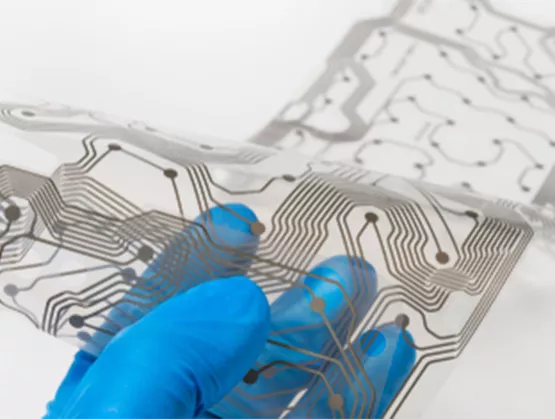
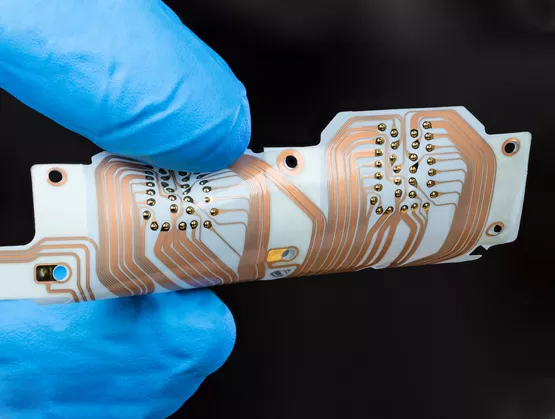
Presentations at this year’s FLEX Conference illustrated the ongoing development of manufacturing tools and processes, materials, and test and reliability evaluation techniques for the growing field of hybrid electronics, which includes printed electronics and flexible hybrid electronics (FHE). Additionally, the field includes the use of additive manufacturing processes for electronics packaging and system assembly, from die attach to flexible printed circuits.Hosted by FlexTech, a SEMI Strategic Technology Community, the conference provides an opportunity for the device making supply chain to connect to R D, design and manufacturing innovations. A review of some of the key developments highlighted in FLEX presentations follows.Innovations in Flexible Printed CircuitsTokyo-based Elephantech has been focused on using advanced inkjet systems to produce flexible printed circuits. Using additive methods instead of subtractive to produce PCBs can enable reductions in carbon footprint, copper usage and water consumption. In order to achieve these benefits, Elephantech has developed processes for combining inkjet printing of metals and electroless plating. The company synthesizes copper nano particles, which it uses to formulate metal ink. It has implemented artificial intelligence to increase print accuracy, showing the capability of average drop position error of less than 2μm, and depositing 20μm droplets into 40μm grooves and wells (Fig 1).Fig. 1. Elephantech inkjet results showing ~2μm precision and prototypes with 50μm line widthExamples of Elephantech’s use of flexible printed circuit technology include a set of switches for a curved monitor and a pressure sensor with reduced footprint and component count. The company intends to directly compete with larger, rigid PCBs, and is developing a mass-production system with 57,840 nozzles that can process sheet sizes of 500 x 830 mm.Traditional processes for component attach on PCBs include mass reflow ovens, thermal compression bonding, and spot laser reflow. Laserssel has developed laser selective reflow, which promises warpage- and damage-free bonding at increased processing speeds. In addition to improving the productivity of rigid PCB production, the laser selective reflow could also enable in-line processing of roll-to-roll flexible printed circuits, replacing the use of trays for bonding to flexible printed circuits.Scrona, which spun out from ETH Zurich, has developed MEMS-based printheads to improve electrohydrodynamic (EHD) printing. By using an electric field to pull droplets out of the print nozzle, EHD can enable much higher print resolution (sub-micron, compared to tens of microns), and enable the use of higher viscosity inks than would be possible with traditional inkjet heads. While EHD has been under development for some time, its application has been limited by crosstalk, in which the electric fields of adjacent nozzles interact with each other, and the requirement for the nozzle to be within tens of microns from the substrate to enable high print accuracy.Scrona’s MEMS-based nozzles address these EHD problems by shielding adjacent nozzles to prevent crosstalk and by creating a uniform electric acceleration field, which increases print distance to the order of a millimeter. The company has used its system to print a variety of inks on different substrates, as well as conformal printing on 3D surfaces (Fig. 2).Fig. 2. Example of printing silver wires across a polished glass edge; line pitch 25μm, glass thickness 1mmThe Rochester Institute of Technology (RIT) has been developing an additive technique called liquid metal droplet jetting, which can deposit metal traces functionally equivalent to solid wires. The process uses metal wire as a feedstock, which is a fraction of the cost of nanoparticle metals. While tin, zinc, and aluminum have been used, silver and copper are still under development. The wire is melted in a micro-crucible, which feeds a nozzle; metal droplets are then jetted on demand in an argon environment to prevent oxidation (Fig. 3, l). Upon hitting the substrate, the drops solidify into metal traces equivalent to solid wire, quickly enough to avoid melting flexible films, and without curing or drying.Several methods have been explored to eject the jets from the nozzle, including magnetohydrodynamic using electromagnetic pulses, piezo-actuated pistons, and pneumatic jetting using compressed gas (Fig. 3, r). These techniques range from high-jetting-frequency and high-cost to simple and low-cost but low-frequency. Higher frequency enables overlap of droplets, increasing conductivity, and reduced processing time.Fig. 3. Concept of liquid metal droplet jetting (l); pneumatic droplet ejection approach (r)In addition to ongoing development of deposition tools and processes, the material set for additively printed electronics continues to expand. Iris Light Technologies, which spun out of Argonne National Lab and Northwestern University, is developing photonic inks for wafer-scale production of active devices including photodetectors, LEDs, and lasers. The semiconductor-based ink can be deposited via aerosol jet onto silicon wafers. Iris Light is focused on 2D semiconductors, specifically black phosphorous, which has a wider spectral coverage than graphene, is tunable in emission and absorption, and has high mobility.An example of the broadening of the additive manufacturing supply chain, Kraetonics has developed software for creating slices to be used in designing 3D-printed structures and elements. The software enables manufacturing 3D volumetric circuits with reduced size, weight, and power compared to 2D PCBs. The process involves 3D printing of hybrid mechanical-electrical assemblies such as circuits and antennas.Innovations in Test and ReliabilityAn area of active interest in the hybrid electronics community is that of test and reliability. American Semiconductor, a developer of flexible circuitry, and Bayflex, a value-added partner of Japanese equipment company Yuasa, are conducting a project on dynamic harsh environmental FHE reliability testing. The goal is to identify root causes of FHE material and system failures.The companies are developing extended temperature and humidity tests to determine FHE system lifetimes and identify causes of failures from physically deforming FHE materials and systems in harsh temperature and humidity environments. Materials under consideration for testing include:Copper on polyimide substrate with a small outline package IC and surface-mounted componentsNobleflexTM, a multilayer substrate with gold on polyimide in development for medical devicesSilver on PET substrate, with small outline package IC.The team is soliciting other test devices and is planning to coordinate with ongoing development of FHE test standards coordinated by SEMI.Henkel reported on an investigation of accelerated temperature cycling test methods, in which the company applied different combinations of temperature range, stress, and frequency of mechanical force in an effort to reduce cycle time for testing component attach reliability. The study was able to achieve similar failure modes using an accelerated test method in the case of a bonding position shift in which cracking of the die attach film was the failure mode (Fig. 4, approach 4). The study found the greatest acceleration in the case of reduced thermal shock cycles (Fig. 4, approach 1).Fig. 4. Approaches evaluated for accelerated testing of component attach.Engineering consulting firm Exponent presented the results of a study on mechanical testing for characterizing fatigue performance of flexible electronics, conducted with continuous monitoring of fatigue for 6-pin flexible flat cables from seven different vendors. Exponent found that continuous monitoring during bending fatigue testing provided greater resolution in test results including detection of intermittent failure in each sample. The study also found that strain amplitude was a critical factor for determining fatigue life, and that flat flexible cables with larger pitches showed improved fatigue performance.About SEMI FlexTechFlexTech, a SEMI Strategic Technology Community, promotes the growth, profitability and success of the flexible hybrid electronics industry by developing educational forums, directing research, and promoting technology innovation.SEMI FlexTech members benefit from speaking and business networking opportunities, introductions to key industry players, research reports, technical funding, access to end users and industry advocacy at FLEX Conferences.Gity Samadi is Director of SEMI research and development funding programs and SEMI FlexTech and SEMI Nano-Bio Materials Consortium (NBMC). Paul Semenza is an advisor to SEMI on special projects. He was previously with NextFlex, the Flexible Hybrid Electronics Manufacturing Innovation Institute.
Read More
Electronics innovation is inching tantalizingly closer to the day when treating neurological disorders such as epilepsy and migraine could be as easy and convenient as dropping into a medical clinic for a minor medical procedure – brain surgery. What today is highly invasive surgery promises to be reduced to a doctor’s office visit as chip engineers work to tether the delicate, complex neurochemical workings of the human brain to the hard wiring of electronics. The goal is to use electrical stimulation to trigger the release of therapeutic doses of natural brain chemicals using small implantable devices in order to restore normal brain functioning, reduce human suffering and help slash the financial burden to economies around the world. The advances come as neurological disorders remain the leading cause of disability worldwide, afflicting up to 1 billion people, a number projected to rise sharply in the years to come, according to the World Health Organization. In 2015, conditions including dementia, epilepsy, multiple sclerosis, Parkinson’s disease and stroke accounted for more than 94 million disability-adjusted life years (DALYS), the number lost globally to ill-health, disability or early death – a total expected to swell to over 103 million by 2030. In the U.S. alone, brain diseases cost nearly $800 billion each year, according to a paper published in the Annals of Neurology in 2017. Bioelectronics Innovation Outpaces Drug Development The trendlines are heightening the urgency to develop new, effective medical treatments, yet traditional drug development alone may not be able to keep pace: The journey to create drugs ready for pick-up at your local pharmacy takes, on average, 10 years from the time they are hatched in the lab. “Unfortunately, pharma is unlikely to help address this problem because drug discovery is becoming slower and more expensive,” George Malliaras, Prince Philip Professor of Technology at the University of Cambridge, noted in his presentation, Electronics on the Brain, at last month’s virtual FLEX 2021 conference. In marked contrast, microelectronics are “becoming cheaper and faster every year.” Dating back to the 1950s with the development of implantable pacemakers to re-establish normal heart rhythms, bioelectronics medicine could help demystify how the brain processes information and lead to more effective treatments for neurological disorders. The field has come a long way since devising cochlear implants to treat hearing impairments in the 1970s, designing spinal cord stimulators to relieve chronic pain in the 1980s and targeting the brain with electrical impulses to help relieve Parkinson’s disease symptoms and neuropsychiatric disorders in the 2000s. ​Deep Brain Stimulation Implants Help Treat Neurological Disorders Deep brain stimulation involves implanting electrodes in the brain through small holes in the skull to send electrical impulses to specific target areas. Used in the U.S. since 1997 to treat Parkinson’s disease, deep brain stimulation can improve motor skills in patients suffering from other conditions too such as dystonia, tremors and epilepsy, enabling them to “function normally, with the flip of a switch,” Malliaras said. Researchers are even testing the technology to treat autoimmune and other disorders not originating in the brain. But the large, rigid electrodes used in the surgery are hostile to the soft, subtle confines of the brain. What’s more, implanting the devices is invasive, with multiple follow-up surgeries typically needed to replace batteries, reposition electrodes or replace deteriorating electrical leads. To overcome these drawbacks, engineers are now designing electronics that can process complex neurological signals to treat brain disorders while conforming to its soft tissue. Malliaras said that means developing electronics capable of interacting with the diverse chemicals the brain uses to bridge the tiny gaps between neurons, called synapses, in order to transmit the neurochemical impulses that give rise to thinking and behavior. Mixed Conductors Form Key Connection Between Electronics and Brain Mixed conductors, materials that can transmit brain signals both ionically and electrically, promise to form this key connection by enabling the development of high-resolution cortical electrodes that monitor neurons without penetrating the brain. They’re also a springboard to the development of flexible pin-sized electronic devices that make neurosurgery much less invasive. That brings new hope for more effective treatments of neurological disorders like epilepsy. Traditionally, the first line of defense against seizures has been antiepileptic drugs, an ineffective treatment since 30% of patients are resistant to the medications, Malliaras said. Another drawback are side effects that include short-term memory loss, fatigue, blurred vision, speech impairments dizziness, nausea and weight loss. Resective surgery – disconnecting the diseased portion of the brain that causes seizures – is often the next option, but is not possible in cases when the procedure would risk damaging circuitry that controls cognition and behavior. Flexible Substrates Fuel Development of Tiny, Expandable Bioelectronics Devices With recent advances, studies on lab rats show that the miniature electrodes designed using flexible substrates made possible by photolithography can conform to the brain’s curvatures and creases to measure the slight electrical signals emitted by individual neurons without penetrating brain tissue and deliver drugs to prevent seizures in animals. Measuring just micrometers in width, these horseshoe-shaped microfluidic devices can pump GABA, a natural neurotransmitter that acts as a brake against neuronal excitability throughout the nervous system, through their minute perforations into the ion exchange membrane of the brain to prevent epileptic seizures. “The data from the research is very exciting, but the path to the clinic is long,” Malliaras said. Still, the findings are a step forward in better understanding the brain and treating its pathologies. Today, microfluidic devices are under development to localize drug delivery in order to bypass the blood-brain barrier and destroy remaining brain cancer cells after a tumor is removed. The devices promise not only to improve cancer treatment since a broad array of cancer drugs can’t cross the protective barrier, but to enable doctors to administer cancer-fighting drugs in smaller doses to help reduce side effects. Implantable electronics today are used to bring relief to sufferers of chronic pain. However, the sizeable paddle-type electrodes involve invasive surgery under general anesthesia and a hospital stay of a few days. An alternative is to implant smaller flexible devices through an outpatient spinal tap with local anesthesia, an approach with its own disadvantages. The devices are less efficient than paddles in delivering electrical stimulation and tend to shift position as the body moves, so are seen as an unreliable solution. That leaves patients to choose between an effective treatment requiring invasive surgery and a less intrusive but less effective alternative. One promising solution combines bioelectronics with soft robotics to enable expandable implants containing microfluidic channels that can be activated mechanically. The device’s malleable paddle electrode can be rolled up inside a needle, inserted with a final tap and then pneumatically unrolled for treatment. While the device so far has been tested only on human cadavers, it could spur the design of a broader category of expandable microfluidics devices that minimize the invasiveness of neurosurgery and get patients back on their feet sooner. The tiny flexible electronics could be available to veterinarians to treat dogs in as soon as next year, Malliaras said, and “hopefully someday in the not-to-distant future they’ll be used to treat human patients.” Michael Hall is a marketing communications manager at SEMI.
Read More
For the first time in its 20-year history, the FLEX Conference dedicated an entire session to the important and timely twin topics of environmental sustainability and power consumption of electronic devices. The event planning committee recognized the urgent need to increase the awareness of how technology and electronics devices can help reduce greenhouse gas emissions (GGE) overall and meet aggressive targets to curb the impacts of climate change. Dr. Christine Ho, CEO of Imprint Energy, delivered the keynote for the session, focusing on the need for powering billions of sensors that will be deployed annually, and their role in reducing fossil fuel emissions through becoming aware of issues, monitoring our resources over time, and intervening early and often to combat waste in multiple sectors and industry. Quoting extensively from the organization Exponential Roadmap Initiative (ERI), Ho noted that “the digital sector has the potential to directly reduce fossil fuel emissions 15% by 2030 and indirectly support a further reduction of 35% by influencing consumer and business decisions and systems transformation.” The initiative’s playbook for reaching net zero carbon emissions by 2050 and limiting global warming to 1.5° Celsius outlines how the digital sector can help remove 13 of the 27 gigatons (GT) of CO2 needed to reach this goal. Ho stated that the rapidly emerging Internet of Things (IoT), devices, software systems, and data insights are the backbone of this digital transformation. The IoT's vast network of sensors can transform multiple sectors, such as the logistics industry, which on an annual basis moves and ships more than 10 billion tons of products worldwide by ships, airplanes, long haul trucks, and train - contributing 17% of GGE and more than 4 gigatons of CO2 annually. Always-connected IoT sensors used by the logistics industry can reduce waste and damage in the supply chain, which is especially problematic for temperature-sensitive and damage prone pharmaceutical and food products, mitigating the need for producing high volumes of buffer inventory to replace damaged goods Noting that the attendees of 20 Years of FLEX Conferences were a big part of the current advancements of low-cost printed, active, shipping tags, Ho said that Imprint Energy’s flexible and thin, Zinc based batteries are ideal for IoT devices, since they boast a significantly smaller carbon footprint than Lithium-Ion (Li-ion) batteries. Imprint Energy is working with systems designers and integrators to design the battery as an integral part of the device package and use low-power strategies to extend device lifetimes. Imprint recommends co-locating battery printing alongside the device integration to further minimize shipping and logistics. When manufactured separately, Imprint’s small footprint, low-operating temperature process line (less than 80°C) provides significant carbon footprint advantages over other technologies. Ho challenged the attendees, saying “we all need to participate in protecting our earth. We need to eliminate waste and contribute to reducing half of our current greenhouse gas emissions by 2030, and we can do that by deploying a global digital skin with more than 100 billion IoT devices in 2030 and up to 1 trillion by 2050. We can minimize the device carbon footprint and maximize its longevity by considering the power capability, as well as design for re-use and re-cycling of the critical materials.” Following Dr. Ho’s presentation, FLEX kicked off a spirited panel discussion with experts from PowerRox, ITN Energy Systems, Birla Carbon, and Auburn University and chaired by Bob Praino and Eric Forsythe, from Chasm Advanced Materials and the Army Research Labs, respectively. The speakers summarized their on-demand presentations and looked at what is being done today to recycle Lithium-Ion batteries, how IoT devices are currently being powered, and drew comparisons between the early days of the Internet and development of the IoT. The speakers generally agreed that the power requirements of wireless cellular and Blue-tooth devices were still too high and run times too short. FLEX 2021 was a virtual event in the 2021 SEMI Technology Series. It was organized by SEMI FlexTech, SEMI NBMC, and NextFlex. Major sponsors included E Ink and Novacentrix. The event covered technical developments in flexible, printed and hybrid electronics, featuring more than 100 presentations and networking opportunities. Technical proceedings are available until March 26 at http://flex.semi.org. Heidi Hoffman is senior director in Corporate Marketing at SEMI.
Read More
New treatments for vascular disease. Optimized agricultural production. Beefed up performance of wearable devices and flexible displays. Four students with their sights set on making the world a better place won Innovators of the Future awards at the 20th Annual FLEX Conference in late February after presenting novel ideas for advancing flexible electronics in the popular student poster event. It was clear that all of these young innovators are working on projects with the potential to impact our lives in the near future. Their work is critical to advancing products, devices and basic research in flexible electronics. Posters created by the 17 students who competed for the awards were judged by a multidisciplinary panel of industry experts. The posters reflected a broad range of applications enabled by flexible hybrid devices and covered technology for wearables, medical devices and precision agriculture. Innovators of the Future Award Winners Robert Herbert from the Georgia Institute of Technology won first place for his paper Smart and Connected Stent System with Nanomembrane Soft Sensors for Wireless Monitoring of Hemodynamics. Vascular diseases are the leading cause of death worldwide, accounting for over 30% of all fatalities. Early diagnosis and monitoring blood pressure and flow rates are critical to effective treatment. Herbert’s poster introduced a less costly, less invasive and more revealing (spoiler alert) sensor system that uses a flexible, wireless biosensor system with an inductive medical stent and capacitive pressure sensors. The laser-machined stent uses multi-layered material integration to function as an inductive coil for wireless communication while maintaining mechanical properties similar to conventional vascular stents. The stent and sensor system can be easily deployed using conventional catheter procedures. Watch his presentation. Jose Waimin from Purdue University’s School of Materials Engineering was one of two second-place winners for his poster that shows how real-time monitoring of ion concentration, moisture, pH, microbial activity and other key metrics in agricultural production can optimize crop yields while reducing environmental impacts. His work presented a scalable alternative for manufacturing low-cost flexible sensors that can be used in an array of applications. Electrodes are manufactured in a Roll-to-Roll (R2R) process to enables fast production at a very low cost per device. Watch his talk. Benham Garakani from Binghamton University, Center for Advanced Microelectronics Manufacturing (CAMM) was the other second-place winner for his paper Electromechanical Behavior of Flexible Silver Paste and Highly Stretchable Liquid Metal for Wearable Electronics. Garakani explored how to improve fabrication of reliable, comfortable wearable devices to boost performance and functionality using substrates such as nonwoven high-density polyethylene fibers (HDPE) and thermoplastic polyurethane (TPU). Garakani also examined the electromechanical reliability of screen-printed silver trace on HDPE fibers and stencil-printed liquid metal (Ga-In-Sn alloy) on TPU during isothermal fatigue cycling. Watch his presentation. Sridhar Sivapurapu from the Georgia Institute of Technology won third place for his poster Flexible and Ultra-Thin 30µm Glass Substrates for RF and mmWave Flex Applications. Sivapurapu’s poster addressed the increasing demand for maximizing the mechanical flexibility of flexible displays while maintaining or improving their electrical performance. Sivapurapu focused on both electrical and mechanical properties for determining the viability of ultra-thin glass stack-ups for flexible RF applications by benchmarking the electrical performance of the ultra-thin glass stack-up to 110 GHz. He also examined electrical characterization during bending tests using free arc bending. Watch his talk. The Innovators of the Future award was sponsored by FlexEnable, a technology provider that develops flexible organic electronics technologies and OTFT materials. All FLEX Conference 2021 presentations are available through March 26, 2021 by registering for the event. Gity Samadi is co-chair of the FLEX Conference student poster awards and program manager at SEMI FlexTech.
Read More