The state of manufacturing is changing rapidly. Regardless of sector or location, manufacturing decision-makers across the world are signaling a desire for better supply chain resiliency, manufacturing flexibility, increased speed of innovation and stronger environmental sustainability.
Singapore’s manufacturing sector, a significant contributor to its gross domestic product, is always evolving and today is shifting away from its traditional focus on producing highly customized products using flexible manufacturing processes, but at significantly lower efficiencies.
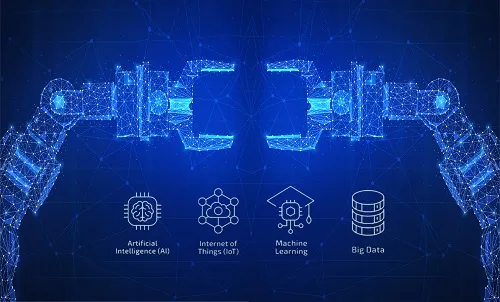
Today, with Industry 4.0, we can design manufacturing systems that optimize both efficiency and flexibility. And this is possible because of the convergence of technologies such as artificial intelligence (AI), data analytics, robotics and the Industrial Internet of Things (IIoT). This blend of technologies helps reduce the cost of technological solution ownership – a derivative of Right’s Law – as a function of cumulative production.
In HP Singapore, driving innovation in our product and processes is part of our DNA, and over time our products have grown in complexity and breadth. We have embraced Fourth Industrial Revolution (4IR) technologies in our advanced manufacturing lines.
We started our Industry 4.0 journey in 2016 with Vision and Mission 2020 to modernize our production facilities to smart factories that strengthen our competitive edge. Our focus was on upskilling our employees with future skill sets, build new technological capabilities and partner with higher education institutes. To drive these transformations, we have formulated five pillars:
Additive Manufacturing
Data Analytics
Cyber-Physical Integration
Digitalization
Workforce Transformation
These five pillars have enabled us to move from labor-intensive and reactive processes to processes that are highly digitized, automated, and AI-driven, enabling us not only to increase quality and productivity but also to reskill our people in anticipation of jobs they will need in the future. Technicians have been upskilled and promoted to techno-operators which has, in turn, freed up technical specialists to explore other roles. Engineers have retrained as data scientists, or have moved to new product development, for instance.
In 2017, HP’s Ink Supplies Operations (ISO) set up Smart Manufacturing Applications and Research Centre (SMARC) to adopt 4IR technologies and implement these innovations in production lines. Today, SMARC is the home ground for HP engineers to experience, trial and prototype solutions, bringing innovative and sometimes unexpected solutions to manufacturing. It is also a showcase for industry partners, government agencies and schools.
Here is how each pillar of the SMARC contributed to transformation to augment the manufacturing workforce:
Cyber-Physical Integration – Move
Role of robotics/automation – By standardizing automation standards for robotics, we have deployed collaborative robots (Cobots) and autonomous intelligent vehicles (AIVs) to perform manual and routine tasks to drive productivity, while reducing errors from operator fatigue and protecting our operators’ physical well-being.
Digitalization – Sense
Role of IIoT – Devices are a treasure trove of data that can provide clarity on how the entire manufacturing line is performing in real time. Building a platform that connects devices and collects data while allowing factory floor managers to dynamically visualize on an Integrated Command Centre (ICC) and manage factory performance is central to HP’s digital transformation journey. And IIoT is not restricted to just devices that are already wired for data sharing. HP has also connected off-the-shelf analogue devices using a standardized data transportation protocol, allowing HP to collect essential data across all types of devices and eliminating manual data entry.
Additive Manufacturing – Build
By embracing additive manufacturing (use of HP MultiJet Fusion 3D printers), HP introduced more flexibility in operations through on-site rapid prototyping, light production, and replacement of parts needed on our manufacturing floors, shortening production timelines. We 3D printed pallets, which are cheaper and faster to produce, and replaced original pallets for transportation on conveyor belts, improving the efficiency and productivity of our operators.
Director Jamie Neo with HP’s MultiJet Additive Manufacturing Printer. (Photo Credit: HP)
The HP Multi Jet Fusion 3D printing technology has helped HP to replace traditional manufacturing methods and streamline processes in our supply chain. For example, HP is 3D printing the Drill Extraction Shoe, a tool that is essential to the removal of waste products from laser-drilling in HP’s printhead manufacturing line. Through 3D printing, HP has consolidated the production of the tool from nine parts to one 3D printed model, thereby optimizing the design of the tool and reducing its production time from three to five days to 24 hours.
Data Analytics – Think
By deploying advanced analytics and machine learning models, HP has enabled real-time detection, diagnostics, and prediction of product quality across our manufacturing lines. Predictive models are replacing traditional “destructive testing,” reducing waste and allowing HP to meet unique product specifications more accurately. Machine learning is diagnosing and recommending the right set up for tools and manufacturing lines, when necessary, to reduce downtime and increase precision.
Workforce Transformation – Grow
The pivot to becoming an advanced manufacturing leader not only requires HP to invest in 4IR technologies but also skill sets to operate 4IR technologies. We embarked on a Workforce Transformation program to help our employees stay competitive in a fast-changing world. Today 35% of HP technical workforce have had the opportunity to take on new roles even as needs evolve, thanks to internal and external training and reskilling.
Beyond technology and training, the glue that binds these together and makes it successful is our culture at HP. We are ambition-led, which means that we do not see the world as it is, but what we can be. And we do so by collaboration.
Plans for the Future
After accomplishing our Mission 2020, in late 2020 we launched Mission 2025 to extend our end-to-end smart factory capabilities through advanced connectivity, intelligence and automation to optimize and drive sustainable manufacturing flexibility and efficiency.
Pyramid of HP’s smart manufacturing focus
Advanced technologies such as additive manufacturing, IIoT, automation and robotics, data analytics, machine learning and AI are central to the connectivity and the end-to-end intelligence of our smart factories, enhancing production efficiency and flexibility while improving the quality of our products. For example, the deployment of IIoT sensors in our wafer plant has helped to reduce downtime in replacing CO2 gas cylinders. What’s more, AI enables us to more accurately monitor the dispensing of structural adhesive to eliminate lost yield.
We believe that by enhancing manufacturing efficiency and flexibility, we were able to shorten resolution time, reduce our carbon footprint, and improve the resiliency of our manufacturing and supply chain systems.
HP smart factory model
In April 2021, two lines in HP Singapore joined the World Economic Forum’s Global Lighthouse Network after being recognized for pivoting from a labor-intensive factory into a digitized, automated one with the help of AI. In doing so, we managed to improve manufacturing costs by 20% and productivity by 70%.
Under Mission 2020, we saw the following successes:
Improved manufacturing costs by 20%
Improved productivity by 70%
Brought most HP employees onboard to our smart manufacturing journey
Equipped HP employees with skill sets in areas such as additive manufacturing, data analytics, AI, robotics and Internet of Things
Established a Model Factory playbook
With Mission 2025, we will:
Continue to train employees in future skillsets by partnering with institutes of higher learning
Scale our Model Factory playbook across more manufacturing lines to reduce costs and improve productivity
Enhance our knowledge in additive manufacturing by building an ecosystem as a service platform to help manufacturing companies
Enable a sustainable manufacturing system to reduce our carbon footprint and help enable a circular economy
We believe in innovating with purpose by focusing on solving real-world problems and creating technology in the service of humanity. That is why we built the SMARC to create the solutions for our lines and showcase these solutions to encourage industry participation.
We are driven by values and ambition, which means that it is not just what we do, but also how we execute it. We make sure our values inform everything we do – for instance, helping us make a greater impact to environmental sustainability, people, and our community. We believe this is a crucial step in coalescing industry support, which is necessary to move the needle on advanced manufacturing.
Robert Ronald is Master Program Manager, Cost Structure, Model Smart Factory and Sustainability, at HP.