downloadGroupGroupnoun_press release_995423_000000 copyGroupnoun_Feed_96767_000000Group 19noun_pictures_1817522_000000Member company iconResource item iconStore item iconGroup 19Group 19noun_Photo_2085192_000000 Copynoun_presentation_2096081_000000Group 19Group Copy 7noun_webinar_692730_000000Path
Skip to main content
Default Banner Image

A.M. Fitzgerald & Associates

Our home state of California has wilderness areas of extreme climates, from desert to high-altitude snow-capped mountains. Every year, people need rescue because they’ve ventured into the wilderness without proper training, or even essential gear, such as water or a warm parka. Many MEMS product development teams get a similar start. They undertake a challenging multi-year journey without enough of the most precious resource needed for success – enough money to finish. As a MEMS product development firm that's completed more than 400 projects, 25% of these with startup companies, we’ve been having many of the same conversations about the road to commercialization with MEMS entrepreneurs. Through that experience, we’ve seen a share of these entrepreneurs – many of whom come right from graduate programs or from outside the semiconductor industry – experience disappointing outcomes. And it’s not because of their technology. Rather, their lack of familiarity with electronic product integration and wafer-based manufacturing often influences a too-optimistic development plan that doesn’t factor in enough time and budget. As technologists, it was tough for us to see companies with promising young technologies struggle due to lack of planning or funding. We would like to see more entrepreneurs succeed, and that was the impetus for our new book, MEMS Product Development: From Concept to Commercialization, some highlights of which follow. Time and money What can MEMS startups do to pave the way for a successful commercial launch, particularly when a long period of scaling up manufacturing is often needed during the go-to-market process? Since money is usually a limited resource, it’s important to prepare a realistic development timeline supported by sufficient funds allocation from the start. As this is easier said than done, we’ve seen both startups and established companies make common financial blunders during MEMS product development. These include: Reserving inadequate funding for developing the entire MEMS product, including packaging, electronics and software Creating an unrealistic timeline for development, resulting in a cash-flow problem Only securing enough funding for the first run at a foundry when, in fact, numerous runs are far more typical Unplanned gaps of months or more between funding tranches, which slows momentum Based on our varied client experience, the engineering costs of developing a MEMS product of medium complexity to the point of validated foundry production (i.e., ready for mass production and product sales) requires on average four years and US$4 million. And that’s just for engineering. Business administration, sales, marketing and other company costs are additional. While it’s common to spend much more for more complex devices or product systems, it’s rare to spend less, unless you’re working with existing IP, such as a foundry process platform, which also could accelerate development time. Typical engineering-only budget required to develop a MEMS product through four stages of development, to the point of volume-production readiness. Reprinted with permission from MEMS Product Development: From Concept to Commercialization (Springer, 2021). Don’t go thirsty in the desert No one wants to get stranded in the desert without enough water, which is why it’s so important to carefully articulate your timeline and secure adequate funding before starting MEMS development. In MEMS development, just as in wilderness adventuring, things rarely go exactly as planned: Wafers break, engineers take a long time to debug, customers change their minds, and random events like storms (or a pandemic) disrupt supply chains. That’s why adding some buffer to your development timeline and your budget will sustain your company through the inevitable delays and setbacks. Plus, there’s generally a ripple effect to a delayed new-product introduction. A slower-than-predicted launch places a burden on a company’s finances because the fixed overhead costs of the entire organization will continue to consume cash while waiting for product launch. Not a lump-sum game Although you might wish to receive one big funding check when you get started, the reality is that investors and executives won’t provide the entire development funding in one sum. They give money in tranches, generally demanding you meet some pre-determined criteria or demonstrate set benchmarks before they’ll release more funds. To best manage tranche funding, a company must carefully plan and set their investors’ expectations for realistic outcomes in advance. A common crisis for startup companies occurs when investors only provide enough budget to execute the very first run at a foundry and then demand to see functional chips before providing the next tranche. However, the aim of the foundry’s first wafer run isn’t to produce working chips. It’s to begin the year-long process of setting up for high-volume manufacturing. The first wafers are unlikely to yield well, or at all, putting the startup at great risk with its frustrated investors. Setting investors’ and executives’ expectations correctly from the start, realistic budgeting and having regular communication about progress and upcoming needs all help to keep the money flowing. Any gaps in funding will waste valuable momentum, which ultimately leads to more expense and delay in the overall product development. It can become especially damaging when the wait for money forces the foundry to stop work, because processes go stale after a few months, and also during busy times, when your product could be sent to the back of the foundry’s queue. As experienced outdoors people know, to enjoy wilderness adventures, you need to plan where you’re going, anticipate common risks, and then prepare accordingly. It’s the same in MEMS product development. Having a good grasp of your timeline and realistic expectations about the funding required to reach commercialization are essential steps in a successful journey. Want to learn more about MEMS Product Development: From Concept to Commercialization (Springer, 2021)? Order the book based on A.M. Fitzgerald Associates’ extensive experience helping entrepreneurs and other innovators commercialize their MEMS devices. Alissa M. Fitzgerald, Ph.D., founded A.M. Fitzgerald Associates, LLC, a MEMS product development firm based in the Bay Area, California, in 2003. She has over 25 years of engineering experience in MEMS design and fabrication and now advises clients on the entire cycle of MEMS product development, from business and IP strategy to supply chain and manufacturing operations. Carolyn D. White, Ph.D., has a background in mechanics of materials and specializes in the design and fabrication of MEMS devices for a wide range of applications. She has additional experience in foundry transfers and technology strategic analysis, including of the evaluation of patent portfolios, feasibility studies, and cost/performance analysis. A.M. Fitzgerald Associates (“AMFitzgerald”) is longtime member of MEMS Sensors Industry Group®(MSIG), a SEMI technology community that connects the MEMS and sensors supply network in established and emerging markets to enable members to grow and prosper. Visit us today.
Read More
What does it mean to identify as LGBTQIA+ in the semiconductor industry? It’s an interesting question to ask, but a difficult one to answer. Because we live in a world in which cisgender heteronormity is assumed, it’s possible to self-identify as LGBTQIA+ without sharing that information publicly. Coworkers and managers might not even realize that their colleague or employee is gay, lesbian, transgender, non-binary or other. Unlike other minorities, notably people of color, LGBTQIA+ people may choose to keep their identities invisible.As I began outreach for this article, I recognized that some people might not want to expose a potential vulnerability to both their co-workers and a broader global audience of SEMI members, so I tried to make them feel more comfortable. I told them I’m a lesbian. I said that I’d send content for their review before publishing. But I quickly discovered that wasn’t enough, despite sweeping cultural and legal advances around LGBTQIA+ attitudes and identity. According to a 2020 Gallup Poll, 5.6% of U.S. adults now identify as LGBTQIA+, up from 4.5% just three years ago. In 2004, Massachusetts became the first U.S. state to legalize same-sex marriage, and in 2015, the U.S. Supreme Court made same-sex marriage legal in all 50 states. The semiconductor industry has been historically conservative. The times, however, are changing. Large chip companies such as AMD, Intel and Lam Research actively support diversity and inclusion efforts across minority groups, including LGBTQIA+, and that’s a good thing, but is it enough? And if not, what actions can SEMI members take to help LGBTQIA+ people in semiconductors feel safe enough to choose visibility?According to Antoinette Hamilton, global head of Inclusion and Diversity at Lam Research, more than 46% of LGBTQIA+ employees in the industry aren’t out in the workplace. That tells us there’s still work to be done, a challenge that Lam is embracing. With its Pride employee resource group (ERG) leading the way, partnerships with organizations such as PFLAG and Out Equal, and recruitment efforts made through organizations such as Out in Science, Technology, Engineering, and Mathematics (oSTEM), Lam has earned a score of 100 on the Human Rights Campaign Foundation’s Corporate Equality Index and was named one of the Best Places to Work for LGBTQ Equality.“At Lam, we understand the importance of empowering employees to bring their authentic self to work,” says Hamilton. “We believe when employees feel valued and included, each person can reach their full potential.”Back in 1992 when Intel paid to relocate Judi Goldstein, her partner and their son from New Jersey to Oregon, mainstream cultural attitudes toward gays and lesbians were very different. According to a June 1992 Gallup poll, only 48% of Americans thought that “gay or lesbian relations between consenting adults should be legal,” with 44% saying they should be illegal. A May 2020 Gallup poll recorded a dramatic shift in attitudes, with 72% affirming the legality of same-sex relations and only 24% opposed.By the late 1990s, Intel had extended domestic partner benefits to same-sex couples. “I registered my partner – now my wife – and our son, and realized that from then on, my whole family would have health insurance through Intel,” says Goldstein, who identifies as a gay woman and uses she/her pronouns. “Both relocating my family and providing family health coverage solidified my attachment to Intel, which was way ahead of other companies at the time.”By 1995, Goldstein became one of the first members of IGLOBE, Intel’s ERG for LGBTQ+ employees. Since that time, she’s observed further progress at Intel, first with the addition of gender identity and expression to Intel’s anti-harassment policy, and later with the inclusion of gender-neutral bathrooms at all major US sites. And advancement didn’t stop there.“We now have international IGLOBE chapters, a celebration of Pride Month in June, company support for the Equality Act and other legislation, a provision for transgender health benefits, and the launch of Self-ID efforts in 2017,” she says.From her start as software engineer more than 32 years ago to her current positions as director of the Open Source Audio and Security Engineering teams, Goldstein has played an instrumental role pioneering new technologies and mentoring other engineers at Intel – in addition to serving as a role model for LGBTQIA+ employees coming through the ranks. Now a grandmother with a five-year-old granddaughter, Goldstein lives in Oregon with her wife of more than 30 and two dogs. Location, Location, LocationAs social animals, we tend to value safe and welcoming places to live. When you’re LGBTQIA+, this may mean moving to an urban area that is more likely to embrace diverse orientations and cultures.After getting his master’s in astrophysics, Chuck Chung had a decision to make. Remain in the same field, which would limit his options on where to live, or get a doctorate in engineering, which would expand them.“In the ‘90s when I was making this choice, things were very different, and I knew that where I worked and lived would have a huge impact on how open I could be,” said Chung. “While I would have loved a career in astrophysics, I realized that engineering would be a more practical choice because I was more likely to find work in a city.”Both personally and professionally, engineering has proved a good choice for Chung. He’s lived in San Francisco and Silicon Valley for the past 18 years, where being out in the workplace is rarely an issue. “I compartmentalize my personal and professional lives when necessary, such as when business colleagues who are overseas talk about their families in casual conversation. Most of the time, though, my identity as a gay man is a non-issue, and I work for a company that really cares.”From his pioneering work in MEMS and genetic sequencing to his current focus on the next generation of microarchitectures at IBM, Chung has long thrived. Now, with a new book on MEMS Product Development – co-authored with two other Ph.D.’s, Alissa Fitzgerald and Carolyn White of A.M. Fitzgerald Associates – the best days of Chung’s career may still be ahead of him. He lives in the Bay area with his husband and their two children.Kunal Garg’s identity didn’t influence his career choices because when he started in semiconductors, he wasn’t out to himself or others. A few years into his engineering career at his former company, Garg realized his identity as a gay man at a time when the national discussion about same-sex marriage was at its apex – leading to some uncomfortable situations at work. “As some of my colleagues and managers openly debated same-sex marriage, they seemed oblivious to the fact that there were LGBTQIA+ people at work,” says Garg. “I knew then that I wanted to steer such conversations in a way that would feel safe and inviting for people like me, who work in this industry while being true to their identities.”Once he’d come out to his family and friends, particularly after he married his husband, Garg wasn’t willing to stay silent at work. “Although it took courage and internal struggle to come out to colleagues, my identity as a gay man wasn’t something I wanted to hide or deny anymore,” he says. “Some people laughed when I mentioned my ‘husband.’ The idea that their colleague, an engineer, an Indian immigrant, a man, could be gay and married to another guy was so foreign, it was almost laughable. Luckily, this didn’t stop me from being myself at work, and over time, these types of conversations became very rare.”Nonetheless, Garg looked around for ways to be part of the LGBTQIA+ engineering community. When he moved to AMD in Austin, he wanted to start with a clean slate. “When my manager called to invite me to join his team at AMD, I casually brought up the fact that my husband was going to need to start looking for a new job in Austin. And, very casually, he asked me what my husband did for a living, and we went on to discuss how Austin would be a great city for us to live in,” says Garg. “The fact that this was such a normal conversation was a big factor in my decision to join AMD.”Soon after starting as a design engineer at AMD, Garg found that LGBTQIA+ engineering community for which he’d been searching. He joined AMD’s Pride ERG, a group that he now chairs. “Being a part of this ERG has been transformational for me on a personal level and has allowed me to connect with my fellow engineers and people in my industry, beyond our mutual love for science and technology.”Become a change agentWhile some chip companies actively promote inclusion and diversity of LGBTQIA+ employees, others still have a long way to go. SEMI and the SEMI Foundation are uniquely positioned to help advance LGBTQIA+ equity issues in the microelectronics industry. "The SEMI Foundation is committed to promoting Diversity, Equity, and Inclusion (DEI) in our industry for the benefit of our workers and our member companies,” says Shari Liss, executive director of the SEMI Foundation. “We are designing programs for human resources departments, company leaders, and DEI allies to make the case for stronger DEI practices that will attract, retain, and promote LGBTQIA+ individuals and other underrepresented groups in our industry. We will soon publish SEMI's Roadmap to Diversity, Equity, and Inclusion and DEI Toolkit, which will contain tools to help companies strengthen their workplace cultures so everyone – including those that identify as LGBTQIA+ – will feel welcome, and will be able to do their best work."“If we want to truly see the semiconductor industry flourish on a global level, we need to push for equitable treatment of LGBTQIA+ and other minority employees,” says Garg. “SEMI can help by educating industry leaders, especially in countries outside North America and Europe, on how diversity and inclusion through policy are vital to their sustained productivity. These workshops and trainings should be data-driven to encourage companies to hire more LGBTQIA+ employees and to create policies that promote the well-being of all employees.”It’s not just at the company level or the industry association level that matters. Just as individuals are necessary change agents in proliferating greater equity among women and people of color, they’re also needed as allies of LGBTQIA+ people.“Like so many of us, I’d love to wave a magic wand to end discrimination based on gender identity or sexual orientation, but like any cultural shift, most change comes in small steps, not in giant leaps,” said Karen Lightman, executive director, Metro21: Smart Cities Institute – Carnegie Mellon University. “Fortunately, it’s easy to help make those small steps by becoming an ally to LGBTQIA+-identified people. When you see an injustice, don’t stay silent. Use your voice. There’s transformative power in that act alone. As one step, I’ve started using my pronouns when I introduce myself and now include them in my digital signature. It’s an easy way for me to express that I am an ally to LGBTQIA+-identified people.”Help us make the change. Use your voice. Get involved. Encourage your company to advocate for LGBTQIA+ inclusion and diversity.Maria Vetrano, principal of Vetrano Communications, is a PR consultant at SEMI Foundation.
Read More
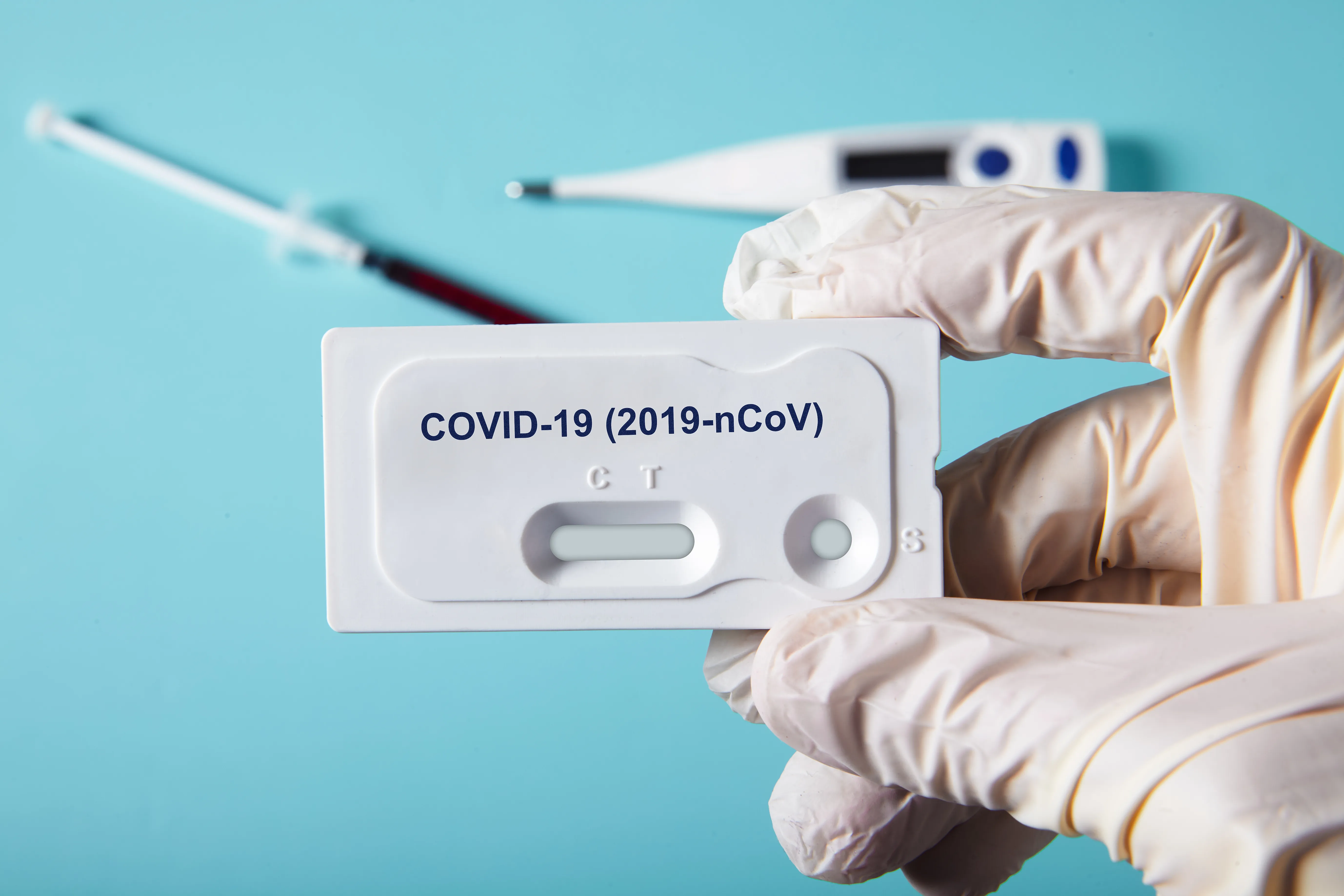
On Saturday, March, 21, 2020 the U.S. Food and Drug Administration (FDA) gave emergency authorization to Cepheid, a California company, to sell a new test for rapid detection of the pandemic coronavirus SARS-CoV-2, which causes COVID-19. Cepheid’s Xpert® Xpress SARS-CoV-2 test gives healthcare workers results in just 45 minutes, with less than a minute of hands-on time for sample preparation.Cepheid, founded by Kurt Petersen, M. Allen Northrup and five others in 1996, is well known in the MEMS community for commercializing microfluidic chip-based polymerase chain reaction (PCR) analysis machines. This is not the first time Cepheid has responded quickly to a biological threat; after the 2001 terrorist attacks in the USA, Cepheid was the first to provide rapid anthrax detection capabilities to the U.S. Postal Service, and it still does today.At the heart of all COVID-19 test protocols (see the WHO protocol and U.S. CDC protocol) is the real-time reverse transcription polymerase chain reaction (RT-PCR) analysis technique. In a very simplified description, PCR uses thermal cycling to amplify the DNA present in a patient’s swab sample, and then using fluorescence optical detection, searches for the virus’s specific DNA. The test requires knowing the virus’s genome in the first place; the crucial work to sequence the full genome of SARS-CoV-2 was first published by Chinese scientists for public use on January 10, 2020.While traditional PCR machines take many hours to thermal cycle and reach a result, MEMS-based PCR systems can work much faster. Featuring scale heaters and reaction chambers that have a tiny thermal mass, they create a significantly faster heat-cool cycle, enabling a rapid result in minutes.The first MEMS silicon PCR chip, developed by Northrup et. al. at Lawrence Livermore National Laboratory and licensed to Cepheid (left) and the Cepheid test cartridge today (right). (Source: Northrup MA, Ching MT, White RM, Watson RT, “DNA amplification in a microfabricated reaction chamber,” Transducers 1993, Yokohama, Japan. pp. 924–926.) Research on MEMS-based PCR systems has continued steadily since the early 1990s. Today, researchers have been focusing on developing highly integrated, low-cost systems specifically for point-of-care use. One example of recent research: a team at Korea’s ETRI and Genesystem have developed a prototype low-cost, handheld PCR system having a polyimide chamber and microheater and an integrated CMOS detector for optical readout of results (figure below). Cross-section schematic of the chamber, heating module and integrated optical detector in a portable PCR prototype (left) and integrated test cartridge (right). (Source: DS Lee, OR Choi, and YJ Seo, “A Handheld and Battery-Powered Realtime Microfluidic PCR Amplification Device,” Transducers 2019, Berlin, Germany pp. 1063-1065.) Korea’s quick recruitment of its biotech companies and creation of novel drive-through testing sites helped it to successfully pinpoint its COVID-19 outbreak and to implement control measures. Let’s hope the Cepheid test can be similarly effective.Based on successive epidemics of SARS, MERS and now COVID-19, rapid PCR test machines, enabled by MEMS technology, are becoming essential medical tools in the fight against viral outbreaks. As continued development lowers the cost of such critical equipment, let’s hope we may soon have a PCR machine in every doctor’s office.Alissa M. Fitzgerald, Ph.D., founded A.M. Fitzgerald Associates, LLC (“AMFitzgerald”), a MEMS and sensors solutions company based in Burlingame, CA, in 2003. She has over 25 years of engineering experience in MEMS design, fabrication and product development.Prior to founding AMFitzgerald, Fitzgerald worked at the Jet Propulsion Laboratory, Orbital Sciences Corporation, Sigpro, and Sensant Corporation, now part of Siemens. She received her bachelor’s and master’s degrees from MIT and her doctorate from Stanford University, in Aeronautics and Astronautics. Fitzgerald has numerous journal publications and holds eight patents. She served on the Governing Council of MEMS Industry Group from 2008-2014 and was inducted into the MIG Hall of Fame in 2013. Fitzgerald serves on the Board of Directors of both Rigetti Computing and the Transducer Research Foundation.AMFitzgerald is a longtime member of MEMS Sensors Industry Group (MSIG), a SEMI Strategic Association Partner. For more information on AMFitzgerald, please visit: https://www.amfitzgerald.com.Interested in learning more about this topic? Read Alissa M. Fitzgerald and Farzad Khademolhosseini’s article in EE Times, MEMS in the Fight Against Covid-19.
Read More
Most of today’s blockbuster MEMS products – from pressure sensors and resonators to accelerometers and microphones – originated from academic research, a trend that Alissa M. Fitzgerald, Founder Managing Member, A.M. Fitzgerald Associates, expects to continue. While many of these potentially game-changing new technologies will require many more years of intensive development and up to $100 million in investment to reach full commercialization, Fitzgerald sees their potential for generating new waves of activity and opportunity in the MEMS and sensors industry.SEMI’s Maria Vetrano caught up with Fitzgerald to preview her October 23 presentation, Emerging MEMS Sensors Technologies to Watch as We Enter a New Decade, at MEMS Sensors Executive Congress, October 22-24, 2019, at the Coronado Island Marriott Resort Spa in Coronado, California.Join us at MEMS Sensors Executive Congress (MSEC) to meet Alissa Fitzgerald and other industry influencers driving innovation in the MEMS and sensors industry. Register now to connect with her at MSEC or visit her on LinkedIn.SEMI: What are your top three emerging MEMS and sensors technologies with the greatest promise?Fitzgerald: Let’s start by defining emerging. In researching this topic for MSEC, I reviewed a year’s worth of academic papers to search for compelling technologies that will emerge five to 10 years from now. While these applications are not yet commercially ready, they bear a distinct presence in academic literature, and some have even reached the proof-of-concept phase. They all have the potential to advance user functionality derived from MEMS and sensors in very meaningful ways.Next-Generation MicromirrorsI’ve noticed renewed interest in micromirrors, driven by interest in LiDAR for autonomous vehicles, in fiberoptic networking, and in VR/AR glasses and headsets as well.Newer generations of micromirrors will use piezoelectric films to enhance optical performance. Piezoelectric actuation can pivot the mirror to a much larger angle than older-generation electrostatically actuated micromirrors. This is important for wider-angle scanning for LiDAR – as well as for other applications – as it enables the creation of a larger picture image.Piezoelectric films can also be used to change the shape of the mirror surface to enable a variable-focus mirror. This is useful on two fronts: It supports depth-of-field adjustments and it alleviates the need for extreme precision in packaging of optical devices, improving both cost and yield.Event-driven sensors/zero-power/ultra-low power sensorsSensors that draw no power, or that draw just small amounts, by activating only upon a triggering stimulus, are enormously exciting. Their extremely low power consumption addresses one of the most significant obstacles to creating large-area sensor networks: the problem of too-frequent battery changes.In addition, while most sensor nodes today broadcast a large stream of data back to the mother ship by radio, these event-driven or zero-power sensors consume only a small amount of power because they activate the radio only to transmit essential data.Resolving the power-consumption problem with sensors will allow deployment of large-area sensor networks in remote or inaccessible locations, highly useful for applications such as monitoring infrastructure.Bacterial sensorsSensors that can detect the presence of bacteria, as well as the type, have widespread applicability beyond medical uses. They would be particularly useful in food-safety applications as they can identify particular strains of bacteria, such as E. coli, before the beef leaves the processing plant or the spinach ships from the warehouse. This could offer dramatic improvements in food safety over the Centers for Disease Control (CDC) and U.S. Food and Drug Administration’s (FDA’s) food safety program, which only flags foodborne illness when a cluster of people are seriously ill.Researchers are also designing bacterial sensors for rapid point-of-care (POC) diagnostics to detect, for example, sepsis early, potentially saving lives.SEMI: You’ve said that some future MEMS and sensors will use alternatives to silicon. When might we see MEMS and sensors printed on paper or other flexible materials – and for which applications are they suited?Fitzgerald: We’re seeing an enormous amount of development of sensors made on paper, plastics and even textiles, materials that are readily available, inexpensive and flexible.What’s gating our progress right now is manufacturing infrastructure. At present, researchers are using inkjet printers, 3D printers, etc. to manufacture prototype sensors, but in most cases, they would need to move to roll-to-roll printing to scale up. I think that we’re looking at a decade before we see these sensor technologies reach the mass market.When they do arrive, we’ll see sensors that we can easily affix to any kind of carton, wrapper or packaging used with food or other disposable items. Traceability and status of perishable items in particular will allow consumers to track food from the farm or factory to the warehouse, store and, finally, to the home.Implementing these kinds of sensors would also help the environment. According to the Natural Resources Defense Council, in the United States alone up to 40 percent of our food is wasted annually, in part because we fear it’s gone bad. If consumers feel assured that their food is safe, they will waste less. And wasting less means that we can grow less food to feed the same number of people. We’ll also reduce the volume of food waste that goes to landfills.SEMI: What can the MEMS industry do to promote the use of more environmentally friendly materials in its products?Fitzgerald: Some of this is already underway. More companies in our industry are adopting Restriction of Hazardous Substances (RoHS) standards to get rid of heavy metals, such as lead, cadmium or other hazardous materials, in their electronics.We could also produce disposable sensors on paper or on biodegradable plastics, which would decompose within a few months, and we could use safer metals, such as gold, magnesium or zinc, to reduce hazardous metals’ contamination in landfills. While it’s not feasible to make all sensors biodegradable, the market for such sensors could be massive.As companies (and individuals), we should also work hard to design electronics that consume less power, because this ultimately translates to fewer disposable batteries in landfills.SEMI: What would you like MSEC attendees to take away from your presentation?Fitzgerald: I’d like to make two main points. First, the trend to use other non-silicon materials to make MEMS and sensors is real and inevitable. It’s a matter of when. Anyone building a gas or chemical sensor on silicon should look at how to do it on paper or plastic because there are great future applications incorporating flexible, disposable sensors in packaging of all types. That’s the low-hanging fruit.Second, to support this technology development trend, we must look seriously at manufacturing infrastructure because we will need completely different sets of equipment, environments and consumable materials to manufacture MEMS and sensors on paper or plastic. Sensor manufacturers could prepare for this future expansion by beginning to collaborate today with companies that already produce paper and plastic goods. Alissa Fitzgerald, Ph.D., founded A.M. Fitzgerald Associates, LLC (AMFitzgerald), a MEMS and sensors solutions company, in 2003. She has over 20 years of engineering experience in MEMS design, fabrication and product development.Prior to founding AMFitzgerald, Fitzgerald worked at the Jet Propulsion Laboratory, Orbital Sciences Corporation, Sigpro, and Sensant Corporation, now part of Siemens. She received her bachelor’s and master’s degrees from MIT and her doctorate from Stanford University, in Aeronautics and Astronautics. Fitzgerald has numerous journal publications and holds eight patents. She served on the Governing Council of MEMS Industry Group from 2008-2014 and was inducted into the MIG Hall of Fame in 2013. Fitzgerald serves on the Board of Directors of both Rigetti Computing and the Transducer Research Foundation.For more information, please visit AMFitzgerald.MEMS Sensors Industry Group (MSIG), the industry association representing the global MEMS and sensors supply chain, hosts the annual MEMS Sensors Executive Congress. To learn how MSIG enables professionals in the MEMS and sensors industry to innovate, address common challenges and accelerate business results, visit us today.Maria Vetrano is a PR consultant for MSIG, a SEMI Strategic Association Partner.
Read More
When developing industry forecasts, market analysts gather data from hundreds of companies to provide actionable insights on established technologies and to identify near-term business opportunities. As a developer of new MEMS and sensor technologies for a range of commercial applications, clients often ask us, “What’s going to be hot?” Gauging the promise of emerging technologies that are five to 10 years from commercialization requires taking a different tack.History tells us that most of today’s blockbuster MEMS products were born as academic research projects. Years of hard work by entrepreneurs, funded by millions of dollars, have turned proof-of-concept research into new commercial products. To identify up-and-coming technologies, we gather information straight from the source: academic conferences and articles.Chirp Microsystems is a good proof point of our research methodology: In my 2012 report on emerging technologies, I highlighted research from UC Berkeley and UC Davis on “In-Air Ultrasonic Rangefinding and Angle Estimation Using an Array of AlN Micromachined Transducers.” Soon after publication, the authors incorporated Chirp Microsystems to commercialize their technology for gesture- and fingerprint-recognition applications.After five years of development work, Chirp’s products are entering the marketplace. In February 2018, the global supplier TDK InvenSense acquired Chirp, underscoring the company’s commercial potential. At October’s SEMI-MSIG MEMS Sensors Executive Congress in Napa, Calif., Chirp’s CEO, Dr. Michelle Kiang, held attendees rapt as she described her company’s journey from startup to wholly owned subsidiary.There’s a methodThis year, I reviewed over 100 papers from top researchers presenting noteworthy technologies at the Hilton Head Workshop on Solid-State Sensors, Actuators and Microsystems. My criteria for selection were: commercial relevance; offers a solution to a known or anticipated problem; and technology game-changers. The following caught my eye: Event-driven sensors: Cleverly designed silicon MEMS that consume no power while standing by. A triggering mechanical or thermal event closes a contact within the sensor to activate its circuitry and telemetry. These sensors leverage existing fabrication methods, so they could become commercial products within five years for event monitoring and security applications. (UT Dallas, Northeastern University). Figure: 5-bit accelerometer having zero standby power. The device is open circuit until a threshold acceleration closes a mechanical contact. Source: University of Texas at Dallas. Thin film piezoelectric resonators: Advances in PZT deposition methods and process integration with CMOS were used to create monolithic acoustic waveguides for RF filtering in 5G applications. This new filter design, using existing scalable processes, is ripe for commercialization. (Purdue University, Texas Instruments) Intra-body communications: MEMS ultrasound transceivers, made from aluminum nitride, can send data directly through flesh at Mbit/s data rate. With trends toward networks of multiple implanted or wearable medical devices, this innovation would enable medically safe, secure, intra-body wireless communication. This early-stage work still needs in vivo validation and would likely require 10 or more years for development and regulatory approval. (Northeastern University) Screen- and 3D-printed sensors: One example of many exciting innovations using screen- and 3D-printing are potentiometric nitrate soil sensors. Low-cost and biodegradable, these sensors could be spread over huge areas to monitor a farm’s soil quality. Table-top and hobbyist tools are currently used to make screen- and 3D-printed devices, so new manufacturing equipment and infrastructure must be developed before commercial production could occur. (Purdue University) Biodegradable batteries: A paper-based battery that can deliver 0.5 uW of power, ingeniously using bacterial metabolism as the electrolyte. These batteries dissolve in water and could one day be used to power temporary medical implants or biodegradable sensors. This exciting proof-of-concept prototype will require significant process development and new manufacturing infrastructure for commercialization. (SUNY Binghamton) Figure: Paper-based battery dissolves in 60 minutes after immersion in water. Source: SUNY Binghamton To read more about these technologies, please download my presentation from SEMI-MSIG’s MEMS Sensors TechXpot at SEMICON West 2018.Alissa M. Fitzgerald, Ph.D., is the founder and managing member of A.M. Fitzgerald Associates, LLC, a MEMS and sensors development company in Burlingame, CA. She has over 20 years of engineering experience in MEMS design, fabrication and product development and now advises clients on the entire cycle of product development, from business and IP strategy to manufacturing operations. She is a frequent speaker at industry conferences and currently serves as a director of the Transducer Research Foundation, sponsor of the Hilton Head Workshop. She received her bachelor’s and master’s degrees from MIT and her doctorate from Stanford University in Aeronautics and Astronautics.For more information, visit: www.amfitzgerald.com
Read More