downloadGroupGroupnoun_press release_995423_000000 copyGroupnoun_Feed_96767_000000Group 19noun_pictures_1817522_000000Member company iconResource item iconStore item iconGroup 19Group 19noun_Photo_2085192_000000 Copynoun_presentation_2096081_000000Group 19Group Copy 7noun_webinar_692730_000000Path
Skip to main content
Default Banner Image

piezoelectric MEMS

Inertial sensors have continued to underpin the success of wearables in increasingly important ways. Propelled by evolutionary advancements in inertial sensors, wearables have strayed from their humble beginnings in simple activity and wellness, which defined the user experience over the past decade. What started with the simple act of telling people their daily step count has morphed to provide deeper insights into swim stroke and run cadence, all the way to mapping out a person’s off-piste ski route. Layered on top of this foundation of inertial sensors, we’ve fused optical, temperature and other sensor technology to provide clinical-grade healthcare snapshots available previously only by visiting the doctor’s office.Inertial sensors today are again leading the way in improving health and wellness. Instead of humans, however, this time the patients are machines. In fact, the health of critical assets – whether factory-based equipment, windmills, train bogies or aircraft – has been assessed through sophisticated analysis of their vibration signatures for many years. The sensors used for these applications have depended on piezoelectric technology because their vibration amplitude signals are very small and difficult to detect and because of the importance of understanding their spectral content over a wide bandwidth. When it comes to noise and bandwidth, bulk piezoceramics have had a major advantage over electrostatic MEMS technology – until recently.Using bulky expensive piezoelectric sensors for condition-based monitoring has been akin to going to the doctor’s office to have an MRI. The equipment required (sensors, receivers) is expensive and requires highly trained specialists to operate the machine and to interpret the information. For this reason, only mission-critical assets are instrumented. For nearly all other equipment, we tend to use inefficient schedule-based maintenance approaches to cover the gap of not having continuous data. Condition-based monitoring leverages real-time sensing of critical machine parameters to reduce system downtime and improve efficiency. Evolving machine healthMEMS started to democratize machine health several years ago, when suppliers began switching from piezoelectrics to capacitive MEMS. While the performance was still not on par with piezoelectric sensors, MEMS technology could already capture a wide array of faults. One example, the ADXL001, started making its way into Integrated Electronics Piezo-Electric (IEPE) and 4-20 mA sensors, which form the backbone of the vibration monitoring market. Although the bandwidth and noise of the sensor did not allow for very early detection and prescriptive monitoring, it did allow the tracking of faults as they progressed and became more imminent.Other digital accelerometers started finding their way into new wireless prototype systems with the goal to simplify and increase deployment to a greater population of assets. The thinking was that self-contained digital wireless sensor nodes could be deployed more economically and quickly, and that these digital sensors would bring the power of computing to the edge node.Unfortunately, even the lowest-noise MEMS products did not have the bandwidth needed to diagnose and predict faults early enough to influence how and when machines are maintained most economically. Instead, such devices were used to detect imminent failure to prevent irreparable harm. As we all know, however, the earlier the doctor spots a problem, the better the probable outcome. That’s because early detection increases the likelihood that the doctor will have access to the full spectrum of treatment options available to fix the problem.Inertial MEMS is blazing a new frontier with the introduction of next-generation capacitive MEMS such as the ADXL100x portfolio. Offering ultra-low noise density and high-frequency response, these newer capacitive MEMS devices fit the bill. With 3dB bandwidths up to 25 kHz and flat response curves within 0.4dB all the way to 10kHz, these accelerometers demonstrate compelling enabling characteristics such as better DC performance, improved robustness, lifetime stability, linearity, and of course, cost, making capacitive MEMS a better choice than piezoelectrics.With high-bandwidth capacitive MEMS much easier to use and deploy – as well as more affordable – the market is starting to respond. Condition monitoring equipment and instrumentation is becoming more accessible to a larger base of manufacturers. In turn, a wealth of data is being created and mined to develop better and timelier predictive and prescriptive maintenance approaches that rely heavily on machine learning and artificial intelligence (AI).It’s worth paying attention to the sizable condition-based monitoring market. Estimated at $3.5 billion and growing, condition-based monitoring reduces downtime and increases equipment utilization in quantifiable ways. And it’s not just manufacturers who stand to benefit. More sustainable and efficient industrial processes, safer trains that crisscross continents at ever increasing speeds, autonomous cars and trucks that know what’s happening under the hood as well as on the road, and modern infrastructure to support our evolving lives show us that condition-based monitoring has something for everyone.Learn more about Analog Devices’ condition-based monitoring signal-chain options that help customers on the journey from sensor to solution. View ADI’s whole portfolio of condition-based monitoring solutions online or download Next-Generation Condition-Based Monitoring brochure.Tzeno Galchev is product marketing manager in the Inertial Sensor Technology Group at Analog Devices Inc. He oversees the strategic marketing and product definition of the inertial sensor component portfolio. He received B.S. degrees in both Electrical and Computer Engineering in 2004, and M.S. and Ph.D. degrees in Electrical Engineering in 2006 and 2010 respectively from the University of Michigan, Ann Arbor. He has over 30 publications in the area of MEMS, holds multiple patents, and is a frequent lecturer and speaker on topics related to MEMS, energy harvesting and sensors.Analog Devices is a longtime member of MEMS Sensors Industry Group (MSIG), a SEMI technology community that enables the MEMS and sensor industry to address common challenges, innovate and accelerate business results.
Read More
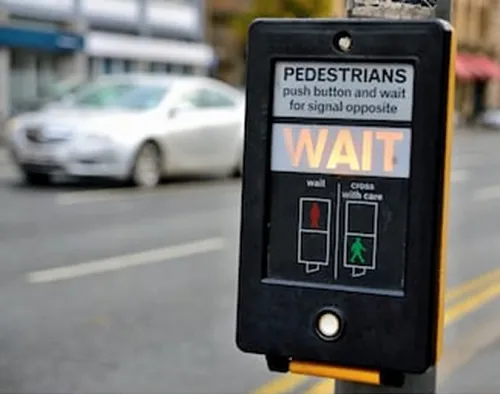
The COVID-19 pandemic (caused by SARS-CoV-2) has disrupted lives around the world more than any other catastrophic event in living memory. Those of us fortunate enough to work from home are cheering on the people who care for our health, transport our packages, work in grocery stores and pharmacies, clean public streets and buildings, and keep utilities up and running — as well as everyone else on the front lines of battling this pandemic. Working from home also gives us time to reflect and ask: How does the world return to normal and how can we help?Crises like the COVID-19 pandemic accelerate social and technology trends because the need for new solutions grows urgent. Looking at epidemiological models can reduce complex disease progression to a series of simple numbers, the most important of which is R nought (R0) value. R0 is simply how many other people a sick person infects. If each sick person infects less than one person, R0 1, the spread of disease will end. But if each sick person infects more than one other person, the disease spreads and may become a pandemic. According to the journal Emerging Infections Diseases, SARS-CoV-2 has an R0 of 5.7, making it far more infectious than the influenza pandemic of 1918.Given the severity of the current pandemic, society has taken huge efforts to reduce R0: mask-wearing, social distancing, avoiding face touching, frequent handwashing and quarantines are all ways to reduce R0.Scientists and engineers are working hard to develop new solutions and evaluate existing technologies that could have a big impact on R0. One of these is the mass deployment of touchless technologies. We’re now aware that every time we touch a surface, we potentially spread disease. I have personally started using touchless Apple Pay at retail checkouts whenever possible and even seek out and remember which stores have enabled Apple Pay. Each time I need to touch an elevator button, security keypad or walk signal button at an intersection, I contort my arms to touch them with an elbow.Since I’m in the electronics industry, I find myself considering which devices have the greatest potential for reducing the number of touchpoints in our daily lives. Motion and ultrasound sensors are definitely promising, but the mainstream adoption of the voice interface makes it the most interesting and scalable touchless technology.New voice technologies are more reliable and secure than ever. The success of cloud-based voice assistants such as Amazon Alexa, Apple Siri and Ok Google has familiarized consumers with the ease and convenience of voice, but these high-powered AI assistants generally require high power and a reliable internet connection. The next wave of voice technology will be much lower in power, fast, private and require no internet connection. This edge-powered voice interface will not play music or tell you the weather, but it will perform many other useful and simple functions, such as operating an elevator, opening a door or changing the volume on your TV. One great example of this local voice command is the Simple Human trash can that can open and close in response to your voice. Opening and closing a garbage may be simple, but a voice-activated model enhances convenience and safety with total privacy.The requirements for deploying voice technology to support more touchless applications include: Low power — to run for months or years between battery changes Robust and reliable— to last over a decade indoors or out Locally processed data — to ensure security and privacy without an internet connection Consumer adoption of touchless and voice technologies has been growing for years, but the COVID-19 crisis highlights the critical benefit of these technologies in reducing the spread of disease. Making high touchpoints voice-powered would eliminate a disease vector and reduce R0 during pandemics as well as during normal cold and flu seasons. Any technology that helps reduce R0 should be deployed as quickly as possible to give us one more way to thwart the virus that is changing life as we know it.As the only supplier of piezoelectric MEMS microphones – which are natively immune to environmental contaminants such as water, humidity, salt, dust, dirt and oil — Vesper is uniquely able to provide outdoor-hardened microphones that are durable enough to support voice-interfaces in hot, wet, dusty or dirty conditions. In fact, we’ve earned the highest waterproof rating for any MEMS microphone – IP57 – which makes me hope that one day soon I’ll use just my voice to tell a crosswalk signal that I need to cross the street.Vesper has also developed a proprietary technology called ZeroPower Listening, which makes it possible to embed always-listening voice interfaces in battery-powered devices with battery life measured in months or years. And that’s just the beginning of how we’ll use voice interfaces in high-touch applications. From voice-controlled parking kiosks and elevator buttons to the treadmill at the gym, the less we touch hard surfaces, the safer we’ll be from picking up SARS-CoV-2, influenza viruses or other pathogens as we go about our daily lives.Learn how Vesper’s low-power and rugged MEMS microphone technology can help designers create seamless voice interfaces for a wide range of indoor and outdoor applications at Smart Home, Smart Office, IoT and Automotive/Industrial.Matt Crowley is CEO of Vesper Technologies, developer of the world’s first piezoelectric MEMS microphone. With five rapid product rollouts in just five years and tens of millions of units shipping to tier one clients across the globe, Matt has grown Vesper from a research-oriented startup to a bonafide commercial business.Under his leadership, Vesper has earned an impressive collection of awards including a 2019 Best of Sensors Award, Innovation Award nods at CES 2018 and 2019, and two Annual Creativity in Electronics (ACE) Awards.Before Vesper, Matt held leadership positions at piezoelectric MEMS pioneer Sand 9, the Boston University Office of Technology Development, and Mars Co strategy consulting, where he advised Fortune 500 companies on operational and strategic issues.Matt received an interdisciplinary degree in Physics and the Philosophy of Science from Princeton University. He is proficient in Japanese, having lived in Japan.Vesper is a member of MEMS Sensors Industry Group (MSIG), a SEMI technology community, that enables the MEMS and sensor industry to address common challenges, innovate and accelerate business results.

Read More