downloadGroupGroupnoun_press release_995423_000000 copyGroupnoun_Feed_96767_000000Group 19noun_pictures_1817522_000000Member company iconResource item iconStore item iconGroup 19Group 19noun_Photo_2085192_000000 Copynoun_presentation_2096081_000000Group 19Group Copy 7noun_webinar_692730_000000Path
Skip to main content
Default Banner Image

HP

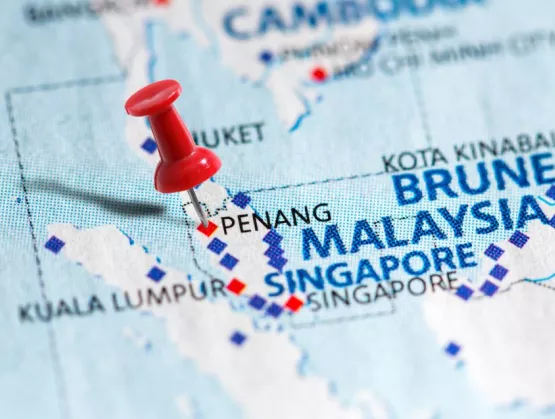
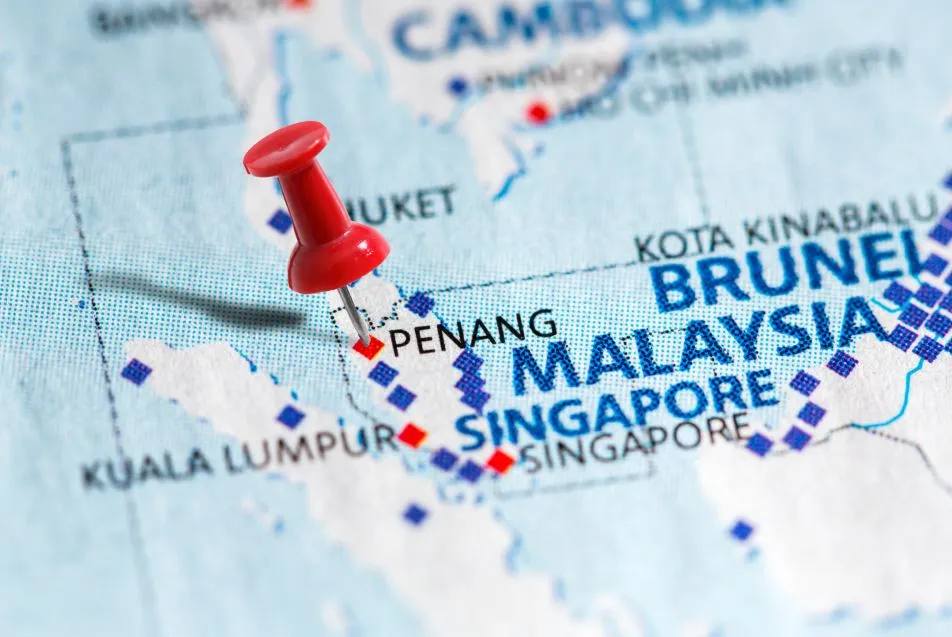
The state of Penang, nestled along the northwest coast of Peninsular Malaysia, needs no introduction in the global electronics manufacturing sector. Despite its diminutive stature with just over 1,000 square kilometers of land area and a 1.8 million-strong population, Penang commanded an estimated 5% of global semiconductor exports in 2019, according to data compiled from the Department of Statistics Malaysia (DOSM) and UN Comtrade. The State’s transformation, from a traditional seaport economy into the Silicon Valley of the East, began in the 1970s, when the establishment of Malaysia’s first free trade zone in the State drew key investments from eight Multinational Corporations (MNCs). These pioneering investors – Intel Corporation, Hewlett Packard (now Keysight Technologies and Agilent Technologies), Robert Bosch, AMD, Litronix (now Osram Opto Semiconductors), Hitachi (now Renesas), Clarion and National Semiconductor[1] – sparked the development of a robust ecosystem of ancillary industries, which formed a foundation for the State’s rise as a prominent, offsite manufacturing hub. Today, Penang houses more than 350 MNCs that are supported by over 3,000 manufacturing-related SMEs. As Penang flourished as a vibrant, regional E E manufacturing hub, the local talent pool steadily accumulated a wealth of business intelligence and technical experience, enabling the robust supply chain to evolve in tandem with technology megatrends. This, in turn, enabled the State to focus on pursuing investments that have propelled the industry up the value chain, away from its beginnings as a low-cost manufacturing hub. Consequently, Penang has seen a proliferation of upstream technology-related investments in high value-added functions in recent years, ranging from research and development (R D), design and knowledge-based solutions, and downstream advanced manufacturing and testing to global business service (GBS) and Centre of Excellence (CoE) activities. Penang’s growing significance in the global E E value chain is demonstrated by its steady and resilient export performance in recent years. From 2014 to 2019, the State’s E E exports grew at a compounded annual rate (CAGR) of 12% to reach RM210 billion (US$51 billion). It has emerged as a hub for professional, scientific and controlling instruments (including medical technology), with exports of these products growing at a 5-year CAGR of 15% to reach RM23 billion (US$6 billion) in 2019. E E products, alongside professional, scientific and controlling instruments, collectively contributed between 77% and 82% of Penang’s total annual exports since 2014, and accounted for 50% of Malaysia’s exports in these two segments during the period. More impressively, despite the disruptions from the COVID-19 pandemic, Penang’s total exports continued to rise in 2020, growing 7% year-on-year to RM310 billion (US$75 billion), and a further 14% year-on-year in January and February 2021, driven by strong global demand for semiconductors. Shaping up as the destination of choice for advanced manufacturing investments As part of efforts to move Penang’s industry up the value chain, the State government has placed emphasis on attracting companies with strong commitments in implementing Industry 4.0 and sustainable investing. These efforts have yielded positive results, with the state having gained traction as a hub for advanced manufacturing investments. This is evidenced by the rising trend in investments per new job creation, which saw a six-fold jump from 2012 to 2020, as well as the number of global heavyweights announcing new investments as well as expansions of existing facilities in the State in 2019 and 2020. Penang attracted RM31 billion (US$7.5 billion) in approved direct manufacturing investment inflows in 2019 and 2020, 88% of which involved investments into the E E, equipment and medical technology industries. Prominent new investments included those from Lam Research, Bosch Group, Ultra Clean Holdings, Dexcom as well as Smith+Nephew. Together with planned expansions by a number of existing MNCs in Penang, these new investments, which are on track to commence operations between 2021 and 2023, are poised to bring Penang’s industry to greater heights and further integrate the State into the global value chain. Recent Notable Direct Manufacturing Investments in Penang Source: InvestPenang and respective companies Penang’s conducive business environment nurtures successful homegrown technology companies Penang’s conducive business environment has not only proven successful in attracting foreign direct investments (FDIs), but also successfully nurtured local E E success stories of locally employed engineers turned technopreneurs, who have founded and built companies that have successfully grown to become internationally renowned in their own right. These homegrown E E companies play crucial roles in the ecosystem, particularly in the areas of automated test equipment (ATE), automation, outsourced semiconductor assembly and testing (OSAT) services, electronics manufacturing services (EMS), precision engineering and tooling. The past five years have also seen the emergence of young, fast-growing Penang-based companies such as Experior, Oppstar Technology and Skyechip, which provide IC design and IC test design services to MNC clients globally. Public-private partnerships cultivate Penang’s talent development roadmap The state is cognisant that the development of a robust and skilled talent pool is imperative to support the growth of strategic industries in Penang. Strong public-private partnerships with concerted efforts in supporting talent development are key to Penang’s continued success. Toward this end, the State government has backed Penang Skills Development Centre’s (PSDC) industry-led training and education efforts, which have helped train over 200,000 of workers to support the industry’s needs since 1989. The State has also coordinated collaboration for industries to provide input to local institutions of higher learning on the relevance of the institutions’ courses, and rallied the industry to support State-run scholarships (Penang Future Foundation) and STEM initiatives. Holistic initiatives to make Penang a world-class investment destination for global frontier companies The dynamics of the global value chain, especially for the technology sector, have evolved rapidly since 2018, particularly amid the complex confluence of trade protectionism, COVID-19 pandemic-driven issues and disruptive technologies. The State government believes that strong, geographically localised industry clusters could help companies mitigate the risks of supply chain disruptions, in addition to improving companies’ time-to-market at a lower cost. To further increase Penang’s attractiveness for high quality investments, the State is focusing on three key strategies: Extending its competitive edge in advanced manufacturing, further strengthening Penang’s industry clusters, which include expediting SMEs’ Industry 4.0 transformation journey, and nurturing more homegrown companies to penetrate the global supply chain Embarking on a continuous drive to develop and recruit talent to the State, as well as cultivate the younger generation’s interest in STEM Enhancing Penang’s liveability with a strong focus on making Penang a smart and green city The State government is committed to continue developing Penang in a holistic manner, with the aim of creating a vibrant business and investment destination with a robust and sustainable economy and high standard of living, creating a conducive environment to “work, live, learn, play and invest.” About InvestPenang InvestPenang is the Penang State Government’s principal agency for promotion of investment. Its objectives are to develop and sustain Penang’s economy by enhancing and continuously supporting business activities in the State through foreign and local investments, including spawning viable new growth centres. To realize its objectives, InvestPenang also runs initiatives like the SMART Penang Centre (providing assistance to SMEs), Penang CAT Centre (for talent attraction and retention) and i4.0 seed fund (a catalyst for the start-up ecosystem). For more information, contact [email protected]. InvestPenang also works closely with various industry associations, including SEMI, to promote Penang’s supply chain and E E ecosystem. InvestPenang is delighted to have collaborated with SEMI on numerous occasions since 2015 and endeavours to sustain the partnership in the years to come, including for the SEMICON SEA 2022 exposition to be held in Penang. [1] No longer present in Penang following a corporate M A exercise.
Read More
The state of manufacturing is changing rapidly. Regardless of sector or location, manufacturing decision-makers across the world are signaling a desire for better supply chain resiliency, manufacturing flexibility, increased speed of innovation and stronger environmental sustainability. Singapore’s manufacturing sector, a significant contributor to its gross domestic product, is always evolving and today is shifting away from its traditional focus on producing highly customized products using flexible manufacturing processes, but at significantly lower efficiencies. Today, with Industry 4.0, we can design manufacturing systems that optimize both efficiency and flexibility. And this is possible because of the convergence of technologies such as artificial intelligence (AI), data analytics, robotics and the Industrial Internet of Things (IIoT). This blend of technologies helps reduce the cost of technological solution ownership – a derivative of Right’s Law – as a function of cumulative production. In HP Singapore, driving innovation in our product and processes is part of our DNA, and over time our products have grown in complexity and breadth. We have embraced Fourth Industrial Revolution (4IR) technologies in our advanced manufacturing lines. We started our Industry 4.0 journey in 2016 with Vision and Mission 2020 to modernize our production facilities to smart factories that strengthen our competitive edge. Our focus was on upskilling our employees with future skill sets, build new technological capabilities and partner with higher education institutes. To drive these transformations, we have formulated five pillars: Additive Manufacturing Data Analytics Cyber-Physical Integration Digitalization Workforce Transformation These five pillars have enabled us to move from labor-intensive and reactive processes to processes that are highly digitized, automated, and AI-driven, enabling us not only to increase quality and productivity but also to reskill our people in anticipation of jobs they will need in the future. Technicians have been upskilled and promoted to techno-operators which has, in turn, freed up technical specialists to explore other roles. Engineers have retrained as data scientists, or have moved to new product development, for instance. In 2017, HP’s Ink Supplies Operations (ISO) set up Smart Manufacturing Applications and Research Centre (SMARC) to adopt 4IR technologies and implement these innovations in production lines. Today, SMARC is the home ground for HP engineers to experience, trial and prototype solutions, bringing innovative and sometimes unexpected solutions to manufacturing. It is also a showcase for industry partners, government agencies and schools. Here is how each pillar of the SMARC contributed to transformation to augment the manufacturing workforce: Cyber-Physical Integration – Move Role of robotics/automation – By standardizing automation standards for robotics, we have deployed collaborative robots (Cobots) and autonomous intelligent vehicles (AIVs) to perform manual and routine tasks to drive productivity, while reducing errors from operator fatigue and protecting our operators’ physical well-being. Digitalization – Sense Role of IIoT – Devices are a treasure trove of data that can provide clarity on how the entire manufacturing line is performing in real time. Building a platform that connects devices and collects data while allowing factory floor managers to dynamically visualize on an Integrated Command Centre (ICC) and manage factory performance is central to HP’s digital transformation journey. And IIoT is not restricted to just devices that are already wired for data sharing. HP has also connected off-the-shelf analogue devices using a standardized data transportation protocol, allowing HP to collect essential data across all types of devices and eliminating manual data entry. Additive Manufacturing – Build By embracing additive manufacturing (use of HP MultiJet Fusion 3D printers), HP introduced more flexibility in operations through on-site rapid prototyping, light production, and replacement of parts needed on our manufacturing floors, shortening production timelines. We 3D printed pallets, which are cheaper and faster to produce, and replaced original pallets for transportation on conveyor belts, improving the efficiency and productivity of our operators. Director Jamie Neo with HP’s MultiJet Additive Manufacturing Printer. (Photo Credit: HP) The HP Multi Jet Fusion 3D printing technology has helped HP to replace traditional manufacturing methods and streamline processes in our supply chain. For example, HP is 3D printing the Drill Extraction Shoe, a tool that is essential to the removal of waste products from laser-drilling in HP’s printhead manufacturing line. Through 3D printing, HP has consolidated the production of the tool from nine parts to one 3D printed model, thereby optimizing the design of the tool and reducing its production time from three to five days to 24 hours. Data Analytics – Think By deploying advanced analytics and machine learning models, HP has enabled real-time detection, diagnostics, and prediction of product quality across our manufacturing lines. Predictive models are replacing traditional “destructive testing,” reducing waste and allowing HP to meet unique product specifications more accurately. Machine learning is diagnosing and recommending the right set up for tools and manufacturing lines, when necessary, to reduce downtime and increase precision. Workforce Transformation – Grow The pivot to becoming an advanced manufacturing leader not only requires HP to invest in 4IR technologies but also skill sets to operate 4IR technologies. We embarked on a Workforce Transformation program to help our employees stay competitive in a fast-changing world. Today 35% of HP technical workforce have had the opportunity to take on new roles even as needs evolve, thanks to internal and external training and reskilling. Beyond technology and training, the glue that binds these together and makes it successful is our culture at HP. We are ambition-led, which means that we do not see the world as it is, but what we can be. And we do so by collaboration. Plans for the Future After accomplishing our Mission 2020, in late 2020 we launched Mission 2025 to extend our end-to-end smart factory capabilities through advanced connectivity, intelligence and automation to optimize and drive sustainable manufacturing flexibility and efficiency. Pyramid of HP’s smart manufacturing focus Advanced technologies such as additive manufacturing, IIoT, automation and robotics, data analytics, machine learning and AI are central to the connectivity and the end-to-end intelligence of our smart factories, enhancing production efficiency and flexibility while improving the quality of our products. For example, the deployment of IIoT sensors in our wafer plant has helped to reduce downtime in replacing CO2 gas cylinders. What’s more, AI enables us to more accurately monitor the dispensing of structural adhesive to eliminate lost yield. We believe that by enhancing manufacturing efficiency and flexibility, we were able to shorten resolution time, reduce our carbon footprint, and improve the resiliency of our manufacturing and supply chain systems. HP smart factory model In April 2021, two lines in HP Singapore joined the World Economic Forum’s Global Lighthouse Network after being recognized for pivoting from a labor-intensive factory into a digitized, automated one with the help of AI. In doing so, we managed to improve manufacturing costs by 20% and productivity by 70%. Under Mission 2020, we saw the following successes: Improved manufacturing costs by 20% Improved productivity by 70% Brought most HP employees onboard to our smart manufacturing journey Equipped HP employees with skill sets in areas such as additive manufacturing, data analytics, AI, robotics and Internet of Things Established a Model Factory playbook With Mission 2025, we will: Continue to train employees in future skillsets by partnering with institutes of higher learning Scale our Model Factory playbook across more manufacturing lines to reduce costs and improve productivity Enhance our knowledge in additive manufacturing by building an ecosystem as a service platform to help manufacturing companies Enable a sustainable manufacturing system to reduce our carbon footprint and help enable a circular economy We believe in innovating with purpose by focusing on solving real-world problems and creating technology in the service of humanity. That is why we built the SMARC to create the solutions for our lines and showcase these solutions to encourage industry participation. We are driven by values and ambition, which means that it is not just what we do, but also how we execute it. We make sure our values inform everything we do – for instance, helping us make a greater impact to environmental sustainability, people, and our community. We believe this is a crucial step in coalescing industry support, which is necessary to move the needle on advanced manufacturing. Robert Ronald is Master Program Manager, Cost Structure, Model Smart Factory and Sustainability, at HP.
Read More
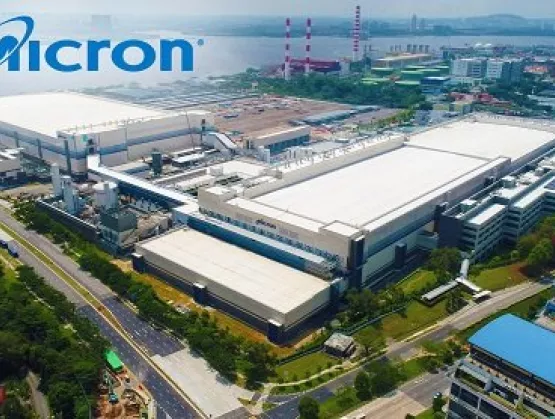
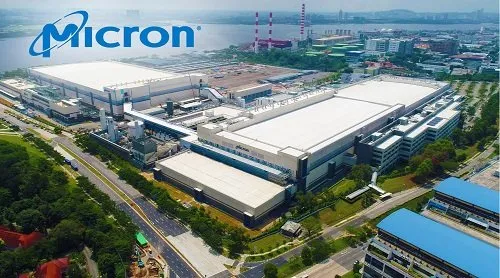
Making Strides TogetherKnowledge is power – especially when it is shared. This principle formed the foundation for Micron’s Go and See virtual visit of its Singapore manufacturing plant on 26 August 2020 as 27 companies including GLOBALFOUNDRIES, ST Microelectronics, Infineon, TEL, ViTrox , IBM, HP and UTAC joined the first-of-a-kind virtual factory visit. The chip industry powerhouses gathered to see how Micron’s Lighthouse frontend wafer fabrication facility leverages Fourth Industrial Revolution technologies to drive new production and cost efficiencies.They saw clear markers of a transformed organisation and spoke with working-level staff, managers and front-line employees. Company representatives also met virtually with Micron management teams from organisations that led its digital transformation – from pilot programs to integration at scale – to realise significant financial and operational benefits. The mix of technologies they deployed to make it all happen included artificial intelligence (AI), big data analytics and the Industrial Internet-of-Things (IIoT).Micron’s Singapore-based fab facility earned Lighthouse certification earlier this year from the World Economic Forum’s Global Lighthouse Network. The Go and See tour was co-sponsored by SEMI Southeast Asia and McKinsey Company.Transformation is CrucialBy embracing Lighthouse principles, semiconductor sectors and companies can accelerate their digital transformation to boost operational and financial efficiency while helping increase productivity across the electronics supply chain. It will take time for Southeast Asia semiconductor manufacturers to transform to digital operations, though we’re seeing growing interest in Industry 4.0 practices as they begin to understand that the deployment of new technologies and applications will help them better understand real-world benefits of smart manufacturing use cases and solutions. SEMI believes shining the spotlight on companies like Micron can illuminate the way forward for other companies to help drive the industry’s digital transformation. We look forward to seeing companies build on this momentum as they start to leverage leading-edge technologies to improve efficiencies and promote sustainability.Bee Bee Ng is president of SEMI Southeast Asia.
Read More