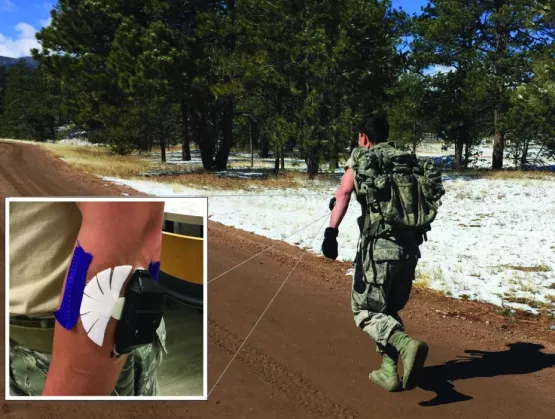
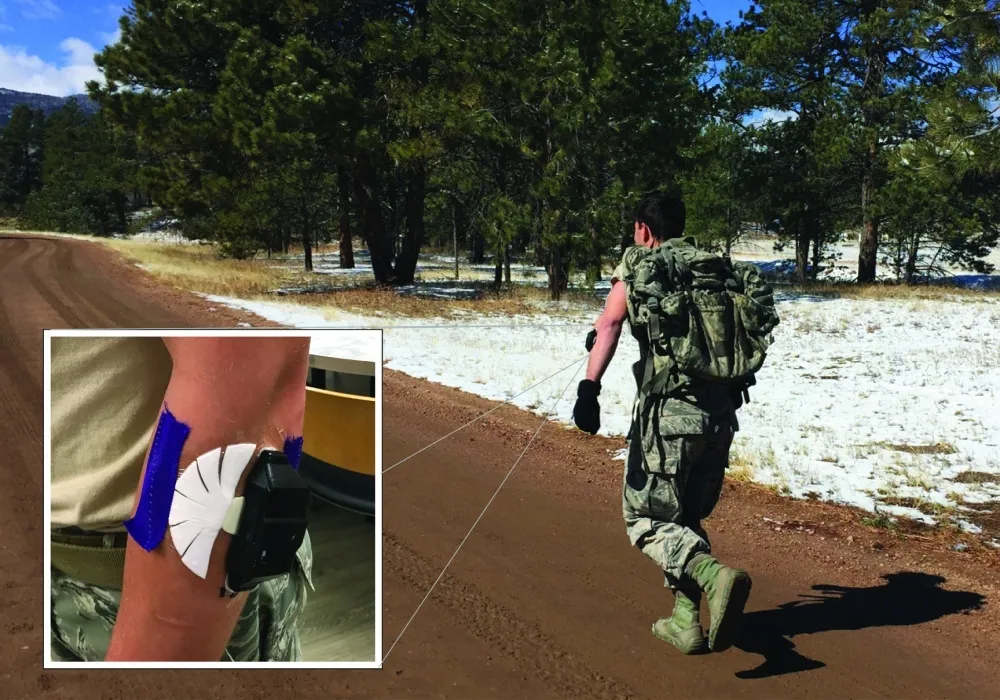
If you bought a new car recently, you must have noticed that it warns you if one of its functions needs your attention. It even alerts the factory if repairs or major adjustments are needed. Wouldn’t it be nice to have similar capabilities for our bodies that will call for a “service” before we end up in an emergency room – or worse? The United States invests almost 18 percent of its Gross Domestic Product (GDP) in healthcare. Such a significant part of our economy deserves our industry’s attention – and it gets it. SEMI’s recent Smart MedTech webinar series tells not only patients and healthcare providers how electronic products can impact their lives, but also offers device makers plenty of ideas for developing new solutions.SEMI Gets SmartIn addition to working on many important topics with more than 2,200 member companies across the semiconductor supply chain, SEMI focuses on special areas: Smart Mobility (as covered here), Smart MedTech (covered below), Smart Manufacturing, and Smart Data. Smart MedTech was the topic of four recent webinars, organized by Melissa Grupen-Shemansky, executive director Nano-Bio Materials Consortium (NBMC), and Chief Technology Officer, SEMI. NBMC’s mission is to enable flexible, wearable human performance monitoring. In her introduction, she emphasized that healthcare will shift from today’s provider-centric approach to a personalized care model, with the following characteristics: Outcome-based Decentralized, not limited to geographies Specific to your personal health and medical needs With a team of providers, connected like never before To achieve all these characteristics, microelectronics will be an essential contributor. That is why SEMI and member companies are working on platforms to fund and commercialize R D as well as to educate potential users and beneficiaries. Grupen-Shemansky engaged a series of experts and organized four webinars to address this broad and complex field, and outline their contributions to meeting the above criteria. They have been recorded and are available to SEMI members. Call your SEMI contacts to find out where and how you can access slides and recordings of more than a dozen presentations.From Biomarkers to BioChemical Sensors Physiological RelevancyTo monitor a human body’s performance, researchers have to first understand which biomarkers indicate specific conditions of the body, then learn how to capture and process the data. Grupen-Shemansky moderated this August 5th session. Christina Davis from UC Davis, Jennifer Martin, and Sean Harshman from the Air Force Research Lab (AFRL), and Kenneth Ward from Pacific Diabetes Technologies presented their ongoing efforts in this field.Davis talked about the challenges of analyzing exhaled breath, which contains 99% water and 1% biomarkers. She showed a hand-held analyzer her team has developed (Figure 1). She also elaborated on how to interpret the captured data and, if needed, decide which follow-up treatments are advised.Figure 1: Palm-sized µCON exhaled breath micro-condenser used to analyze biomarkers. (Courtesy: UC Davis) AFRL’s Martin and Harshman outlined how ongoing and future minimally invasive techniques are being used to monitor airmen, and give them advice for self-treatment to maximize their performance. The Pacific Diabetes Technologies speaker, Ward, showed how to use minimally invasive, subcutaneous (=under the skin) oxygen sensors to detect hemorrhage (= blood loss) and control it.En Route Care (ERC) and Point of Care (POC) DiagnosticsTreating injuries right away and correctly shortens not only a patient’s suffering, but also improves his or her chances for a full recovery. AFRL’s Matthew Dalton moderated this August 12th session. Derek M. Sorensen from AFRL, Zheng Yan from the University of Missouri-Columbia, Melinda Eaton from the Virtual Health Program Management Office at the U.S. Department of Defense (DoD), and Azar Alizadeh from General Electric (GE) Research outlined their contributions to achieving instant and professional care.AFRL’s Sorensen described the many challenges a Critical Care Air Transport Team (CCATT) deals with when performing their work inside a noisy, dark, hot, or cold, shaking airplane, discussed their equipment and personnel constraints, and explained how difficult it is, even for experienced doctors, to perform emergency surgeries under these conditions.Professor Yan takes low cost very seriously and demonstrated how he and his students have developed on-skin wearable sensors that can be manufactured by using only pencil and paper.Eaton outlined the DoD’s strategy for assuring its medical force is ready to support soldiers. Then she discussed a broad range of the DoD’s traditional health management responsibilities and added that Covid-19 is now an important factor.Alizadeh addressed how GE microelectronic solutions improve the efficiency of care, reduce medical errors and length of hospital stays as well as improve workflows of caregivers. In addition to GE’s well-known, large/stationary medical equipment and communications infrastructure (Figure 2), Alizadeh showed that GE is also providing skin patches and other wearable sensors to capture data.Figure 2: The Future of Monitoring: In 2017, Mercy Hospital served 800,000 patients with telemedicine including those with chronic diseases. Patient:doctor ratio: US average 300:1. Mercy = 1100:1. (Courtesy: GE) Human Wearables Enabling Rapid Decision Making in the Integrated Care ContinuumAs Figure 2 above shows, microelectronic equipment can improve patient care and efficiency of medical personnel, but only if sufficient data can be captured timely and accurately – increasing the importance of wearables. AFRL’s Jeremy Ward moderated this August 17th session. Christopher Scully from the U.S. Food and Drug Administration (FDA), Ashleigh Coker from the AFRL’s Sensors Directorate, Ted Harmer from the AFRL’s Airman Systems Directorate, and AFRL’s Regina Shia presented for Oxana Pantchenko from NextFlex how they develop wearables jointly. Scully introduced the FDA’s organization and its responsibilities, described the high-value accurate data can provide, warned about the damage false alarms and equipment failures can cause, and explained the regulatory role the FDA plays in this context.AFRL’s Coker highlighted the essential role sensors play in modern warfare with several examples, described her directorate’s operations and showed their warfighter-centric design process (Figure 3).Figure 3: Warfighter-centric design process steps and the need to engage multiple heads/perspectives in this process. (Courtesy of AFRL) AFRL’s Harmer addressed the importance of good communications architecture and protocols to capture and compute data to assure efficient cooperation between land/air/sea/space-based forces.NextFlex’ Pantchenko prepared a presentation about standards-compliant wearable electroencephalography (EEG), electromyography (EMG), and electrooculography (EOG) devices, jointly developed with AFRL and several other companies. It was delivered by AFRL’s Regina Shia.Automation, Augmentation and AINatalie Wisniewski, Founder of Profusa, Inc. a and consultant in Wearables and Digital Health, moderated the fourth webinar, held on August 26. She emphasized SEMI’s role in this context, then introduced the speakers: Michael Kirby from Colorado State University, Kevin Zhao from Harmonize Health, Mary Clare McCorry from armi/biofab USA, and Andreas Caduff from ETH Zuerich.Professor Kirby outlined several mathematical principles that need to be applied to get meaningful results when analyzing data. He emphasized that genetic factors influence if an individual is susceptible, tolerant, or even resistant to certain pathogens and warned that bacteria can develop resistance to today’s antibiotics.Zhao from Harmonize talked about the importance of predictive analytics in remote care, how to filter out false alarms, and how to deliver the best available care cost-effectively. In closing, he emphasized that computers and algorithms are not replacing clinical staff.McCorry outlined how biofab USA, a program of armi, uses sensors and automation to grow replacement tissue and organs (Figure 4). She explained how they use engineering principles and life sciences to make guide cells grow into replacement tissue. The company’s plan is to expand the currently lab-based capabilities into an industrial scale tissue foundry.Figure 4: Growing ear cartilage in the lab. (Courtesy: armi/biolab USA) SummaryMcCorry summarized her presentation, and actually the entire webinar series, with these statements: The human body is a 3D, highly complex, dynamic, and multi-faceted biological construct Skin lends itself well as an interface between body and wearable sensors Connecting physiology (e.g. vital signs), behavior, and external factors is important for getting good results Verification, validation, and FDA involvement are important for making methods and devices successful Sensors, communication computing (AI/ML) are complementing, not replacing, medical personnel Today’s methods and devices will be outperformed by tomorrow’s solutions – stay up to date Personal CommentsSummarizing eight hours of presentations in a few pages requires a very high and lossy compression factor – please understand. I suggest you call on your SEMI contact to get access to these previous and following webinar recordings. Excellent contacts across the electronics supply chain enable SEMI to win experts in many areas to convey valuable information in these webinars.I am impressed that the USA military, specifically the AFRL, invests so much effort in medical support for airmen/women. They demonstrate that only healthy and fit personnel can take full advantage of the sophisticated weapon systems at their disposal if/when they are called upon to deploy them.This Smart MedTech webinar series confirms what many medical experts told me during exams and/or before and after surgeries: The human body is a masterpiece of bioengineering. These webinars also reminded me of what I learned at a brain-health class at Stanford University: Our brains only need about 20 Watts to perform computing and memory tasks that fairly quickly approximate the results of today’s computers – a benchmark for computer architects and AI/ML experts.Republished with permission from 3D InCites.