downloadGroupGroupnoun_press release_995423_000000 copyGroupnoun_Feed_96767_000000Group 19noun_pictures_1817522_000000Member company iconResource item iconStore item iconGroup 19Group 19noun_Photo_2085192_000000 Copynoun_presentation_2096081_000000Group 19Group Copy 7noun_webinar_692730_000000Path
Skip to main content
Default Banner Image

Aspinity

SEMI spoke with Tom Doyle, founder and CEO of Aspinity, about the challenges of packing more localized intelligence into portable Internet of Things (IoT) devices without draining their batteries. Doyle shared his views on Aspinity’s system-level approach – solve the power problems by performing machine learning in analog – ahead of his presentation at the SEMI MEMS Imaging Sensors Technology Showcase, 18 February, as part of the SEMI Technology Unites Global Summit, 15-19 February 2021, online event. Join us to meet experts from Aspinity and other key industry influencers. Registration is open. SEMI: Why is power efficiency so important for IoT devices? Doyle: Hundreds of millions of IoT devices are improving our lives at home and at work. Always on and always sensing the environment for data, these smart devices have traditionally been wall-powered and have relied on the cloud for their data processing needs, but clogged networks, as well as privacy and performance issues, have necessitated the migration to edge processing.Spanning consumer, medical and industrial, these IoT devices are becoming smaller and more portable. And a portion of them is operating remotely in hard-to-access locations. So now we are packing more functionality into the device and we are moving to battery power and the batteries need to last a long time. That is a big challenge before us, and to answer it, we need to find the most power-efficient ways to integrate always-on sensing capability into IoT devices because we cannot afford to have short battery life limit market adoption.SEMI: Why is it so challenging to deliver low-power, always-on solutions and how can sensors suppliers achieve improvements in system power? Doyle: In today’s always-on IoT devices, all sensor data – which are naturally analog – is immediately digitized at high resolution, and then it’s analyzed to determine whether a wake word has been spoken, a specific motion has been made, or some other anomaly has occurred. But since most of the data collected will not contain the information for which the device is waiting, this digitize-first approach wastes significant battery life by continuously running irrelevant data through the ADC and the digital processor.Sensors suppliers have some options to consider for reducing power. If they are satisfied achieving incremental improvements in battery life, both sensors and digital processor suppliers can continue to drive down the power of each individual component in the system. But to achieve revolutionary power savings, we must look at a more holistic system solution.The fundamental problem is that moving data through a system costs power. That is why the most efficient way to save power is to reduce the amount of data down to what’s actually important as early as possible, right at the start of the signal chain, where the physical world becomes data. If we can minimize the amount of data that require downstream processing, then we can maximize battery life.SEMI: Aspinity aims to solve the battery-life problem in IoT devices by introducing a new system architecture. Could you explain how your approach differs from digitize-first?Doyle: Aspinity’s solution, called the Reconfigurable Analog Modular Processor (RAMP), is an analog processing technology that combines analog machine learning (analogML™) and analog compression to enable accurate, ultra-low-power analog event detection and system wake-up. RAMP technology enables a new system architecture, which we call analyze-first, that allows an always-on system to spend just a little bit of analog power up front at the sensor to determine whether sensed data are relevant to the task at hand before waking the digital system for further processing. The analyze-first architecture can extend battery life by months or years over digitize-first architectures because it keeps the higher-power digital components asleep unless important data require digitization and analysis, which in some applications – such as voice-first or acoustic event detection – may occur very rarely. Aspinity RAMP voice activity detection with preroll from Aspinity on Vimeo. SEMI: Can you give us an example?Doyle: Here is a practical example of how this works: For most voice-enabled systems, such as smart speakers, voice-activated TV remotes and hearables, voice is only present 10%-20% of the time – but the digitize-first architecture on which these devices are traditionally based is digitizing 100% of the sound data captured by the microphone, even when most of that data are irrelevant and could not possibly contain a wake word.In contrast, the RAMP-based analyze-first architecture is highly efficient since it uses feature extraction and a neural network to analyze the sound at the microphone, right where it enters the device, to determine if the sound contains voice before waking the digital wake word engine. Additionally, the accuracy of most wake word engines relies not just on waking up and analyzing the wake word, but also on analyzing the 500ms of sound prior to the wake word (preroll). To support wake word engine performance, the RAMP also continuously compresses 500ms of preroll that can be stored in just 2k of memory and delivered to the wake word engine along with the voice data. So, this new analyze-first approach using RAMP technology can extend battery life by 10 times over older digitize-first designs, without sacrificing performance and accuracy.SEMI: What solutions can Aspinity bring to address the current market needs? Doyle: Aspinity offers the only analogML chip for always-on IoT devices that run on battery: the RAMP chip.The RAMP is trainable and programmable to detect many different types of sensor events directly from the raw analog sensor data. One application that benefits from a RAMP chip are devices that are always-listening for voice, for glass break or alarms, or for some other type of sound. Other examples include vibration sensors that monitor industrial equipment for predictive and preventative maintenance, and heartrate sensors that are used to detect anomalies in wearables and other biomedical applications.Aspinity just recently introduced our voice-first evaluation kit – which we will be demonstrating during the Technology Showcase at Technology Unites – to enable our customers to get first-hand experience with our RAMP-based analog voice wake-up solution. With this complete hardware and software kit, customers can experience all of the benefits of analogML and analog data compression – 10x power savings without a reduction in wake word detection accuracy –for their next generation of voice-enabled devices.SEMI: How can technology unite us? What do you expect from your participation at SEMI Technology Unites Global Summit?Doyle: I think this past year has shown us that when time gets tough – and for many of us, the COVID-19 pandemic has been one of the most difficult challenges we have faced – that innovation is critical to solving major problems. The microelectronics industry has played an important role in providing critical components for COVID-19 testing, ventilators, air-purification systems, and other equipment used in healthcare settings. COVID-19 has also accelerated the move to voice as a preferred interface to many devices in an effort to stem the spread of germs on surfaces.The biotech industry is gearing up to provide the vaccines that we hope will restore more normalcy to our daily lives. We can thank the successful collaborations between R D innovators and established companies in many different markets for the new devices and drugs now going into production.With traditional in-person conferences still on hold until the pandemic eases up, attending industry conferences with exceptional speakers presenting interesting content is more important than ever. SEMI Technology Unites Global Summit provides that opportunity, and I’m genuinely looking forward to participating.Tom Doyle, Founder and CEO of Aspinity, brings over 30 years of experience in operational excellence and executive leadership in analog and mixed-signal semiconductor technology to Aspinity. Prior to Aspinity, Tom was group director of Cadence Design Systems’ analog and mixed-signal IC business unit, where he managed the deployment of the company’s technology to the world’s foremost semiconductor companies. Previously, Tom was founder and president of the analog/mixed-signal software firm, Paragon IC solutions, where he was responsible for all operational facets of the company including sales and marketing, global partners/distributors, and engineering teams in the US and Asia. Tom holds a B.S. in Electrical Engineering from West Virginia University and an MBA from California State University, Long Beach.Serena Brischetto is senior manager of Marketing and Communications at SEMI Europe.
Read More
The seemingly simple act of commanding consumer devices by voice is a choice that nearly 118 million Americans now make every day, according to a recent report from eMarketer, the digital marketing research firm.While the voice interface is convenient for users, its implementation comes at the potential loss of individual privacy. The reason? Always-on, always-connected voice-first devices such as Amazon Alexa and Google Home require a wall plug and an internet connection to powerful cloud processors, making it possible for cloud companies — however benignly — to collect data on personal habits, location and conversation that were never intended for sharing. Move processing to the edgeTo address concerns over user privacy, device designers are attempting to do more of the audio processing within the consumer device, rather than sending users’ voices into the cloud. Moving more processing to the edge is a trend across the Internet of Things (IoT) industry, and not just for voice data but for other types of sensitive or proprietary data as well.Yet designers have realized limited success because the conventional approach to always-listening edge processing is notoriously inefficient: It digitizes and processes 100% of incoming sound data even though up to 90% of the data is irrelevant noise. This digitize-first approach wastes vast amounts of system power digitizing and analyzing the audio signal as it searches for a wake word when there isn’t even speech present, making it impractical for use in small, battery-operated devices.Workarounds don’t workTackling this power issue is critical to keeping private data secure. Unfortunately, it’s also exceptionally difficult. Design engineers have tried workarounds to decrease power consumption in an always-listening system, including duty cycling and reducing the power of each individual component in the audio signal chain that handles the data. The reality is that these kinds of approaches don’t address the root cause of the problem: too much data.To truly tackle the problem, we need to change our approach to a system solution, not a component solution. By moving to a more efficient edge architecture that intelligently minimizes the amount of data that moves through the system, we can focus the system’s energy resources on analyzing voice and not on searching for a wake word in irrelevant noise. Analyze, THEN digitize It’s time to move away from the digitize-first approach that has dominated voice wake-up device architecture since the invention of voice-first applications.Inspired by the way the human brain efficiently filters incoming information, differentiating, for example, a dog bark from a baby’s cry, an ultra-low-power analog machine learning technology is changing this paradigm. For the first time, device designers can use low-power analog machine learning to detect which data are important for further processing and analysis prior to data digitization.Leveraging an analyze-first architecture, a new analog neuromorphic semiconductor platform allows the higher-power-processing components in the system to stay asleep until voice has actually been detected, and only then does it wake them to listen for a possible wake word.Delivering a post-microphone audio chain that draws as little as 25µA of current when always-listening and collecting preroll data, this analyze-first architecture allows designers to extend battery lifetime significantly. That’s the difference between smart earbuds that run for weeks instead of hours or a battery-powered smart speaker that runs for months instead of weeks.More importantly, it’s the difference between the current always-listening devices that indiscriminately record and send all sound data to the cloud, and one that has the localized intelligence to select and send only the relevant data, reducing the user’s vulnerability to the loss of private data.Balance convenience with privacyThe trade-off between making our lives easier and keeping our personal information private is a choice that we are asked to make throughout our day in a hundred different ways. Bringing more audio processing capability to the mobile device without draining the battery is the first step toward delivering more secure voice-first solutions. But to succeed in this effort, we must shift to a bio-inspired architecture that determines which data are important and requires further processing at the earliest point in the signal chain. Once we move to the analyze-first approach, only a small fraction of the tens of zettabytes of data collected by the forthcoming generation of always-on IoT devices will require further processing in the device and in the cloud.A better balance between cloud and edge processing is a better balance between convenience and privacy, and that’s a win for everyone.About the AuthorTom Doyle is CEO and founder of Aspinity. He brings over 30 years of experience in operational excellence and executive leadership in analog and mixed-signal semiconductor technology to Aspinity. Prior to Aspinity, Tom was group director of Cadence Design Systems’ analog and mixed-signal IC business unit, where he managed the deployment of the company’s technology to the world’s foremost semiconductor companies. Previously, Tom was founder and president of the analog/mixed-signal software firm, Paragon IC solutions, where he was responsible for all operational facets of the company including sales and marketing, global partners/distributors, and engineering teams in the US and Asia. Tom holds a B.S. in Electrical Engineering from West Virginia University and an MBA from California State University, Long Beach. For more information, please visit https://www.aspinity.com/Technology.Aspinity is a member of MEMS Sensors Industry Group (MSIG), a SEMI technology community, that enables the MEMS and sensor industry to address common challenges, innovate and accelerate business results.
Read More
Part 2 of 2-part series on MSEC 2019 highlights. Read Part 1. Neural Networks on ChipTo be sure, low power is king when bringing machine learning to the sensor edge. Battery-powered, always-on sensing devices require it since frequent recharging is the death knell of any electronic product. That’s why semiconductor companies are offering new ways to conserve power.“MEMS sensor suppliers have made significant strides in the power, size and performance of their devices,” said Aspinity CEO Tom Doyle. “Yet these gains deliver only incremental power improvements to the system.”Doyle advocates a new architectural model that uses an analog neuromorphic processor to analyze all sensor data at the start of the signal chain instead of sending it downstream so power-hungry chips such as DSPs can digitize it before analysis.“The technology industry wants to take advantage of the many benefits of always-on sensing applications,” said Doyle. “Before we can reach mass proliferation, however, we need to resolve the power issues that are deal-breakers for some applications. We believe the answer to this challenge is architectural. All the data gathered by always-on sensing systems is analog in nature, yet as soon as it’s captured, it’s digitized immediately for analysis. Determining which data is important up front eliminates the digitization and processing of irrelevant data so that voice-first devices such as smart speakers and wearables/hearables can run for long periods of time without requiring battery recharge.”Syntiant CTO Jeremy Holleman agreed that on-device intelligence is the future.“Did you just fall? Is your heartrate a bit off? Deep learning provides a toolset that yields vastly superior decisions,” said Holleman. “The problem is that deep learning is computationally intensive. The answer is a neural network that performs on-device edge inferencing.”Holleman added that Syntiant’s neural decision processor was recently certified as Amazon Voice Service (AVS)-compliant for wake-word detection, making it easier to design voice control in battery-powered devices such as earbuds and wearables.MSEC Technology Showcase WinnerWith the groundswell of interest in intelligence at the edge, it was no surprise that Cartesiam won top honors among all competitors in the MSEC Technology Showcase for its NanoEdge AI, software that brings AI to the edge of the signal chain, making it easier for designers to create intelligent objects that can learn and understand.“Unlike other AI algorithmic technologies for sensing devices, NanoEdge enables both learning and inference at the edge, providing accurate and adaptive intelligence,” said Cartesiam Managing Director and Co-founder Marc Dupaquier, who accepted the award. “It’s also the only tool of its kind that does not require data scientists on board for implementation, which saves a tremendous amount of money. Our clients can build a machine learning library and embed it into their own code within weeks to realize the same caliber of unsupervised neural network that was once the exclusive domain of AI cloud vendors.”MSIG 2019 Hall of FameAt this year’s conference, MSIG Director Carmelo Sansone recognized two longtime contributors to the commercialization of MEMS and sensors: Peter G. Hartwell, Ph.D., chief technology officer at InvenSense, a TDK group company; and Thomas Kenny, professor and senior associate dean of engineering at Stanford University.Hartwell leads technology strategy and the InvenSense advanced technology research group. He has more than 25 years’ experience commercializing silicon MEMS products, including advanced sensors and actuators, and developing MEMS testing techniques.Kenny’s academic accomplishments include authoring or co-authoring more than 250 scientific papers and holding 50 issued patents. He has also advised more than 50 graduated Ph.D. students from Stanford.MSEC 2020Mark your calendar for next year’s MSEC, October 12-14, at Coronado Island Marriott Resort Spa in Coronado, Calif. Get updates from MSIG on MSEC and other upcoming events including MSTC 2020.Stay in Touch with MSIGMEMS Sensors Industry Group (MSIG), a SEMI Strategic Association Partner, is the industry association representing the global MEMS and sensors supply chain. To learn how MSIG enables professionals in the MEMS and sensors industry to innovate, address common challenges and accelerate business results, visit us today.Connect with MSIG on Twitter and LinkedIn. Subscribe to SEMI Blog: Technology and Trends.Maria Vetrano is a public relations consultant at SEMI.
Read More
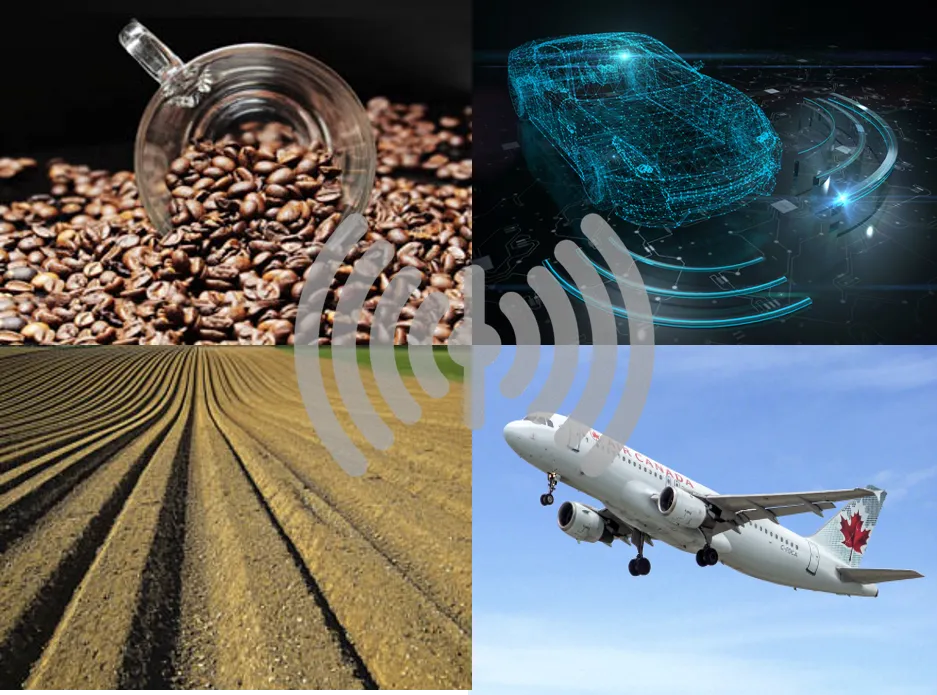
Part of 1 of 2-part series on MSEC 2019 highlights. Read Part 2. MEMS and sensors are proliferating across consumer, automotive, biomedical/healthcare, robotics, industrial and agriculture applications to harvest sensory data in a hyper-connected world and meet demand from consumers and organizations alike as they clamor for more intelligence in electronics.Take the ubiquitous iPhone. Shipped in 2007, Apple’s first iPhone sported five sensors. By contrast, the most feature-packed smartphones will embed up to 20 sensors by 2021, according to Yole Développement’s Jérôme Azémar. He estimates that the devices will feature four MEMS microphones, four CMOS image sensors (CIS), a RGB color sensor, a laser rangefinder, an infrared sensor, a gas sensor, a heart rate monitor and a fingerprint sensor, not to mention the MEMS inertial sensors that device users have come to know and trust.The MEMS market is expected to reach $18.5 billion in 2024 [1], up a whopping 60 percent from $11.6 billion in 2018, according to Azémar, who presented at MEMS Sensors Industry Group’s 15th annual MEMS Sensors Executive Congress (MSEC) in late October in Coronado, Calif. Add other types of sensors to the mix – CIS, environmental sensors, LiDARs, radars, ultrasonics, and fingerprint sensors – and the market will mushroom to $93 billion by 2024, said Azémar.Since MEMS Sensors Industry Group (MSIG) joined SEMI as a Strategic Association Partner three years ago, SEMI has expanded its MEMS and sensors programs to Europe and Asia while continuing to grow its U.S. conferences. “SEMI is continually investing in MEMS and sensors innovation across the supply chain,” said Dave Anderson, president of SEMI Americas and host of MSEC. “For example, MSIG is contributing to the development of the Heterogeneous Integration Roadmap, an initiative designed to drive heterogeneous integration technology development and accelerate electronics innovation. The roadmap spans device design, test and fabrication, ecosystem development, R D, equipment and materials. “At MSEC, executives and other speakers explored how AI and blockchain are remaking the food supply chain, air transportation and other sectors as MEMS and sensors improve the quality of our lives,” said Anderson.Sensing at the EdgeThe concept of artificial intelligence (AI), that a machine can harness intelligence that rivals or outperforms humans – and act without human intervention – has been a feature of the human imagination since at least the 1968 film 2001: A Space Odyssey. MEMS and sensors facilitate intelligence in a wide range of electronics such as smartphones, healthcare wearables, robots, industrial predictive maintenance systems, and cars. AI is sure to augment that functionality.MEMS and sensors are now in their third wave of evolution, a focus on edge AI, Bosch Sensortec CEO and General Manager Stefan Finkbeiner told MSEC attendees. For its part, Bosch is working to add AI to MEMS devices. The first wave integrated software with MEMS sensors, and the second, sensor fusion, enabled designers to allocate performance and power strategically to tune MEMS for resource-constrained devices. The third wave is “an active-learning phase in which MEMS facilitates real-time learning at the edge to promote greater personalization, environmental feedback, privacy of user data and improved battery life,” said Finkbeiner.Small sensor nodes with edge AI exemplify third-wave applications. Integrating low-power environmental sensors (e.g., gas, temperature, pressure, humidity and air-flow sensors), the nodes could be deployed in fire-prone forests to assess fire risk and support early detection. Access to this real-time environmental information could prove invaluable to residents and public-safety personnel alike.Google takes another tack, applying machine learning to resource-constrained devices, said Nick Kreeger, a senior software engineer at the Internet giant. The company’s Google Brain creates machine learning models that can run on inexpensive, low-power microcontrollers using Google’s TensorFlow Lite, an open-source machine learning tool that’s been deployed on a multitude of mobile devices. Inferencing is done at the device’s edge, rather than transmitted to the cloud.Meeting the power constraints of battery-powered sensing devices is another matter that starts with minimizing energy and data waste. “Deep learning is compute-bound and runs well on existing microcontrollers,” Kreeger said. “Because it’s all arithmetic, it’s low-power compared to storage access.”Already Google has worked with Plant Village, a research unit at Penn State University, and the International Institute of Tropical Agriculture (IITA) to help farmers improve food production by using machine learning and cheap sensors to spot and manage planet diseases in developing countries. And that production chain is in dire need of a boost, according to Rajendra Rao, general manager of IBM Food Trust, an enterprise-class blockchain solution.“We are on the cusp of complete failure of the food system,” Rao said. “One out of 10 people gets sick each year from foodborne illness, 420,000 die from this annually, 80 percent of companies in the food supply chain have not digitized, one-third of all fresh food in the US is thrown away, and one in five seafood samples worldwide is mislabeled.”IBM Food Trust’s work with Sucafina, which manages a global green coffee supply chain, shows how sensors can trace food from the farm to the processing plant to the consumer. With the IBM Food Trust platform, Sucafina can track the origin of the beans used in a cup of coffee – a competitive differentiator to coffee drinkers eager to support fair-trade coffee roasters.ripe.io, one of Forbes’ 25 most innovative AgTech startups, is also tackling the challenges and complexities of the food supply chain.“Our secure blockchain platform creates a digital twin of food items, transparently aggregating foods’ journey in real-time, to provide a harmonized trustworthy platform for multiple stakeholders,” said Rachel Gabato, the company’s COO. The ripe.io blockchain-based platform collects data from various sensors – temperature, pressure, light, humidity and inertial MEMS sensors. Growers, distributors and end customers including sweetgreen – a U.S. restaurant chain that depends on fresh produce – use the information to trace the origin and quality of food.MSEC 2020Mark your calendar for next year’s MSEC, October 12-14, at Coronado Island Marriott Resort Spa in Coronado, Calif. Get updates from MSIG on MSEC and other upcoming events including MSTC 2020.Stay in Touch with MSIGMEMS Sensors Industry Group (MSIG), a SEMI Strategic Association Partner, is the industry association representing the global MEMS and sensors supply chain. To learn how MSIG enables professionals in the MEMS and sensors industry to innovate, address common challenges and accelerate business results, visit us today.Connect with MSIG on Twitter and LinkedIn. Subscribe to SEMI Blog: Technology and Trends.[1] Source: Status of the MEMS Industry report, Yole Développement, 2019Maria Vetrano is a public relations consultant at SEMI.
Read More
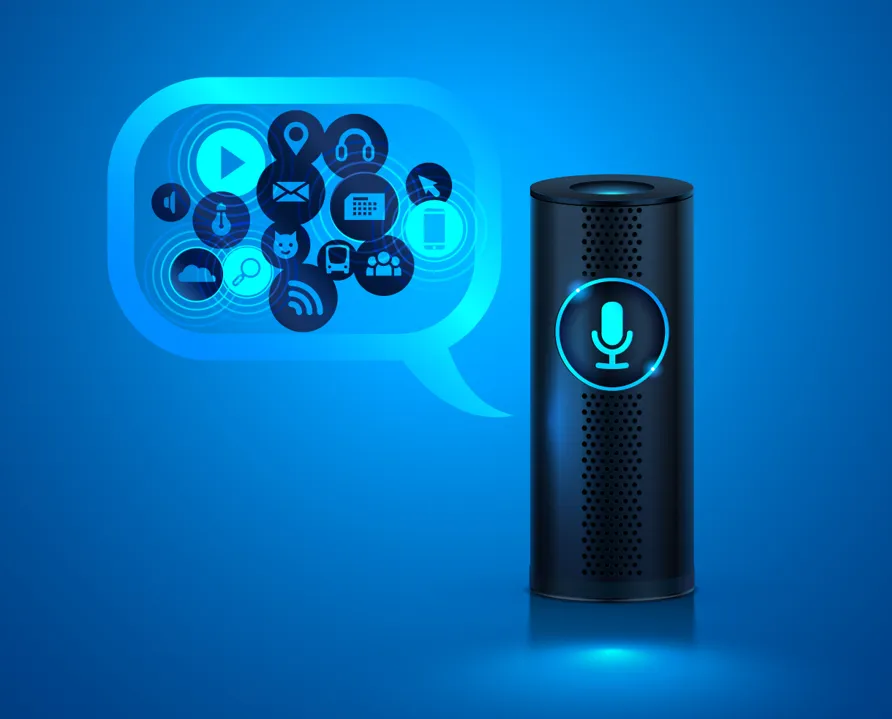
Every day it seems like a new portable voice-first device is coming to market. From smart speakers small enough to fit in your pocket to tiny wireless earbuds and voice-activated TV remote controls, we are using voice increasingly to play music, select TV shows, turn on the lights or interact with our smart thermostat. While the popularity of voice-first interfaces has spawned massive diversity in device type, as long as these devices are portable, they have one thing in common: They’re battery-powered, and that could be a problem for consumers who are tired of frequently recharging or replacing batteries. Change the Architecture, Reduce the PowerThe issue lies in the traditional hardware architectures of today’s voice-first devices, which are notoriously inefficient when it comes to power consumption. Such devices rely on a “digitize-first” model of processing voice data in which the heaviest power-consumers, like the analog-to-digital converter (ADC) and the digital signal processor (DSP), do all the heavy lifting up front, right at the start of the audio signal chain. They continuously digitize and analyze 100% of the ambient sound data as they search for a wake word, even if speech is not present and the only sound is noise. Because voice is spoken randomly and sporadically, that continuous digitization of sound wastes up to 90% of battery power.To tackle the battery drain in portable voice-first devices, we need look no further than the human brain. Our brain processes sound very efficiently. Imagine that you are outside your house having a conversation with your neighbor. You are able to focus on what your neighbor is saying because your brain can differentiate between sounds that it should send to the deeper brain for speech processing and sounds that it shouldn’t bother processing further (e.g., dog barks, sirens or car traffic). The brain spends minimal energy up front to decide whether it should spend additional energy on processing down the line. In other words, it saves the most power-intensive processing only for the important sounds.We can mimic the brain’s approach to signal processing by enabling a new “analyze-first” architecture for voice-first devices. This analyze-first approach requires ultra-low-power analog processing technology that can differentiate voice from noise before the sound data is digitized. This keeps the higher-power capabilities in a voice-first system, such as the wake-word engine, in a low-power mode when just noise is present. This approach only wakes up the higher-power chips in the system, e.g., the DSP or ADC, when it detects speech. Like our brain, a voice-first system uses an analyze-first architecture to conserve energy most of the time, saving the heavy lifting, i.e., the wake-word listening, for times when speech is present. The analyze-first architectural approach to always-on listening analyzes the analog microphone prior to digitization, saving considerable power in portable voice-first devices that run on battery. This architectural shift to analyze-first is well worth the investment because it reduces the system’s power consumption in a battery-powered voice-first device by up to 10x. That’s the difference between a portable smart speaker that runs for a month on battery instead of a week or smart earbuds that last for a whole day instead of a few hours on a single charge. Longer battery life in portable voice-first devices generates more good will among consumers, creating another key differentiator for manufacturers engaged in the ultra-competitive race for more users.For more information on the analyze-first architectural approach to voice-first devices, please view our video.Tom Doyle is CEO and founder of Aspinity. He brings over 30 years of experience in operational excellence and executive leadership in analog and mixed-signal semiconductor technology to Aspinity. Prior to Aspinity, Tom was group director of Cadence Design Systems’ analog and mixed-signal IC business unit, where he managed the deployment of the company’s technology to the world’s foremost semiconductor companies. Previously, Tom was founder and president of the analog/mixed-signal software firm, Paragon IC solutions, where he was responsible for all operational facets of the company including sales and marketing, global partners/distributors, and engineering teams in the US and Asia. Tom holds a B.S. in Electrical Engineering from West Virginia University and an MBA from California State University, Long Beach. For more information, visit www.aspinity.com. Aspinity is a member of SEMI-MEMS Sensors Industry Group, which connects the MEMS and sensors supply network, allowing members to address common industry challenges and explore new markets.
Read More