downloadGroupGroupnoun_press release_995423_000000 copyGroupnoun_Feed_96767_000000Group 19noun_pictures_1817522_000000Member company iconResource item iconStore item iconGroup 19Group 19noun_Photo_2085192_000000 Copynoun_presentation_2096081_000000Group 19Group Copy 7noun_webinar_692730_000000Path
Skip to main content
Default Banner Image

personalized medicine

SEMI spoke with Dr. Franz Laermer, Research Fellow (Senior Chief Expert) at Robert Bosch GmbH Stuttgart, Corporate Sector Research and Advance Engineering, about the latest trends in medical diagnostics and personalized treatments. An open platform for the automation of complex molecular diagnostics workflows recently developed by Robert Bosch has proven its ability to take molecular diagnostics to the point of need.To make this happen, miniaturization, microsystems and microfluidics technologies, as well as microelectronics, are crucial. This is critical for the detection of SARS-CoV-2 infections within a rather short development time.Laermer shared his views ahead of his presentation at the SEMI MedTech Forum, 19 February, as part of the SEMI Technology Unites Global Summit, 15-19 February 2021, online event. Join us to meet experts from Robert Bosch and other key industry influencers. Registration is open. SEMI: What is driving innovation in diagnostics and what role does the semiconductor industry play?Laermer: One of the major drivers in diagnostics is the molecular breakdown and detailed analysis of nucleic acids on the level of the individual nucleotide. This reveals the root causes of diseases like cancer, genetic aberrations, infections and therapy resistances. Today’s solutions are mostly PCR-based (that rely on the polymerase chain reaction) or depend on sequencing. The keys to bring these technologies closer to the point of need are automation, miniaturization, low-cost, ease of use, flexibility, reliability, and fast time from sample-to-result. Semiconductor and microsystems technologies are enablers to meet these requirements, thanks to their ever-increasing performance, with Moore’s law pushing the semiconductor side of the story.SEMI: Can you tell us more about the the Bosch VIVALYTIC system? Laermer: VIVALYTIC is a universal and highly flexible diagnostic platform for the integration and automation of a wide variety of molecular diagnostics assays. It consists of the universal laboratory analyzer tool, which operates the application-specific cartridges. All reagents and specific bio contents are contained in the application-specific cartridges in a long-term stable manner at room temperature. The user only has to introduce the patient sample into the cartridge, push the cartridge into the analyzer and start the automatic workflow, which yields a diagnostic result within typically less than one hour. The VIVALYTIC products are manufactured by Bosch Healthcare Solutions GmbH (BHCS) in cooperation with strategic diagnostic partners and bio content owners.SEMI: How is the pandemic impacting automated diagnostics in the medical industry? What is new now?Laermer: The pandemic has clearly shown the importance of fast automated diagnostics at the point of need. Breaking infection chains as early as possible requires fast reliable PCR testing anywhere and anytime. We managed to reduce the time needed for SARS-CoV-2 rapid testing to less than 30 minutes for positive probes, an achievement that is embraced by our customers. Until a sufficiently high level of immunization is reached by vaccination, rapid testing is the only way to limit the number of infections, hospitalizations, and lethal outcomes of the COVID-19 pandemic.SEMI: Besides infectious disease diagnostics, what solutions will enable a paradigm shift in medical treatments?Laermer: Today more and more targeted drugs and therapies are developed in oncology to address certain mutations that are considered drivers of the cancer. This moves away from the one drug fits all approach to precision oncology. As a prerequisite of this personalized therapy, the mutation status of a tumor must be clarified – and monitored precisely and repetitively during therapy. The latter requires molecular diagnostics at the point of need, i.e. at the onco-ambulance. One keyword in this context is liquid biopsy. Another example of personalized therapy is the detection of bacteria type and antibiotics resistances in bacterial infections, and the selection of optimized antibiotics therapy.SEMI: What solutions can Robert Bosch bring to address the needs just mentioned? Laermer: Robert Bosch GmbH is a leader in microsystems, microsensors and semiconductor technologies. Our new 12-inch semiconductor plant in Dresden will strengthen our position in these fields. This encompasses artificial intelligence and the Internet of Things as well. As a technology provider, we generate superior solutions for automation and management of complex workflows, and thus deliver win-win-solutions together with our diagnostic partners.SEMI: How can technology unite us? Laermer: Technology, especially semiconductor and microsystems technology, is a game changer in the medical area. Whenever different disciplines meet each other and cooperate, as are the medical, diagnostics and semiconductor areas, innovation is accelerated strongly. New things happen at the interfaces between different areas of competencies.Franz Laermer, Research Fellow (Senior Chief Expert), Robert Bosch GmbH Stuttgart, Corporate Sector Research Advance Engineering. Dr. Franz Laermer joined the Corporate Research and Technology Center of Robert Bosch GmbH, Stuttgart, Germany, in 1990, where he started the development of new key technologies and sensor functions for the upcoming field of MEMS at Bosch. Today he is a Bosch Research Fellow/Senior Chief Expert for Microsystems, Microfluidics and Molecular Diagnostics. Laermer's work laid the foundation for the VIVALYTIC Diagnostics Platform of the newly founded Bosch Healthcare Solutions (BHCS) Business Division and the SARS-CoV-2 rapid tests from Bosch. Dr. Franz Laermer is the co-inventor of the Bosch Deep Reactive Ion Etching Process (BOSCH-DRIE) for microstructuring silicon. He holds more than 200 patents and was awarded with European Inventor of the Year 2007 – Category Industry prize by the European Commission and the European Patent Office (together with co-inventor Andrea Urban) for the invention, development and sustainable success of the BOSCH-DRIE process. He received the 2014 IEEE Jun-ichi Nishizawa Medal Award from the Institute of Electrical and Electronics Engineers (IEEE), USA. In 2019 he was awarded with the 2019 Technology Prize from the Eduard-Rhein-Foundation in Germany.Serena Brischetto is senior manager of Marketing and Communications at SEMI Europe.
Read More
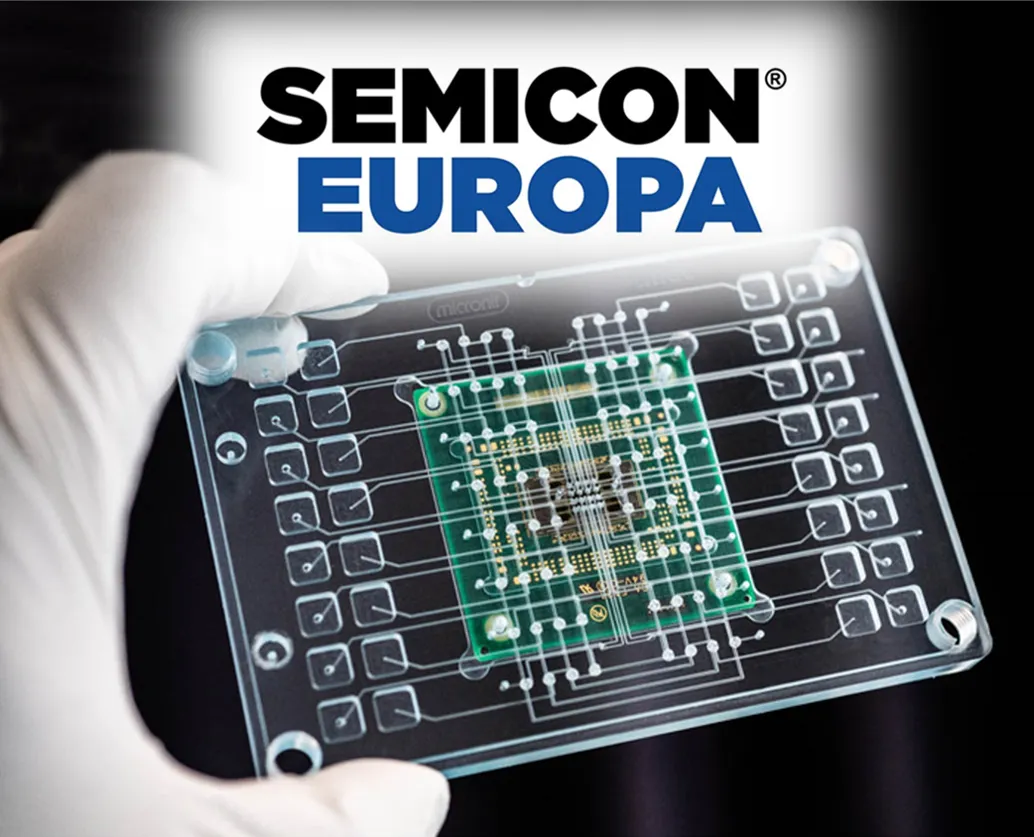
Healthcare has traditionally focused on one-size fits-all medication to treat populations instead of tailoring treatments to individual patients. Recent advances in stem cell technology allow researchers to create disease models for personalized medicine. SEMI spoke with Thomas Pauwelyn, Postdoctoral Researcher at imec, about trends in medical technology innovation such as organ-on-chip devices and their applications. Pauwelyn shared his views ahead of his presentation at the SEMI SMART MedTech Forum, 13-14 November, in Hall B2 (Inspiration Hub) at SEMICON Europa, 12-15 November, 2019, in Munich, Germany. Join us at the event to meet experts from imec.xpand and other key industry influencers. Registration is open. Participation is free of charge for SEMICON Europa visitors. SEMI: What triggered the healthcare move from a one-size fits-all medication to treat populations to tailored treatments? What advancements allowed researchers to create models for personalized medicine? Pauwelyn: One of the main triggers for this transition is the inefficiency of the current healthcare system. The top 10 highest grossing drugs in the U.S. are effective for only between 1 in 25 to 1 in 4 patients. Not only do most medicines only help a small share of the patients, but they are often developed in classical clinical trials with predominantly western or male participants.Recent advances in stem cell technology allow researchers to create disease models for individual patients. In other words, researchers can reprogram cells from a patient’s skin or blood sample to various cell types, including cardiac or neuronal cells, through stem cell techniques. These samples reflect the traits that make a patient unique.However, patient-in-a-dish models expose cells to very artificial environments. So these models look very different from their counterparts in the body. Organ-on-chip systems address these issues by exposing cells to physiologically relevant conditions and create more mature models. SEMI: What is exactly an organ-on-chip? Pauwelyn: Organ-on-chip devices are microfluidic cell culture chips that can revolutionize the development of drugs and personalized treatments. These devices model the pathophysiological behavior of organs and tissues. Inside these chips, cell cultures are grown and exposed to conditions that better resemble in vivo microenvironment. Different organ models can be created by exposing different cell types to an engineered microenvironment. Common examples are the heart-on-chip, lung-on-chip, gut-on-chip or brain-on-chip.SEMI: Medical technology has made astonishing advances over the years. As new medical devices emerge, what are the main challenges?Pauwelyn: Meeting stringent regulatory requirements is one of the main challenges for medical devices. Technologies related to personalized medicine do not neatly fit in existing health technology assessments and reimbursement processes.In the case of organ-on-chip devices, there are challenges related to production, qualification and adoption. Increased standardization will also help scientists compare and interpret their findings. Currently, various research groups obtain different results from own organ-on-chip systems. These systems may be fabricated from different or exotic materials, expose cells to different microenvironments or rely on other cell models. Often, only a few devices are available for testing due to limited fabrication scalability.SEMI: What did imec do to overcome those challenges?Pauwelyn: imec turned to its expertise in chip design and technology to develop a novel organ-on-chip platform in close collaboration with Micronit Microtechnologies in the InForMed project funded by the ECSEL Joint Undertaking (ECSEL2014-2-662155). The platform’s main requirements were that it could reduce handling variability by microfluidic automation, be fabricated with conventional materials compatible with production upscaling, and produce high-quality electrical recordings of cellular activity. Another essential requirement was the compatibility of the device to the standard workflow of pharmaceutical research. The user interface is based a conventional 96-well plate, and peristaltic pumps are integrated into the device.SEMI: How does the CMOS-based microelectrode array work and where do you see potential for applications in the field of personalized medicine?The imec-developed CMOS-based microelectrode array is the sensor in our organ-on-chip system that monitors the cell culture. The sensor consists of 16,384 electrodes distributed over 16 independent microfluidic wells. It detects cellular activity down to the single-cell level, including intracellular action potentials or extracellular signals from electrically active cells or impedance caused by cells growing directly over the electrode.We believe this technology has great potential for developing miniaturized patient models in the lab. By using patient cells reprogrammed to the desired cell types through stem cell technologies, we can develop patient-on-chip systems. These systems would be able to predict which treatment is best suited for a specific patient or how drugs affect certain subpopulations.SEMI: What are your expectations for the SMART MedTech Forum at SEMICON Europa 2019 in Munich? Pauwelyn: The SMART MedTech Forum brings together an interesting mixture of researchers, entrepreneurs and stakeholders in the future of healthcare. I look forward to hearing their perspectives and to discuss how personalized medicine and MedTech will help tackle current challenges.SEMI: Can you share one prediction for the future of MedTech? Pauwelyn: I believe that MedTech in the future will help us tailor treatments to each patient. Doctors will have a wide arsenal of tools available to predict which treatment will deliver both the highest chance of success and the lowest chance of adverse reactions. One of these tools could be a human-patient-on-chip system. It would consist of interlinked organ-on-chip modules with patient-derived cell models. In this way, the reaction of patients to specific treatments could be predicted without ever exposing them to potentially harmful compounds.Dr. Thomas Pauwelyn currently is a post-doctoral researcher with an Innovation Mandate grant from VLAIO, investigating strategies to valorize the results from his research. Pauwelyn’s research focuses on developing novel organ-on-chip systems for predictive toxicology and drug development. He also investigates how organ-on-chip devices may help stratify patients and help enable personalized medicine. Pauwelyn has studied at KU Leuven, Belgium, since 2008. He earned his BSc in Bioscience Engineering specializing in Catalytic Technologies in 2011 and a Master’s in Nanoscience and Nanotechnology with the Bioscience Engineering option in 2013. He completed an IWT fellowship for a PhD at KU Leuven and imec’s Life Science Technologies group in 2018.Serena Brischetto is senior manager, marketing and communications, at SEMI Europe.
Read More