downloadGroupGroupnoun_press release_995423_000000 copyGroupnoun_Feed_96767_000000Group 19noun_pictures_1817522_000000Member company iconResource item iconStore item iconGroup 19Group 19noun_Photo_2085192_000000 Copynoun_presentation_2096081_000000Group 19Group Copy 7noun_webinar_692730_000000Path
Skip to main content
Default Banner Image

Made in China 2025

Shenyang is on an unwavering path to maturing its integrated circuit (IC) equipment manufacturing industry over the next few decades in response to the Made in China 2025 Strategy. Since the strategy’s introduction in 2015, the city, long a transportation and commercial hub of China's northeast, has built out a complete integrated circuit industrial chain integrating technical research and innovation, components and parts processing, and equipment manufacturing. Its ambition is to compete on the world stage.Shenyang has implemented policies and provided funding to support the development of its IC equipment and related industries to buttress the development of emerging industries. Speaking at the SEMI China Members Day 2019 in Shenyang, Zheng Guangwen, secretary-general of ICMTIA and Shenyang IC Equipment Industry Technology Innovation Strategic Alliance, said that the city, as a key IC equipment industry base in the upstream of China’s industrial chain, hopes to enter the international community in part by leveraging SEMI’s global platform. Zheng Guangwen, Secretary General, ICMTIA and Shenyang IC Equipment Industry Technology Innovation Strategic Alliance More than 150 representatives from member companies gathered at SEMI China Members Day 2019 to discuss China’s semiconductor industry investment and capital dynamics and semiconductor market trends. The event sought to promote stronger communication and interaction between the upstream and downstream of the semiconductor industry chain. The forum was co-sponsored by SEMI China and Shenyang Science and Technology Bureau and co-hosted by ICMTIA and Shenyang IC Equipment Industry Technology Innovation Strategic Alliance. Lung Chu, President of SEMI China Opening the event, Lung Chu, president of SEMI China, set stage for the discussion by noting that global semiconductor industry has been booming since 1957, reaching another record high of $470 billion in sales last year as it faced a critical juncture, with industry growth slowing in the first half of 2019. The slowdown was predictable and is temporary, a natural stage in the industry’s cyclicality. From a macro point of view, the development of advanced technology requires huge investment. There was an obvious gap in investment between enterprises, which often leads to the stronger become much stronger. Under these circumstances, it is very important for China to master key technologies and products during the process of catching up and surpassing. Each region should focus on its strengths.Enterprises should do their own business in a low-key way and keep a prudent and optimistic attitude. The number of SEMI China members has reached a new high. SEMI China is committed to becoming the best partner to realize China's semiconductor dreams. In promoting the development of global semiconductor industry and China's semiconductor industry, SEMI has continuously gathered strength and actively organized rich activities to promote the sustainable growth of Chinese semiconductor enterprises through international cooperation. Zhao Rigang, Director of SCTB, Shenyang Science and Technology Bureau Zhao Rigang, director of SCTB at Shenyang Science and Technology Bureau, pointed to the importance of SEMI’s pivotal role and global influence in cultivating cooperation between international and domestic industries including Shenyang’s IC sector. Speaking at the SEMI China Members Day 2019 in early June, Rigang said the growing importance of chips in China is a key catalyst for Shenyang’s rise as semiconductor sectors domestically and abroad invest heavily in a new generation of information technologies such as mobile Internet, cloud computing, big data, Internet of Things. Kang Jin, General Manager, SMIC Beijing For China’s semiconductor industry to flourish, the region must improve its IC supply capacity just as it has brought its PV industry to full maturation, said Kang Jin, general manager of SMIC Beijing. The key to developing China's integrated circuit industry, he said, lies in building a robust semiconductor supply chain. Zong Runfu, Chairman and General Manager, KINGSEMI Semiconductor Equipment Supply Chain DevelopmentLocalization has enabled KINGSEMI to optimize its technology design capabilities to produce high cost-performance equipment for greater competitive advantage, saidZong Runfu, chairman and general manager of KINGSEMI. While the localization rate of supply chain construction was over 50 percent, the localization rate for front-end equipment is still low. Zong Runfu said localization is imperative not only to lowering costs, but also to ameliorating the supply-guarantee rate, maintaining quality and shortening the delivery cycle. Russell Li, VP of Marketing and Business Development, WLCSP Packaging Solutions for 3D Active Sensing DevicesInternet of Things (IoT), artificial intelligence (AI), 5G and other technologies are starting to become a part of daily life as more sensors find their way into new retail stores and smartphones, a trend that will continue as autonomous transportation begins to take hold, said Russell Liu, VP of marketing and business development at WLCSP. The move to bring more human-like capabilities to technology is driving the implementation of perception function in devices, with passive sensors giving way to active sensors and machines translating the physical world into a 3D view through the eyes of a 3D camera. What’s more, the next generation of IoT devices will feature more integrated processors including signal processors, caches, sensors, photons, RF and MEMS, bringing the challenges of miniaturization to system integration. Liu said miniaturization will only be possible by developing advanced packaging technologies that enable highly integrated processors for mobile devices and intelligent automobiles. Wang Ronghua, VP of Technology, Dalian Xinguan Technology Getting Ready for GaN Power Electronics EraGaN offers excellent performance in optoelectronics, RF and power electronics and will coexist with and complement silicon devices for years to come, said Wang Ronghua, VP of Technology at Dalian Xinguan Technology. However, the industrialization of GaN power devices still faces technical challenges in application, reliability, packaging, epitaxy, device and process – all barriers to market adoption. To overcome these hurdles, GaN power devices must meet the reliability and cost-performance requirements of applications to which they are best suited.Ronghau said that GaN power devices, such as cascade and p-GaN enhanced devices, now support end products, proof that the era of gallium nitride has arrived. “Gallium nitride is quite different from silicon in epitaxy, device design and key technology, which requires close integration of upstream and downstream industry chains for effective promotion,” he said. Billy Feng, Executive Director, J.P. Morgan Is the Semiconductor Industry Still Cyclical? Since 2008, the semiconductor cycle has waned, disrupting the traditional thinking of investors, equipment suppliers and logistics channel providers as investors’ appetite for the chip industry investments has grown, said Billy Feng, executive director at J.P. Morgan. The long-term prospects for the semiconductor industry remain bright. But after reaching historic revenue highs in 2017 and 2018, the industry – and investor expectations – will enter a period of adjustment. Dr. Adam He, Executive Director, CGP Tech Fund The unique gene of the semiconductor industry consists of the blend of its lofty requirements for quality, reliability and consistency; cooperation between upstream and downstream sectors; internationalization; and a powerful ambition to innovate, said Dr. Adam He, Executive Director of CGP Tech Fund. He described Chinese chip enterprises he often encounters as falling into one of two entrepreneurial categories – IC experts and cross-border business people. Both want the answer to "how to make money and how to establish a solid competitive position?” He said. Adam believes that accessing the genes of the semiconductor industry is the answer to both questions and crucial to the maturation of China’s chip industry. The genes must be used to strengthen the Chinese manufacturing and materials sectors. Du Shanshan, Senior Analyst, SEMI China SEMI Market Outlook: Fab Investment, Equipment and Materials Market ForecastsEmerging technologies have sparked explosive semiconductor industry growth, said Du Shanshan, a senior analyst at SEMI China. While the industry will see a slight recession in 2019 due to memory market softness, trade wars and other factors, it is on stable footing for the long run. At the same time, China continues to optimize its IC industry chain, and semiconductor design and manufacturing companies have gradually grown in number. Over the next decade, the average growth rate of China's production capacity is expected to exceed 10 percent. Richard Feldman, VP of Global Expositions and Events, SEMI Richard Feldman, vice president of Global Expositions and Events of SEMI headquarters, presented the new SEMI Asia semiconductor business development plan to members and called on companies in mainland China, Taiwan and Malaysia to participate in SEMICON Europe to strengthen the influence of globalization.After the meeting, participants visited KINGSEMI Co., Ltd., Shenyang Piotech Co., Ltd, Shenyang SIASUN Robot and Automation Co., Ltd., Shenyang Fortune Precision Equipment Co., Ltd. and SKY Technology Development Co., Ltd. The event facilitated communications between upstream and downstream companies. SEMI China Member Day 2019 Group Photo Cherry Sun is a marketing manager at SEMI China.
Read More
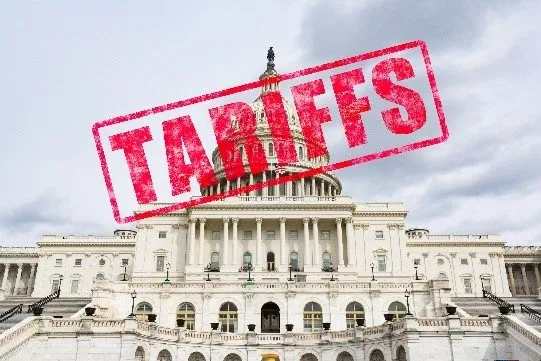
U.S. Government Imposes Tariffs on $200 Billion of Goods and China Retaliates on $60 Billion of GoodsEarlier this week, the U.S. Trade Representative (USTR) released a 10 percent tariff on $200 billion in imports from China, including more than 90 tariff lines central to the semiconductor industry.The 10 percent tariff will take effect on September 24, 2018, and rise to 25 percent on January 1. These tariff lines will cost SEMI’s 400 U.S. members tens of millions of dollars annually in additional duties. However, counting the products included in the previous rounds of tariffs, the total estimated impact exceeds $700 million annually. China has already announced that it will respond with tariffs on $60 billion worth of U.S. goods. In his notice, President Trump said the U.S. will impose tariffs on $267 billion worth of goods if China retaliates. The U.S. government removed 279 total tariff lines, including three lines that impact our industry: silicon carbide, tungsten, and network hubs used in the manufacturing process.As we’ve noted, intellectual property is critical to the semiconductor industry, and SEMI strongly supports efforts to better protect valuable IP. However, we believe that these tariffs will ultimately do nothing to address the concerns with China’s trade practices. This sledgehammer approach will introduce significant uncertainty, impose greater costs, and potentially lead to a trade war. This undue harm will ultimately undercut our companies’ ability to sell overseas, which will only stifle innovation and curb U.S. technological leadership.Product Exclusion Process – List 2USTR formally published the details for the product exclusion process for products subject to the List 2 China 301 tariffs (the $16 billion tariff list). If your company’s products are subject to tariffs, you can request an exclusion.In evaluating product exclusion requests, the USTR will consider whether a product is available from a source outside of China, whether the additional duties would cause severe economic harm to the requestor or other U.S. interests, and whether the product is strategically important or related to Chinese industrial programs (such as “Made in China 2025”).The request period ends on December 18, 2018, and approved exclusions will be effective for one year, applying retroactively to August 23, 2018. Because exclusions will be made on a product basis, a particular exclusion will apply to all imports of the product, regardless of whether the importer filed a request.More information, including the process for submitting the product exclusion request and details what information should be included in your submission can be found here. Please let me know if your company plans on filing an exclusion. SEMI has prepared a document that includes guidelines for your exclusion filing, an explainer on how to submit, and links to official government info. SEMI is glad to assist your companies file exclusion requests for your products. SEMI will continue tracking ongoing trade developments. Any SEMI members with questions should contact Jay Chittooran, Public Policy Manager at SEMI, at [email protected].
Read More
Two months after opposing $34 billion in U.S. trade tariffs on behalf of the U.S. semiconductor manufacturing industry, Jonathan Davis, global vice president of industry advocacy at SEMI, this week spoke out against an additional $16 billion in duties on Chinese goods. Testifying before the same U.S. interagency panel mulling the tariffs, Davis called for the removal of 29 tariff lines covering items critical to semiconductor manufacturing including machines and spare parts used to make, wafers, flat panel displays and masks.In his testimony to the panel, Davis stressed that while SEMI supports stronger protections against the theft of valuable intellectual property (IP), tariffs do little to address U.S. concerns over IP loss. Over the past month, SEMI has also submitted written comments and opposed the tariffs in public testimony. The panel includes representatives from the U.S. Trade Representative (USTR), Departments of Treasury, Commerce, State and Defense, and the Council of Economic Advisers.Also testifying, Joe Pon, corporate vice president at Applied Materials, explained that the proposed tariffs will harm small and midsized companies and other U.S. business interests. Describing the tariffs as a tax on exports of high-value U.S. goods, Pon said the duties give non-U.S. firms an unfair competitive advantage.In a parallel push to Davis’s testimony, SEMI, with more than 10 representatives from six member companies, met with 16 congressional offices this week to underscore the damage the tariffs would wreak on the U.S. semiconductor industry. The fallout would include higher operating costs, fewer exports and slower innovation. The tariffs would also curb industry growth and put thousands of high-paying, high-skill jobs at risk. SEMI pressed congressional leaders to reject the tariffs and support a push for congress to re-assert itself on trade policy.Tariffs to Cost U.S. SEMI Members More than $500 MillionSEMI estimates that the second list of proposed tariffs, covering about $16 billion in Chinese goods, will cost its 400 U.S. members more than $500 million annually in additional duties.The tariffs on $34 billion in Chinese goods, which took effect July 6, impact products such as test and inspection equipment as well as spare parts that enter the U.S. from China. That round of tariffs will cost SEMI member companies and estimated tens of millions of dollars annually. SEMI Public Policy Team Asks Members to Review Tariff ListLooking ahead, SEMI encourages members to review the newly released $200 billion tariff list, determine any impact to their businesses and share their findings with SEMI’s public policy team.The U.S. Trade Representative (USTR) has published the exclusion process for products subject to the China 301 tariffs. If your company’s products are subject to tariffs, you can request an exclusion.In evaluating product exclusion requests, the USTR will consider whether a product is available from a source outside of China, whether the additional duties would cause severe economic harm to the requestor or other U.S. interests, and whether the product is strategically important or related to Chinese industrial programs (such as “Made in China 2025”).The deadline for submitting product exclusion requests to USTR is October 9, 2018. Approved exclusions will be effective for one year upon approval and retroactive to July 6, 2018.More information including the process for submitting the product exclusion request can be found here.Any SEMI members with questions should contact Jay Chittooran, Public Policy Manager at SEMI, at [email protected].
Read More
The U.S. Trade Representative (USTR), based on findings from its Section 301 investigation into China's trade practices, today announced a 25 percent tariff on $34 billion in Chinese goods including many products in the semiconductor supply chain.Products such as test and inspection equipment and spare parts that enter the U.S. from China will be subject to this tariff, which enters into force on July 6, 2018. About 80 percent of the semiconductor products originally proposed remain on the final list of tariffs.USTR also has proposed tariffs on more than $16 billion worth of goods including chemicals as well as machines and spare parts that are used to manufacture semiconductor devices, wafers, flat panel displays, and masks, all of which would squarely strike the semiconductor industry. This new proposed list includes products identified by the U.S. government that have particularly benefited from Chinese industrial policies such as “Made in China 2025.” SEMI is set to voice its opposition to these tariffs with written comments and at an upcoming public hearing.Over the past month, SEMI has submitted written comments and offered testimony on the damaging impact that tariffs would have on the U.S. semiconductor industry. While SEMI strongly supports efforts to better protect valuable intellectual property, we believe that these tariffs will do nothing to address U.S. concerns over China’s trade practices. Instead, the tariffs will harm companies in the semiconductor supply chain by increasing business costs, introducing uncertainty and stifling innovation.SEMI will continue to engage with lawmakers as the $34 billion in tariffs take effect and the proposed $16 billion in duties remain under consideration. We encourage members to review this list and determine the level, if any, of impact. If you have questions or concerns, please reach out to Jay Chittooran, Public Policy Manager at SEMI, at [email protected].
Read More
Hope springs eternal. And it was with collective open arms that many U.S. businesses welcomed the recent talks between U.S. and Chinese officials to resolve their trade differences and downplay the specter of a full-blown trade war. Treasury Secretary Steven Mnuchin went so far to say that trade war with China was “on hold.”Hope and optimism soon fizzled. On May 29th, the White House released a statement contradicting Sec. Mnuchin, announcing that the Trump Administration would indeed move forward with a 25 percent tariff on $50 billion worth of goods imported from China. Besides focusing on goods that the U.S. has deemed are tied to “Made in China 2025” – the Chinese initiative to produce more advanced manufacturing goods domestically – the Administration also announced stiffer investment restrictions and enhanced export controls related to the acquisition of industrially significant technology. The final tariff list will be published by June 15th, and the proposed list of investment restrictions and export controls will be announced by June 30th.Tariffs and New Focus on Export ControlsAll of this comes as the White House and Capitol Hill have heated up their activity in recent months to curb commerce with China through tariffs and investment restrictions.The Section 301 investigation, a key component of this push, has zeroed in on China’s trade practices related to intellectual property violations. Following a months-long inquiry, the Office of the U.S. Trade Representative (USTR) determined in March 2018 that China’s forced transfer of technology and intellectual property has discriminated against U.S. firms. The finding prompted President Trump to respond with a number of remedial actions including a proposed 25 percent tariff on $50 billion worth of U.S. imports from China.More than 100 lines of the proposed tariff list directly impact the semiconductor supply chain, hitting fundamental components of the semiconductor manufacturing process. SEMI has fought back, strongly urging the removal of these tariff lines from the proposed tariff list. At a bare minimum, the tariffs against China will cost the U.S. tens of millions annually in additional taxes, create lost revenue as a result of reduced exports, threaten thousands of high-paying U.S. jobs, stifle innovation and curb U.S. technological leadership – all while not directly addressing U.S. concerns with China.These tariffs, plus the new focus on export controls, is particularly troubling for the semiconductor supply chain. The recent move comes on the heels of other trade actions, including tariffs on steel, aluminum, and solar cells that will not only limit trade and opportunities for U.S. economic growth, but also will introduce significant uncertainty for U.S. businesses. CFIUS Reform Moves Ahead, But Concerns RemainAt the same time, other government efforts that could encumber investment continue. Both the Senate Banking and House Financial Services Committees unanimously passed the Foreign Investment Risk Review Modernization Act (FIRRMA). The legislation aims to upgrade the Committee on Foreign Investment in the United States (CFIUS) – the interagency body that reviews inbound foreign investment for national security concerns. With such rare bipartisan agreement on a major bill, it is expected to be passed by both chambers and signed into law later this year.The current version of the bill is certainly an improvement on earlier drafts. The legislation no longer contains problematic language that would have given CFIUS the authority to review joint ventures between U.S. and foreign companies. The language would have, for the first time ever, expanded CFIUS’s jurisdiction to include outbound foreign investment. Given the semiconductor industry’s deep reliance on expansive global supply chains, this language was particularly concerning to our industry.However, broad concerns remain about how CFIUS functions. In recent months, CFIUS has been used seemingly to evaluate transactions based on economic security, rather than the Congressional intent of national security. Should this trend continued, we worry that this could curb otherwise acceptable investments, stifling innovation and limiting growth, especially in the semiconductor industry.SEMI Educates Lawmakers on Industry ImpactsWith tensions likely continue to rise and efforts to wall off commerce with China ongoing, SEMI is engaging with policymakers to educate them on how these restrictions will potentially undermine the long-term health of the semiconductor industry. SEMI will continue to meet with policymakers about the critical importance of trade and investment to the continued success of the semiconductor industry. If you are interested in more information on trade, or how to be involved in SEMI’s public policy program, please contact Jay Chittooran, Public Policy Manager, at [email protected].
Read More