downloadGroupGroupnoun_press release_995423_000000 copyGroupnoun_Feed_96767_000000Group 19noun_pictures_1817522_000000Member company iconResource item iconStore item iconGroup 19Group 19noun_Photo_2085192_000000 Copynoun_presentation_2096081_000000Group 19Group Copy 7noun_webinar_692730_000000Path
Skip to main content
Default Banner Image

BCP

Cameron Burks, head of Global Security, Enterprise Business Resiliency and Health, Environment Safety with Adobe Systems, and a member of the White House Task Force for COVID-19 response, briefed members of SEMI’s IT Leadership (ITL) and Environment, Health Safety (EHS) groups on April 20, 2020, on enterprise resiliency principals specific to the current COVID-19 crisis. Burks has spent over 20 years in the global security, crisis management and business continuity fields for public and private global companies. In the meeting, he noted, “This is all new. No one has had to respond to a crisis of this magnitude and impact. Ever.” On top of all of the learning and responding that teams are doing in real-time, it is helpful to have a strong business continuity plan (BCP). The following is a recap of insights that Burks shared on best practices for business continuity with examples from Adobe’s BCP.The Long-Term Picture: How to Plan for Business ContinuityBurks emphasized that the first step in any crisis is identifying risks and ensuring the safety of all human life. Once human safety is assured, the next part of the plan must form a strong foundation for escalation, operation evaluation and response. A solid foundation also creates the business factors to restart operations efficiently. The foundation of the Adobe pandemic plan was laid during the summer of 2019 while the global team was updating their infectious disease plan and rehearsing with headquarters and regional offices. That plan includes six main sections:1. Crisis Management Plans – escalation, roles and responsibilities, team operations2. Crisis Communication Plans – internal and external stakeholder communications3. Incident Management Plans – site or regional management response4. Emergency Response Plans – immediate local response to events5. Business Recovery Plans – business and facility recovery6. Disaster Recovery Plans – IT and technology recoveryThis format has worked and scaled well over the past few months, and the company is now in the stage of evaluating how to help offices recover and repopulate. Response Team Structure – Global and LocalAlthough it is critical to have plans and leadership coming from headquarters when it comes to a crisis, LOCAL teams are on the front lines since most crises start and evolve quickly. In the planning process, the local teams need to know and be trained on plans for a wide range of incidents and events including: People- and product-related Security – both external and internal Operational (e.g. cyberattacks) Natural disasters Health-related, such as this pandemic The severity of the event will determine the corporate impact and activation of appropriate plans. Low-impact events include those where stability is quickly reached and response plans have effectively contained the incident. High-level events will cause severe disruption for employees and customers and require an efficient and coordinated response. Regardless of the severity level of the event, all response teams need to be prepared to quickly activate and then to thoroughly coordinate on crisis management and communications. It is critical to have established actions to implement based on the severity level of an event. Table 1 provides an example of Key Trigger Levels for implementing specific actions depending on the severity of an event. Table 1 – Key Trigger Levels X = phase to consider first implementing controls The team needs to understand what the staff requires to maintain business continuity. Burks recommended aligning with ISO 22301, the Business Continuity standard. The standard will lead a company to understand what redundancies need to be in place to keep essential operations running. In Adobe’s case, this includes keeping data centers running and providing essential gear to the 90+ members of the response and global security teams. Adobe tests the plans every month and addresses the bugs – every time.Repopulating Business Facilities During COVID-19 While COVID-19 infection and death rates are currently flattening in many locations, there remain a significant number of new infections, limiting the ability to repopulate business facilities without threatening the health of the workforce and their families. Adobe is using multiple indicators to calculate when the virus is contained, the threat is reduced, and employees can return to workplaces. For now, Burks recommended maintaining social distancing as much as possible while keeping operations running. He believes summer may see some abatement due to weather. However, most experts expect to stay hyper-aware and responsive well into 2021.Although Adobe tries to provide actual dates for return to their employees – and did early on with best estimates – they have had to change to a “until further notice” statement. Repopulating is going to be much more complicated than the original decisions to work from home. The Adobe operations team is providing much larger conference rooms, enhanced cleaning regimens, and new norms of interacting at the workplace for everyone. The goal is to bring people back in small groups on a site-by-site basis. The first group will be only 7-10% of the workforce. That group includes the cleaning and facilities crews to support the professional staff, who would return to reap the benefits of a collaborative environment. Many people want to come back to the office. They are suffering in isolation, and productivity is dropping in those cases.Adobe is planning to create a manual on interacting at the workplace and will require training and adherence to new social constructs. Security officers will be “ambassadors,” helping the workforce remember and adhere to the new rules. The company will use footprint stickers to provide visual clues to employees on walking single file and avoiding groups. Stickers will designate desks that can and cannot be used. To provide a more open office plan, they will remove desks and arrange movable white boards to accommodate the collaboration employees want.The situation is complex and dynamic and requires decision-making based on a definitive set of criteria. The following is a summary of information that Burks shared on Adobe’s criteria for returning to work after COVID-19: Indication of health and safety assurance utilizing risk assessment criteria – locally assessed and qualified for a minimum of six weeks. Travel prohibitions and local/external meeting guidelines to be modeled separately utilizing case-by-case risk assessment criteria. Assessment of the case fatality rate, infection peak and downside projections – curve must be flat. Management team decision on how much risk to assume, as this disease is durable Assessment of infection vector and prevalence vis-à-vis relaxation of nonpharmaceutical interventions; assessment of local healthcare capacity Government shelter-in-place restrictions fully (or partially) lifted; declarations by public leaders that the virus has been contained at some level (city, state, country) Assessment of facilities to physically distance employees and/or staggered shift schedule; assessment of security capability/resource availability Assessment of public transportation and infrastructure, including parking garage Assessment of school closures, childcare and/or adult-care Assessment of nonpharmaceutical intervention awareness campaign, medical surveillance program, and/or onsite medical or clinical support No visitor program until approved by global security staff when office repopulation program begins. Create exceptions list. Emergency plans formally in place Site capacity identified; Emergency Response Team (ERT) skeleton crew part of the repopulation Full plan in place to close offices for a period of no less than three weeks if one employee or vendor tested positive for COVID-19 during repopulation exercise; plan includes informing workforce within “return population” of circumstance and having the facilities team execute a deep clean. The plan would then activate communications for the crisis management remediation phase, which includes full workforce transparency via town halls, webinars, emails, etc. Burks noted that contact tracing has moved from an unthinkable invasion of privacy to a likelihood for most workplaces, taking into consideration privacy laws predominant in Europe and U.S. If anyone falls ill or tests positive for the virus, they will automatically be sent home and everyone who has been in contact with them will need to enter a 14-day quarantine before returning. Burks’ presentation, and his thoughtful approach to planning and the current situation with COVID-19, allowed the attendees to consider their positions and paths for bringing their workers back to the offices and facilities. A lively question and answer session enabled members to further clarify points and get immediate feedback on their plans and strategies. Burks finished with a request to industry members to continue the dialogue and send industry data for him to report back to the White House Task Force. For additional resources from SEMI, visit our COVID-19 response website, which provides best practices and the opportunity to submit company stories.About the AuthorHeidi Hoffman is Senior Director of Corporate Marketing for SEMI. She is currently serving on the SEMI COVID-19 Response Team, coordinating multiple inputs from across the industry to assist all SEMI members in responding to the crisis. To submit your company response story, visit our COVID-19 News and Blogs webpage and scroll down to the green submit bar below the news.
Read More
Part 2 of 2Read Part 1.While companies navigate the ongoing COVID-19 crisis, corporate leaders should be evaluating a number of key business continuity issues as well as steps they can take to not only react to business disruptions but also reshape their business and recovery plans.We spoke with Dan Steele, Senior Director and the APAC Head of Environmental, Health, Safety, and Security (EHS S) at GLOBALFOUNDRIES (GF) Singapore, via teleconference for insights into the best practices he and his team have implemented from their Business Continuity Plan (BCP) to guide them through the health crisis.SEMI: How can SMEs (small and medium-sized enterprises) afford BCP, as they are often quite costly?Steele: BCP is not something you afford. Rather, it is essential to good management. Every business is about managing risks and every manager’s responsibilities include risk mitigation. Regardless of their size, companies often pay a higher price for survival in a crisis because they are ill-prepared. All companies owe it to themselves, their employees and other stakeholders to conduct ongoing business continuity planning. No one knows what or when the next crisis will be, and no plan is perfect in mitigating crisis impacts.However, it is critical to plan for potentials, institutionalize EHS and security best practices, ensure the supply chain has both redundancy and robustness, train employees to adopt additional skills, and work with customers in advance. Companies that continue to ask themselves what if are the ones that will be the best prepared. And, if BCP is done right, businesses can avoid huge losses. Dwight Eisenhower said, "Planning is everything, the plan is nothing." I think too many companies spend far too much time creating exacting plans when instead they should be planning. Since planning the survival of the company is every manager’s daily responsibility, BCP should not be purely looked upon as a cost, but also as an expected deliverable from the management team.SEMI: Companies have rolled out mandatory work-from-home (WFH) policies and it has become a new normal for many of us. What other measures can GF take should this WFH period be extended?Steele: Our work-from-home policy seems to be working quite well at this point. However, WFH will only be effective if the right tools are provided to employees – we give our employees access to our system so they can work remotely. WFH also offers opportunities to drive new and innovative ways of working, and accelerates some of our automation efforts such as Augmented Reality (AR).At the same time, mental health is just as important and we conduct weekly check-ins with employees to assess their anxiety levels by asking two basic questions: How is the team’s morale and has it impacted productivity in our operations? For us at GF, WFH is not a disintegration of the team. It is important to our operations to continue the social aspects of working as ONEGF. That means online meetings should require face-to-face interactions. It is important for people to connect. Additionally, we maintain the same quality expectations for remote work as we do when employees are on-site. If this WFH period is extended, we need supervisors and managers to reach out and ensure that we stay connected with our employees.SEMI: What BCP lessons have you learned during the outbreak and will the learnings change any of your business or operations strategies when normalcy returns?Steele: I am not sure we learned anything new about BCP. As stated, our approach to BCP is to spend less time on exact plans and more time on planning, asking ourselves what if and mentally walking our way through potential solutions. This crisis reinforces the premise that we must be prepared. We did not have a plan on our shelf for working-from-home, but we had visualized it, knew what we would have to enact and now have employees managing highly sophisticated, technical and skilled manufacturing operations from home, and some of them reside in Malaysia. BCP must be a conscientious, concerted effort even when normalcy returns – it helps us better prepare. Additionally, BCP is not the responsibility of a single person or department. Just like our daily business, BCP is an integrated effort across many functions. Good and great ideas come from anywhere in a time of crisis. Listening is extremely important.SEMI: If there is one takeaway from this unusual and uncalled experience, what will it be?Steele: What we walk away with is the fact that we are dealing with a pandemic that is highly unpredictable, and that we need all types of employees with diverse backgrounds, experiences and perspectives. This inclusion has made us successful all along, and that is what is helping us ride through this crisis today and into tomorrow. We are glad that we have a diverse and proactive BCCM team that is able to quickly adapt and respond to the many challenges of a crisis. SEMI: What advice would you offer to stay productive while WFH?Steele: We acknowledged that it is difficult for the WFH policy to be effective in the manufacturing sector. Although we do not see any productivity loss thanks to automation, we’ve seen a slowdown in our engineering activities.My advice: First stay healthy, monitor your health, and follow the government’s hygiene advice for yourself, your families and the communities you live in. If you socialized before, there is no reason to stop. Stay connected with your co-workers and team. Personally, I don’t believe WFH now means you are always on. Just as you did when working on-site, you still need your personal time. You have to strike the balance that works best for you.Dan Steele has over 25 years of experience in environmental, health, safety and security operations. He has also held other leadership roles in facilities engineering, quality, reliability and assurance, and risk management.Bee Bee Ng is president of SEMI Southeast Asia.
Read More
Part 1 of 2Read Part 2. While companies navigate the ongoing COVID-19 crisis, corporate leaders should be evaluating a number of key business continuity issues as well as steps they can take to not only react to business disruptions but also reshape their business and recovery plans.We spoke with Dan Steele, Senior Director and the APAC Head of Environmental, Health, Safety, and Security (EHS S) at GLOBALFOUNDRIES (GF) Singapore, via teleconference for insights into the best practices he and his team have implemented from their Business Continuity Plan (BCP) to guide them through the health crisis.SEMI: How did GLOBALFOUNDRIES Singapore first respond when the country reported its first COVID-19 case?Steele: Since the early days of our company, we have had a Business Continuity / Crisis Management (BCCM) team in place that is responsible for business continuity planning for the site. At the beginning of this journey with the coronavirus, we believed in two truths: maintaining the safety and well-being of our employees and consistently communicating precautionary measures the company has taken to protect them and our business. These actions are critical to keeping our employees safe, while keeping the anxiety level low. By informing and updating employees in a timely manner, we ensure that they are well-educated about the crisis as it unfolds and the foreseeable circumstances that could be ahead of us. Once the world was well into the coronavirus outbreak, our CEO declared in a message to all employees that “we entered this pandemic crisis together, and we will exit it together.”We have also established links to pertinent government websites and made them conveniently available to ensure employees have access to the latest available information for their personal lives.SEMI: What actions has GF Singapore taken in response to the crisis so far?Steele: On January 29, our BCCM team activated the first line of defense by initiating temperature checks at all building entrances for every individual including employees, contractors, visitors, and customers who come into our facilities. We asked each to declare their state of health and travel history and issued a temperature card to every employee and resident contractor. They are all required to record their temperature twice daily – once before coming to work and again at midday – and they present the temperature log to security upon their arrival.The following week, our teams split into an A/B work arrangement to ensure continuity of our operations. We proactively pared down our teams to the staff essential for our on-site operations, while enabling the rest to work from home. We also advised our most vulnerable employees with impaired immune systems or who are pregnant to work from home. Concurrently, we moved all meetings of 10 or more people to virtual communications and only allowed meetings with fewer than 10 to be held in rooms with participants sitting at least one meter apart. We informed our customers of our efforts and moved all planned on-site visits to online visits.In line with Singapore’s efforts to curb the spread of COVID-19 within the community, GF restricted site access of people who had recently traveled to countries with sustained community transmission and regularly updated the restriction list. To conduct contact tracing, we created our two degrees of separation list that we used to track employees with families and close associates who were linked to a COVID-19 case. Employees provided the information voluntarily. On our campus, we enforced strict safe distancing measures by limiting access to meeting rooms, marking off-limits tables and removing chairs in the cafeteria, limiting the number of elevator riders to no more than four, and placing boxes or other spacing indicators at smoking zones, bus stops and temperature-taking lines. We also initiated a daily log of employees taking the company buses tagged to the bus number, time, and employee identification numbers in anticipation of the need for contact tracing.Most recently, when the Singapore-Malaysia border closed, we activated the next phase of our BCP that was already in place – housing over 450 Malaysian employees in Singapore hotels.Throughout this crisis, we continuously monitor and evaluate possible impacts to our supply chain to ensure the continuity of our business. This is a standard element of our ongoing business continuity management system.Most importantly, we frequently communicate with our employees and tell them everything the company is doing and why we are doing it. We encouraged employees to monitor their health, stay home if they are unwell, and seek immediate medical treatment if necessary at one of our panel clinics or other medical facilities.SEMI: What are your top concerns amidst this health crisis?Steele: At GF, we are managing through the crisis with an unwavering focus on two guiding principles: the safety and well-being of our worldwide team, their families and communities; and delivering on our commitments to our clients. As the world’s leading specialty foundry, GF has a unique role in the global supply chain. Our semiconductor technology is vital to a range of industries including health care, communications, infrastructure and security. With these priorities in mind, the company undertook unprecedented steps and has adapted to the crisis by dynamically adjusting its protocols, health and safety measures, and business processes to protect its teams while maintaining manufacturing excellence.We are committed to safeguarding the well-being of our employees while supporting and sustaining our on-site operations and protecting customers’ products. A major concern is the impact on our employees. We understand that COVID-19 can be infectious even if an individual is asymptomatic – we are always concerned that temperature screening alone is not sufficient. This is the reason that from day one we have encouraged our employees to monitor their health, follow all government advice for proper hygiene and seek medical attention if unwell as early as possible, and not come to work.Dan Steele has over 25 years of experience in environmental, health and safety, and security operations. He has also held other leadership roles in facilities engineering, quality, reliability and assurance, and risk management.Bee Bee Ng is president of SEMI Southeast Asia.
Read More
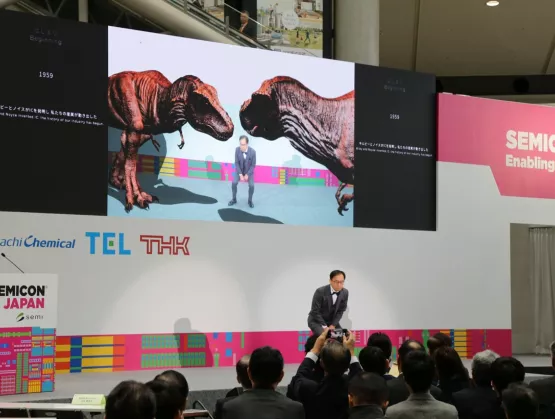
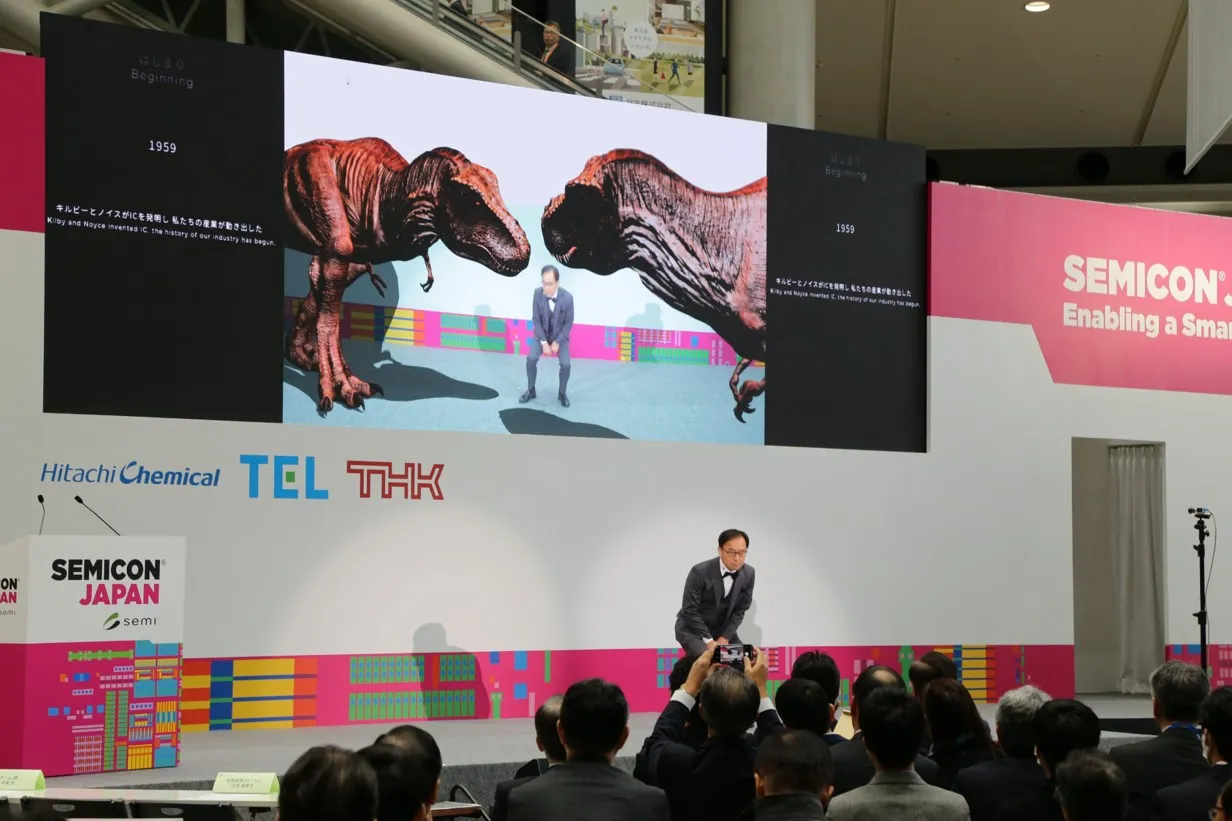
Augmented reality (AR) tyrannosauruses towered on-screen as I interacted with the creatures in a mix of prehistoric and cutting edge. Or, rather, my AR double was doing the playacting. Minutes later, virtual doppelgangers of a small lineup of chip industry executives cut the ceremonial ribbon. Seemingly sweeping away the winter chill, the opening of SEMICON Japan 2019 dazzled with smart technology and the promise of lives, cities and workplaces transformed, with uber-intelligent applications in full display at Tokyo Big Sight. But what resources does the industry need to harness to drive the next era of innovation? The semiconductor industry’s unwavering passion and young talent are key, said Hiroshi Imano, Chairperson of the SEMICON Japan Initiatives Committee, in his opening keynote. And hardly any region of the world is in a better position to help realize that future than Japan, Imano said. The region supplies one third of the equipment and more than half of all materials to the global semiconductor manufacturing industry.Talent was also top of mind for SEMICON Japan 2019 keynote speaker Makiko Eda, Japan's Chief Representative Officer at the World Economic Forum (WEF). Serving as a platform for public-private partnerships, the organization's mandate is to tackle global issues such as climate change and geopolitical strife in making world more resilient to risk and, by extension, more sustainable.Spanning ecology, economy, technology, society, geopolitics and industry, that mission includes reskilling and upskilling a billion people over the next decade, a high priority for WEF, which hosts a conference every January in Davos, Switzerland. The theme of this month's conference – Stakeholders for a Cohesive and Sustainable World – reflects the vital importance of building the international partnerships and global consensus necessary to achieving WEF's goals.One key to that sustainability will be technology and Arm, a global chip design company, will play a key role, with the company’s chips touching over 70 percent of the world’s population, Arm president Yuzuru Utsumi said in his keynote. Today, Arm is driving toward an ambitious goal: Ship 100 billion chips from 2017 to 2021 – the same number produced over the previous quarter century – by powering advances in mobile computing, server and networking infrastructures, and automotive applications.Arm’s innovation ecosystem of more than 1,000 partners will deliver these chips as they continue to work together to develop differentiated technology. Arm plans to increase investments not only in its primary processor business to accelerate market share gains but in the company’s new IoT business to create new revenue streams. The goal: Deliver long-term sustainable growth, Utsumi said. SEMICON Japan 2019 showcases SMART manufacturing and transportation Billed as a showcase of smart technologies, SEMICON Japan 2019 delivered with an array of eye-grabbing exhibitions in the popular SMART Applications Zone. In the SMART Transportation area, the automatic operation pavilion featured a car equipped with open-source software for autonomous driving. The exhibitor, Tier IV, aims to help lead the early commercialization of self-driving vehicles through the adoption of its software, Autoware, which makes it easier to develop self-driving vehicle prototypes using low-power platforms.Sony Semiconductor Solutions demonstrated a vision sensing processor designed to guide autonomous drones. Using two cameras, the processor measured the changing distance between visitors moving about the exhibit and stationary objects in real time, indicating proximity in hues of red (nearby) and blue (at a distance). Many visitors were wowed, describing the multichromatic display as futuristic.Others rode a simple wooden swing hanging by two ropes, but from dizzying heights thanks to Solidray’s Duo-Sight, a virtual reality (VR) system that projects 3D images stretching from wall to floor for immersive experiences. One visitor thrilled at how riding the swing, suspended only a few feet from the floor, felt like soaring on a flying trapeze. Target applications for the technology include virtual rides at amusement parks and presenting interior design options to homeowners.In the SMART Manufacturing area, one highlight was the demonstration by the National Institute of Advanced Industrial Science and Technology (AIST) of a remote-controlled Minimal Fab System designed for low-volume, high-mix chip production with little staffing. Designed to increase production efficiency, the system allows a circuit designer to manufacture a semiconductor by singlehandedly operating equipment up and down the production line. Controlling nearly 50 pieces of equipment, the Minimal Fab System on display manufactured chips that were verified for functional operation and exhibited afterwards.On the SMART Applications stage, exhibitors DENSO and Toyota Motor Corporation announced a new joint venture to conduct research and advanced development of the next-generation in-vehicle semiconductors critical to electric and autonomous vehicle innovation. The venture, operating as MIRISE Technologies, will combine Toyota’s mobility expertise with DENSO’s in-vehicle component prowess. The goal is to build a rapid, competitive development system by 2030, said Yoshifumi Kato, executive director of the DENSO Research and Development Center, and president and representative director of the venture. On track to begin work this year, MIRISE will span three fields of technology development: power electronics, sensing and SoC (System-on-a-Chip). The name MIRISE combines word the Japanese word "mirai" (future) with "rise."Business Continuity PlanningNatural disasters and other emergencies are an ongoing threat to uninterrupted business operations across the semiconductor manufacturing supply chain and particularly in earthquake-prone Japan. To better prepare for business disruptions and restore normal operations as soon as possible after disaster strikes, more companies are teaming on Business Continuity Planning (BCP).THK's Seismic Isolation Experience Car demonstrated one technology designed to help – a seismic isolation device. The car shakes like an earthquake to give people inside a taste of how a building heaves and sways during a quake with and without the device deployed. Visitors were struck by how much the isolator dampens tremors to prevent or minimize damage. In the BCP seminar, representatives from Sony Semiconductor Manufacturing, THK, DISCO and Team Engineering Consulting shared lessons learned from actual disasters and discussed the critical importance of daily disaster drills. Yukihide Keigo, Executive Engineer in charge of Products and Development at Sony Semiconductor Manufacturing, recounted how the company’s Kumamoto Prefecture plant struggled for 96 days to restore full operations after the facility sustained heavy damage in the 2016 earthquake. Keigo said the plant lacked the structural reinforcements necessary to withstand the impact and fell prey to poor planning and accountability. The Kumamoto plant has since implemented measures – structural and procedural improvements – that more accurately account for seismic risks to ensure full recovery within 56 days. The plant’s new procedures include emergency drills for staff including night-shift workers.Innovation abounds at six SuperTHEATER forumsSEMICON Japan 2019 was held in the West and South Halls of Tokyo Big Sight as organizers of the Tokyo Olympics occupied the East Hall, the exhibition's usual home at the venue, to prepare for the 2020 games. For the first time, the main stage, SuperTHEATER, was set up in the cavernous arena near the main entrance. The SuperTHEATER featured six forums over three days. Semiconductor Executive Forum – View by Top Two in the Era of Digitalization with thought leaders from IHS Markit and Sony Semiconductor Solutions SMART Connectivity Forum – Infinite World Brought by 5G Innovation with experts from Softbank and Nokia Solutions Networks SMART Transportation Forum I – Front-line of Automated Driving featuring speakers from Intel and DENSO SMART Transportation Forum II – Revolution of Sky Transportation, supported by the U.S. Commercial Service in Japan, with presenters from Ministry of Economy, Trade and Industry (METI), Subaru and Bell Helicopter Manufacturing Innovation Summit – Issues and Innovation: What will Drive Growth to 2030 featuring thought leaders from VLSI Research, Applied Materials, KLA, Nikon and Tokyo Electron Mirai Vision Forum – Future Relation of Technology and Body 2.0 with speakers from Leave a Nest, Ory Lab and Autonomous Control Systems Laboratory The Mirai Vision Forum highlighted advanced technologies that could lead to societal improvements. One presenter, Kentaro Yoshifuji, CEO at Ory Lab, recalled how, as a child, he once stayed home from school while recovering from an illness. His imagination in full flight, the youngster imagined having a clone that could attend school and be with his classmates. The experience eventually inspired him to develop OriHime, a robot that gives socially isolated people a way to communicate with friends or colleagues remotely. Originally developed for physically impaired people, OriHime today is used to help the able-bodied. The robot is situated with the companion and the user operates OriHime remotely. A camera and monitor in OriHime’s face provide the visual and audio connection and the user controls the device with a smartphone or tablet or, for those who are paralyzed, through eye movement. One potential application: With OriHime stationed at a business office, working mothers could use OriHime to telecommute to better balance their careers with their parenting responsibilities at home. The robot would be a mother’s go-between, enabling her to communicate directly with colleagues.The next generation of innovators also took the stage as five teams presented innovative business ideas in friendly competition. The top prize in The TECH CAMP Hackathon went to the group that hatched an ingenious plan to develop a jacket that trains users to move their bodies in preprogrammed ways. For example, legendary Japanese professional baseball player Shigeo Nagashima could wear the gear while batting to program the device, then give the jacket to someone who’s never swung a baseball bat. The jacket would help the user replicate Nagashima’s swing. Now comes the real work of any innovator – executing on the vision.And then came two soccer-playing artificial intelligence (AI) robots that squared off and ... Scored! The demonstration by the Toyota National College of Technology started as a research project by Toyota National College students in 2002. The young innovators designed and developed all the robotic hardware and software from scratch. Looking ahead to SEMICON Japan 2020!SEMICON Japan 2019 not only gathered leading Japanese semiconductor materials and manufacturing equipment providers to demonstrate their latest innovations. The premiere regional event also provided insights on key trends critical to the entire electronics manufacturing supply chain. This year’s event drew more than 51,000 visitors and 695 exhibitors from 15 regions filling more than 1,700 booths.SEMICON Japan 2020 returns to East Hall at Tokyo Big Sight in December 2020. I look forward to seeing you there!Jim Hamajima is president of SEMI Japan.
Read More
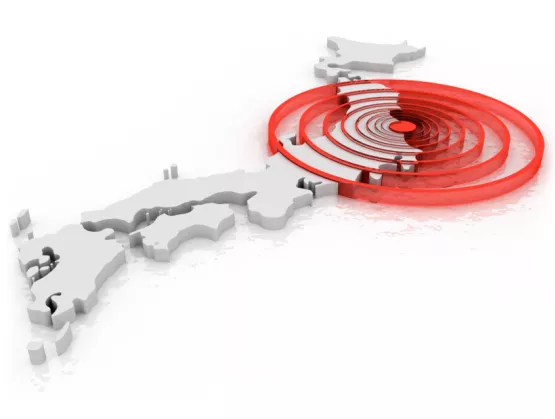
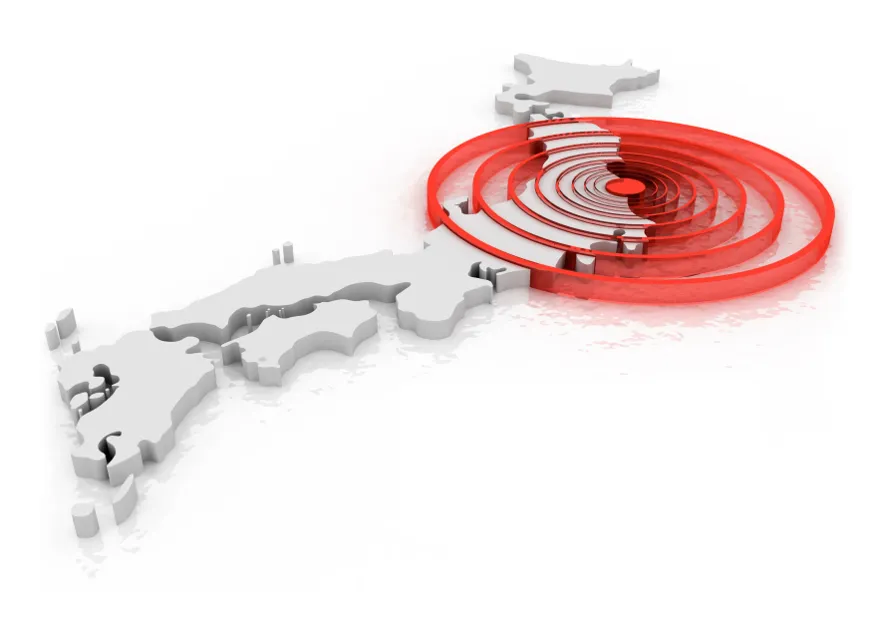
Wedged among four major tectonic plates, Japan is at the mercy of their abrupt herculean shifts and the earthquakes and tsunamis they can trigger. The fallout can be devastating. The magnitude 9 Great East Japan (Tohoku) temblor in 2011 and ensuing tsunami took nearly 20,000 lives, destroyed 138,000 buildings and cost $360 billion in economic damage.Factories including silicon wafer production facilities owned by Shin-Etsu Chemical and MEMC Electronic Materials – together accounting for 25 percent of the global silicon wafer production – sustained heavy damage. Operations were suspended. The Kumamoto earthquake in 2016 also caused significant damage. The economic cost: as much as $7.5 billion.With disaster risk rising on a global scale, these calamities offer valuable lessons in disaster preparedness and how companies can draw from their experiences to strengthen business continuity planning (BCP).Earthquake experiences and lessons in BCP were the focus of the recent SEMI Japan Members Day as speakers from five semiconductor device and equipment manufacturers offered their BCP strategies to about 150 SEMI members. Following are key takeaways from their presentations. Renesas: Create a robust production plant that is hard to break and easy to fixRenesas Semiconductor Manufacturing’s Naka plant took about 80 days to resume production while its ability to deliver semiconductors was delayed even longer as it recovered from damage caused by the Tohoku earthquake, said Yoshiyuki Miyamoto, Representative Director and President at Renesas. Operations at the company’s Kawajiri plant were disrupted by the Kumamoto earthquake.A key lesson from both earthquakes: The company needed to promote risk visualization from top-to-bottom in the supply chain. With the goal of making its plants easy to repair but hard to break down, Renesas implemented a risk management plan for earthquake preparedness plan to ensure stronger production line resistance and a stable supply to customers. The company ran simulations of multiple earthquake scenarios including aftershocks, enabling it to develop new BCP training and preparedness measures. Sony: Staying transparent about the disaster, sharing and interacting with related companiesYukihide Keigo, a representative from the Sony Semiconductor Manufacturing, showed footage taken the day the Kumamoto earthquake damaged a production line at its Kumamoto Technology Center. Sony is the top manufacturer of imaging sensors worldwide, and the Kumamoto plant is the backbone of that production. The magnitude of the foreshock fell within levels Sony had accounted for in its BCP at that time, and the line was expected to return to full production within a week. However, the magnitude of the earthquake that followed outstripped expectations, and the company’s BCP didn’t hold up. Three and a half months later, the plant had finally fully recovered. The protracted recovery prompted Sony to develop an earthquake preparedness plan using a model that assumed double the magnitude of expectations. For full restoration, the company identified challenges to returning to full operation at each stage of the production line. Then it went even further, developing in-house diagnostics, implementing critical path methods and strengthening earthquake resistance of equipment that manages bottlenecks for the restart of the plant. The revision of its BCP plan led to the establishment of a system to shorten the resumption of production after a major earthquake to just two months.Sony shared the contents of its BCP review with other companies to solicit help identifying any gaps and highlighted its partnership with Renesas in the Semiconductor Industry Association in Japan (JSIA), a committee of the Japan Electronics and Information Technology Industries Association (JEITA), to share materials procurement resources for the purposes of disaster preparedness and business continuity. HORIBA STEC: Steady daily practices protect hundreds of millions of yen worth of products HORIBA STEC’s Aso plant, near the epicenter of the Kumamoto earthquake, suffered heavy damage that cut off electricity and the water supply, yet production in its clean room resumed in just 10 days, said Hiroyuki Koyama, a factory manager at the plant. The plant’s quick recovery stemmed from daily preventive measures implemented before the quake such as connecting freestanding shelves for greater stability, applying thick rubber bands as rails to prevent manufactured goods from falling to the floor, and placing equipment on rolling carriages instead of fixed shelves.The practices saved the Aso plant hundreds of millions of yen in products and materials that otherwise could have been lost in the earthquake. Koyama also offered the reminder that, with regulations governing factory layout and construction differing widely depending on factors such as a building’s age, companies need to tailor their BCPs to the unique characteristics of each building. THK: The key point of dampening earthquakesTHK’s ACE Division develops earthquake dampening and vibration control devices designed to absorb the vibrational energy of an earthquake, though the devices must also be designed for precise analysis of that energy, said Hidemi Murao. Murao provided an overview of the latest technologies and products for dampening earthquake vibrations and shared test results from experimental devices.Murao described how THK’s recently introduced Linear Motion (LM) Guide, an earthquake vibration dampening technology, can significantly reduce building vibrations during a temblor. In a video Murao showed to demonstrate how the guide works, a shelf loaded with equipment rests on a platform equipped with THK’s LM Guide equipment. Simulating an earthquake, the platform shakes vigorously in every direction but the shelf remains steady as the LM Guide dampens the vibrations. The platforms can be installed on floors or underground in buildings or factories to prevent shelves from toppling. Tokyo Electron: The ideal BCP management systemOne risk associated with BCP training is that it can become overly routine, dulling the response of employees in actual disasters, said Tokyo Electron Vice President Tatsuya Aso. To help keep its workers’ skills sharp, TEL held surprise drills with employees assigned to particular BCP roles to test their ability to adapt quickly to when disaster strikes. In addition, TEL has launched surveys in more than 70 overseas locations to optimize safety in these high-hazard facilities.The SEMI Japan Members Day presentations made clear that the issue of BCP transcends boundaries between individuals, manufacturers, regions, and sectors within the global electronics supply chain. Disaster preparedness requires problem-solving across the entire supply chain, with companies sharing technical knowledge, offering mutual aid, and striving for continual improvement. Collaborative is essential. At SEMICON Japan 2019, SEMI will continue to bring companies together to address BCP initiatives and share their technical knowledge with members. Jim Hamajima is president of SEMI Japan.

Read More