downloadGroupGroupnoun_press release_995423_000000 copyGroupnoun_Feed_96767_000000Group 19noun_pictures_1817522_000000Member company iconResource item iconStore item iconGroup 19Group 19noun_Photo_2085192_000000 Copynoun_presentation_2096081_000000Group 19Group Copy 7noun_webinar_692730_000000Path
Skip to main content
Default Banner Image

webinars

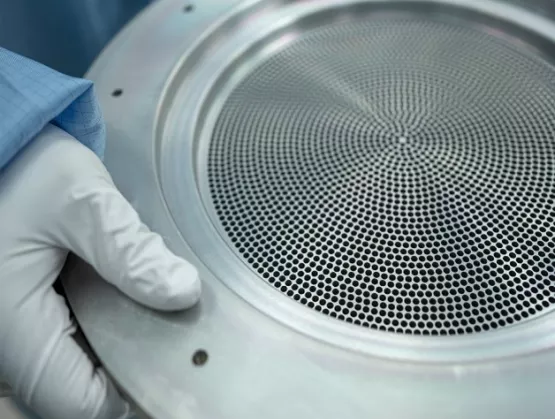
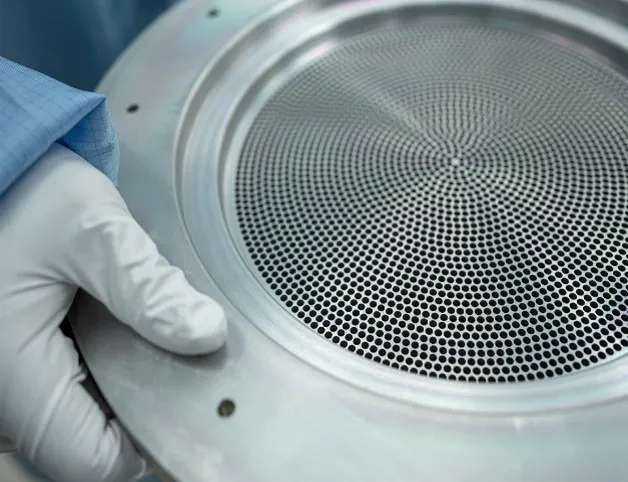
With each transition to a new technology node, fab requirements for metal and particle contamination become more stringent, posing challenges for existing coating methods such as anodization or plasma spray that may not provide complete protection against contamination especially on critical chamber components with complex geometry. SEMI spoke with Beneq business executive Sami Sneck about common metal and particle contamination issues with critical chamber components, coating methods to protect against corrosion, and properties to look for when selecting the optimal protective coating solution. Sneck discussed the unique benefits of atomic layer deposition (ALD)anti-corrosion coatings with Aluminiumoxide (Al2O3) and Yttrium Oxide (Y2O3) and offered recommendations on how to work with original equipment manufacturer (OEM) partners to design, test and implement an ALD coating solution for semiconductor equipment. To learn more, visit Beneq at its digital booth at SEMI Technology Unites Global Summit, available on-demand until March 26, 2021. Registration is open. SEMI: How does ALD compare with other coating methods such as anodization and plasma spray? Sneck: ALD enables conformal dense and pinhole-free coatings on complex shapes. We can deposit various ALD coating materials on parts made of various materials. All other coating techniques have limitations. For instance, anodization is conformal, but porous and is suitable for Al2O3 used for aluminum parts. Plasma Spray is a line-of-sight method and not conformal on complex shapes, such as holes in showerhead parts. SEMI: Which substrate materials work for ALD coatings? Sneck: In general, parts made of common metal materials, such as aluminum, stainless steel or titanium, all work well with ALD coatings. Commonly used ceramic materials work well with ALD too. Plastic materials need to be coated generally at a lower temperature, which limits the coating material selection, but materials such as Al2O3 can be applied as well. SEMI: What is the maximum coating thickness you can reach with ALD? Does this depend on the material? Sneck: Yes, indeed. The maximum coating thickness does depend on the material of the part that we are coating. Polymer materials for example, have a very large coefficient of thermal expansion, which limits the practical coating thickness to the 100-nanometer level. On metal and ceramic parts, coatings of several micrometers are possible too. Typically, ALD coating thickness on chamber components range from a few hundred nanometers to one micrometer. SEMI: Which aspect ratio can you coat with ALD? Sneck: Basically, ALD can coat aspect ratios of 1000:1, but this would be extremely slow. In practice, some of the most complex parts are showerhead parts with small holes. Typically, these have an aspect ratio of around 100:1, which is perfectly commercially feasible for ALD. An extreme example would be gas lines: In this case, the aspect ratio may be also around 100:1, but the physical distance from one end to the middle may be half a meter. In this respect, it is not practical to wait for gas diffusion to reach such a depth level. Instead, the gas lines can be coated by forcing the ALD precursor gas flow into the gas line parts. This works well but needs part-specific manifolds to guide the gases. SEMI: What is the lifetime of ALD coating compared to other coatings? Sneck: ALD coatings differ from other coatings a couple of ways. First of all, ALD coatings generate less particle contamination since they are non-porous. Secondly, and most importantly, ALD coatings can cover areas that other coatings cannot. What is considered the lifetime of a certain part depends on various factors. Ultimately, the lifetime needs to be confirmed by testing parts in actual process chambers by running a lot of wafers through the chamber and monitoring critical parameters such as particle level and yield. SEMI: If you have multiple shelves with parts in the reaction chamber, how does the shelf position affect the coating uniformity? Is center shelf better than top and bottom shelf? Sneck: Uniformity depends on many parameters, including the part geometry, part holder geometry, batch size and coating material. When the shelves supporting the parts are optimally designed and the gas flow is well-distributed to all shelves, all shelves from top to bottom show similar uniformity. SEMI: Is there any risk of cross-contamination? Sneck: Cross-contamination could potentially be caused by the parts themselves or by different coating materials. The batch setup is fixed in production use, which means the parts are the same in every batch. The only variation is that the batch may not be full in some cases, but then we do not fill the empty part of the batch with other parts that could cause contamination in order to prevent contamination from one part type to another. Cross-contamination from one coating material to another is not a usual concern but can be prevented by using dedicated reaction chambers for different coating materials. This is very easy to do with Beneq P800. Sami Sneck manages Beneq’s semiconductor part coating business. He joined Beneq in 2005 and since then has held various professional and management positions including product manager, application manager, director of ALD group, head of sales, and head of Asia. He earned his MSc degree in Chemical Engineering in 2001 from Helsinki University of Technology. Sneck has special expertise in Atomic Layer Deposition technology and business development. He has played a vital role in introducing various ALD production concepts and solutions to several industries ranging from jewelry to photovoltaics, electronics and semiconductors. Access the free webinar recording and discover the latest anti-corrosion coating solutions and the unique benefits of ALD (atomic layer deposition). This webinar is particularly helpful for process engineers, equipment engineers and others responsible for contamination control and equipment yield. Serena Brischetto is senior manager of Marketing and Digital Engagement at SEMI Europe.
Read More
About 70% of the U.S. Gross Domestic Product (GDP) is driven by consumer demand. What consumers are looking for is influenced by, for example, fashion trends, product innovations, environmental forces, and personal interests. Regarding personal interests: Sales of electronic components at Fry’s are poor. Radio Shack stores even vanished completely. Today’s consumers do not like to tinker; they want to buy software-enabled, user-friendly systems with over-the-air updating that serves their current and future requirements well – e.g. smartphones. System vendors followed the same transition, and so did semiconductor vendors. Instead of offering (low margin) components, they develop and manufacture big portions of, if not complete, (high value) hardware and software solutions for electronic systems, targeted at specific markets.Mid-August, two SEMI webinars outlined the Smart Mobility market and what it expects from system and semiconductor vendors.SEMI's Smart Initiative“None of us knows as much as all of us,” “Connect – Collaborate – Innovate,” and other strategic considerations have motivated SEMI to become the gateway for the $2 Trillion (= 2,000 Billion) global electronic design and manufacturing supply chain. Figure 1 shows how many companies and organizations have joined this large industry organization, to work together efficiently and serve customer demands cost-effectively. Especially in four high-growth markets/application areas – Smart Data, Smart Mobility, Smart MedTech, and Smart Manufacturing – SEMI enables highly rewarding cooperation. Figure 1: Overview of SEMI members, technology communities, and areas of focus. (Courtesy: SEMI) MEMS and Sensors for Smart Mobility Tim Brosnihan, executive director of MEMS Sensor Industry Group (MSIG), moderated the webinar on MEMS and sensors for Smart Mobility. Bettina Weiss, Chief of Staff and Global Smart Mobility Lead at SEMI, presented the overview. In addition to Figure 1 above, she showed how many companies are now supporting SEMI’s Smart Mobility efforts and have joined the Global Automotive Advisory Council (GAAC). The European GAAC was founded in 2018, based on requests from VW and Audi. Regional chapters have also been formed in the U.S., China, Taiwan, and Japan. Figure 2 shows the current members of the American GAAC – new members are welcomed in all five regions. Figure 2: Current GAAC members in the Americas. (Courtesy: SEMI) Market Trends and Technology Innovations in MEMS Sensors Andreas Breiter, Partner at McKinsey Company, addressed markets, and Armen Mkrtchyan, Associate Partner at McKinsey Company, spoke about technology. Breiter addressed both vehicle and infrastructure changes required, as well as many ongoing and planned activities to enable Smart Mobility. He outlined autonomy, connectivity, electrification, and shared mobility of vehicles as the major opportunities for MEMS sensors. Mkrtchyan showed which technologies enable Smart Mobility and which regions will invest how much in software, hardware, and services by 2030, to capture data and process it in partially/fully autonomous vehicles’ Domain Control Units (DCUs) – see Figure 3. Figure 3: Pre-COVID market estimates. (Courtesy: McKinsey Company) MEMS-based sensors are used in vehicles to monitor pressures and perform as accelerometers or gyroscopes. Non-MEMS-based sensors capture light (e.g. for time-of-flight distance measurements) or magnetic fields (e.g. for RPM measurements). Regarding the many infrastructure upgrades needed for enabling autonomous vehicles on the roads, in Figure 4, Breiter gives road planners a lot of food for thought and planning work. City planners face much more complex challenges. That’s why electronic systems will also be needed to make these large infrastructure investments earn returns. Figure 4: Smart roads are essential for autonomous driving. (Courtesy: McKinsey Company) EDA and Smart Mobility The second Smart Mobility webinar focused on how Electronic Design Automation (EDA) tool vendors, Intellectual Property (IP, System Building Blocks) vendors, and system/IC Design Services can contribute to the success of Smart Mobility. Bob Smith, executive director of Electronic System Design Alliance (ESDA), moderated the webinar, highlighting where the relatively small but essential ESDA and its members fit in the semiconductor ecosystem – see Figure 5. Figure 5: EDA, IP, and design services enable the entire electronics ecosystem. (Courtesy: ESDA) Bettina Weiss explained how SEMI and the Smart Mobility Team are working to bring together stakeholders in the semiconductor ecosystem in general and the Smart Mobility segment specifically, to jointly address topics of common interest, work on solutions and agree upon standards where and when needed. Market Trends and Technology Innovations in EDA, IP and Design Services Andreas Breiter and Armen Mkrtchyan presented McKinsey’s perspectives regarding these topics. In addition to the above-mentioned market data, Breiter emphasized that DCUs are playing an increasingly important role in capturing the data provided by smart sensors, are processing it, and initiating appropriate actions. Together with application-specific software, these DCUs perform tasks like sensor fusion, manage creature comfort, assure safe operation of the vehicle, and secure communication with the outside world (Figure 6). Figure 6: High growth for DCU; likely shift in business models. (Courtesy: McKinsey Company) Mkrtchyan addressed EDA, IP, and services for Smart Mobility from 10 different technical perspectives. Here are the highlights. Component failures can and will have severe consequences in Smart Mobility. Therefore screening, testing, and exhaustive verification are extremely important. Software content is likely to increase at 10% CAGR during this decade. To increase the productivity of software and middleware developers, he emphasized that standards need to be agreed upon. Over-the-air (OTA) updating capabilities are needed. That’s why cybersecurity is important to keep vehicles current and safe. Power train electronics need to function at up to 150°C. New materials will be needed to increase reliability, reduce cooling efforts, and lower unit costs. Last, but not least, Mkrtchyan emphasized that every city needs to design its own infrastructure, not only to enable Smart Mobility but also to monetize the large investments needed; EDA, IP and design support will help to achieve both. In summary, he stated that Design and IP as well as packaging and test will be the most impacted areas in the transition to Smart Mobility. Personal Comments After having attended several MSIG events, I am impressed by how MEMS, NEMS (Nano…), and sensors can lend machines in many ways sight, smell, taste, touch, and hearing. They can replicate these human senses, often better than found in us. If you, like me, celebrated when your first modem enabled your PC to communicate with the entire world, you’ll appreciate the value MEMS and sensors can and will add to machines’ “communication skills.” Also, I can assure you that innovative engineers in this field will find many new ways to capture data in the physical, chemical, and biological domains and enable machines to keep humans safe. (I look forward to a handheld Covid-19 sensor that provides results within a few seconds!) Having worked for a small, then a large EDA vendor, many years ago, and for the ESD Alliance several years ago, I know how difficult it is to motivate innovative software developers to work together or agree upon standards. I am glad that the ESD Alliance is now working closely with SEMI. Most SEMI member companies, and their innovative employees, have learned over the years how important standards are to reduce development cost, processing, and test time, as well as time to profit. I wish Bob Smith and the ESDA members all the best for cooperating closely to define design standards, bi-directional hand-off points up and down the entire supply chain, primarily at the interface between design and manufacturing. I want to encourage EDA and IP experts to work closely with the experienced and knowledgeable people in materials, equipment, manufacturing, and test. 5G mm-wave communication, artificial intelligence/machine learning (AI/ML), reliable solutions for Smart Mobility, and development/characterization of new materials offer great opportunities and challenges for design AND manufacturing. Together, these two big camps can monetize required solutions much better and faster, than on their own. Your contact at SEMI can tell you how and where you can watch the webinar recordings and/or download all the slides. P.S.: Having two eCars and one eBike in our garage encourages me to appreciate SEMI’s efforts in advance Smart Mobility! Republished with permission from 3D InCites.
Read More
Japan’s semiconductor industry has weathered the COVID-19 pandemic to post robust growth. Far from a temporary setback, COVID-19 will lead to enduring change in how we work and live. And just as automation has been a bulwark against the devastating business impacts of the virus outbreak, increasing digitization will lead to new efficiencies in our industry.These were some of the key takeaways from three SEMI Japan Members Day webinars in June and July that offered the latest updates on COVID-19 impacts to the semiconductor industry and restart strategies for SEMI members. More than 2,000 SEMI members across Japan’s islands attended the webinars featuring the following five speakers: Hideki Kanewaka, Marketing Director, Consulting Lead, Japan, Accenture Japan Ltd. Takayuki Komori, Manager, Marketing Engineering Dept, SUMCO Corporation Taketoshi Hamaguchi, Director, Manufacturing Industry, Microsoft Corporation Akira Minamikawa, Senior Consulting Director, OMDIA (Informa Intelligence LCC) Yuichi Koshiba, Managing Director Partner, Boston Consulting Group COVID-19 Impact on Japan Semiconductor Industry is ModestThe consensus view of the five speakers from various quarters of the industry – consultant, IT service provider, materials supplier, market analyst – was that the Japan semiconductor industry withstood the heavy blows COVID-19 dealt to other industries thanks to strong demand for chips. Shelter-in-place policies and lockdowns spawned by COVID-19 has accelerated the digital transformation rippling around the world as electronics sales have soared to support everything from remote work and education to healthcare and home entertainment including gaming.The rapid growth of cloud usage for video streaming, gaming and remote work is taxing communications network capacity and placing more bandwidth demands on servers, said Akira Minamikawa of OMDIA. According to a recent report by Nokia, communications network traffic has skyrocketed 300 percent for online meetings and 400 percent for gaming, bringing the networks closer to their capacity limits. Minamikawa sees server shipments increasing at 8 percent CAGR through 2024. For the broader chip market, he expects demand for notebooks, solid state and hard disk drives, and gaming to remain strong in 2020. He also predicts rapid 5G penetration for smartphones will boost semiconductor chip industry growth.Still, not all semiconductor segments are expanding, said Yuichi Koshiba of Boston Consulting Group. Chip shipments for end products in markets such as automotive, industrial equipment and aircrafts are on the decline. Slowing demand for chips that power automotive applications in particular could pare sales for some chip companies and distributors since the segment accounts for a high proportion of their overall revenue.State of the Semiconductor IndustryFrom SUMCO’s vantagepoint as a major silicon wafer supplier, the company’s Takayuki Komori sees a number of changes unfolding in the semiconductor industry: Smartphones are driving growing demand for process technology (smaller nodes) and 300mm wafers. Komori estimates the typical high-end smartphone sports 1,700 square millimeters of silicon. 300mm wafers account for 80 percent of that total while more than 50 percent of the devices use leading edge multi-patterning technologies. Smartphones will need more RF chips to support 5G’s high-speed communications and added frequency ranges. Substrates for RF switches and tuners have been shifting from gallium arsenide (GaAs) and other compound semiconductors to silicon. 5G smartphone penetration will accelerate as the cost of integrating CPUs and modem functions into a single chip sees a swift decline. While the sensitivity and resolution of CMOS image sensors have evolved to incorporate innovative backside illumination and stacking technologies, future advances will focus more on products for machine vision applications capable of sensing invisible light bands. Rising adoption of electric vehicles and robotics applications will drive growing demand for power semiconductors that control their motors such as IGBTs and MOSFETs as the production capacity for the devices expands and shifts to 300mm wafer lines. For memory fabs, Minamikawa said utilization remains high as a result of a spending slowdown by major chip manufacturers and will stay elevated even once additional capacity ramps to support robust demand. Foundry fab utilization also remains high despite the pandemic-driven cancellation of smartphone chip orders in March. Minamikawa also sees the utilization rate of micro rising with the surge in demand for notebooks, PCs and servers in the second half of 2020.Transition to New NormalAs people around the world start to settle into new ways of living and working, there’s a growing acceptance that the transformation will be long-lasting. And no area of people’s lives is changing more than their work. Boosted by government subsidies, many small and midsize companies in Japan have started to implement work-from-home policies, an area where major electronics and IT businesses had already instituted reforms, said Hideki Kanewaka of Accenture. A few examples: Nippon Telegraph and Telephone Corporation (NTT) announced that half of its employees will continue to work from home in the future. A five-year plan Toshiba launched in 2019 to allow all employees to work from home will likely accelerate. Hitachi plans to allow all employees to work from home starting in April 2021. dwango, a major internet-based entertainment company in Japan, announced it will allow in principle any employees to work remotely. In the critical area of remote sales, Kanewaka pointed to the importance of going beyond online business meetings, paperless transactions and virtual events to devise new ways to attract customers and close deals. Creating online communities and providing rich digital content are also important measures to consider, he said.Manufacturing's Digital TransformationTravel restrictions by most countries to curb the COVID-19 outbreak have also raised barriers to chip companies sending engineers overseas sites to service state-of-art equipment and provide other technical support. Microsoft’s remote assist system deployed by ASML is one tool semiconductor makers can use to overcome this challenge, said Taketoshi Hamaguchi of Microsoft.The system connects a remote equipment service expert with an onsite worker through the internet, allowing the technical expert to provide support through a goggle display with a camera worn by the worker. Guided by the expert, the worker can perform complex services. A Natural User Interface (NUI) helps give the factory worker a clear understanding of the often highly technical instructions.Using artificial intelligence (AI) to increase automation will also help reduce the reliance of semiconductor factories on onsite workers. For example, AI deep learning can be deployed to calibrate equipment autonomously and reduce downtime after scheduled maintenances, Hamaguchi said.Corporate Restart Strategies Beyond factory considerations tied to COVID-19, semiconductor companies will need to adapt their business strategies to new ways of operating. For example, global supply chains will shift to domestic sources and increase redundancy to ensure a steady supply, a change leading to higher overall costs, Koshiba said. Trade routes among regions will also be redrawn as the trade rift between the United States and China and other geopolitical tensions intensify. The total value of those routes is expected to recover by 2023.Koshiba advised companies to evaluate the supply chain trade-offs between stability and cost and factor in potential risks to improve their short-term resilience and drive mid- to long-term supply chain restructuring.After past recessions, 14 percent of companies restored sales growth, Koshiba said. He recommended investing aggressively in growth and seizing M A opportunities during the downturn. Chip companies must also adapt to supply chain changes faster than competitors.Become a SEMI MemberWebinars like the recent SEMI Japan Members Day series have become increasingly important in the mix of programs and services SEMI offers members to help them connect, collaborate and innovate in the microelectronics community. To become a SEMI member, please visit the SEMI website or contact your nearest SEMI office.Jim Hamajima is president of SEMI Japan.
Read More
Since the beginning of the COVID-19 outbreak earlier this year, the world has been flocking online – to connect, to share stories, and, for those who can, to continue to work to help keep the wheels of economies turning. With its shift away from in-person events, the SEMI Foundation, too, has found new ways to connect with members and talent. We have started to develop online content for high-school and university students to maintain engagement with these vital pools of future talent. As we build our online presence, we will also explore providing support for reskilling employees, veterans and other target hire groups to help meet microelectronics industry’s talent needs.This strategic shift involves repurposing and transforming existing programs. One key focus area as we evolve our work has been SEMI High Tech U (HTU), a hands-on industry exposure program the SEMI Foundation launched in 2001. The program aims to gather high-school students at member company work sites to learn about the science behind semiconductor technology and various career paths. We are working to offer this career education opportunity online to better connect with students and educators all over the world, regardless of their proximity to a member company. This new guided online journey through the manufacture of a silicon chip will allow users to learn about the science, technology, equipment and companies needed to create this amazing device that is the heart of our digital world.The SEMI Foundation’s open houses catering to university students are also going online. The virtual events will give students a chance to learn about the critical technologies emerging from the microelectronics industry and available career opportunities. They will also be able to submit their resumes for open positions at our member companies.We’re excited as we gear up to launch these online programs in order to expand our reach and impact and to support the critical workforce development needs of our member companies. As we begin to expand our online content, we will be recording our educational webinars and gathering testimonials from corporate leaders and offering both as free resource to members, students and potential hires. These digital resources will help our members share talent development best practices and give students deeper insights into the industry.If you would like to support these initiatives as the SEMI Foundation continues to help the industry attract, develop and retain talent in ways that no single member company can alone, you may do so in a number of ways: Volunteer to review educational content for accuracy and relevance Sign up to be a speaker or panelist at upcoming virtual events Share industry informational videos Highlight industry technologies that are making a difference in the world Showcase how your company is addressing STEM education and workforce development Sponsor an upcoming SEMI Foundation workforce development event To get involved, please contact Shari Liss, executive director of the SEMI Foundation, at [email protected].
Read More