downloadGroupGroupnoun_press release_995423_000000 copyGroupnoun_Feed_96767_000000Group 19noun_pictures_1817522_000000Member company iconResource item iconStore item iconGroup 19Group 19noun_Photo_2085192_000000 Copynoun_presentation_2096081_000000Group 19Group Copy 7noun_webinar_692730_000000Path
Skip to main content
Default Banner Image

prefectures

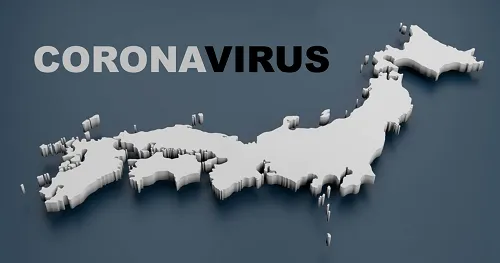
In an important step toward resuming business as usual in Japan, Prime Minister Shinzo Abe on May 14 lifted the state of emergency originally scheduled to expire at the end of May for 39 of Japan’s 47 prefectures, marking “the real beginning of our efforts toward a new normal in the era of the coronavirus” as new cases continue to decline. But with Tokyo, Osaka and six other prefectures still under the state of emergency, Abe urged citizens to remain cautious as the nation and world continue to confront the COVID-19 threat. Among criteria the remaining prefectures must meet for a state of emergency suspension is a reduction in new infections to no more than 0.5 cases weekly for every 100,000 citizens. The eight prefectures account for nearly half of Japan’s population and GDP, with Tokyo and Osaka the two largest urban areas in the island nation. Japan expects to contain its economic losses to 38 trillion yen, 15 percent less than the 45 trillion yen hit originally projected. The Japan government has planned a May 21 progress review[1] in the eight prefectures, a timeline that Abe said could lead to the lifting of the state of emergency before the original cutoff at the end of the month, a move that would help stem the drain on the domestic economy.Strict Immigration Controls Restricts International Travel to and from Japan by Supplier EngineersAs I reported on April 21, the Japan Foreign Ministry on March 31 raised its travel advisory to level 3 for 49 regions around the world including the U.S., prohibiting travel from Japan for any purpose. SEMI Japan is urging government officials to exempt Japanese supply chain engineers from the travel ban to allow visits to semiconductor manufacturing facilities in those regions in order to install, start up and service equipment.Starting May 14, Japan blocked immigration of foreign nationals and permanent residents from 100 countries and regions worldwide, a ban applying to anyone who spent time in their home region within 14 days of their planned arrival in Japan. The areas include China, Singapore, South Korea, and Taiwan in Asia; Canada and the U.S.; and Germany, France, Italy, Netherlands, Switzerland and the U.K. in Europe. For the complete list, see the Japan Ministry of Justice’s website.Japan’s immigration ban mirrors restrictions now in place in many other regions around the world. The immigration controls are well-intended – to restrict the spread of COVID-19 – but hamstring the global microelectronics supply chain. For example, the curbs bar engineers from international travel to install new tools and software in fabs. SEMI Japan has stressed the potential chip industry impacts of the ban in ongoing talks with the Ministry of Economy, Trade and Industry and is facilitating discussions between government representatives and SEMI members to help clear the way for travel by critical supply chain workers to Japan. SEMI Supports Members with COVID-19 ResourcesSEMI international headquarters and regional offices are here to help you, our members. For more information on our webinars, surveys, best practices and other information designed to help you meet the challenges of the pandemic, please visit the SEMI Coronavirus Updates Resources page.[1] The May 21 review found three prefectures in western area – Hyogo, Kyoto and Osaka – met the criteria to lift the state of the emergency. Four other prefectures – Chiba, Hokkaido, Saitama and Tokyo – remain under the emergency order that will be reviewed again as early as May 25.Jim Hamajima is president of SEMI Japan.
Read More
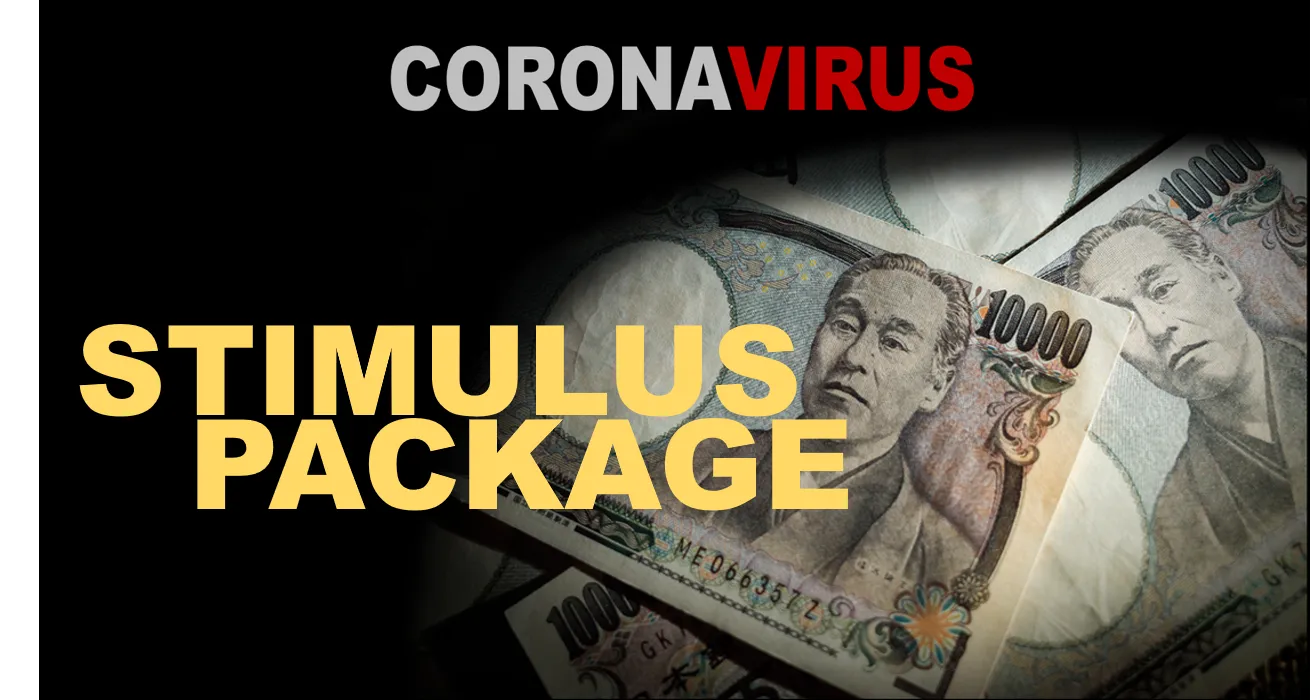
On April 16, Japan prime minister Shinzo Abe expanded the state of emergency beyond Tokyo, Osaka and five other prefectures to all 47 prefectures nationwide in an effort to curb the spread of COVID-19.As I reported two weeks ago, SEMI Japan initiated communications with all prefectural governments on April 10. Since then, the government’s concerns over the virus’s impact on the semiconductor supply chain have heightened. Prefectural Governments Plan No Restrictions on the Semiconductor Supply ChainOf the 47 prefectural governors I contacted, urging them to classify the semiconductor industry as an essential business, 40 confirmed in follow-up calls through April 20 that they have no plans to restrict operations of the semiconductor industry and supply chain companies in their jurisdictions. Those prefectures include Aichi, Akita, Aomori, Chiba, Ehime, Fukui, Fukuoka, Fukushima, Gifu, Gunma, Hiroshima, Hyogo, Ishikawa, Iwate, Kagawa, Kagoshima, Kanagawa, Kochi, Kumamoto, Kyoto, Miyagi, Miyazaki, Nagano, Nagasaki, Nara, Niigata, Oita, Okayama, Okinawa, Saga, Saitama, Shiga, Shimane, Shizuoka, Tochigi, Tokushima, Toyama, Wakayama, Yamagata and Yamanashi.However, the Aichi, Iwate, Kumamoto, Nagasaki, Oita and Saga governors cautioned they will reconsider restrictions on the semiconductor and other industries if COVID-19 transmissions worsen.The seven other prefectures including Tokyo and Osaka are not planning to respond to our request until they have COVID-19 transmission mitigation plans in place. In the meantime, SEMI Japan will continue to encourage prefectural governments to allow semiconductor supply chain companies to continue to operate unrestricted, a move consistent with current national policy for novel coronavirus disease control.Japan’s Economic Stimulus PackageOn April 6, a day before prime minister Shinzo Abe declared the emergency state for seven prefectures, he announced an unprecedented 108 trillion yen ($989 billion) stimulus package[1]. The package, equivalent to about 20% of the Japan’s economic output, dwarfs the 56 trillion yen in aid passed in the wake of the 2008 financial crisis.The first phase of the relief package seeks to halt job losses and bankruptcies, while the second will support a V-shaped economic recovery. For businesses, phase-one aid includes: Subsidies for firms that keep workers on the payroll. Large companies keeping at least half of their workers on the payroll and small and medium sized businesses that continue to pay at least two-thirds of their employees are eligible for the payouts. One-year deferment of income and regional tax payments for companies hit by the virus Property tax reductions of 50% in fiscal year 2020 for small and medium sized companies with sales that have fallen by at least 30%, and property tax exemptions for those with sales suffering contractions of at least 50%. Interest-free loans requiring no collateral for small and medium sized companies Low-interest loans available to medium sized and large companies through the Development Bank of Japan and Shoko Chukin Bank The second phase of the package, still under development, could include incentives to recharge consumer spending and tourism and subsidies for regional economies once the coronavirus has been contained.Japan COVID-19 Stimulus and Support ResourcesThe economic support measures planned by the Japan Ministry of Economy, Trade and Industry (METI) are summarized at https://www.meti.go.jp/english/covid-19/index.html#10.Prefectural and municipal stimulus and support information is summarized in Japanese at https://j-net21.smrj.go.jp/support/tsdlje00000085bc.html.SEMI Supports Members with COVID-19 ResourcesSEMI international headquarters and regional offices are here to help you, our members. For more information on our webinars, surveys, best practices and other information designed to help you meet the challenges of the pandemic, please visit the SEMI Coronavirus Updates Resources page.[1] The government increased the stimulus package to ¥117.1 trillion after a sudden policy shift to provide cash handouts of ¥100,000 for every individual in Japan. Originally, the plans were to give ¥300,000 to each household that has seen a sharp fall in income due to the virus outbreak.Jim Hamajima is president of SEMI Japan.
Read More
Japan’s Prime Minister Shinzo Abe declared a state of emergency for Tokyo, Osaka and five other prefectures[1] on April 7 in response to a startling increase of COVID-19 infections in the region’s cities in an uneasy moment for its domestic semiconductor industry. The declaration, effective through May 6, authorized the six prefectural governors to strengthen curbs on the spread of the virus and included guidance for citizens to stay home and restrictions on operations of non-essential businesses.With Japan supplying some 40 percent of the world’s chip production equipment and materials, the declaration stirred fears among semiconductor manufacturers that their uninterrupted operations – critical to sustaining the global industry – might be at risk. Japan Government Designates Semiconductor Industry as EssentialIn April 7 and 11 revisions to its Basic Policies for Novel Coronavirus Disease Control, the Japanese government allayed those concerns by designating semiconductor manufacturers essential businesses – a stark acknowledgment of the chipmakers’ vital role in combatting the novel coronavirus. The policy stated:“Among medical and manufacturing industries, we request the continuation of the following business operators in consideration of infection prevention: operators who are difficult to stop production line due to the characteristics of the equipment (such as blast furnaces and semiconductor factories); and operators who produce essentials (including important items in supply chains) for protection of the people who need medical care and support, as well as for maintenance of social infrastructure. We also request the continuation of the business operators who sustain medical care, the lives of the people, and maintenance of the national economy.”[2]SEMI Japan Reaches Out to Prefectures to Urge Essential Business Designation Equipment and materials shortages can halt production of an entire fab line and ripple through intricately connected global supply chains to stifle the production of end devices including the electronics critical to COVID-19 treatments. Electronic devices also play a central role in containing the virus’s spread by enabling artificial intelligence (AI), data analytics, digital communications, telemedicine, robotics, remote health monitoring, telecommuting, online shopping and other digital services.The essential business designation was explicit recognition that Japan’s semiconductor supply chain is integral to the global chip production ecosystem and worthy of the same protections the government has implemented for semiconductor companies. With SEMI members operating in Japan’s 47 prefectures, I sent letters to all prefectural governors three days after the second policy revision, urging them to apply the same designation, and the SEMI Japan team is following up to secure their support.SEMI Japan Encourages Government to Exempt Members from Travel Restrictions The Japan Foreign Ministry on March 31 raised to level 3 its travel advisory for 49 regions including the U.S., China, Taiwan and South Korea, encouraging Japanese citizens to avoid travel regardless of purpose to blunt the international spread of the coronavirus. SEMI Japan is working with the Semiconductor Equipment Association of Japan to urge the government to exempt semiconductor supply chain companies from the level 3 travel restrictions if they implement measures to prevent domestic infections and contagion in the visited regions. The exemptions would allow supply chain companies to install and service equipment at fabs – one key to maintaining smooth, uninterrupted operations.SEMI Supports Members with COVID-19 ResourcesSEMI international headquarters and regional offices are here to help you, our members. For more information on our webinars, surveys, best practices and other information designed to help you meet the challenges of the pandemic, please visit the SEMI Coronavirus Updates Resources page.[1] The six prefectures are Tokyo, Kanagawa, Chiba, Saitama, Osaka, Hyogo and Fukuoka.[2] Provisional translation by Ministry of Health, Labour and Welfare. Full document is available at https://www.mhlw.go.jp/content/10900000/000620733.pdf.Jim Hamajima is president of SEMI Japan.

Read More