downloadGroupGroupnoun_press release_995423_000000 copyGroupnoun_Feed_96767_000000Group 19noun_pictures_1817522_000000Member company iconResource item iconStore item iconGroup 19Group 19noun_Photo_2085192_000000 Copynoun_presentation_2096081_000000Group 19Group Copy 7noun_webinar_692730_000000Path
Skip to main content
Default Banner Image

Fourth Industrial Revolution

The state of manufacturing is changing rapidly. Regardless of sector or location, manufacturing decision-makers across the world are signaling a desire for better supply chain resiliency, manufacturing flexibility, increased speed of innovation and stronger environmental sustainability. Singapore’s manufacturing sector, a significant contributor to its gross domestic product, is always evolving and today is shifting away from its traditional focus on producing highly customized products using flexible manufacturing processes, but at significantly lower efficiencies. Today, with Industry 4.0, we can design manufacturing systems that optimize both efficiency and flexibility. And this is possible because of the convergence of technologies such as artificial intelligence (AI), data analytics, robotics and the Industrial Internet of Things (IIoT). This blend of technologies helps reduce the cost of technological solution ownership – a derivative of Right’s Law – as a function of cumulative production. In HP Singapore, driving innovation in our product and processes is part of our DNA, and over time our products have grown in complexity and breadth. We have embraced Fourth Industrial Revolution (4IR) technologies in our advanced manufacturing lines. We started our Industry 4.0 journey in 2016 with Vision and Mission 2020 to modernize our production facilities to smart factories that strengthen our competitive edge. Our focus was on upskilling our employees with future skill sets, build new technological capabilities and partner with higher education institutes. To drive these transformations, we have formulated five pillars: Additive Manufacturing Data Analytics Cyber-Physical Integration Digitalization Workforce Transformation These five pillars have enabled us to move from labor-intensive and reactive processes to processes that are highly digitized, automated, and AI-driven, enabling us not only to increase quality and productivity but also to reskill our people in anticipation of jobs they will need in the future. Technicians have been upskilled and promoted to techno-operators which has, in turn, freed up technical specialists to explore other roles. Engineers have retrained as data scientists, or have moved to new product development, for instance. In 2017, HP’s Ink Supplies Operations (ISO) set up Smart Manufacturing Applications and Research Centre (SMARC) to adopt 4IR technologies and implement these innovations in production lines. Today, SMARC is the home ground for HP engineers to experience, trial and prototype solutions, bringing innovative and sometimes unexpected solutions to manufacturing. It is also a showcase for industry partners, government agencies and schools. Here is how each pillar of the SMARC contributed to transformation to augment the manufacturing workforce: Cyber-Physical Integration – Move Role of robotics/automation – By standardizing automation standards for robotics, we have deployed collaborative robots (Cobots) and autonomous intelligent vehicles (AIVs) to perform manual and routine tasks to drive productivity, while reducing errors from operator fatigue and protecting our operators’ physical well-being. Digitalization – Sense Role of IIoT – Devices are a treasure trove of data that can provide clarity on how the entire manufacturing line is performing in real time. Building a platform that connects devices and collects data while allowing factory floor managers to dynamically visualize on an Integrated Command Centre (ICC) and manage factory performance is central to HP’s digital transformation journey. And IIoT is not restricted to just devices that are already wired for data sharing. HP has also connected off-the-shelf analogue devices using a standardized data transportation protocol, allowing HP to collect essential data across all types of devices and eliminating manual data entry. Additive Manufacturing – Build By embracing additive manufacturing (use of HP MultiJet Fusion 3D printers), HP introduced more flexibility in operations through on-site rapid prototyping, light production, and replacement of parts needed on our manufacturing floors, shortening production timelines. We 3D printed pallets, which are cheaper and faster to produce, and replaced original pallets for transportation on conveyor belts, improving the efficiency and productivity of our operators. Director Jamie Neo with HP’s MultiJet Additive Manufacturing Printer. (Photo Credit: HP) The HP Multi Jet Fusion 3D printing technology has helped HP to replace traditional manufacturing methods and streamline processes in our supply chain. For example, HP is 3D printing the Drill Extraction Shoe, a tool that is essential to the removal of waste products from laser-drilling in HP’s printhead manufacturing line. Through 3D printing, HP has consolidated the production of the tool from nine parts to one 3D printed model, thereby optimizing the design of the tool and reducing its production time from three to five days to 24 hours. Data Analytics – Think By deploying advanced analytics and machine learning models, HP has enabled real-time detection, diagnostics, and prediction of product quality across our manufacturing lines. Predictive models are replacing traditional “destructive testing,” reducing waste and allowing HP to meet unique product specifications more accurately. Machine learning is diagnosing and recommending the right set up for tools and manufacturing lines, when necessary, to reduce downtime and increase precision. Workforce Transformation – Grow The pivot to becoming an advanced manufacturing leader not only requires HP to invest in 4IR technologies but also skill sets to operate 4IR technologies. We embarked on a Workforce Transformation program to help our employees stay competitive in a fast-changing world. Today 35% of HP technical workforce have had the opportunity to take on new roles even as needs evolve, thanks to internal and external training and reskilling. Beyond technology and training, the glue that binds these together and makes it successful is our culture at HP. We are ambition-led, which means that we do not see the world as it is, but what we can be. And we do so by collaboration. Plans for the Future After accomplishing our Mission 2020, in late 2020 we launched Mission 2025 to extend our end-to-end smart factory capabilities through advanced connectivity, intelligence and automation to optimize and drive sustainable manufacturing flexibility and efficiency. Pyramid of HP’s smart manufacturing focus Advanced technologies such as additive manufacturing, IIoT, automation and robotics, data analytics, machine learning and AI are central to the connectivity and the end-to-end intelligence of our smart factories, enhancing production efficiency and flexibility while improving the quality of our products. For example, the deployment of IIoT sensors in our wafer plant has helped to reduce downtime in replacing CO2 gas cylinders. What’s more, AI enables us to more accurately monitor the dispensing of structural adhesive to eliminate lost yield. We believe that by enhancing manufacturing efficiency and flexibility, we were able to shorten resolution time, reduce our carbon footprint, and improve the resiliency of our manufacturing and supply chain systems. HP smart factory model In April 2021, two lines in HP Singapore joined the World Economic Forum’s Global Lighthouse Network after being recognized for pivoting from a labor-intensive factory into a digitized, automated one with the help of AI. In doing so, we managed to improve manufacturing costs by 20% and productivity by 70%. Under Mission 2020, we saw the following successes: Improved manufacturing costs by 20% Improved productivity by 70% Brought most HP employees onboard to our smart manufacturing journey Equipped HP employees with skill sets in areas such as additive manufacturing, data analytics, AI, robotics and Internet of Things Established a Model Factory playbook With Mission 2025, we will: Continue to train employees in future skillsets by partnering with institutes of higher learning Scale our Model Factory playbook across more manufacturing lines to reduce costs and improve productivity Enhance our knowledge in additive manufacturing by building an ecosystem as a service platform to help manufacturing companies Enable a sustainable manufacturing system to reduce our carbon footprint and help enable a circular economy We believe in innovating with purpose by focusing on solving real-world problems and creating technology in the service of humanity. That is why we built the SMARC to create the solutions for our lines and showcase these solutions to encourage industry participation. We are driven by values and ambition, which means that it is not just what we do, but also how we execute it. We make sure our values inform everything we do – for instance, helping us make a greater impact to environmental sustainability, people, and our community. We believe this is a crucial step in coalescing industry support, which is necessary to move the needle on advanced manufacturing. Robert Ronald is Master Program Manager, Cost Structure, Model Smart Factory and Sustainability, at HP.
Read More
Teck Khiong, WOI, senior manager of Factory Integration at Infineon Technologies Asia Pacific Pte Ltd, recently shared with me how the Infineon backend plant in Singapore has benefited from its journey to qualify for the lighthouse certification.WOI is driving Infinion smart manufacturing projects with a strong focus in the area of connect and control using IoT (Internet of Things) and analytics technologies. Ng: How did the Infineon backend plant in Singapore distinguish itself to qualify for lighthouse certification? WOI: The Infineon Singapore backend manufacturing plant is proud to be a Lighthouse Certified Smart Manufacturing site as part of the World Economic Forum’s (WEF) Fourth Industrial Revolution platform. Our Industry 4.0 (I4.0) implementation reduces labor costs by 30% and improves capital efficiency by 15%. We drove this successful digital transformation continuously investing in our people development and digital backbone.Of the many initiatives under our I4.0 Smart Factory platform, five were selected for WEF Lighthouse submission and certification. Digital foundation with integrated connectivity and workflow execution We implemented an Internet of Things (IoT) framework to connect machines to manufacturing system more than two years ago. The digitization of our Work-in-Progress (WIP) management systems provides full traceability and gives us better control of the four Ms (Man-Machine-Method-Material). Material handling and process automation We progressively deployed automated solutions starting six years ago using autonomous transport, robotic material management systems and automation of packing processes. This eliminated non-value touches in areas of WIP storage and retrieval. Advanced algorithms enabled WIP scheduling and dispatching As our product mix and volume grew in complexity, our advanced algorithms has enabled us to increase our machine uptime, thus reducing idle and set-up time. Manufacturing control tower Our control tower provides a real-time pulse of the entire manufacturing process, from machine efficiency to quality. The tower also improves data integrity and collaborative information sharing while issuing early-warning alerts that enable exception management and timely decisions. Running a global virtual factory Our Global Production Network deployments allows us to connect and manage a growing contract-manufacturing network in real time, with the same transparency, traceability and control as if the manufacturers are our internal sites.About Teck Khiong, WOITeck Khiong, WOI graduated from Loughborough University in the UK with a Master of Science degree in Computer Integrated Manufacturing (CIM). For more than 20 years he has delivered manufacturing IT solutions to global backend (assembly and test) semiconductor manufacturing, ranging from equipment, factory, process control, material handling automation and manufacturing execution systems (MES).
Read More
Making Strides TogetherKnowledge is power – especially when it is shared. This principle formed the foundation for Micron’s Go and See virtual visit of its Singapore manufacturing plant on 26 August 2020 as 27 companies including GLOBALFOUNDRIES, ST Microelectronics, Infineon, TEL, ViTrox , IBM, HP and UTAC joined the first-of-a-kind virtual factory visit. The chip industry powerhouses gathered to see how Micron’s Lighthouse frontend wafer fabrication facility leverages Fourth Industrial Revolution technologies to drive new production and cost efficiencies.They saw clear markers of a transformed organisation and spoke with working-level staff, managers and front-line employees. Company representatives also met virtually with Micron management teams from organisations that led its digital transformation – from pilot programs to integration at scale – to realise significant financial and operational benefits. The mix of technologies they deployed to make it all happen included artificial intelligence (AI), big data analytics and the Industrial Internet-of-Things (IIoT).Micron’s Singapore-based fab facility earned Lighthouse certification earlier this year from the World Economic Forum’s Global Lighthouse Network. The Go and See tour was co-sponsored by SEMI Southeast Asia and McKinsey Company.Transformation is CrucialBy embracing Lighthouse principles, semiconductor sectors and companies can accelerate their digital transformation to boost operational and financial efficiency while helping increase productivity across the electronics supply chain. It will take time for Southeast Asia semiconductor manufacturers to transform to digital operations, though we’re seeing growing interest in Industry 4.0 practices as they begin to understand that the deployment of new technologies and applications will help them better understand real-world benefits of smart manufacturing use cases and solutions. SEMI believes shining the spotlight on companies like Micron can illuminate the way forward for other companies to help drive the industry’s digital transformation. We look forward to seeing companies build on this momentum as they start to leverage leading-edge technologies to improve efficiencies and promote sustainability.Bee Bee Ng is president of SEMI Southeast Asia.
Read More
Many companies are applying Fourth Industrial Revolution initiatives in manufacturing, though only a few have managed to successfully integrate the smart manufacturing technologies at a scale that allows them to realise significant economic and financial benefits.Known as lighthouse companies, these organisations have taken their smart manufacturing journeys from pilot to integration at scale, serving as beacons to others in overcoming challenges in their production systems through the adoption of leading-edge technologies such as artificial intelligence, additive manufacturing and advanced analytics.At the recent SEMI Southeast Asia webinar Journey to Recovery of the E E Industry, Dato' Azman Mahmud, Chief Executive Officer of Malaysian Investment Development Authority (MIDA), spoke about building Malaysia’s very own Lighthouse Project comprising multinational corporations that will act as anchors to help guide local players into this new venture.During the webinar, Dato' Azman elaborated about Malaysia’s competitive edge – its diversified economic structure and government support. He said the key to sustaining this competitive edge, however, is that the Malaysian economy must be digitally empowered. The Lighthouse Project is one programme that will help achieve this objective. We are inspired and encouraged by this initiative. As firm believers in connecting and collaborating, SEMI Southeast Asia supports programmes that advance the entire microelectronics ecosystem. We look forward to seeing MIDA drive this project, and we encourage Malaysian E E companies to tap MIDA’s expertise in this field. Ultimately, we are confident that through this initiative and the adoption of Industry 4.0 technologies, Malaysia will be repositioned as a top global manufacturing nation. Bee Bee Ng is president of SEMI Southeast Asia.
Read More
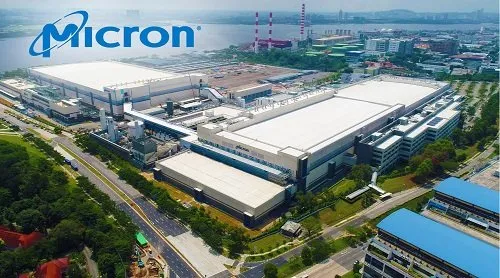
The world’s most advanced manufacturing factories are leading the way in driving efficiency and sustainability.In advance of its 2020 meeting, the World Economic Forum welcomed Micron into its Global Lighthouse Network, a group of advanced manufacturers “that are showing leadership in applying the technologies of the Fourth Industrial Revolution to drive operational and environmental impact.”For years, Micron has been helping clients integrate artificial intelligence (AI), big data analytics and the industrial internet of things (IIoT) into their factories. And now Micron’s factory is one of the first facilities in Singapore, along with Infineon, to be recognized by the Global Lighthouse Network.In a recent interview with Channel News Asia, Manish Bhatia, executive VP of Global Operations, explained how Micron has been practicing what it preaches: “Our products enable new technology trends such as IoT, 5G, cloud computing and autonomous driving. Applying these technologies in our own manufacturing facilities demonstrates the enormous potential in driving business value. Industrial IoT and artificial intelligence are part of the biggest revolution since the advent of robotic manufacturing productivity 50 years ago.”For Micron, this journey started with the need to “keep pace with the technological advancement of our semiconductor processes,” Manish said. “We wanted to provide higher-capacity, higher-performance, lower-cost and lower-power chips.”This meant embarking on the same journey they guide clients through: “We started by focusing in 2014 on simple statistical analysis to improve our production processes,” Manish said. “Following that, we developed more complex deep learning and AI capabilities to draw insights from our data. Most recently, we introduced IoT sensors — like cameras and acoustic sensors — to gather even more data that allows us to further improve our production processes.”The Singapore factory plays a critical role in developing leading-edge NAND. Micron’s Singapore presence, composed of two wafer-fabrication facilities and one assembly and test facility, serves as the base for worldwide operations. With over 500,000 square feet of cleanroom space, the location is also a designated NAND Center of Excellence, driving the implementation of the company’s leading-edge 3D NAND production for use in mobile phones, solid-state drives, digital cameras and more. Micron employs approximately 8,000 people in Singapore.The World Economic Forum says the results of the Singapore transformation have been spectacular: Micron’s “semiconductor fabrication facility has integrated big data infrastructure and IIoT to implement artificial intelligence and data science solutions, raising product quality standards and doubling the speed at which new products are ramped.”Below are notable achievements that Micron was recognized for: Automation of production and maintenance produced a 4% tool availability improvement. The IIoT-enabled smart factory led to a 22% scrap and product downgrade reduction. Advanced analytics for process optimization with OEMs reduced time to ramp new products by 50%. Deep learning optical-defect detection created a 2% yield improvement. The integrated deviation management platform reduced time to resolve quality issues by 50%. Micron was a natural choice for the Global Lighthouse Network, an organization whose creation is timely. The World Economic Forum points out that “global production industry is lagging in its adoption of Fourth Industrial Revolution manufacturing technologies, with more than 70% of companies stuck in pilot-phases … [There is] a need for a neutral learning platform to showcase top-use cases, roadmaps and organizational approaches to adopting and scaling technologies from which other companies globally could benefit.”As part of the Global Lighthouse Network, Micron will be able to share knowledge and best practices with peers, support new partnerships and help other manufacturers deploy technology, adopt sustainable practices and transform their workforces. We can all build on this community of like-minded organizations, levering technology to improve efficiencies and promote sustainability.This recognition from the World Economic Forum is a win-win. We look forward to joining the club of lighthouse factories around the world and to helping propel the entire global manufacturing industry into the Fourth Industrial Revolution. At Micron, we are at the forefront of this transformation and welcome the opportunity to serve as a lighthouse.Koen De Backer is responsible for driving Micron’s smart manufacturing initiatives and digital operations including capabilities with IoT, artificial intelligence, advanced analytics, cognitive computing and machine learning to enhance Micron’s business, global operations and product development. Prior to joining Micron, Mr. De Backer led large-scale operations projects for more than a decade to help clients reduce inefficiencies and achieve excellence in manufacturing, procurement, supply chain and support functions.Most recently, De Backer was a partner at McKinsey Company, where he steered the semiconductor consulting practice in Southeast Asia and was one of the firm’s leading experts on applying artificial intelligence and automation techniques across operations and support functions such as finance, human resources and procurement. Additionally, Mr. De Backer consulted with high-tech global clients while working at Deloitte Consulting, Altran Europe and CSC. Mr. De Backer holds a master’s degree in business administration from INSEAD and a master’s degrees in both industrial management and electromechanical engineering from Katholieke Universiteit Leuven.De Backer is also chairman of the SEMI Southeast Asia Smart Manufacturing Chapter. For information on participating in the chapter, contact Shannen Koh at [email protected].
Read More
As a top semiconductor manufacturing hub, Korea is poised to lead the world in fab construction spending in 2019 and 2020, accounting for 27 percent of the total market. Little wonder that Korea’s prowess in the semiconductor industry has meant steady membership growth for SEMI Korea, with HD Cho, president of SEMI Korea, putting the average annual jump at about 7 percent.But HD Cho’s focus as he returned to COEX in Seoul, home to SEMICON Korea, in late August was not on membership growth over the years but the future. Cho hosted about 400 SEMI members gathered at SEMI Korea Members Day for insights into the state of the world economy, semiconductor industry outlooks, and perspectives on how South Korean and European microelectronics companies can form stronger ties. Setting the stage with look at macroeconomics, Byung-yeon Kim, team manager of NH Investment and Securities, predicted that, as the global economy continues to falter, 25 of the 58 major countries this year will cut interest rates in a bid to boost prospects for growth. Historically, the global composite leading indicator (CLI), a bellwether for turning points in the economy, has rebounded after 20 months of decline, he said. While the CLI downtrend is now past the 20-month mark, Kim struck a bullish note, predicting that the global economy will bounce back before long.Soo-kyoum Kim, vice president at IDC, referring to the semiconductor industry’s own soft patch, said that total revenue is expected to drop from $475 billion in 2018 to $440 billion this year but should rebound to a new high of $500 billion in 2023. The memory market will be especially hard-hit, dropping more than 29 percent in 2019 and another 14 percent next year before bottoming and then staging a recovery in the second half of 2020. The strength of the rebound will hinge on server market demand, he added.Next year will also see rebounds in semiconductor equipment and materials revenue, with growth of 12 percent and 3 percent, respectively, said Clark Tseng, director of Industry Research and Statistics at SEMI. The increases will follow a 2019 equipment market drop of 18 percent to $53 billion from the previous year while materials this year is expected to remain flat at $52 billion. The semiconductor industry will expand at a modest 2.4 percent this year, jumping to 7.6 percent in 2020, Tseng reported, citing the average growth rate based on data from Gartner, WSTC, IC Insights, VLSI Research and other industry analyst firms. Despite current weak market demand and the ongoing trade war, the long-term outlook for the semiconductor industry remains upbeat, he added.In Europe, semiconductor industry growth continues on the strength of the region’s high strategic importance in the global electronics supply chain, said Laith Altimime, president of SEMI Europe. Fab construction spending in Europe continued to grow in 2018, reaching $300 million, and is expected to hit $1.2 billion in 2019 and $1.6 billion in 2020, with equipment, parts and components driving the surges.To help build stronger ties between European and Korean chip industries, Altimime introduced the SEMI Korea members to SEMI Europe business platforms including SEMICON Europe, the 3D System Summit, ISS Europe, and the MEMS Imaging Sensor Summit. He also encouraged the formation of more business partnerships between companies in the two regions by familiarizing SEMI Korea members with European players in areas such as foundry, MEMS, sensors and wafer manufacturing.And it will be MEMS and sensors that help drive the 4th Industrial Revolution, said Sung-hyuk Kim, a team leader at LG Electronics' Sensor Solution Research Institute. In his presentation Architecting Sensor Solutions for the Next Revolution, he noted that sensors are finding their way into devices where they have never been used before. In household refrigerators, gas sensors help deodorize the inside while distance sensors detect the approach of people. Air conditioners equipped with a camera sensor can pinpoint the location of humans and steer the airflow in their direction. Of course, all these smarts will come in form of data-devouring artificial intelligence (AI), and that data will be generated in massive amounts by MEMS and sensors – placing them at the epicenter of the 4th Industrial Revolution.Jaegwan Shim is a marketing specialist at SEMI Korea.
Read More
In the long unfolding arc of technology innovation, artificial intelligence (AI) looms immense. In its quest to mimic human behavior, the technology touches energy, agriculture, manufacturing, logistics, healthcare, construction, transportation and nearly every other imaginable industry – a defining role that promises to fast track the fourth Industrial Revolution. And if the industry oracles have it right, AI growth will be nothing shy of explosive.“The gains these days are not incremental,” said Ajit Manocha, SEMI president and CEO, said to a gathering in July of the Chinese American Semiconductor Professional Association (CASPA) for its Summer Symposium at SEMI’s headquarters in Milpitas. “They are hockey stick – exponential – with AI semiconductors growing in market size from $4 billion this year to $70 billion in 2025.”Manocha left little doubt that AI is remaking the semiconductor industry and, in the process, the world at large. Internet of Things (IoT) and 4G/5G, both key AI enablers, will account for more than 75 percent of device connections by 2025.“Today, 30 billion devices worldwide are connected,” Manocha said, citing an Applied Materials prediction that the number of connected devices globally will grow to between 500 billion and 1 trillion by 2030. Those devices will generate stunning amounts of data collected, interpreted and used to reason, solve problems, learn and plan, leading to the holy grail of autonomous machine behavior.To process this colossal amount of data central to the promise of AI, the industry must break through the limits of a key technology: memory. Memory a Critical AI BottleneckThe challenge for memory starts with performance. Historically, every decade gains in compute performance have outpaced improvements in memory speed by 100 times, and over the past 20 years that gap has grown, said Steven Woo, a fellow and distinguished inventor at Rambus, presenting at the symposium. The upshot is that memory has bottlenecked compute and, in turn, AI performance. The industry has responded with new ways to implement memory systems on AI chips. Each is suited to unique performance requirements and, of course, comes with trade-offs. Among the frontrunners: On-chip memory delivers the highest bandwidth and power efficiency but is limited in capacity. HBM (High Bandwidth Memory) offers both very high memory bandwidth and density. GDDR balances trade-offs among bandwidth, power efficiency, cost and reliability. Since 2012, AI training capability has grown 300,000 times, besting Moore’s law by 25,000 times in doubling every 3.5 months, a blistering pace compared to the 18-month doubling cycle of Moore’s law, Woo said. The staggering improvements have been driven by parallel computing capacity and new application-specific silicon like Google’s Tensor Processing Unit (TPU).These specialized silicon architectures and parallel engines are key to sustaining future gains in compute performance and combatting the slowing of Moore’s Law and the end of power scaling, Woo said. By rethinking the way processors are architected for certain markets, chipmakers can develop dedicated hardware capable of operating with 100 to 1,000 times greater energy efficiency than general purpose processors to overcome another big limiter to scaling compute performance – power.For its part, the memory industry can improve performance by signaling at higher data rates and using stacked architectures like HBM for greater power efficiency and performance, and by bringing compute closer to the data.Memory scaling for AIA key challenge is scaling memory for AI. Demand for better voice, gesture and facial recognition experiences and more immersive virtual reality and augmented reality interactions is tremendous, said Bill En, senior director at AMD, speaking at the symposium. These capabilities require more processing power across both high-performance computing (HPC) for big data analytics and machine learning as it relies on AI and machine intelligence to generate meaningful insights. Emerging machine learning applications include classification and security, medicine, advanced driver assistance, human-aided design, real-time analytics and industrial automation. And with 75 billion IoT-connected devices – all generating data – expected by 2025, there will be no shortage of data to analyze, En said. The wings alone of a new Airbus A380-1000 feature some 10,000 sensors.Mountains of this data are stored in massive data centers on magnetic hard drives, then transferred to DRAM before moving to SRAM within the CPU for the handoff to the compute hardware for analysis.With data growing at an exponential clip, the question is how to make sure all other memory systems can handle the flood of data. AMD’s answer is a chiplet architecture featuring eight smaller chips around the edge that drive the compute and a large chip in the center that doubles the IO interface and memory capability to in turn double chip bandwidth.AMD has also moved from a legacy GDDR5 memory chip configuration to HBM to bring memory bandwidth closer to the GPU for more efficient processing of AI applications. The HBM provides much higher bandwidth while reducing power consumption. Compared to DRAM, AMD’s HBM delivers a much faster data rate and far greater memory density, En said.Over the next decade, look for more performance improvements from multi-chip architectures, innovations in memory technology and integration, aggressive 3D stacking and streamlined system-level interconnects, he said. The industry will also continue to drive performance gains in devices, compute density and power through technology scaling.Michael Hall is a global marketing communications manager at SEMI.
Read More