downloadGroupGroupnoun_press release_995423_000000 copyGroupnoun_Feed_96767_000000Group 19noun_pictures_1817522_000000Member company iconResource item iconStore item iconGroup 19Group 19noun_Photo_2085192_000000 Copynoun_presentation_2096081_000000Group 19Group Copy 7noun_webinar_692730_000000Path
Skip to main content
Default Banner Image

MSIG

Areas packed with dense foliage. Mile-deep mines and tunnels. Urban canyons. Indoor environments. Global Positioning System (GPS) technology has long been a boon to location tracking of aerial, terrestrial and aquatic vehicles — as well as to people in motion — but in many cases it can’t function with a high degree of reliability, either because the GPS signal is somehow obstructed, or worse, is jammed or spoofed. Delivering higher precision and higher reliability in GPS-denied environments — as well as immunity to jamming and spoofing — positioning, navigation and timing (PNT) represents the next evolutionary step in location positioning and tracking. With PNT so critical to a range of defense, commercial and industrial applications — and with sensors the building blocks of PNT solutions —the MEMS Sensors Industry Group, a SEMI Technology Community, is ensuring that our members play a transformative role in PNT innovations. We’ve secured $14.9 million in research dollars for PNT R D over the past 18 months, marking Phase I of a project funded through a public-private consortium with the U.S. Army Research Laboratory (ARL). With the typical funding structured as a 50/50 cost share with the industry participant, the research dollars go farther, and the level of commitment that each recipient makes is more pronounced. As we look ahead to Phase II of the MSIG PNT R D project, the details of which we’ll announce later this year, we’d like to reflect on the companies and research labs that won bids through a competitive process supported by the SEMI-MSIG PNT Technical Advisory Council and the SEMI-MSIG PNT Governing Council. Winners submitted proposals that both met our criteria for advancing PNT technologies relative to mobility, size and weight, and that laid a path toward greater cost efficiency and lower product price. “PNT doesn’t displace GPS,” said Tim Brosnihan, executive director of SEMI-MSIG. “Rather, getting the two technologies to work together improves position and tracking. While current PNT solutions use inertial measurement units, or IMUs, to effectively maintain positioning accuracy in the absence of a GPS signal, it’s also true that accumulated bias and noise-related errors in the IMUs make positional determination unreliable. Like most great pairings, GPS and PNT can work together. We can use IMUs when GPS is unavailable, and when GPS returns, it can be used to reset the IMU errors. So when the GPS signal is lost again, the IMU can maintain navigation and location. “We’re focusing this PNT project on technologies that will allow accurate positional determination in the absence of a reliable GPS signal for prolonged periods,” added Brosnihan. Here are snapshots of the 10 companies and research institutions that won awards for their PNT-focused developments. Analog Devices is developing an optimal size, weight, power, and cost (SWaP-C) solution for applications requiring high-accuracy navigation and uncompromised reliability. The company’s mode-matched navigation-grade gyroscope with system ID leverages an innovative sensor and its associated process design, a robust high-volume manufacturing flow, and system-control algorithms to achieve very high-performance (0.01 degree/hour bias instability and 0.005 degree/√hr angle random walk). Carnegie Mellon University (CMU) is developing a CMOS MEMS high-stability accelerometer through machine learning (ML). If embedded in footwear, these ML-optimized accelerometers could be used in personal navigation. If embedded in a golf ball, baseball or hockey puck, the accelerometer could extract the trajectory of the object in motion by measuring its shock (force). The CMU device validates state-of-the-art performance of the university’s high-dynamic-range accelerometer systems-on-chip. It also validates and tests ML models by measuring the accelerometer and auxiliary sensor output over long time periods (e.g., 1 hour, 10 hours, days) to collect independent long-duration time-series data. By modeling drift from environmental influences — along with possible overall system changes from extreme events, such as high-temperature excursions and shock — designers can dramatically reduce navigation errors to support more accurate navigation over longer time periods. GE Research is developing a novel MEMS gyrocompass that will enable high-end north-finding systems, traditionally unaffordable for automotive and consumer applications. The device will be available in mass-market applications such as robotics and autonomous vehicle navigation in GPS-denied environments. The MEMS gyrocompass enables a 10x reduction in SWAP-C with high accuracy. An additional benefit of this work is that GE will offer a foundry service process development kit (PDK) for its Polaris MEMS process, speeding the development and manufacture of MEMS devices in an advanced processing facility. Georgia Institute of Technology is developing high-aspect-ratio monocrystalline silicon carbide-on-Insulator (SiCOI) MEMS devices that will reduce navigation angle errors, potentially making widescale pedestrian navigation available in mass-market applications such as smartwatches and smartphones. The platform for ultra-high-performance bulk acoustic wave (BAW) gyroscopes and timing resonators will feature material properties that allow a much better structural symmetry and a higher-resonant quality factor (Q) than silicon MEMS (Si MEMS). Honeywell is working to enhance the navigation accuracy of commercial and military vehicles in GPS-denied environments through an innovation that dramatically improves the performance of a MEMS IMU by both refining candidate ML algorithms, including recurrent neural networks (RNNs), and by combining deep neural network (DNN)-based calibration and sensor fusion algorithms. PARC is developing a new materials platform for photonic integrated circuits (PIC). Aluminum gallium nitride (AlGaN), an ultra-wide bandgap semiconductor, is epitaxially grown to produce single-crystal layers for fabrication of optical components, such as waveguides and micro-ring resonators for optical signal processing. The project includes design and fabrication of specialized laser diodes at wavelengths needed to probe qubits based on atomic ions (e.g., strontium and ytterbium). The new platform offers several benefits: low optical loss from the ultraviolet (UV) to infrared spectral bands excellent non-linear optical properties for efficient frequency-generation processes (e.g., optical frequency combs); and enabling technology to realize compact, field-deployable quantum systems for PNT applications, such as ultra-fast distance measurements, microcombs for optical atomic clocks, photonic radar, optical coherence tomography, and coherent communications — all applications that benefit from the lower cost and small chip size of these integrated photonic circuits By expanding its proprietary EpiSeal encapsulation process to include new materials and topologies, SiTime is developing low-impedance and low-noise MEMS resonators with an ultra-stable wafer-level package. Because these novel MEMS resonators are highly reliable and very compact — while using less power and providing lower RF noise — they’re ideal for 5G RF timing applications, IoT devices, and smart vehicles. Teledyne Scientific Imaging (CSAC project) is conducting a study to identify paths to reduce the cost of battery-operated chip scale atomic clocks (CSAC) that provide affordable precision timing for denied environments. The project goal is to identify viable paths of reducing cost by an order of magnitude, without sacrificing performance. In addition to exploring design and manufacturability solutions, project researchers are performing short loop experiments as proof-of-concept validation. Through a second award, Teledyne Scientific (IMU project) is advancing packaging and integration for compact, navigation-grade six degrees of freedom (DOF) MEMS IMUs. Featuring reduced bias instabilities associated with packaging stresses and ambient temperature influences, the Teledyne Scientific IMUs promote environmentally robust low-stress packaging of wafer-level vacuum packaged (WLVP) MEMS gyro resonators, facilitating a lower-cost, smaller and more accurate IMU for performance-driven PNT applications. Twinleaf is developing a new light source module ideally suited for integration directly into quantum sensors. This project integrates a bright, tunable distributed Bragg reflector (DBR) near infrared (IR) 795nm wavelength laser made by the project’s subcontractor (Photodigm) into a package that locks the laser to an atomic reference line in a microfabricated vapor cell. The laser module’s high-output intensity and low magnetic signature will enable breakthrough performance levels for Twinleaf’s magnetometer and other quantum sensors requiring the light source integrated into the sensor module. Request for Proposal for Phase II of SEMI-MSIG PNT Program Opens Q4 2021 SEMI-MSIG will accept request for proposal (RFP) submissions for Phase II of its PNT program starting in Q4 2021. This year, in addition to funding IMU and timing device projects, MSIG will also consider proposals on imaging-based navigation solutions. If you’d like to submit for Phase II, sign up to receive more information on the RFP by visiting SEMI’s R D Programs page. You can also connect with Paul Carey by email, [email protected] or LinkedIn. Paul Carey, Ph.D., is the director of the MEMS Sensors Industry Group. With deep domain expertise in X-ray imaging backplane platforms — and their supply-chain technologies such as flexible substrates, laser annealing for semiconductors and silicides, thin film transistors (TFT) for flexible OLED displays, and polysilicon-on-plastic TFT technology — Carey has held technical leadership positions at dpiX, Applied Materials, and Lawrence Livermore National Laboratory. He received a double-major B.S. from UC Berkeley in Electronical Engineering and Computer Science (EECS), and Materials Science and Engineering (MSE). Carey holds an M.S. in EECS from UC Berkeley and a Ph.D. in MSE from Stanford University.
Read More
Our home state of California has wilderness areas of extreme climates, from desert to high-altitude snow-capped mountains. Every year, people need rescue because they’ve ventured into the wilderness without proper training, or even essential gear, such as water or a warm parka. Many MEMS product development teams get a similar start. They undertake a challenging multi-year journey without enough of the most precious resource needed for success – enough money to finish. As a MEMS product development firm that's completed more than 400 projects, 25% of these with startup companies, we’ve been having many of the same conversations about the road to commercialization with MEMS entrepreneurs. Through that experience, we’ve seen a share of these entrepreneurs – many of whom come right from graduate programs or from outside the semiconductor industry – experience disappointing outcomes. And it’s not because of their technology. Rather, their lack of familiarity with electronic product integration and wafer-based manufacturing often influences a too-optimistic development plan that doesn’t factor in enough time and budget. As technologists, it was tough for us to see companies with promising young technologies struggle due to lack of planning or funding. We would like to see more entrepreneurs succeed, and that was the impetus for our new book, MEMS Product Development: From Concept to Commercialization, some highlights of which follow. Time and money What can MEMS startups do to pave the way for a successful commercial launch, particularly when a long period of scaling up manufacturing is often needed during the go-to-market process? Since money is usually a limited resource, it’s important to prepare a realistic development timeline supported by sufficient funds allocation from the start. As this is easier said than done, we’ve seen both startups and established companies make common financial blunders during MEMS product development. These include: Reserving inadequate funding for developing the entire MEMS product, including packaging, electronics and software Creating an unrealistic timeline for development, resulting in a cash-flow problem Only securing enough funding for the first run at a foundry when, in fact, numerous runs are far more typical Unplanned gaps of months or more between funding tranches, which slows momentum Based on our varied client experience, the engineering costs of developing a MEMS product of medium complexity to the point of validated foundry production (i.e., ready for mass production and product sales) requires on average four years and US$4 million. And that’s just for engineering. Business administration, sales, marketing and other company costs are additional. While it’s common to spend much more for more complex devices or product systems, it’s rare to spend less, unless you’re working with existing IP, such as a foundry process platform, which also could accelerate development time. Typical engineering-only budget required to develop a MEMS product through four stages of development, to the point of volume-production readiness. Reprinted with permission from MEMS Product Development: From Concept to Commercialization (Springer, 2021). Don’t go thirsty in the desert No one wants to get stranded in the desert without enough water, which is why it’s so important to carefully articulate your timeline and secure adequate funding before starting MEMS development. In MEMS development, just as in wilderness adventuring, things rarely go exactly as planned: Wafers break, engineers take a long time to debug, customers change their minds, and random events like storms (or a pandemic) disrupt supply chains. That’s why adding some buffer to your development timeline and your budget will sustain your company through the inevitable delays and setbacks. Plus, there’s generally a ripple effect to a delayed new-product introduction. A slower-than-predicted launch places a burden on a company’s finances because the fixed overhead costs of the entire organization will continue to consume cash while waiting for product launch. Not a lump-sum game Although you might wish to receive one big funding check when you get started, the reality is that investors and executives won’t provide the entire development funding in one sum. They give money in tranches, generally demanding you meet some pre-determined criteria or demonstrate set benchmarks before they’ll release more funds. To best manage tranche funding, a company must carefully plan and set their investors’ expectations for realistic outcomes in advance. A common crisis for startup companies occurs when investors only provide enough budget to execute the very first run at a foundry and then demand to see functional chips before providing the next tranche. However, the aim of the foundry’s first wafer run isn’t to produce working chips. It’s to begin the year-long process of setting up for high-volume manufacturing. The first wafers are unlikely to yield well, or at all, putting the startup at great risk with its frustrated investors. Setting investors’ and executives’ expectations correctly from the start, realistic budgeting and having regular communication about progress and upcoming needs all help to keep the money flowing. Any gaps in funding will waste valuable momentum, which ultimately leads to more expense and delay in the overall product development. It can become especially damaging when the wait for money forces the foundry to stop work, because processes go stale after a few months, and also during busy times, when your product could be sent to the back of the foundry’s queue. As experienced outdoors people know, to enjoy wilderness adventures, you need to plan where you’re going, anticipate common risks, and then prepare accordingly. It’s the same in MEMS product development. Having a good grasp of your timeline and realistic expectations about the funding required to reach commercialization are essential steps in a successful journey. Want to learn more about MEMS Product Development: From Concept to Commercialization (Springer, 2021)? Order the book based on A.M. Fitzgerald Associates’ extensive experience helping entrepreneurs and other innovators commercialize their MEMS devices. Alissa M. Fitzgerald, Ph.D., founded A.M. Fitzgerald Associates, LLC, a MEMS product development firm based in the Bay Area, California, in 2003. She has over 25 years of engineering experience in MEMS design and fabrication and now advises clients on the entire cycle of MEMS product development, from business and IP strategy to supply chain and manufacturing operations. Carolyn D. White, Ph.D., has a background in mechanics of materials and specializes in the design and fabrication of MEMS devices for a wide range of applications. She has additional experience in foundry transfers and technology strategic analysis, including of the evaluation of patent portfolios, feasibility studies, and cost/performance analysis. A.M. Fitzgerald Associates (“AMFitzgerald”) is longtime member of MEMS Sensors Industry Group®(MSIG), a SEMI technology community that connects the MEMS and sensors supply network in established and emerging markets to enable members to grow and prosper. Visit us today.
Read More
The automotive industry is changing. Our vehicles are getting electrified, connected and automated. As this trend is accelerating, it’s having an impact on how semiconductor devices, including MEMS sensors, are designed and qualified for automotive. As automotive semiconductor designers carefully consider product definition, product validation, and long-term reliability, MEMS sensor suppliers are responding to new opportunities created by electrified and automated vehicles by developing inertial measurement units (IMUs) for automated driving as well as battery pressure monitoring sensors for Li-ion EV batteries. The most complex MEMS device of all The automotive MEMS IMU is probably the most complex MEMS device that will be used inside a vehicle. This type of IMU is a System-in-Package (SiP) comprised of multiple gyroscope and accelerometer sensing elements plus a signal processing ASIC, integrated into one package that creates an inertial sensor able to measure up to six degrees of freedom (6DoF): yaw, roll and pitch for rotational movements, and lateral, longitudinal and vertical acceleration for linear movements. Degrees of freedom in a vehicle For vehicles with Level 3 autonomy and above (per SAE definition), the IMU is mandatory for taking over the trajectory control of the vehicle in case other sensors, such as the camera, radar or LiDAR, become impaired. Should such a failure occur, the IMU will function as a guidance sensor to bring the car to a safe stop within a short period of time and distance. The IMU is also used to control the regular movement of the car while driving in automated mode. While IMU technology already exists for aerospace applications, there are significant challenges to adapting it for automotive. The automotive IMU requires high performance at costs that are compatible with the automotive industry. Because automotive life cycles are long, MEMS sensor suppliers must produce the device in high volume for an extended period of time. They must also guarantee the sensor’s performance and reliability over a 10- to 15-year lifetime with no maintenance or recalibration of the sensor required. Only a few MEMS suppliers have the capability and willingness to embark on this kind of journey. Electrification is creating new applications for MEMS sensors The conversion from internal combustion engines to electrified propulsion is going to affect the powertrain MEMS market. For example, pressure sensors used in engine management for air pressure and fuel pressure will simply go away with electrification. However, the use of large Li-ion batteries in electrified vehicles has created a new application for MEMS sensors. One of the known risks of Li-ion batteries is the small probability for a battery cell to go into a thermal runaway situation that will lead to a fire. The press has reported multiple cases of EV batteries catching fire. Thermal runway effects When it comes to thermal runaway events, every second counts. Detecting the event as early as possible enables the vehicle safety system to take all necessary measures to warn occupants of an imminent fire and activate timely countermeasures (e.g., trigger fire extinguisher and call fire brigade) to mitigate the impact of the fire. Published studies have shown that measuring the pressure inside the battery pack is a good indication that a thermal runaway is starting. The outgassing of a battery cell, plus a sudden rise in temperature, will increase pressure inside the battery pack, which will generate a pressure pulse. To detect such a pressure pulse, a MEMS pressure sensor must permanently measure the pressure inside the pack. It must also report to the battery management system any suspicious change in pressure, independent of atmospheric pressure changes. It’s important to keep this kind of sensor on all the time to detect any pressure anomaly in the system, even when the vehicle is completely off. NXP has developed a pressure sensor to specifically address this new safety application in EVs, and several automotive manufacturers are already using this solution. NXP battery pressure management sensor The quest for zero defects While the automotive industry is targeting zero fatalities as its ultimate goal, the semiconductor industry and module suppliers are targeting zero defects for each and every semiconductor device. For safety-critical automotive MEMS sensors complying with the Automotive Electronics Council (AEC) Q100 qualification for semiconductors, it’s necessary but clearly not sufficient to guarantee a zero defects production launch and long-term reliability of the device. To boost the reliability and robustness of automotive sensors, NXP has developed Above and Beyond (AaB), a new methodology that studies advanced reliability and robustness well ahead of the device’s qualification and production release. Based on risk-mitigation analysis, AaB consist of extensive testing, such as test-to-fail, corner lot testing, and new use-case testing combined with advanced statistics, all of which help NXP understand how these different parameters interact with each other. As sensor suppliers must integrate AaB into their project planning, it does add time and cost to the project. The upside is that this early investment pays off as long as weaknesses in the device can be detected and corrected before a production launch. Field failures, on the other hand, can lead to unplanned redesign and requalification of a device. Worst-case, they can lead to a recall campaign that costs a huge amount of money. We’re systematically using the AaB methodology at NXP for safety-critical MEMS sensors because its potential benefits far outweigh its costs. For more information about NXP MEMS sensors, register for the upcoming webinar series, MEMS to Market: Ingredients for Success, where NXP will discuss The Growing Importance of MEMS Reliability (May 5, 2021). Register by March 10 to watch all the webinars LIVE. Each webinar will also be available to watch on-demand at your convenience. Contact the author via LinkedIn or learn more about NXP sensors. About the Author With nearly 30 years of experience in the field of automotive and MEMS sensors, Marc Osajda is responsible for European automotive MEMS sensors business development activities at NXP Semiconductors. Osajda holds an engineering degree in mechanics and electronics from the French Ecole Nationale Superieure d’Arts et Métiers (ENSAM). NXP Semiconductors is an active member of MEMS Sensors Industry Group®(MSIG), a SEMI technology community that connects the MEMS and sensors supply network in established and emerging markets to enable members to grow and prosper. Visit us today.
Read More
The air we breathe is precious yet neglected as anthropogenic pollutants continue to pour into the earth’s atmosphere. Still, there’s hope that greenhouse gas emissions – and the human behavior behind them – can be brought under control for the good of the planet with the help of gas sensors that gauge pollutant levels.Of the many air pollutants, some are more detrimental to our health than others. Figure 1 lists the top seven pollutants, their chief sources and health effects. The Air Quality Index is calculated by combining values from particles and four gases (carbon monoxide, ozone, sulfur dioxide, nitrogen dioxide). The good news is that gas sensors are available in the market that can monitor each of those pollutants.Figure 1 – Top seven pollutants and their health effects. Source: EPA Air Sensor Guidebook The challenge is that many gas sensor end users today have little understanding of how to compare the performance characteristics of sensors offered by various vendors. SEMI is working to help end users clear that hurdle. SEMI-MSIG this year created a group within its Device Working Group focused on developing gas sensor standards aimed at growing the market and defining guidelines affecting areas including testing methods, reliability requirements, packaging and communication interfaces. Importantly, the standards will also make it easier for end users to make a clear choice among rival products.The SEMI-MSIG Device Working Group comprises devoted experts from leading gas sensor companies as well as OEMs. We welcome companies involved in deploying gas sensors to join this fast-growing group to improve air quality standards in sectors including residential construction, factory automation, automotive, consumer electronics and healthcare. One potential market is consumer electronics such as smart phones since concerns about air quality is growing among device users.The MEMS Sensors Industry Group (MSIG) Device Working group was formed in early 2019. Its mission is to develop a series of technical specifications, industry standards and best practices for MEMS and Sensor devices and platforms. The goal is to advance the use and expansion of MEMS and sensors worldwide.Table 1 – Top seven pollutants and their health effects. Source: EPA Air Sensor Guidebook In the past, we focused on inertial sensors (See IEEE2700 standard for inertial sensors as an example of an output of this team). In 2020, our focus shifted to gas sensors and we plan to expand our work to include other types of sensors in the near feature. Industry leaders such as Bosch, TDK Invensense, Renesas, Infineon, Analog devices, STMicroelectronics, GE and Intel meet every month to strategize on a series of initiatives.If you’re interested in joining the SEMI-MSIG Device Working Group, please contact Carmelo Sansone, Director of MEMS Sensors Industry Group.The MEMS Sensors Industry Group (MSIG) is a SEMI technology community that enables the MEMS and sensor industry to address common challenges, innovate and accelerate business results.Carmelo Sansone is director of the SEMI-MSIG. He has focused his career on building products and system solutions that have large impact in the marketplace. Sansone launched several sensor processor platforms for low-power applications, including the first microcontrollers with DSP capabilities, the core of today’s portable devices intelligence. Sansone has led the successful integration of the MSIG organization into SEMI by expanding its services and global reach. Carmelo holds a master’s degree in Electronic Engineering with a specialization in Biomedical from the University of Pisa and an MBA from Golden Gate University, San Francisco.
Read More
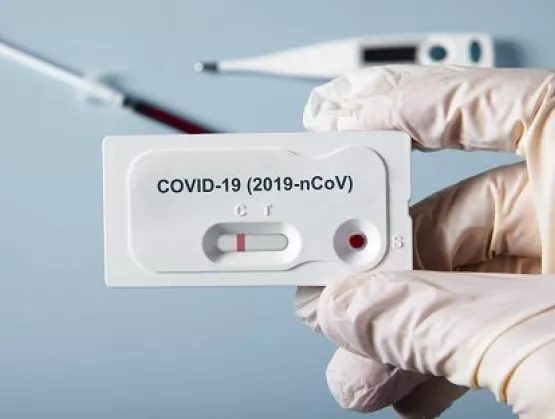
COVID-19 has had an impact on the entire healthcare market. During the peak of the first wave, companies from the industrial and automotive sectors worked on repurposing their sensors and production lines to provide pressure sensors for respirators and temperature sensors for thermometers. At the same time, companies making sensors for wearables and other mobile devices used for remote monitoring of patients experienced saw increased demand, caused in part by the surge in telemedicine worldwide. In addition, strong demand for COVID-19 tests pushed diagnostic players to repurpose existing systems to detect the SARS-CoV-2 virus or associated antibodies. Over the past six months in particular, numerous microfluidic technologies have enabled either rapid point-of-care tests or high-throughput solutions for central labs. The demand for these tests is incredibly high (millions of tests per month are needed), which has contributed to boosting the revenue of many companies in the respiratory-testing area.These respiratory-testing companies have placed many testing machines at existing and new customer sites, and have sold an impressive number of test kits resulting in an initial revenue spike in Q1 2020, and even higher spikes in Q2 and Q3. This growth seems on track to last into early 2021 and beyond as the pandemic continues, the flu season arrives, and health organizations test increasingly higher numbers of people than they were several months ago. The winners in respiratory testing include Abbott, bioMérieux, Cepheid, GenMark and Luminex, among many others. In this context, Yole expects the point-of-care segment of the microfluidic product market to enjoy an impressive jump from US$4.5 billion in 2019 to US$6.3 billion in 2020, growing at 15.1% CAGR between 2019 and 2025 to reach $10.4 billion in 2025. This represents 40% of the total microfluidic product market in 2019.In its research on microfluidics, Yole tracks a wide range of COVID-19 tests from different companies. The tests are used to meet different needs. Evolution of COVID-19 TestingNo doubt this increased production of tests will be especially useful for the upcoming flu season. But what will happen next year, if (we hope) reliable COVID-19 vaccines are validated and marketed, and the new coronavirus eventually disappears? Will diagnostic companies’ sales fall to pre-pandemic levels, and all these investments in production lines be wasted? Don’t worry. This is not a one-shot deal: Once the pandemic is over, most testing machines will remain in place, and customers will use them to run other tests the companies offer – usually for other kind of infectious diseases – driving sales of single-use disposables in coming years. The pandemic has shown us that more efficient diagnostic tools are required. Rapid, inexpensive, widely accessible testing for infectious diseases is crucial if we are to face such challenging situations. The real struggle for diagnostic companies, especially in the field of microfluidics where recent platforms have a small assay menu, is placing instruments (i.e., the test machines that run the disposable cartridges and read the results) at customers’ locations, from hospital settings and urgent care to field testing sites, and this has now been achieved. This will drive consumables sales in the future, even beyond the pandemic, and take the microfluidic-based point-of-care testing market to the next level. Rapid point-of-care testing is driving growth in microfluidics and will continue to do so for years to come. In the meantime, new significant opportunities are opening for point-of-care diagnostic test-makers, and rapid, miniaturized microfluidic technologies may be the winners here. Rapid passenger screening in airports, and rapid employee or visitor screening at the workplace will become essential for preventing the virus’ spread. In total, this could represent billions of rapid tests needed per year. COVID-19 has slowed down business growth in many areas but has really helped microfluidic-based point-of-care diagnostics take it to the next level, and this is only the beginning.For more information on Yole’s microfluidics activities, please view Yole’s reports, Point of Need 2020 – Including PCR-Based Testing or Status of Microfluidics Industry 2020 or visit i-Micronews.comYole Développement is a member of SEMI and the MEMS Sensors Industry Group (MSIG), a SEMI technology community that connects the MEMS and sensors supply network in established and emerging markets enabling members to grow and prosper. Visit us today. Sébastien Clerc is a technology and market analyst in Microfluidics, Sensing Actuating at Yole Développement (Yole). As part of the Photonics Sensing team, Clerc has authored a collection of market and technology reports dedicated to microfluidics and other micro-devices for major market segments: medical (including diagnostics, pharmaceutical, biotechnology, drug delivery, medical devices) and industrial (including environment, agro-food). At the same time, he is involved in custom projects such as strategic marketing, technology scouting, and technology evaluation to help academic and industrial players in their innovation processes. Thanks to his technology and market expertise, Clerc has spoken in more than 20 industry conferences worldwide over the last four years. Clerc holds a master’s degree in Biomedical Technologies and a master’s degree in Innovation and Technology Management, both from Grenoble Institute of Technology (Grenoble INP - Grenoble, France).
Read More