downloadGroupGroupnoun_press release_995423_000000 copyGroupnoun_Feed_96767_000000Group 19noun_pictures_1817522_000000Member company iconResource item iconStore item iconGroup 19Group 19noun_Photo_2085192_000000 Copynoun_presentation_2096081_000000Group 19Group Copy 7noun_webinar_692730_000000Path
Skip to main content
Default Banner Image

NXP Semiconductors

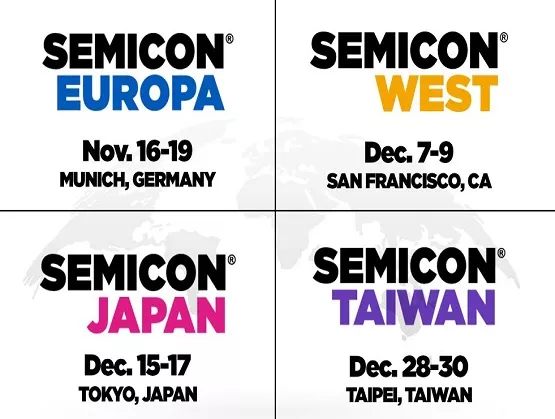
The Executive Forum at SEMICON Europa in Munich on November 16 was a welcome opportunity to demonstrate the strategic importance of our vital industry.Executives across the entire electronics and applications value chain rightly pointed out the contribution that the semiconductor supply chain made to supporting the efforts to control COVID-19, which sparked explosive demand for semiconductors and led to the chip shortage and supply chain disruptions. The pandemic has heightened the urgency to establish the manufacturing capacity needed to support the global recovery and onward rapid growth of the semiconductor industry, which is projected to exceed $1.2 trillion in revenue by 2030.Semiconductors are the heartbeat of the way we work and live, and their vital importance is now recognized by governments worldwide including European Commission officials, as well as by the wider population.So far, so good. However the rapid industry growth brings opportunities and challenges. If we continue on the path we are now on, there will simply not be enough energy in the world to feed our data appetite in the so-called 5th wave of digital expansion. Many speakers at SEMICON Europa referred to the importance of sustainability and diverse skills, and many companies have put in place comprehensive programmes that will enable industry growth and lead toward net zero carbon emissions. The semiconductor industry is central to efforts to control climate change. Collaboration and cooperation across the European microelectronics ecosystem are essential.Europe is a world leader, and many stunning advances in technology have resulted from many collaborative projects, large and small, over the years. Many of the executives at SEMICON Europa stressed that these efforts must continue, and indeed be expanded, across the entire electronics and applications value chain. However, the focus remains on ever more capable technologies to match the needs of the digital age: data management, communications, computing capability and improving important application areas such as healthcare.(Clockwise) Laith Altimime, president of SEMI Europe; Luc Van den hove, president and CEO of imec; and Lars Reger, Executive VP and CTO of NXP Semiconductors present at SEMICON Europa 2021. But where are the programmes to drastically reduce carbon emissions and air pollution, eliminating the use of scarce resources and acting as a catalyst to keep 1.5 alive? SEMI is doing its part by establishing a sustainability initiative. To help the industry building the talent pipeline crucial to its future growth, SEMI has also developed workforce diversity programs. Both initiatives are bringing together leaders from across the semiconductor supply chain to address these critical challenges. These changes require major disruptions. Time and again, our industry has demonstrated that it can overcome tremendous challenge.Of course, many chip companies are already devoting significant time and effort to help meet the moment, and projects are underway across our industry focused on these great causes. Yet, we can’t rely on individual efforts to fix these global problems. Our industry, with so much capability and history of rapid innovation, needs to take the lead in changing the way we meet these industrial and social imperatives.Contact [email protected] to learn more about the SEMI Environmental, Health, Safety Sustainability initiative and help the semiconductor industry take action today.Learn more about SEMI Diversity and Workforce Development initiatives.Peter Connock is Chair of SEMI Europe Industry Strategy Symposium Committee and Chairman of memsstar Limited.Serena Brischetto is senior manager of Marketing and Digital Engagement at SEMI Europe.
Read More
At the SEMI Foundation, we’re taking steps to support a big, audacious goal – achieving gender parity in the microelectronics industry. Dating to its roots at Bell Labs, Fairchild Semiconductor, and Intel in the late 1950s and 1960s, the semiconductor industry was pioneered by men at a time when far fewer women were in the workforce. While women have made major workforce gains since those early days, we’re still far from achieving anything close to an equitable representation of women. According to the U.S. Bureau of Labor, only 11.8% of electrical and electronics engineers – and just 8.7% of mechanical engineers – are women. What’s more, research from the American Association of University Women (AAUW), a non-profit that champions equity for women and girls through advocacy, education, and research, tells us that women drop out of engineering careers more steadily and quickly than men. According to AAUW research, just 30% of women working in engineering are still in the field after 20 years compared to 35% of men. By the time women have been in the field for 30-34 years, that number falls to 19% – while it increases to 39% of men among the same cohort. The small number of women in engineering careers and the fewer still who stay in engineering long term illustrate the troubling gender disparities in the industry. Even with these low numbers, however, there are still women who have managed to not just stay in the industry, but to thrive and lead within it. I talked with four of these women about their professional journeys and how they believe women can be best supported in careers in our industry. The AAUW research report Solving the Equation: The Variables for Women’s Success in Engineering and Computing shows that attrition in engineering is higher among women than men. Passion for math and scienceLam Research VP Gowri Kamarthy took her Ph.D. in chemical engineering from UC Berkeley directly to Lam Research, where she’s spent the past 22 years in technical positions. Today she heads the company’s conductor etch product line.Coming from a family of engineers, including her father and siblings, Dr. Kamarthy had a built-in support system that was essential to her success. She never felt intimidated by male peers after spending her formative years pursuing her passion for math and science.“I may have stood out as a minority in the field of engineering, but there was also a silver lining in standing out,” she said. “People notice you.”Kamarthy realizes that engineering careers are generally perceived as being less compatible with family life, for both women and men.“Anyone who wants work-life balance in an engineering career will have to navigate its special challenges, including the need to work long hours to match the rapid pace of innovation,” Kamarthy said.Drawing from her own experience, Kamarthy offers some career advice. “Perseverance and grit are key to success,” she said. “The other ingredient is luck. I was fortunate to have great bosses at Lam who didn’t see gender first and foremost. Instead, they recognized my ability to deliver on projects and encouraged me to perform at my best.” A love for math and science. The confidence to excel in those subjects. A support system to help her through the bumpy times. These were also truths for Sandy Vos, Ph.D., director of R D at NXP Semiconductors.“I was always good at figuring things out,” says Dr. Vos. “I remember feeling enthralled when I got my first internship because it combined engineering, math, science and manufacturing.” Like Kamarthy, Vos was aware of her status as a woman in a male-dominated field, but it didn’t stop her.“If anything, my gender drove me to prove myself,” Vos said. “And I’ve been fortunate because everywhere I’ve worked, I’ve been a part of a smart and collaborative team.”That doesn’t mean gender never came into play. Whenever it did become an issue, Vos didn’t shy away from hard conversations. She recalls having a conflict on the plant floor with two men who each stood over six feet and were about 100 pounds heavier.“I had a conversation with them, and we figured it out,” she said. “But for a while there, my heart was racing.”Gender felt like a bigger issue when Vos was younger. “Now that I have gray hair, it’s not much of a concern,” Vos said. “But earlier in my career, I started putting Ph.D. on my business card so people would know I could talk technical details.”Though just one of three women in an undergraduate class of 35 engineering students – and with a teaching cohort of all-male professors – Debbie Gustafson anticipated equitable treatment in her college engineering program. She had the same outlook when she began her career in semiconductor manufacturing. But the belief that she’d receive the same treatment as her male peers went largely unfulfilled. This didn’t slow her down. During her first year as CEO of Energetiq, she grew the company’s revenues and valuation. A year later, she steered the company through a successful acquisition by Hamamatsu Photonics. Today Gustafson continues to lead Energetiq as a wholly owned subsidiary, but the road to the top job wasn’t without hurdles. Gustafson muscled through the tough times.“When I started out, I traveled to Japan and Korea when there weren’t other women in technical roles,” she said. “My first meetings were extremely frustrating. I was the only woman in the room, and the men wouldn’t address me. This went on for a year, but I kept coming back and built the relationships.”Now a member of the SEMI Foundation Board of Trustees, Gustafson credits mentors with helping her navigate the nuances of doing business across cultures during those early years.A rocket scientist among usAlissa Fitzgerald might tell you that MEMS isn’t rocket science. But that’s only because she has a Ph.D. in Aeronautics and Astronautics, which actually is rocket science. Dr. Fitzgerald worked at a government laboratory and a large defense contractor before she got her Ph.D. and moved to a MEMS industry startup. Though gaining valuable experience, she found the environments too hierarchical and lacking in career development opportunities for young female engineers. As one of the few women engineers at these heavy-duty engineering firms where, in the 1990’s, there were no women in leadership roles, Dr. Fitzgerald sensed that opportunities for her to advance were remote. Fitzgerald started her own firm rather than climb up the ladder of another company, but it turns out, her motivation had nothing to do with gender.“It was the way engineers were treated like Dilbert,” she said. “I felt like a cog in the wheel, working for corporations that weren’t nurturing or appreciative of engineers.”After years of working for other companies, Fitzgerald founded the eponymous AMFitzgerald Associates, a developer of innovative MEMS and sensor solutions for specialty applications. When gender did come up for Fitzgerald, it manifested in men questioning her technical abilities.“Early in my career, I felt like I had to prove myself worthy, even though my degrees were from MIT and Stanford,” she said.Over 3,000 respondents to the Workplace Experiences Survey, sponsored by the Society of Women Engineers and the Center for WorkLife Law at UC Hastings Law, validate Fitzgerald’s experience. 61% of women vs. 35.1% of white men surveyed cited Prove-It-Again Bias – “having to prove themselves repeatedly to get the same levels of respect and recognition as their colleagues.” For engineers of color, that disparity was even worse. 68% of engineers of color (both women and men) reported Prove-It-Again Bias vs. 35% of white men.“For women and people of color, there’s rarely an assumption of competence,” Fitzgerald said.It’s sad but true that we can’t decouple the challenges women face from the challenges people of color face. Both are dramatically underrepresented as chip companies, and women of color represent the smallest percentage of the industry’s workforce and leadership.Inclusivity mattersWorking toward gender equity isn’t just a case of doing what’s right. It’s a case of doing what’s profitable. Research shows that companies with more women on the board perform better.“Given the pace of innovation in semiconductors, we need people from different backgrounds and perspectives to solve the hard problems challenging our industry,” Kamarthy said.Vos appreciates the fact that SEMI is creating a forum of inclusion.“Inclusion starts when you’re young,” she said. “School-aged kids are already making decisions about a future they see as exciting and possible. Our job is to make sure they have the opportunities to pursue what they envision.”Change won’t come magically, though. Fitzgerald believes companies need to make a concerted effort to attract a diverse population.“While I see a disproportionate number of female applicants, I’m more the exception than the rule,” she said. “When male executives call and ask, ‘How are you finding all these amazing female engineers?’ I say, ‘they’re finding me.’”Elevate the storyAchieving gender parity in microelectronics is a daunting task. Fortunately, access to SEMI’s global membership puts us in a unique position to make this deeply complex story clear and relevant to our members, so we can help support the shift.We’re looking at both the stark numbers of women working in microelectronics and at the lack of longevity of women in engineering. We’re elevating the conversation about childhood education. Why are girls passed over in math and science classes in early grade school, and what is the effect of teachers’ lowered expectations for girls taking these classes? What does it mean to be the only in the room? The only woman, or the only woman of color, on a team or in a meeting room. Feelings of isolation or disengagement – or frustration with Prove-It-Again bias – often lead to turnover in an industry that already struggles with retention.Reverse the trendThere’s much SEMI members can do to work toward gender parity in our industry. Look at recruitment, hiring, retention and promotion processes to see how women fare in them. Consider how to create a company culture of self-awareness and inclusion. Ensure equitable pay. Suggest and request women speakers for keynotes and panels at conferences. And offer workplace flexibility to allow women – who often bear most family responsibilities – to take time off or reconfigure schedules so they can help care for children or ailing parents.It’s time for our industry to reverse the trend of gender inequality. Research shows that companies with greater gender and racial parity are more productive, innovative, and profitable. If we welcome and support women in our companies, we will help women – and our industry – reach their full potential.Get involved with SEMIRegister for the Women in Semiconductors (May 3, 2021). This virtual event will include interactive exploration and discussion on strengthening the roles of women in hybrid and remote work environments. Everyone managing teams or experiencing the gender parity challenges and opportunities will benefit from the fresh thinking and best practices that the Women in Semiconductor program is known for.Participate in the SEMI Mentoring Program. By matching mentees with industry leaders and professionals, SEMI Foundation facilitates one-on-one mentoring relationships that benefit all participants. Whether you are a recent university graduate or growing in your microelectronics career and looking for support, participating in the SEMI Mentoring Program will put you on the right track.Participate in the McKinsey Company 2021 Women in the Workplace Study, which looks at representation and the experience of women in companies across the U.S. and offers recommendations on how to retain and support women. Email [email protected]. Shari Liss is executive director of SEMI Foundation. Connect with her on LinkedIn.
Read More
The automotive industry is changing. Our vehicles are getting electrified, connected and automated. As this trend is accelerating, it’s having an impact on how semiconductor devices, including MEMS sensors, are designed and qualified for automotive. As automotive semiconductor designers carefully consider product definition, product validation, and long-term reliability, MEMS sensor suppliers are responding to new opportunities created by electrified and automated vehicles by developing inertial measurement units (IMUs) for automated driving as well as battery pressure monitoring sensors for Li-ion EV batteries. The most complex MEMS device of all The automotive MEMS IMU is probably the most complex MEMS device that will be used inside a vehicle. This type of IMU is a System-in-Package (SiP) comprised of multiple gyroscope and accelerometer sensing elements plus a signal processing ASIC, integrated into one package that creates an inertial sensor able to measure up to six degrees of freedom (6DoF): yaw, roll and pitch for rotational movements, and lateral, longitudinal and vertical acceleration for linear movements. Degrees of freedom in a vehicle For vehicles with Level 3 autonomy and above (per SAE definition), the IMU is mandatory for taking over the trajectory control of the vehicle in case other sensors, such as the camera, radar or LiDAR, become impaired. Should such a failure occur, the IMU will function as a guidance sensor to bring the car to a safe stop within a short period of time and distance. The IMU is also used to control the regular movement of the car while driving in automated mode. While IMU technology already exists for aerospace applications, there are significant challenges to adapting it for automotive. The automotive IMU requires high performance at costs that are compatible with the automotive industry. Because automotive life cycles are long, MEMS sensor suppliers must produce the device in high volume for an extended period of time. They must also guarantee the sensor’s performance and reliability over a 10- to 15-year lifetime with no maintenance or recalibration of the sensor required. Only a few MEMS suppliers have the capability and willingness to embark on this kind of journey. Electrification is creating new applications for MEMS sensors The conversion from internal combustion engines to electrified propulsion is going to affect the powertrain MEMS market. For example, pressure sensors used in engine management for air pressure and fuel pressure will simply go away with electrification. However, the use of large Li-ion batteries in electrified vehicles has created a new application for MEMS sensors. One of the known risks of Li-ion batteries is the small probability for a battery cell to go into a thermal runaway situation that will lead to a fire. The press has reported multiple cases of EV batteries catching fire. Thermal runway effects When it comes to thermal runaway events, every second counts. Detecting the event as early as possible enables the vehicle safety system to take all necessary measures to warn occupants of an imminent fire and activate timely countermeasures (e.g., trigger fire extinguisher and call fire brigade) to mitigate the impact of the fire. Published studies have shown that measuring the pressure inside the battery pack is a good indication that a thermal runaway is starting. The outgassing of a battery cell, plus a sudden rise in temperature, will increase pressure inside the battery pack, which will generate a pressure pulse. To detect such a pressure pulse, a MEMS pressure sensor must permanently measure the pressure inside the pack. It must also report to the battery management system any suspicious change in pressure, independent of atmospheric pressure changes. It’s important to keep this kind of sensor on all the time to detect any pressure anomaly in the system, even when the vehicle is completely off. NXP has developed a pressure sensor to specifically address this new safety application in EVs, and several automotive manufacturers are already using this solution. NXP battery pressure management sensor The quest for zero defects While the automotive industry is targeting zero fatalities as its ultimate goal, the semiconductor industry and module suppliers are targeting zero defects for each and every semiconductor device. For safety-critical automotive MEMS sensors complying with the Automotive Electronics Council (AEC) Q100 qualification for semiconductors, it’s necessary but clearly not sufficient to guarantee a zero defects production launch and long-term reliability of the device. To boost the reliability and robustness of automotive sensors, NXP has developed Above and Beyond (AaB), a new methodology that studies advanced reliability and robustness well ahead of the device’s qualification and production release. Based on risk-mitigation analysis, AaB consist of extensive testing, such as test-to-fail, corner lot testing, and new use-case testing combined with advanced statistics, all of which help NXP understand how these different parameters interact with each other. As sensor suppliers must integrate AaB into their project planning, it does add time and cost to the project. The upside is that this early investment pays off as long as weaknesses in the device can be detected and corrected before a production launch. Field failures, on the other hand, can lead to unplanned redesign and requalification of a device. Worst-case, they can lead to a recall campaign that costs a huge amount of money. We’re systematically using the AaB methodology at NXP for safety-critical MEMS sensors because its potential benefits far outweigh its costs. For more information about NXP MEMS sensors, register for the upcoming webinar series, MEMS to Market: Ingredients for Success, where NXP will discuss The Growing Importance of MEMS Reliability (May 5, 2021). Register by March 10 to watch all the webinars LIVE. Each webinar will also be available to watch on-demand at your convenience. Contact the author via LinkedIn or learn more about NXP sensors. About the Author With nearly 30 years of experience in the field of automotive and MEMS sensors, Marc Osajda is responsible for European automotive MEMS sensors business development activities at NXP Semiconductors. Osajda holds an engineering degree in mechanics and electronics from the French Ecole Nationale Superieure d’Arts et Métiers (ENSAM). NXP Semiconductors is an active member of MEMS Sensors Industry Group®(MSIG), a SEMI technology community that connects the MEMS and sensors supply network in established and emerging markets to enable members to grow and prosper. Visit us today.
Read More
SEMI spoke with Andreas C. Zimmer, Executive Search and Selection Consultant at ZIAN Co industrial consulting and recruitment, about strategies for attracting and retaining talent and promoting careers in semiconductor industry. Zimmer shared his views ahead of his presentation at the SEMI Fab Management Forum, 17 February, as part of the SEMI Technology Unites Global Summit, 15-19 February 2021, an online event. Join us to meet experts from ZIAN Co. and other key industry influencers. Registration is open. SEMI: What makes the semiconductor industry such a great career destination? Zimmer: The semiconductor industry is an interesting world for anyone involved in or just fascinated by high-end technology. But if we think about our mobile phones, personal computers or cars, we should all ask ourselves what technology is behind these devices we use in our daily life. The classical Newtonian physics does not reveal the source of the pixels in our mobile phones or why a navigation system knows where I currently am and how I’m supposed to drive to avoid the traffic jam ahead. The semiconductor industry truly is the technological pacesetter. The technologies and applications developed by SEMI and its members are the multipliers directly impacting our daily life. Moore's law not only affects the development of chips themselves, but also how we use the applications and devices they enable. Think about the size-performance ratio of modern smartphones compared to the first- and second-generation devices in the 1970s and 1980s, or compare today's BMW with one from the 1960s. The problem is that the industry is too hermetic. We perceive a lack of willingness to go out and tell in a generally understandable way what this industry is all about! Everyone knows Apple, Samsung, Nokia, but who, besides the specialists, knows NXP, Infineon, TSMC or LFoundry? Many companies are largely unknown to the general public! So why should a graduate from a technical university choose a company such as Applied Materials, TEL or ASML? During their studies students will inevitably have come in touch with IC or MEMS companies, but do they also know what is behind them? Do they really know the value chain that leads to the end product? SEMI: What can the chip industry do to better attract talent? Zimmer: Our industry is extremely attractive for anyone who is interested in technology and would like to push things ahead, but unfortunately access to this industry is almost reserved to the initiated who, in whatever way, came in touch with the industry at some point. Let me get this straight: This is not a conscious, willful attitude. It is just the result of our industry’s hermetic attitude. In my opinion, there is no overarching, uniform strategy in marketing, communications or advertising to promote the potential of the semiconductor industry to a wider audience. That’s why SEMI and the cooperation of its members in attracting talent is essential. SEMI: What concrete actions do you suggest for attracting and retaining talent? Zimmer: In German there is the saying “Do good and talk about it!” – and this is exactly what should be implemented. It is not enough to place an ad when necessary, to promote something here and there, perhaps to sponsor a chair or to provide a device free of charge. These are certainly all reasonable actions, but rather random and not long-term or strategic. Furthermore, these actions will reach only a relatively small group of people. The industry should organize structured recruitment activities under a long-term plan, over 10 years or even extending to the next generation. This shouldn't be a rigid corset, but rather a guideline closely informed by the chip industry’s technology roadmap and companies across the supply chain. If it is the task of an organization’s board and the management to define the strategic direction and to set specific goals, it should be the task of technical management to ensure that these goals can and will be achieved. However, this will only succeed if human resources is involved from the very beginning and can plan appropriate personnel resources accordingly. Employees retire, quit and change employers. New materials, technologies, applications and processes are being developed and require new, specific knowledge. Market requirements change. All of these components need to be recognized and considered in early planning. SEMI: What is your experience as a consultant? Zimmer: As consultants, we experience how organizations literally fall out of the clouds when the situation within the organization itself drastically changes, because a strategically important colleague is retiring or suddenly leaving the team for whatever reason. Then, quite surprisingly, the question “Where and how quickly can we find the suitable replacement?” arises. Instead, that departure should be considered as a possible development up front in overall talent planning – a plan B to keep in the drawer. Developing and implementing a long-term HR development roadmap, aligned with the technology roadmap, enables a company to anticipate when specific resources are needed, identify the right people and get them onboard without gaps. It is also important to keep your team informed and involved in all decisions and process changes, and to make sure they get the respect and appreciation they deserve. Employer-employee cooperation over the long term only works when the relationship is a win-win for both parties. If an organization sees the relationship as one-sided to its exclusive benefit, sooner or later the worker will be terminated or quit at the expense of the organization. Truly live the statement “Our people are our best and most valuable resources!” SEMI: When should organizations start attracting young talent? Zimmer: The sooner, the better! Communications aimed at attracting future employees should be designed to reach people of all ages and levels of education. For many years, the tobacco industry targeted young people by demographic, considering their age, education and cultural mindset to ensure they perceived cigarettes as cool. The result? Many people became addicted, mostly for life, just because some clever communications expert touched the right spot! Our industry will not attract teenagers like tobacco corporations did, but the strategy is basically the same: arouse the curiosity of your target group and speak their language. A possible scenario: A company starts and establishes a relationship with neighboring technical, middle and high schools by providing equipment, documentation, and employees who serve as teachers or coaches, and organizing guided tours, seminars and workshops in coordination with the school management. The cooperation continues with the university, where the respective chairs are supported and financed. With a little creativity there are endless possibilities! In our day-to-day business, we observe that large, well-known companies such as Bosch and Daimler are practically sitting on the lap of students in key universities and institutes, yet are unable to identify talent very early and bind them to their company. SEMI: How can organizations capitalize on shifting retirement patterns to help narrow their talent gap? Zimmer: The answer to this arises from considerations related to personnel planning in connection with a company’s technology roadmap. If the roadmap is linked to HR plans, you automatically have an overview of the time-critical moments when personnel gaps might arise. Then you can easily close these gaps, for example by arranging the onboarding of a successor for a specific position long before the job holder leaves. Considering notice periods and approval processes, a period of at least two years should be planned in order to be prepared for personnel changes. Of course, much of this varies depending on the importance of the position to the organization and the size of the talent pool. For example, it will probably be easier and faster to hire and train a sales engineer than the successor for a development manager, when you know there are maybe only 10 people worldwide who are, professionally speaking, at his level. And this is equally true for internal promotions: Always keep an eye on your own people and try to discover their greatest talent! Senior people tend to look outside the organization rather than just around the corner. Maybe the right talent is sitting next to you. Stay tuned and talk to your people to implement a strategic knowledge transfer as part of your organizational culture. Another aspect that is often overlooked is the deputy function: We often find functions in organizations that literally have a unique selling proposition. But there is no deputy, no one who can step in case of an emergency, because no other colleague possesses the knowledge and information to take over if necessary. Usually this is not a problem during a vacation or illness, but what do you do if a key job holder suddenly cannot work from one day to the other? SEMI: What is the role played by artificial intelligence? Zimmer: AI is both a risk and an opportunity. A new technology can always mean danger if it is used incorrectly, and I am not talking about job losses! This has always proven to be a mistake in the past. On the contrary, new technologies create new jobs! New technology accelerates communication, creates new platforms for interaction, shortens decision-making processes, and turns the world into a small village. In your interview with David Meyer CEO of Lynceus, he hits the nail on the head: The great advantage of AI in our industry is likely to be the management, handling, analysis and drawing of conclusions from an incredible amount of information at an unbelievable speed. Without AI, information cannot be controlled to this extent, not to mention accurately evaluated in real time. The mastery of these processes and the learning curve that results from them – for example for the determination of quality levels – should set completely new manufacturing standards. SEMI: How can technology unite us? What do you expect from your participation at SEMI Technology Unites Global Summit? SONAR GmbH has been in this industry as a personnel and business consultant firm for 25 years now. We have experienced many pig cycles since 1995 and accompanied our customers through all the ups and downs, only to have learned one thing in the end: The semiconductor industry is unfortunately still too fixated on technology and overlooks the fact that this technology is made by people for people. The EU's latest Pact for Skills, which was presented at end of November 2020 by Commissioners Schmidt and Breton, foresees 2 billion € investment to generate 250,000 new jobs in the electronics industry throughout Europe! In 2013, we aimed to sensitize semi industry executives, managers and CEOs to the importance of human resources to the well-being and success of organizations. It’s vitally important to invest in day-to-day relationships with your employees to foster their careers and address their needs. The SEMI Fab Management Forum will feature leading game changers of semiconductor operations to highlight best practices for achieving sustainable operations beyond 2020 and exploring the latest solutions for smarter tools and smarter processes. Andreas C. Zimmer is executive search and selection consultant at ZIAN Co industrial consulting and recruitment, specializing in recruiting talent for high-end technologies in areas such as LED, PV, semiconductors, electronics, and test and measurement. A personnel and industrial consultant with more than 20 years of experience, Andreas is active throughout Europe, the United States and Asia. For more insights about workforce and skills strategies, please see SEMI Workforce Development activities and the European METIS project. Serena Brischetto is senior manager of Marketing and Communications at SEMI Europe.
Read More
Nexperia became a standalone company about four years ago after our divestiture from NXP Semiconductors. Last year we started our journey towards smart manufacturing at our back-end factories in Asia by developing a roadmap to help steer us in the right direction.Our first step to creating a convincing and workable smart manufacturing roadmap was to define the very meaning of smart manufacturing to Nexperia. Since the definition of smart manufacturing varies widely, we started by looking at two different and distinct technology adaptations: Physical automation Data-driven manufacturing, or using analytics at the core to develop and adopt machine learning and artificial intelligence (AI) models It is important to find the right balance of investments between physical automation and data-driven manufacturing to steer clear of deployment inefficiencies since only connected solutions deliver full value. Our approach involved the following high-level steps. Meeting with internal management teams for their inputs and examining factory needs and maturity Meeting with other semiconductor factory operators, subcontractors and partners to review their smart manufacturing approaches and challenges Evaluating our needs and status against the Singapore Smart Industry Readiness Index model Physical AutomationEvaluating the maturity of available solutions and adaptions by the industry and our own shop floor helped simplify the thought process quite well. Logistic automation is not new. Very mature solutions, even for custom layouts and preferences, are readily available. Shop floor automation is far more difficult than logistic automation since variability is simply too high. Traditional shop floor investments were always driven from quality or OEE perspectives and not necessarily very well connected. Our approach is outside-in – deploy logistic automation first and then move to the shop floor.Data-Driven ManufacturingHow smart manufacturing becomes depends on the extent to which a factory is data-driven. Enabling data-driven manufacturing requires foundational investments to improve traceability, connectivity and real-time operations. We believe real-time awareness can drive machine-level and closed-loop process control critical for predictive, cognitive control of the shop floor.Real-Time Awareness and Traceability is at the CoreDeveloping real-time awareness requires wide-ranging manufacturing protocols. The following focus areas have helped us simplify the challenge: Connectivity Core systems for areas including MES, quality and SAP Analytics and AI Digital shop floor featuring one operator interface with real-time control systems Readiness of engineers, technicians and managers Each of these pillars has different level of complexity due to legacy equipment and systems, legacy processes and inexperience of engineers with automation. This makes deployment of data-driven operations a complex challenge. We looked at different project approaches for each of the focus areas: Core Systems – Build additional technology enablers and roll them out with prioritization planning. Analytics – Focus mainly on OEE and yield with automated root cause analysis and predictive approaches. Real-Time Control – Merge the initiative with factory-level programs to improve productivity and quality. With a strong smart manufacturing roadmap, the next challenge is to secure long-term buy-in on the plan and required investments from executive management. Visiting and otherwise connecting with peer sites that have already deployed smart manufacturing infrastructure is vital in this effort. Thanks to SEMI members, we were allowed to visit their factories with our management team for go-and-see tours since seeing is believing in the smart manufacturing journey. Our executives also met with subcontractors and vendors to better understand the value of this transformational undertaking.A long-term outlook is necessary to successfully develop a smart manufacturing roadmap, and executive commitment goes a long way to ensuring its success. We are excited about our smart manufacturing journey and believe it is a game changer for our factories.Adarsha MARPALLI is director of Factory Automation at Nexperia B.V.
Read More
Europe is facing an acute shortage of skilled microelectronics workers that undermines the growth potential of not only the electronics industry but the European economy as a whole. Nearly 1.1 million job advertisements for electro-engineering workers were placed in the EU between mid-2018 and the end of 2019 (CEDEFOP, 2020). The shortfall looms large as a skilled and diverse workforce that can continuously innovate is the oxygen of microelectronics. In light of the critical importance of microelectronics to Europe’s ability to fulfill its growth potential, SEMI Europe participated in the high-level roundtable hosted by Commissioner Nicolas Schmit and Commissioner Thierry Breton on October 5. The discussion’s key takeaway: The skills challenge facing the microelectronics industry is too complex for one organization to tackle, and reskilling and upskilling its workforce should be a common priority for Europe. Only with a diverse, substantial and skilled microelectronics workforce can Europe achieve its R D, design and manufacturing ambitions while ensuring its sovereignty in the digital age. The roundtable highlighted the EU Pact for Skills as a key means to narrow the industry’s skills gap.An ever-growing part of our lives, microelectronics, with their ability to run billions of computations per second and store vast quantities of data, are the brains of modern technology. The digital sovereignty of nations around the world today relies on advanced microprocessors to collect, transfer, analyze and store immense amounts of data used in key end-user sectors such as mobility, telecommunications, energy, security and healthcare. Information and communication technologies (ICT) enabled by microelectronics are helping much of the world’s population to work and study from home and remain safe during the COVID-19 pandemic.According to the Smarter2030 Report, further deployment of ICT, including electronic components in critical sectors such as transportation, manufacturing, agriculture, construction and energy, could eliminate the equivalent of 12.1 billion tons of CO2 per year globally. These are some of the reasons why nations worldwide are making large-scale investments to advance a homegrown microelectronics R D, design and manufacturing base. It is no surprise, then, that semiconductors are now at the center of the so-called global techno-trade wars.Clearly, Europe urgently needs to mobilize and pool resources to develop effective lifelong learning programs for all workers and continue investing in microelectronics innovation. We need to instill the passion for creating technology among current and future workforce, in particular women and people with challenged backgrounds, and build a highly diverse talent pool. Working together, we can better demonstrate how computing technologies, including quantum, high-performance and edge AI, provide solutions to grand societal challenges and attract talented people to the fascinating world of electronic components and systems.Against this backdrop, the microelectronics industry finds the Pact for Skills very timely and crucial to advancing the talent pool underpinning Europe’s deep digital ecosystem. The Pact will play an instrumental role in improving the scope and the quality of training partnerships at regional, national and European levels, sharing best practices and helping the microelectronics industry and workforce adapt to the effects of COVID-19.The microelectronics industry is committed to building on the momentum created by the METIS Erasmus+ collaborative project and to mobilizing our ecosystem and education partners for a successful Pact for Skills in Microelectronics starting this year.The High-Level Roundtable: Skills for Microelectronics was hosted by Commissioner Thierry Breton and Commissioner Nicolas Schmit. Participants included Paul Boudre, CEO, SOITEC; Lars Reger, CEO Germany and CTO, NXP; Frits van Hout, Executive Vice-President and Chief Strategy Officer, ASML; Françoise Chombar, CEO, Melexis; Emmanuel Sabonnadiere, CEO, CEA-Leti; Luc Van den hove, President and CEO, imec; Sabine Nietzsche, Board member, Silicon Saxony and Vice President, GlobalFoundries; Laith Altimime, President, SEMI Europe (coordinator of METIS); Yolande Berbers, President, European Society for Engineering Education (SEFI); James Calleja, President, European Forum for Technical Vocational Education and Training (EFVET); Ludovic Voet, Confederal Secretary, European Trade Union Confederation (ETUC).Emir Demircan is director of Advocacy and Public Policy at SEMI Europe. To learn more about SEMI Europe advocacy, contact Emir at [email protected].
Read More