
Challenges and Solution of Post Ceria CMP Clean
Ceria particles are widely used in STI CMP processes because they provide higher TEOS removal rate. High TEOS removal rate is due to the Ce-O-Si bond formed by the interaction between ceria particle and SiO2 film. However, due to the strong Ce-O-Si bond, it is difficult to remove ceria particle from TEOS after CMP. If ceria particles remain on the wafer, it can lead to yield and reliability issues. Therefore, we should remove ceria particles and defects; the cleaning process is a crucial step to manufacturing integrated circuit. Here, we hypothesize that a process that ruptures ceria particles from the TEOS surface and prevents them from reattaching to the wafer surface could significantly reduce the number of residual ceria particles.
Seo et al. reported that a mixture of hydrogen peroxide and ammonium hydroxide can efficiently remove ceria particles from the TEOS surface. Mei et al. also reported that a complexing agent can be used to remove ceria particles. Both reports focused on rupturing the Ce-O-Si bonds chemically bonded to the substrate. However, because the Ce-O-Si bond is very strong, chemical cleavage requires the use of highly reactive agents, such as strong oxidizers, acids, or bases. These chemicals may corrode the underlying material and the more traditional ones have EHS/Safety concerns.
Therefore, we focus on Chemical Mechanical Cleaning (CM-Cleaning) and propose a high-cleaning solution which can efficiently remove ceria particles from the TEOS surface. CM-Cleaning mechanism consists of two steps: (1) rupturing the Ce-O-Si bond using the physical force of the pad and (2) preventing the reattachment of ceria particles to the wafer. The cleaning solution contains an acid/hydrogen peroxide, polymer, chelate agent and ultra- pure water and it has low pH. The mechanism for CM-Cleaning is described below. First, the Ce-O-Si bond is ruptured by the combination of chemical reaction of an acid/hydrogen peroxide and by physical force of the brushes. Then, ruptured ceria particles are released from the wafer into the cleaning solution. Subsequently, the wafer surface is protected with a polymer to prevent reattachment of ceria particles. As shown in Figure 1, it was found that the combination of CM-Cleaning and hydrogen peroxide/acid significantly reduced the coverage of ceria particles on the wafer from 98% (a) to 5% (c). In addition, the number of defects decreased by more than 90% with the new composition (Cleaner 2) compared to the current composition (Cleaner 1) as shown in Figure 2.
We have successfully improved the cleaning efficiency of ceria particles on the wafer, especially TEOS, by applying CM-Cleaning. In this report, we present the details of our high-cleaning solution for ceria particles using CM-Cleaning and the importance of wafer surface protection.
Reference:
[1] Jihoon Seo, Akshay Gowda and Suryadevara V. Babu, Almost Complete Removal of Ceria Particles Down to 10 nm Size from Silicon Dioxide Surfaces, ECS Journal of Solid State Science and Technology, 2018, 7 (5) 243-252.
[2] Mei Yan, Baimei Tan, Shihao Zhang, Wei Li, Jinbo Ji, Zhi Liu, Li Huang, Fangyuan Wang, Xiaolong Wang, Haoyu Du, Effect of Complexing Agent on Ceria Particle Removal in Post-STI CMP Cleaning Process, Colloids and Surfaces A: Physicochemical and Engineering Aspects, 2023, 658 (5), 130668."
BIOGRAPHY
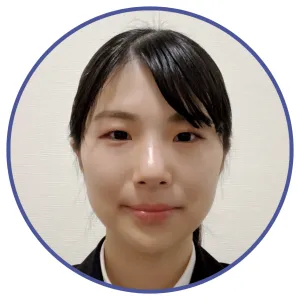
Moeka Ajiki joined Fujimi Incorporated in 2024 as a researcher in the R&D division. Her current work focuses on developing advanced post-CMP cleaning solutions and CMP slurries, contributing to next-generation semiconductor manufacturing processes. For post-CMP cleaning, she was engaged in colloidal silica removal by high-function alkaline cleaning chemistry, and ceria particle removal by EHS friendly chemistry. Recently, she also focused on developing next-gen CMP slurries for FEOL.
She received her M.Eng in Organic Polymer Chemistry from Nagoya Institute of Technology in 2024. She holds a strong academic background in polymer and organic chemistry, with specialized expertise in biomacromolecules, molecular biology, and chemical biology. She has authored notable research, including a representative paper published in RSC Chemical Biology (Vol.5, pp.544–555, 2024), highlighting her contributions to chemical biology and material science. This interdisciplinary knowledge enables her to design innovative chemical systems for surface treatment and contamination control.