downloadGroupGroupnoun_press release_995423_000000 copyGroupnoun_Feed_96767_000000Group 19noun_pictures_1817522_000000Member company iconResource item iconStore item iconGroup 19Group 19noun_Photo_2085192_000000 Copynoun_presentation_2096081_000000Group 19Group Copy 7noun_webinar_692730_000000Path
Skip to main content
Default Banner Image

North America

The White House and House Speaker Nancy Pelosi announced that the United States has reached final terms on the U.S.-Mexico-Canada free trade agreement (USMCA). The USMCA provides important modifications and updates to the 25-year old North American Free Trade Agreement (NAFTA), and SEMI supports its timely ratification in the U.S. Congress. The USMCA includes significant provisions to protect continued innovation and North American market access across product design and manufacturing supply chains for the electronics industry. The agreement strengthens requirements for the protection and enforcement of intellectual property rights, including trade secrets. The U.S. microelectronics industry will benefit greatly from USMCA’s strong enforcement mechanism for the misappropriation of trade secrets including civil procedures and remedies, criminal penalties, and judicial procedures to prevent disclosure of trade secrets in litigation.The agreement also establishes new rules to enhance and protect digital trade to benefit companies of all sizes and consumers. The USMCA prohibits tariffs, taxes and other barriers to cross-border data flows and minimizes restrictions on where data can be stored and processed. These provisions establish important precedents for data and digital technology in future trade agreements. The USMCA aligns with SEMI’s core principles including open global markets, fair competition and the protection of intellectual property rights. Mexico and Canada are two of the United States’ most important trading partners, and strengthening the three countries’ mutual obligations under USMCA will greatly benefit SEMI members. SEMI welcomes final passage of the USMCA and the critical certainty it will bring to trade rules within North America going forward.Joe Pasetti is Vice President, Global Public Policy Advocacy, at SEMI.
Read More
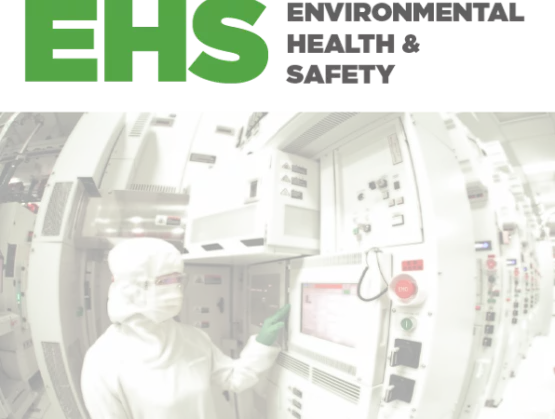
Environmentally sound policies and the health and the safety of workers in the microelectronics supply chain are vitally important to SEMI and its members. For more than two decades, together we have focused on worker safety by focusing on global environment, health and safety (EHS) compliance and regulatory issues and the advancement of sound EHS practices. Today, EHS has taken on an even higher profile in the microelectronics industry with its growth across Europe, North America and Asia. Never has the industry been under greater scrutiny. The list of regulatory agencies is growing. To keep pace with rising EHS requirements and continue to ensure worker safety, we’d like your help. The SEMI EHS summit will open with a keynote presentation from Russ LaMotte, Managing Principal of Beveridge Diamond, and a recognized expert on EHS issues in the electronics industry. Member companies representing equipment, materials, facilities and devices will then each share their EHS concerns. Finally, working groups will address industry EHS challenges and gaps. Outputs from the working group meetings will form the basis for the future SEMI EHS program. The EHS issues SEMI’s program and company volunteers are addressing include: PFOA – Government efforts to eliminate pefluoro-octanoic acid and related compounds and salts (collectively known as PFOA) from company supply chains REACH – A European Union regulation to strengthen protections against chemical risks to human health and the environment. Other countries – Japan, Korea, Taiwan – have enacted similar regulations. Stockholm Convention – An international environmental treaty designed to eliminate or restrict the production and use of persistent organic pollutants (POPs) Waste Framework Directive Database – The European Commission and the European Chemicals Agency (ECHA) are building a database where all suppliers will be required to register certain articles. Other groups are dealing with country-specific aspects of the Restriction of Hazardous Substances (RoHS) and the Toxic Substances Control Act (TSCA). Complementing our advocacy efforts, SEMI has established 25 primary EHS standards with SEMI S2 (Safety) as the cornerstone. The S2 family of SEMI Standards acts as performance-based EHS considerations for semiconductor manufacturing equipment and has also been adopted by adjacent industries. Sign up for the November 29th SEMI EHS Summit today Team up with your SEMI colleagues to collectively formulate the semiconductor manufacturing industry’s EHS program. SEMI members can register for the November 29th SEMI EHS Summit by clicking here. If you cannot make this meeting but wish to be added to SEMI’s regular communication on EHS and Advocacy issues, please click here and choose Advocacy from the list of topic choices. Michael Ciesinski is vice president of the FlexTech Alliance, a SEMI Strategic Association Partner chartered with building up infrastructure for flexible electronics manufacturing.
Read More
Thanks to you and the more than 5,000 other industry experts who contribute your time and brainpower, the SEMI Standards Program is celebrating its 45th anniversary in 2018. The first SEMI Standards meeting was held in 1973 to create a dimensional specification for silicon wafers. At the time, the proliferation of more than 2,000 different wafer specifications had led to major inefficiencies as the industry was just getting underway. To address this problem, wafer suppliers gathered under the auspices of SEMI and quickly developed consensus specifications for 2-inch wafers, and by the mid-1970s over 80 percent of wafers being shipped conformed to the new standard.Since that time, the SEMI Standards Program has expanded both geographically and technically. The program now has 20 technical committees in China, Europe, Japan, Korea, North America, and Taiwan, tackling manufacturing challenges across the electronics supply chain. Critical milestones include the development of SEMI S2, the comprehensive safety guideline that has drastically reduced industry incidents and continues to be updated to keep up with the hazards associated with semiconductor manufacturing, and the SECS/GEM and EDA suites of equipment communication standards, which are the backbone of modern day semiconductor “Smart Manufacturing.”As we commemorate our 45th year, there has never been a more diverse and active agenda as we look to solving issues in new areas such as Fan-Out Panel Level Packaging, Electron Microscopy Workflow, and flexible hybrid electronics. Of course, the Standards Program owes its success and longevity to you. I am repeatedly amazed by the dedication of Standards Members, and look forward to continuing the industry collaboration – together we can make the next 45 years as fun and productive as the first!As SEMI president and CEO Ajit Manocha has stated, “SEMI Standards is the oxygen of the industry.”SEMI Standards has saved the industry untold billions of dollars by defining interoperability specifications, guidelines and test methods that have streamlined semiconductor manufacturing and ensured the smooth operation of hundreds of pieces of equipment – all working automatically 24X7.What's more, SEMI Standards has enabled the production of more than 2.2 billion wafers and 1.8 trillion IC devices. Referenced more than 10 million times in production fab purchases, more than 25 SEMI Standards, on average, are cited in each purchase order for semiconductor equipment and materials in the electronic manufacturing ecosystem.
Read More