downloadGroupGroupnoun_press release_995423_000000 copyGroupnoun_Feed_96767_000000Group 19noun_pictures_1817522_000000Member company iconResource item iconStore item iconGroup 19Group 19noun_Photo_2085192_000000 Copynoun_presentation_2096081_000000Group 19Group Copy 7noun_webinar_692730_000000Path
Skip to main content
Default Banner Image

Japan

On April 16, Japan prime minister Shinzo Abe expanded the state of emergency beyond Tokyo, Osaka and five other prefectures to all 47 prefectures nationwide in an effort to curb the spread of COVID-19.As I reported two weeks ago, SEMI Japan initiated communications with all prefectural governments on April 10. Since then, the government’s concerns over the virus’s impact on the semiconductor supply chain have heightened. Prefectural Governments Plan No Restrictions on the Semiconductor Supply ChainOf the 47 prefectural governors I contacted, urging them to classify the semiconductor industry as an essential business, 40 confirmed in follow-up calls through April 20 that they have no plans to restrict operations of the semiconductor industry and supply chain companies in their jurisdictions. Those prefectures include Aichi, Akita, Aomori, Chiba, Ehime, Fukui, Fukuoka, Fukushima, Gifu, Gunma, Hiroshima, Hyogo, Ishikawa, Iwate, Kagawa, Kagoshima, Kanagawa, Kochi, Kumamoto, Kyoto, Miyagi, Miyazaki, Nagano, Nagasaki, Nara, Niigata, Oita, Okayama, Okinawa, Saga, Saitama, Shiga, Shimane, Shizuoka, Tochigi, Tokushima, Toyama, Wakayama, Yamagata and Yamanashi.However, the Aichi, Iwate, Kumamoto, Nagasaki, Oita and Saga governors cautioned they will reconsider restrictions on the semiconductor and other industries if COVID-19 transmissions worsen.The seven other prefectures including Tokyo and Osaka are not planning to respond to our request until they have COVID-19 transmission mitigation plans in place. In the meantime, SEMI Japan will continue to encourage prefectural governments to allow semiconductor supply chain companies to continue to operate unrestricted, a move consistent with current national policy for novel coronavirus disease control.Japan’s Economic Stimulus PackageOn April 6, a day before prime minister Shinzo Abe declared the emergency state for seven prefectures, he announced an unprecedented 108 trillion yen ($989 billion) stimulus package[1]. The package, equivalent to about 20% of the Japan’s economic output, dwarfs the 56 trillion yen in aid passed in the wake of the 2008 financial crisis.The first phase of the relief package seeks to halt job losses and bankruptcies, while the second will support a V-shaped economic recovery. For businesses, phase-one aid includes: Subsidies for firms that keep workers on the payroll. Large companies keeping at least half of their workers on the payroll and small and medium sized businesses that continue to pay at least two-thirds of their employees are eligible for the payouts. One-year deferment of income and regional tax payments for companies hit by the virus Property tax reductions of 50% in fiscal year 2020 for small and medium sized companies with sales that have fallen by at least 30%, and property tax exemptions for those with sales suffering contractions of at least 50%. Interest-free loans requiring no collateral for small and medium sized companies Low-interest loans available to medium sized and large companies through the Development Bank of Japan and Shoko Chukin Bank The second phase of the package, still under development, could include incentives to recharge consumer spending and tourism and subsidies for regional economies once the coronavirus has been contained.Japan COVID-19 Stimulus and Support ResourcesThe economic support measures planned by the Japan Ministry of Economy, Trade and Industry (METI) are summarized at https://www.meti.go.jp/english/covid-19/index.html#10.Prefectural and municipal stimulus and support information is summarized in Japanese at https://j-net21.smrj.go.jp/support/tsdlje00000085bc.html.SEMI Supports Members with COVID-19 ResourcesSEMI international headquarters and regional offices are here to help you, our members. For more information on our webinars, surveys, best practices and other information designed to help you meet the challenges of the pandemic, please visit the SEMI Coronavirus Updates Resources page.[1] The government increased the stimulus package to ¥117.1 trillion after a sudden policy shift to provide cash handouts of ¥100,000 for every individual in Japan. Originally, the plans were to give ¥300,000 to each household that has seen a sharp fall in income due to the virus outbreak.Jim Hamajima is president of SEMI Japan.
Read More
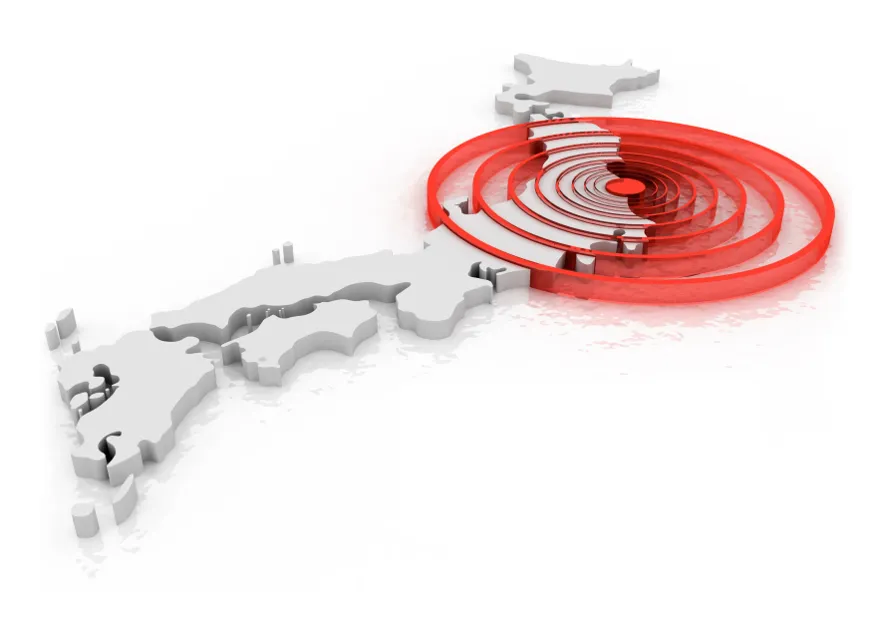
Wedged among four major tectonic plates, Japan is at the mercy of their abrupt herculean shifts and the earthquakes and tsunamis they can trigger. The fallout can be devastating. The magnitude 9 Great East Japan (Tohoku) temblor in 2011 and ensuing tsunami took nearly 20,000 lives, destroyed 138,000 buildings and cost $360 billion in economic damage.Factories including silicon wafer production facilities owned by Shin-Etsu Chemical and MEMC Electronic Materials – together accounting for 25 percent of the global silicon wafer production – sustained heavy damage. Operations were suspended. The Kumamoto earthquake in 2016 also caused significant damage. The economic cost: as much as $7.5 billion.With disaster risk rising on a global scale, these calamities offer valuable lessons in disaster preparedness and how companies can draw from their experiences to strengthen business continuity planning (BCP).Earthquake experiences and lessons in BCP were the focus of the recent SEMI Japan Members Day as speakers from five semiconductor device and equipment manufacturers offered their BCP strategies to about 150 SEMI members. Following are key takeaways from their presentations. Renesas: Create a robust production plant that is hard to break and easy to fixRenesas Semiconductor Manufacturing’s Naka plant took about 80 days to resume production while its ability to deliver semiconductors was delayed even longer as it recovered from damage caused by the Tohoku earthquake, said Yoshiyuki Miyamoto, Representative Director and President at Renesas. Operations at the company’s Kawajiri plant were disrupted by the Kumamoto earthquake.A key lesson from both earthquakes: The company needed to promote risk visualization from top-to-bottom in the supply chain. With the goal of making its plants easy to repair but hard to break down, Renesas implemented a risk management plan for earthquake preparedness plan to ensure stronger production line resistance and a stable supply to customers. The company ran simulations of multiple earthquake scenarios including aftershocks, enabling it to develop new BCP training and preparedness measures. Sony: Staying transparent about the disaster, sharing and interacting with related companiesYukihide Keigo, a representative from the Sony Semiconductor Manufacturing, showed footage taken the day the Kumamoto earthquake damaged a production line at its Kumamoto Technology Center. Sony is the top manufacturer of imaging sensors worldwide, and the Kumamoto plant is the backbone of that production. The magnitude of the foreshock fell within levels Sony had accounted for in its BCP at that time, and the line was expected to return to full production within a week. However, the magnitude of the earthquake that followed outstripped expectations, and the company’s BCP didn’t hold up. Three and a half months later, the plant had finally fully recovered. The protracted recovery prompted Sony to develop an earthquake preparedness plan using a model that assumed double the magnitude of expectations. For full restoration, the company identified challenges to returning to full operation at each stage of the production line. Then it went even further, developing in-house diagnostics, implementing critical path methods and strengthening earthquake resistance of equipment that manages bottlenecks for the restart of the plant. The revision of its BCP plan led to the establishment of a system to shorten the resumption of production after a major earthquake to just two months.Sony shared the contents of its BCP review with other companies to solicit help identifying any gaps and highlighted its partnership with Renesas in the Semiconductor Industry Association in Japan (JSIA), a committee of the Japan Electronics and Information Technology Industries Association (JEITA), to share materials procurement resources for the purposes of disaster preparedness and business continuity. HORIBA STEC: Steady daily practices protect hundreds of millions of yen worth of products HORIBA STEC’s Aso plant, near the epicenter of the Kumamoto earthquake, suffered heavy damage that cut off electricity and the water supply, yet production in its clean room resumed in just 10 days, said Hiroyuki Koyama, a factory manager at the plant. The plant’s quick recovery stemmed from daily preventive measures implemented before the quake such as connecting freestanding shelves for greater stability, applying thick rubber bands as rails to prevent manufactured goods from falling to the floor, and placing equipment on rolling carriages instead of fixed shelves.The practices saved the Aso plant hundreds of millions of yen in products and materials that otherwise could have been lost in the earthquake. Koyama also offered the reminder that, with regulations governing factory layout and construction differing widely depending on factors such as a building’s age, companies need to tailor their BCPs to the unique characteristics of each building. THK: The key point of dampening earthquakesTHK’s ACE Division develops earthquake dampening and vibration control devices designed to absorb the vibrational energy of an earthquake, though the devices must also be designed for precise analysis of that energy, said Hidemi Murao. Murao provided an overview of the latest technologies and products for dampening earthquake vibrations and shared test results from experimental devices.Murao described how THK’s recently introduced Linear Motion (LM) Guide, an earthquake vibration dampening technology, can significantly reduce building vibrations during a temblor. In a video Murao showed to demonstrate how the guide works, a shelf loaded with equipment rests on a platform equipped with THK’s LM Guide equipment. Simulating an earthquake, the platform shakes vigorously in every direction but the shelf remains steady as the LM Guide dampens the vibrations. The platforms can be installed on floors or underground in buildings or factories to prevent shelves from toppling. Tokyo Electron: The ideal BCP management systemOne risk associated with BCP training is that it can become overly routine, dulling the response of employees in actual disasters, said Tokyo Electron Vice President Tatsuya Aso. To help keep its workers’ skills sharp, TEL held surprise drills with employees assigned to particular BCP roles to test their ability to adapt quickly to when disaster strikes. In addition, TEL has launched surveys in more than 70 overseas locations to optimize safety in these high-hazard facilities.The SEMI Japan Members Day presentations made clear that the issue of BCP transcends boundaries between individuals, manufacturers, regions, and sectors within the global electronics supply chain. Disaster preparedness requires problem-solving across the entire supply chain, with companies sharing technical knowledge, offering mutual aid, and striving for continual improvement. Collaborative is essential. At SEMICON Japan 2019, SEMI will continue to bring companies together to address BCP initiatives and share their technical knowledge with members. Jim Hamajima is president of SEMI Japan.

Read More