

Moderators
Chungyuan Standard Time (CST)
Yu-Chuan Li, Distinguished Professor, Taipei Medical University
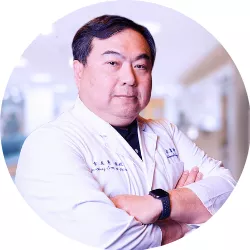
Biography: Prof. Li is a pioneer of artificial intelligence in medicine and
translational biomedical informatics. He has devoted himself to
evolving the next generation of Al in patient safety and prevention (""Earlier Medicine""). He has been deeply involved in international cooperation for biomedical informatics development among Asia, America, Europe, and Africa.
Prof. Li is currently served as the elected president of the International Medical Informatics Association (IMIA). He has previously served as Vice President of IMIA and President of the Asia-Pacific Association for Medical Informatics. Besides, he has also been elected as a fellow of Australia College of Health Informatics in 2009, American College of Medical Informatics in 2010, and International Academy of Health Science Informatics in 2017.
Position
• Distinguished Professor, Taipei Medical University
• Dermatologist, Taipei Municipal Wanfang Hospital
• President-elect, International Medical Informatics Association
Education
• Ph.D., Medical Informatics, University of Utah School of Medicine
• M.D., Medicine, Taipei Medical University"
Central Europe Time (CET)
Michael Brothers, Technical Program Manager, UES, Inc.
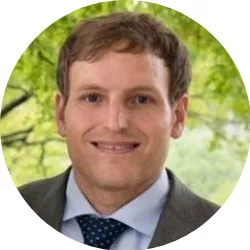
Biography: Dr. Brothers graduated from the University of Cincinnati with a B.S. in Chemistry and Biology before obtaining his Ph.D. from the University of Illinois Urbana-Champaign in Chemical Biology. Dr. Michael Brothers is currently a Technical Program Manager with UES, supporting biochemical sensor and gas phase sensor research at both the 711th Human Performance Wing at Wright Patterson Air Force Base and with UES, leading to numerous publications and patents. In his role, Dr. Brothers works with data scientists and statisticians and is an end user of advanced data architectures for a variety of sensor applications and analysis.
Pacific Daylight Time (PDT)
Dr. Andreas Caduff, Strategic Advisory Board Member, Digital Medicine Society
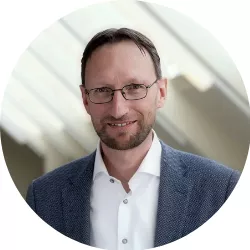
Biography: Andreas Caduff has been a driving force in the development of non-invasive and contextualized physiological monitoring. He was serving as CTO of Solianis where he orchestrated the development of non-invasive glucose monitoring. He then founded Biovotion and served for 7 years as CEO, offering a state of the art user-centric, analytics driven ecosystem, powered by medical wearable technology. Biovotion received several international awards and high calibre endorsements for its innovations, including an award from the XPrize Foundation. Today he enjoys working at the interface of secured medical technology, physiological monitoring and data science, towards a more holistic view of health.
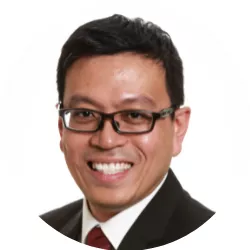
Speaker 1: Paul Chua, CyberSecurity Officer, Greater Asia, Becton Dickinson
Data Fusion for Smart Healthcare
Abstract: With sensor innovation and the exponential growth of biomedical datasets being continuously generated, the healthcare industry is experiencing a fundamental shift to a more proactive, precise, and personalized care model that empowers people to lead healthier lives. However, in most cases, this massive, collected information, albeit timely and precise, is only intended to be displayed to the healthcare personnel, who remain responsible for making final care decisions. From this perspective, the potential correlations between various human body indicators—i.e., ‘fusing’ data from multiple sources—is manually undertaken by a physician, who applies his/her knowledge and experience to detect/prevent a potentially critical situation. With the advancement of edge processing and new fusion techniques, there are now efficient Data Fusion solutions to collect, transfer, storage, aggregate, and analyze data from multiple sources, and help the healthcare professional make better, informed decisions. Various challenges and issues with Healthcare analytics and data fusion would also be highlighted, along with future innovation and business opportunities.
Biography: Paul Chua is the Greater Asia CyberSecurity Officer of BD. Paul is responsible for developing and aligning security initiatives with company-wide programs, business objectives within Greater Asia; and ensuring that information assets and technologies used in BD products, manufacturing, service, enterprise IT, and third-party partners are adequately secure and resilient.
Paul is a seasoned professional with more than 25 years of experience managing product development and operations at APAC level for IT, Telecommunications, Healthcare, Cybersecurity, and Homeland Security. Prior to joining BD, Paul was the Chief Product Officer of a data analytics startup, where he was responsible for developing multiple suites of AI & Data Fusion-as-a-Service products for the Healthcare, BFSI, and Government enterprises.
Paul holds a Bachelor of Applied Science (Computer Engineering) from Nanyang Technological University of Singapore and a Masters of Business Administration from Northwestern University, Kellogg School of Management & Hong Kong University of Science & Technology.
Speaker 2: Steve Steinhubl, Chief Medical Officer, PhysIQ

The Untapped Value of Individual Longitudinal Data: Lesson's from COVID-19
Abstract: In the setting of any possible insult to individual wellness, management decisions are routinely made based on symptoms and objective physiologic measurements, whether the person primarily making those decisions is the individual experiencing them or a clinician caring for them. Since symptoms are often non-specific, the recognition of abnormalities in physiologic parameters plays an important role in diagnosing and guiding therapeutic interventions. Multiple aspects of the COVID-19 pandemic highlighted the challenges to relying on population-based “normal” physiologic metrics, but also rapidly accelerated work focused on identifying changes in an individual’s unique “normal” for improving the diagnosis and management of acute infection, as well as providing a better understanding of long COVID and response to vaccination.
Biography: Dr. Steinhubl is the Chief Medical Officer for physIQ and a career-long clinician-scientist. Prior to joining physIQ, Steve was the founding Director of Digital Medicine at Scripps Research’s Translational Institute. He remains clinically active as a Cardiologist in the Alaska Native Tribal Health Consortium. He received his undergraduate training in chemical engineering at Purdue University, medical degree at St. Louis University and cardiology training at the Cleveland Clinic. His work at Scripps, and now at physIQ, has focused on the implementation of clinical programs built specifically around the novel capabilities of digital technologies, especially those made possible through combining novel sensor technologies and AI-based insights to provide personalized, real-time analyses able to detect individual changes in health. Steve has been the Principal Investigator of dozens of nationwide and global clinical trials and has published ~300 peer-reviewed articles and was the founding Editor-in-Chief of Nature Partner Journal - Digital Medicine.
Speaker 3: Matteo Lai, CEO & Co-Founder, Empatica
Digital Biomarkers and Their Use in Post-COVID Healthcare: A Case Study Example From Empatica
Abstract: During the past year, the disruption in healthcare brought by the pandemic has highlighted the importance of continuous, remote monitoring and diagnostics. Medical devices and AI can help to rapidly develop new remote diagnostics, to be used by patients and physicians. How are these algorithms as a medical device designed, built and deployed?
In this presentation, we look at an example for early Covid-19 detection, before symptoms appear, that was previously tested on Influenza and applicable to other viral respiratory infections. The work was performed by the team at Empatica during 2020, with support from HHS and the US Army’s MRP. Empatica Inc is an MIT spinoff based in Boston, MA, and a pioneer in enabling continuous, unobtrusive patient monitoring via physiological and behavioral biomarkers. EmbracePlus, its latest model, has been built to monitor the health of astronauts on NASA’s Journey to Mars.
Biography: Matteo Lai is co-founder and CEO of Empatica, a digital biomarker and medical devices company based in Boston, Massachusetts and Milan, Italy. Empatica provides an end-to-end remote health monitoring platform for running decentralized clinical trials, and develops digital biomarkers that can monitor a range of conditions.
As a technology entrepreneur, Mr. Lai contributed to the invention of the solutions being offered by Empatica. The company has developed the award-winning Embrace; the world’s smallest and most accurate wearable sensor suite for research, which also became the world’s first FDA cleared smart watch for use in Neurology.
Matteo studied Engineering, trained as an Architect, and holds a Double MSc degree in Architecture and a Master in Innovation Management. He was recently selected by Sifted as one of the top pioneers of the European start-up world.
Speaker 4: Bobby Reddy, Jr., CEO & Co-Founder, Prenosis
Sparking Precision Medicine for Sepsis and COVID-19
Abstract: Prenosis is a start-up company focused on deconvoluting the heterogeneity of human immune response to infection. By utilizing its proprietary NOSISTM Dataset, a unique collection of combined biomarker and clinical data, Prenosis builds a pipeline of digital diagnostics to improve care in hospitals in partnership with a network of hospitals, software, research, and diagnostic companies. The Sepsis ImmunoScoreTM, Prenosis’s flagship product on its ImmunixTM platform, is able to identify patients at highest risk for sepsis in hospitals by combining Electronic Medical Record datastreams with novel biomarker tests with high accuracy. This product has the potential to save tens of thousands of lives and billions in healthcare spending annually across the United States.
In this talk, we will discuss the utility of the Sepsis ImmunoScoreTM for improving care of patients suspected of sepsis in hospitals. We will also demonstrate significant new data illustrating that the types of holistic immune responses due to SARS-COV-2 can be very similar to immune responses due to other infections. These results could spark a whole new era of precision medicine for treating abnormal immune response due to infection, including SARS-COV-2.
Biography: Bobby Reddy, Jr., Ph.D., is an engineer turned entrepreneur who has focused on the development and commercialization of precision medicine products for over 14 years. He co-founded Prenosis, Inc. in 2014 and serves as its CEO. In this role, he has raised capital from investors, been awarded numerous research grants, recruited a dynamic and multi-disciplinary team, and executed various strategic partnerships with huge diagnostic companies, hospitals, manufacturers, technology partners, and others. He is passionate about the problem of the deconvoluting the heterogeneity of immune system dysregulation and its relevance in sepsis and other diseases. Dr. Reddy received his Ph.D. in electrical engineering from UIUC in 2012 with a focus on biotech devices and algorithms.