
SEMI China Fab Acceleration Program Conference Focuses on EHS and Facility
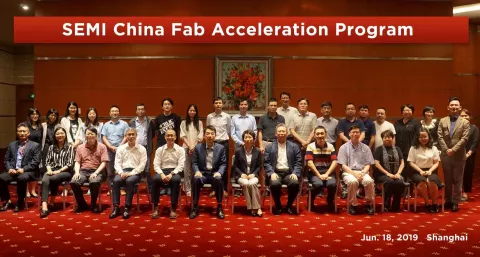
Group photo of Fab Acceleration Program Conference
The SEMI China Fab Acceleration Program Conference was successfully held June 18 in Shanghai International Convention Center. The representatives of more than 10 Fab factories and companies attended the meeting, including TSMC, SMIC, Silan microelectronics, CR Micro, CXMT, Nexchip, HH Grace, HLMC, ASMC/GTA, Intel (Dalian),TEL, Pall(China),Century 3, Greenment, ZINGSEMI,GENTECH and EDRI.
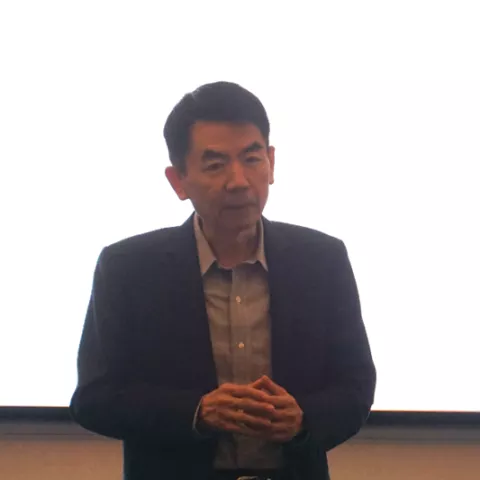
Lung Chu, President of SEMI China
Lung Chu, President of SEMI China, delivered a welcome speech. He introduced that FOA (Fab Owners Alliance) joined the SEMI family in 2018. Alliance members met regularly to discuss and deal with common manufacturing problems. They combined advantages with resources to provide value for plant management and operation through the collaboration platform of equipment manufacturers and solution suppliers to maintain and improve its global competitiveness. SEMI originated from standards. This year we would issue the 1,000th standard. Next year would be the 50th anniversary of SEMI. SEMI and industry would grow together. SEMI China is also committed to the development of China's semiconductor industry, striving to be the best partner in achieving China's semiconductor dream.
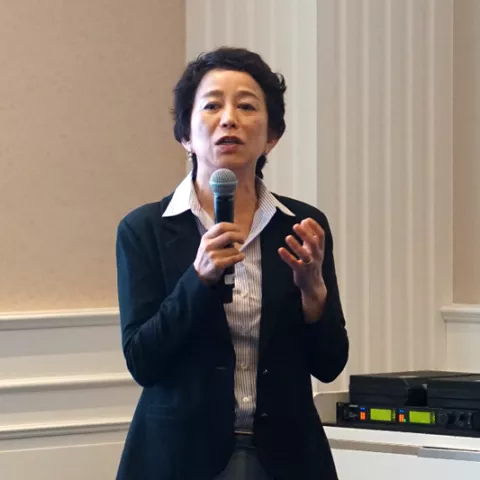
Supika Mashiro, expert of TEL
Supika Mashiro, expert of TEL, introduced that the advocacy of SEMI EHS industry and the information channel of SEMI. SEMI S-Documents (Safety Guidelines/Standards) were very beneficial to the development of the semiconductor industry related to the supply chain of microelectronics industry. SEMI safety standards were ideal for semiconductor manufacturing equipment. SEMI safety standards began in the 1990s, before which there was no uniform standard in the industry. In 1991, the original version of S2 was developed, and the latest version is S2-0818.
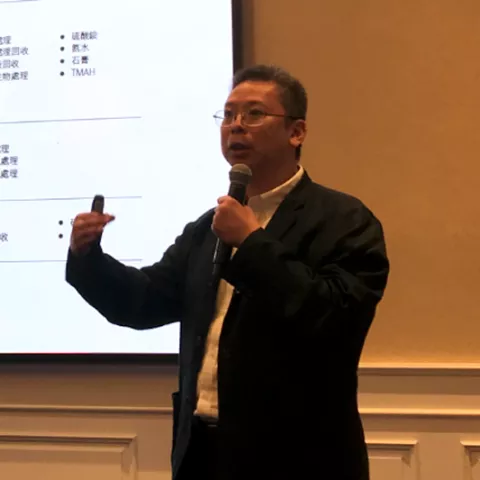
Kogan Kao, EHS Manager, TSMC China
Kogan Kao, EHS Manager, TSMC China, mentioned that water resources would be a hot topic in the future, and shared how to maximize the recycling of water resources including water resource risk management, water regime response measures, waste water monitoring and treatment processes, strengthen the source management of effective diversion and actively promote the reuse of recycled water, and achieve a drop of water into TSMC can use 3.5 times of reuse on average at TSMC through the process of recycling.
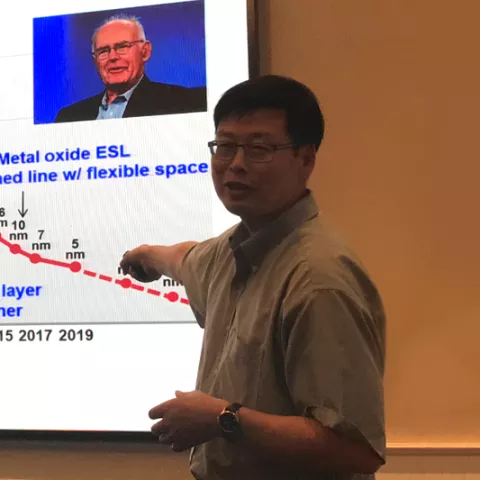
David Huang, MicroE VP, PH.D, Pall
David Huang, MicroE VP, PH.D, Pall, delivered a speech entitled Fab contamination Prevention-Particle & Metal Defect Control, mainly shared the pollution problems of nanoparticles and heavy metals and how to prevent them. He introduced that for 14 nanotechnology, a single nanometer particle could destroy a CPU. According to statistics, more than half of the yield problems were related to particles.
According to him, process defects in semiconductor wafer fabrication includes photolithography, etching, and CMP. Not all wafers can work. Defects are one of the main reasons for the low yield. The performance and yield of wafers are the key indicators to determine the maturity and profitability of the process. Establishing an appropriate SPEC is the first step to ensure yield. At the same time, it is necessary to understand the source of the defect, control feed quality and strictly adhere to process parameters, and choose appropriate and effective elimination and prevention technologies (such as filtering).
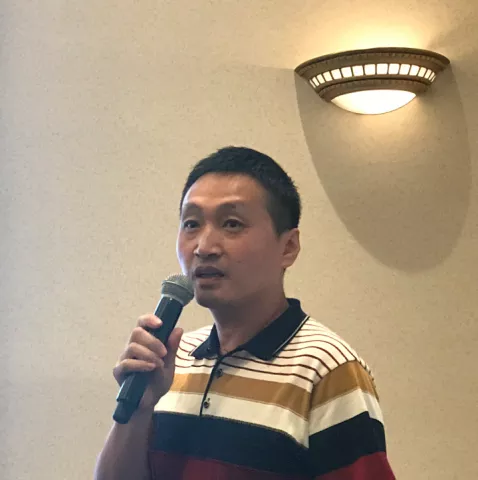
Frank Liu, Director, Century 3, delivered a speech entitled What Can We Do for an Environmental FAB. According to him, for capital-intensive, technology-intensive and policy-driven semiconductor (FAB) construction projects, it is necessary to accelerate the design and construction cycle of the project. Therefore, the rapid and accurate determination of environmental design indicators can reduce the risk and loss of project construction. This speech took the final establishment of pollutant concentration discharge indicators in wastewater and waste gas as an example to share the uncertainty of these emission indicators in the early stage of the project and the basis and reasons for experts to determine the indicators. In the end, a result which is different from expectation and has to be reformed is obtained. At the same time, some cutting-edge technologies in wastewater and waste gas treatment under relatively harsh conditions were also shared. Finally, it is proposed that detailed investigation should be done in the preliminary design, especially reading EIA reports of industrial parks and investigating similar factories around, communicate with EPA engineers and EIA units, the final pre-determined design conditions, aiming to make quick decisions, reduce errors or risks, and accelerate the progress of the project.
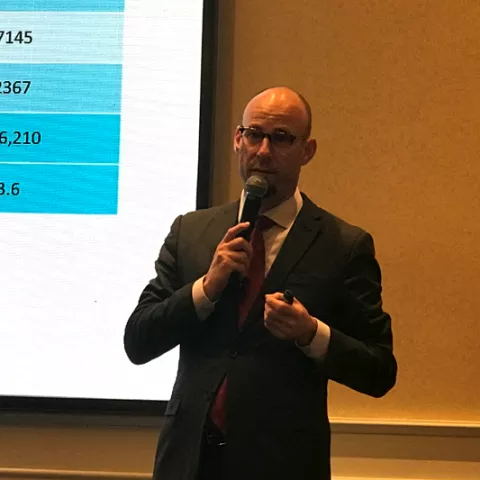
Johnny Browaeys, Director, Greement Environment
Johnny Browaeys, Director, Greement Environment, delivered a speech entitled Business and Supply Chain Resilience in China's New Era: New Challenges and New Tools. According to Johnny, environmental protection is a strategic priority in China's five-year plan. Surrounding environment (such as nearby factories, environmental infrastructure, sensitive areas) and policies (environmental planning, industrial transformation, industrial capacity planning, and urban planning) are all the issues to be considered in enterprise risk management. He cited the strategies of specific provinces for environmental planning, such as understanding the importance of rectifying and upgrading the chemical industry, enterprises and parks that do not meet safety production standards and environmental standards must be closed down and low-end enterprises must be eliminated. At the same time, he also presented the punishment given to some dangerous chemical enterprises to highlight the importance of environmental issues.
SEMI China Fab Acceleration Program conference promotes the exchanges between Fab plants and provides value for plant management and operations by combining superior resources, so as to maintain and enhance its global competitiveness.