

November 5, 2025
Join us for this engaging Master Class with Benyamin Davaji, PhD, Assistant Professor of Electrical and Computer Engineering at Northeastern University and Peter Doerschuk, Professor of Electrical and Computer Engineering and Biomedical Engineering at Cornell University, as they explore the role of digital twin models in advancing semiconductor manufacturing. The masterclass will highlight how data-guided methods and computational modeling are transforming unit process development, driving efficiency and innovation across the semiconductor industry. With expertise spanning microsystems, acoustic transducers, and nanofabrication, the speakers will provide insights into how digital twins can bridge research and production to accelerate breakthroughs in semiconductor technology.
Time
10:00 am - 12:00 pm PDT
Location
United States
A digital twin is a computer representation of the structure, context, and behavior of physical systems, which are critical components in the optimization of computational systems, accurately representing physical systems and processes. A Digital Twin can be used to reduce or eliminate iterative physical experiments needed for optimization, thereby enhancing yield, saving time, and resources. Semiconductor manufacturing involves numerous complex steps, where accurate control of each step is crucial to achieving the overall manufacturing yield and minimizing variations in device characteristics. The complexity of the manufacturing processes' flows limits flexibility for testing novel approaches. Unit processes can be based on first-principal models (physics-based), data-based models, or hybrid models combining both approaches when possible. Fabrication processes in the cleanroom and on printed electronics tools are often a function of time-varying parameters, including those of the equipment, environment, and materials. The parameters often have co-dependencies across different process steps and tool sets.
This course will cover the necessary material to create DNN-based Digital twins for nanofabrication processes in cleanrooms. The course will include experimental details for data preparation, data processing, training models, and use case demonstrations. Nanofabrication process equipment can inherently have millions of internal variables and can learn from datasets, providing a robust and complementary approach to traditional feedback control and process stabilization methods. The included Digital Twin modes are developed using images (CD-SEMs, optical images), time history data (Optical Emission Spectroscopy), and textual process information (recipes and materials). The course will include: (1) Approaches to preprocess image data and create learning-based models, (2) using DNN-based domain translation for learning to predict the DUV nanolithography and ICP Plasma Etch, (3) virtual metrology methods for quantification of learning outcomes, and (4) developing a new class of process-aware DNN-based digital twins.
ABOUT THE SPEAKERS
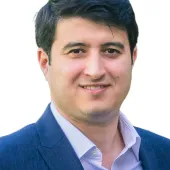
Benyamin Davaji, PhD
Benyamin Davaji is an Assistant Professor in the Electrical and Computer Engineering Department at Northeastern University. His research focuses on integrated microsystems with an emphasis on sensing and computation using mechanical waves, acoustic/ultrasound transducers, bio-interfaces, and microcalorimetry. He also applies data-guided methods to nanofabrication process development and semiconductor manufacturing. Dr. Davaji earned his PhD in Electrical and Computer Engineering from Marquette University in 2016 and later served as a post-doctoral associate at Cornell University’s School of Electrical and Computer Engineering.
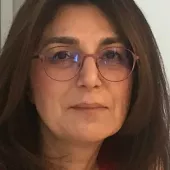
Peter Doerschuk, PhD
Peter Doerschuk, Professor at Cornell University since 2006, previously served on the Purdue faculty in Electrical and Computer Engineering and Biomedical Engineering. He earned B.S., M.S., and Ph.D. degrees in Electrical Engineering from MIT, an M.D. from Harvard Medical School, and completed training at Brigham and Women’s Hospital and a postdoc at MIT. His research applies computational nonlinear stochastic systems to biology and medicine, spanning viral 3-D structure determination using electron microscopy and x-ray scattering, to nonlinear models of ethanol pharmacokinetics that enable sensor processing, pattern recognition, and individualized physiological analysis.

SEMI Members: $75
Use your corporate email address during log in to be recognized as a SEMI Member.
Non-Members: $149
Students: Free
Contact Basak Ulutas Ozturkler ([email protected]) with a picture of your student ID to receive your discount code.