

Advanced Metrology for the Development and Manufacturing of Critical Filtration and Purification Product
New challenges and opportunities in process and design innovations continue to emerge in parallel to ever shrinking semiconductor device geometries as technology scales beyond the 2nm node. While adherence to Moore’s Law drives scale reduction, the industry faces ever-increasing sources of process sensitivity and reduced process margins. Additionally new materials, required for enhanced device performance, mandate the need for unprecedented purity to enable robust manufacturing. With all these contributing factors, the industry is redefining the on-wafer defect tolerance and the approach to delivering solutions. A “total wafer environment” contamination characterization and control strategy is essential for yield enablement.
For example, in the case of cleaning chemistries, due to the increasing number of new materials, the complexity of three-dimensional device architectures at smaller critical dimensions, and the challenges and limitations of current metrology, the severity of killer defects is rising and can remain undetectable without early intervention safeguards in place. The key is to maintain process stability while controlling contamination via a total wafer environment strategy. Critical to achieving this process state includes the correlation of defects on wafer, the wafer environment itself, and to define the control limits for gases, chemicals, air, precursors, ultrapure water and substrate surface cleanliness. In this presentation, we will focus on the metrology associated with the development and manufacturing of Wet Etch and Cleans filtration and purification products that enable contamination control of critical chemistries in the semiconductor manufacturing process.
BIOGRAPHY
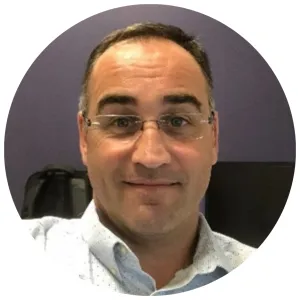
Dr. Thomas Phely-Bobin has more than 20 years’ experience in technology development leadership, focused on innovation and productization. Tom is currently the Vice President of Engineering, R&D and Applications solutions for the Liquid Microcontamination Control group at Entegris. Tom joined Entegris in 2012. Prior to working with Entegris, Tom led the Materials Research group at QinetiQ North America from 2004 to 2012. From 2002 to 2004, Tom was a post-doctoral fellow at Sandia National Laboratories in Albuquerque, New Mexico. Tom earned an MS and PhD in Polymer Science and Engineering from the University of Connecticut.