
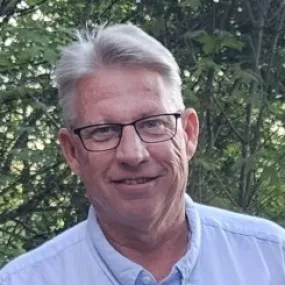
OTF Planar Staff IC Intel
Don has been employed by Intel for 31 years. He started in the 6-inch microcontrollers Fab-5 in Chandler AZ. He has been involved in every Arizona process start-up including the most recently 18A Fab-52. His manufacturing process experience at Intel includes Diffusion, Wet Etch, Planar-CMP, Ultra-Pure Water, Waste Treatment Systems, Abatement and Vacuum Systems, Gases, and Bulk Chemical Delivery. Don is also co-chair the SEMI North America Liquid Chemicals Technical Committee.
Before Intel he worked in Toxicology Labs, Environmental Chemistry Labs and Agricultural Labs after spending 6 years as a Nuclear Plant Chemist for the Unites States Navy on Trident Ballistic Missile Submarines.
Abstract
Chemical Quality and Consistency Requirements for the Semiconductor Industry
Leading edge semiconductor manufacturing factories are becoming increasingly sensitive to defect sources and process variability impacts. The ability to detect and then control these sources are also becoming much more difficult to accomplish.
This short presentation will provide a high-level overview of the semiconductor wafer manufacturing process. It will also highlight how chemicals and gases can create very disruptive process excursions within the manufacturing process.
Key Take Aways:
- The manufacturing process duration is very long, which provides a multitude of opportunities for excursions to occur.
- At even given time, there can be tens of thousands of wafers in process at once.
- There can be thousands of potentially sellable Die on a single wafer.
- Each wafer will go though hundreds of process steps before it is completed.
- There are hundreds of liquid chemicals and gases being used in the manufacturing process.
- Any excursion can cause a catastrophic loss of production and associated company revenue.
- A preview of what specific parameters and associated detection levels are required to enable the capability of leading edge and future processing nodes.
- Discussion on the requirements regarding variation control of assays and purity.