

Smart Trees in Smart Cities: Using Digital Technologies to Monitor the Trees that Protect City Residents from Excess Heat
ABSTRACT
Even before the pandemic hit, residents of cities around the world were experiencing unprecedented threats from excess heat, floods, wildfires, and air pollution. Digital technologies can help cities prepare for, respond to, and recover from these challenges. But people are increasingly wary of the motivations of the companies and governments that offer these solutions. To overcome this distrust and to provide new insights about how technology can benefit city residents, Portland State University and a collection of municipal, corporate, nonprofit, and academic partners launched the Digital City Testbed Center (DCTC) in 2018. The DCTC tests digital innovations under the relatively controlled environmental conditions found in a network of campuses in the Pacific Northwest before they are deployed more broadly in communities and business districts. By combining foundational platforms like 5G, advanced WiFi, sensor networks, cloud computing, and satellite-based remote sensing with new applications from more than a dozen startups, DCTC is addressing a wide range of emerging problems and opportunities. One of these is monitoring the health of urban trees, because of their importance in keeping temperatures low and air clean, and the possibility that if they get too dry, they could be susceptible to wildfire. In this combined presentation, we will talk first about DCTC's approach and then focus on new ways to monitor the urban tree canopies that help keep our cities livable.
BIOGRAPHY
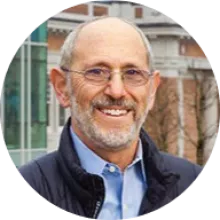
Jonathan Fink is Professor of Geology and Director of the Digital City Testbed Center at PSU, where he studies natural hazards and urban sustainability. He also is a visiting professor at University of British Columbia where he co-directs the Cascadia Urban Analytics Cooperative, which seeks to help build a technology corridor between Vancouver and Seattle. He previously was Vice President for Research at both PSU and Arizona State University. He received a PhD in Geology from Stanford University and is an elected fellow of the Geological Society of America and the American Association for the Advancement of Science.