

Recent Advances in Development of 4H-SiC Inertial Sensors and Timing Resonators
ABSTRACT
This talk will present the recent advances in the development of a versatile, mass-manufacturable 4H-silicon-carbide MEMS platform technology, with the aim of creating a quantum leap in the performance of inertial sensors and timing resonators. By utilizing high aspect ratio deep-reactive-ion-etching (DRIE) of 4H-SiC, the bonded SiC-on-insulator platform has enabled the creation of ultra-high-Q capacitive bulk-acoustic wave (BAW) resonators, enhancing the performance of MEMS BAW gyroscopes, accelerometers, and OCXOs. With a projected angular random walk (ARW) of less than 110-3 °/√hr, 4H-SiC BAW gyros are poised to surpass the performance levels of bulky and expensive ring laser gyros while providing large bandwidth and immunity to shock and vibration. Additionally, Lamé mode SiC resonators, showcasing a demonstrated Q of 20106 at 6 MHz and equipped with heaters and temperature sensors, offer unparalleled performance and stability for single-chip OCXOs in demanding extreme environments.
BIOGRAPHY
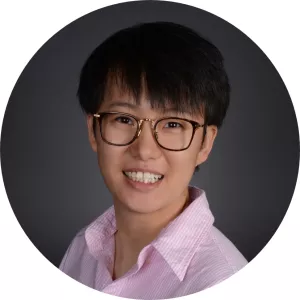 Ningxin Li, Ph.D., is a postdoctoral fellow at Georgia Institute of Technology, Integrated MEMS Laboratory which led by Dr. Farrokh Ayazi. Ningxin’s work is dedicated to advancing the knowledge frontier in the realm of MEMS technology, specifically focusing on the development of a versatile and mass-manufacturable 4H-SiC platform to catalyze a quantum leap in the performance of inertial sensors and timing resonators. As an accomplished engineer and physicist, Ningxin's efforts are driven by a passion for innovation and excellence. The bonded 4H-SiC-on-Insulator platform with buried cavities which developed by her is poised to enhance the quality factor (Q) of the MEMS resonator. Moreover, Ningxin brings extensive expertise in high/low aspect ratio deep-reactive-ion-etching (DRIE) of 4H-SiC and resonators nanofabrication, along with profound insights into 4H-SiC materials exploration.
Ningxin's scholarly impact extends across esteemed high-impact factor journals, including ACS Nano, Small and so forth. Her achievements have earned recognition within academia, as evidenced by "Best Poster Nomination” in Material Research Society 2021 Fall meeting. Furthermore, she has been invited to serve as a reviewer for "The ASME Energy Sustainability Conference" in 2024, underscoring her status as a respected authority in related field.