

Moderator: Dr. Yi-Shao Liu, Chief Operating Officer, Helios Bioelectronics, Inc.
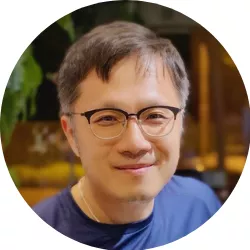
Biography:
Ph.D., ECE, Purdue University, USA
Post-doctoral associate, ECE & Bioengineering, University of Illinois at Urbana-Champaign, USA
Experience:
Committee of Cybersecurity, Interoperability, Regulatory and Reimbursement of Digital Health, APACMed
Deputy Director, NTU-Delta Corporate Laboratory for Cyber Physical Systems, Singapore
Deputy Director, Delta Research Center, Delta Electronics Int'l (Singapore) Pte. Ltd.
Chairman of Industry Division, American Association of Clinical Chemistry (AACC)
Section Manager, Biosensor Program, Taiwan Semiconductor Manufacturing Company (TSMC)
Louis J. Dunka, Jr. Award 2016; Outstanding Speaker Award, 2015; Best Abstract of Interest to the Industry Division Award (Jointly by TSMC and SONY DADC Bioscience) 2014, AACC
Speaker 1: Dr. Yi-Shao Liu, COO, Helios Bioelectronics Inc.
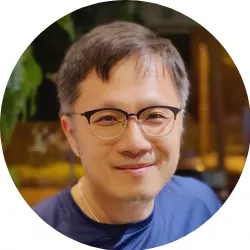
From Analog to Digital: A Portable Semiconductor-based Biosensor Platform for Molecular Diagnosis and Novel Therapy Development
Abstract: Founded in 2016, Helios Bioelectronics, Inc. is developing an application-driven and highly sensitive BioFET platform, enabling real-time monitoring of health status for precision medicine. The platform serves to collect information such as biologically significant genetic aberrations and altered protein expressions to establish dynamic profiling of the molecular regulations for monitoring and diagnostics of complex diseases. Helios BioFET platform can detect any targets with a net charge, including protein, bacteria, nucleic acid (e.g. miRNA), cell and so on. The BioFET chips are readily customizable by immobilizing target-specific probes onto the chip surface. Hence, minimal sample preparation is needed and no labeling is necessary for target detection. In addition, over one million biosensors can fit into the size of a fingertip, allowing for detection of multiple targets on a single BioFET chip with significant statistical power. BioFET chips generate data that can be readily digitized and transmitted through Cloud computing for AI analysis. Together with the portable-size equipment, Helios aims to take up the rapid growing markets of POCT and molecular diagnostics for personalized and decentralized digital healthcare.
Biography:
Ph.D., ECE, Purdue University, USA
Post-doctoral associate, ECE & Bioengineering, University of Illinois at Urbana-Champaign, USA
Experience:
Committee of Cybersecurity, Interoperability, Regulatory and Reimbursement of Digital Health, APACMed
Deputy Director, NTU-Delta Corporate Laboratory for Cyber Physical Systems, Singapore
Deputy Director, Delta Research Center, Delta Electronics Int'l (Singapore) Pte. Ltd.
Chairman of Industry Division, American Association of Clinical Chemistry (AACC)
Section Manager, Biosensor Program, Taiwan Semiconductor Manufacturing Company (TSMC)
Louis J. Dunka, Jr. Award 2016; Outstanding Speaker Award, 2015; Best Abstract of Interest to the Industry Division Award (Jointly by TSMC and SONY DADC Bioscience) 2014, AACC
Speaker 2: Dr. Hui Tian, CEO & Co-Founder, Axbio
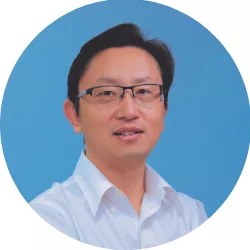
Clinical Sequencing with Bio-CMOS Chip
Abstract: DNA sequencing is expanding rapidly from research market to clinical market, with associated new challenges. The distributed clinical sequencing application (such as pathogen detection) often requires a small instrument, fast workflow, simple operation, high accuracy, and low cost. Combining integrated circuits with molecular motors and microfluidics, at Axbio we developed a high throughput bio-CMOS chip platform which is suitable for clinical sequencing and multi-omics measurements.
Biography: Dr. Hui Tian is CEO and cofounder of Axbio. Prior to that he was the Vice President of Roche Sequencing Unit, and the Vice President of Genia Technologies. He has extensive DNA sequencing, image sensors and semiconductor engineering experience. He has held senior technology and engineering leadership positions at multiple high-tech companies, including Pixim (acquired by Sony), InVisage (acquired by Apple), and Aptina (acquired by On Semiconductor). Dr. Tian earned his PhD and MS degrees from Stanford University, and MS and BS degrees from Tsinghua University.
Speaker 3: Dr. Johnsee Lee, Founder & CEO, Personal Genomics, Inc.
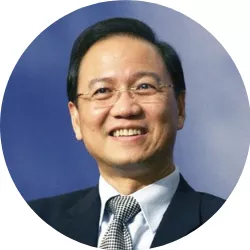
Leveraging Semiconductor Technology for Decentralized DNA Sequencing in Clinical Applications
Abstract: The next generation sequencing (NGS) has become an essential analytic tool for precision medicine aiming at significantly improving the effectiveness of disease treatment and prevention. However, clinical NGS analyses are typically provided in centralized labs, and a comprehensive genomic profiling for a tumor by NGS requires 18 days of time and often costs several thousand US dollars. NCCN Clinical Oncology Guidelines have called for more timely multigene molecular testing at more affordable costs for all patients.
In addition, current NGS identifies the causes of genetic disorders only less than half of the time (1). In large part, that's because most genomic analyses rely on NGS’ short-read sequencing with reads only 100-300 base-pair long, which is not sufficient at finding larger structural variants.
A decentralized optoelectronic single-molecule sequencing (OES) technology has been developed, aiming at sequencing a human-sized genome within hours and with a much lower cost. It is also a long-read sequencing technology with read length several orders of magnitude longer than current NGS, thereby capable of detecting majority of structure variants in human genome.
The OES technology consists of a photonics chip with high-density array of nano wells, a high-sensitivity detection module, and a set of novel 3’ sequencing chemistry. The system utilizes advanced yet very cost-effective semiconductor manufacturing processes. Since the module is designed to simultaneously detecting large number of sequencing reactions in-situ and in real-time, millions of DNA strands can be sequenced very quickly.
The OES sequencing technologies are protected by more than 190 patents and patent applications worldwide. With such a decentralized long-read and affordable technology, clinical applications of DNA sequencing will become more widespread in precision medicine.
Note: (1) K. Miller, Clinical Omics, p. 20-25, March/April 2018
Biography: Dr. Johnsee Lee is the Founder & CEO of Personal Genomics and the Chairman of Quark Biosciences, Inc. He is also the Chairman of Taiwan Precision Medicine & Molecule Diagnostic Industry Association and the Honorary Chairman of Taiwan Biotech Industry Organization (Taiwan BIO). Prior to his current position, he served as the President of Industrial Technology Research Institute (ITRI), the Chairman of the Development Center for Biotechnology (DCB), and as the Board Director of Taiwan Semiconductor Manufacturing Corp. (TSMC). Dr. Lee has played a key leadership role in the development of Taiwan’s world-class high-tech industries.
Dr. Lee received his PhD degree from the Illinois Institute of Technology, and an MBA from the University of Chicago. He is also a graduate of Harvard Business School’s Advanced Management Program. Dr. Lee is the founder and the first director of Biomedical Engineering Laboratory at ITRI. Over the last 15 years, he has successfully facilitated the founding of more than 15 biotech and IT start-up companies.
Before joining ITRI, Dr. Lee held various technical and managerial positions at Argonne National Laboratory and at Johnson Matthey Inc. in the U.S.A. He was elected as the President of the Federation of Asian Chemical Societies in 1999. Dr. Lee has also served as the President of Taiwan Telecare Industry Association, and the President of Monte Jade Science & Technology Association in Taiwan.
Dr. Lee has published numerous journal papers and patents. He received many honors and awards including the National Engineering Medal, CIE Distinguished Achievement Award, the Innovation Leadership Award by Global Views, and the Excellence in Research & Innovation Award by Frost & Sullivan.
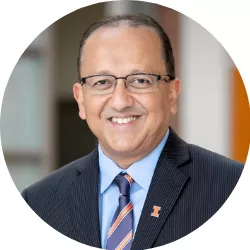
Speaker 4: Rashid Bashir, Ph.D., Dean, Grainger College of Engineering; Grainger Distinguished Chair in Engineering and Professor of Bioengineering, University of Illinois at Urbana-Champaign
Microfluidics and Nanotechnology for Lab on Chip and Personalized Diagnostics
Abstract: Integration of biology, medicine, and engineering and especially fabrication methods at the micro and nano scale offers tremendous opportunities for solving important problems in biology and medicine and to enable a wide range of applications in diagnostics, therapeutics, and tissue engineering. Microfluidics and Lab-on-Chip can be very beneficial to realize practical applications in detection of disease markers, counting of specific cells from whole blood, and for identification of pathogens, at point-of-care.
The use of small sample size and sensitive analysis of target entities can result in easy to use, one-time-use assays that can be used at point-of-care. In this talk, we will present our work on the use of electrical field effect sensors including silicon and graphene for sensitive detection of nucleic acid and proteins, solid state nanopore sensors, and our recent work on SARS-CoV-2 detection at the point of care. The implication of these technologies for advancing personalized medicine for sepsis and cancer would be discussed.
Biography: Rashid Bashir is currently the Dean of Grainger College of Engineering, the Grainger Distinguished Chair in Engineering, and Professor of Bioengineering at the University of Illinois at Urbana-Champaign. He was member of the core founding team and co-chair of the inaugural curriculum committee for the Carle-Illinois College of Medicine, the world’s first engineering based College of Medicine at the University of Illinois at Urbana-Champaign. He has previously been at Purdue University and at National Semiconductor Corporation. He has held a visiting Scientist position at Massachusetts General Hospital and Shriner’s Hospital for Children, and was Visiting Professor of Surgery at Harvard Medical School, Cambridge, MA.
He was the recipient of the Joel and Spira teaching Award, the NSF Faculty Early Career Award and the IEEE EMBS Technical Achievement award. In 2018, he received the Pritzker Distinguished Lectureship Award from BMES. His research group is interested in developing new diagnostic technologies for precision and personalized medicine, and in 3D bio-fabrication of cellular systems. Using bionanotechnology, BioMEMS, and lab on chip, he is working at the interface of biology and engineering from the molecular to the tissue scale, and aiming to make an impact on grand challenges in infectious disease, sepsis, cancer, and others. He has authored or co-authored over 250 journal papers and has been granted 50 patents. Technology from his group has been licensed to multiple startups and larger companies.