

Moderator: Dr. Yi-Shao Liu, Chief Operating Officer, Helios Bioelectronics

Biography:
Ph.D., ECE, Purdue University, USA
Post-doctoral associate, ECE & Bioengineering, University of Illinois at Urbana-Champaign, USA
Experience:
Committee of Cybersecurity, Interoperability, Regulatory and Reimbursement of Digital Health, APACMed
Deputy Director, NTU-Delta Corporate Laboratory for Cyber Physical Systems, Singapore
Deputy Director, Delta Research Center, Delta Electronics Int'l (Singapore) Pte. Ltd.
Chairman of Industry Division, American Association of Clinical Chemistry (AACC)
Section Manager, Biosensor Program, Taiwan Semiconductor Manufacturing Company (TSMC)
Louis J. Dunka, Jr. Award 2016; Outstanding Speaker Award, 2015; Best Abstract of Interest to the Industry Division Award (Jointly by TSMC and SONY DADC Bioscience) 2014, AACC"
Speaker 1: Justin Reggi, Head of Partnerships, HumanFirst

Evaluating Digital Measures Across Clinical Research and Virtual Care
Abstract: HumanFirst enables safe, effective, and equitable healthcare operations at home. Previously known as Elektra Labs, HumanFirst serves leading organizations pioneering decentralized clinical trials and virtual care. Twenty-two of the 25 largest pharmaceutical companies in the world have used the HumanFirst platform to evaluate and enable the deployment of health technology products. HumanFirst offers command center and infrastructure solutions that ensure their telehealth operations are as reliable and trustworthy as those within hospitals or labs. In this talk, we’ll cover the V3 Framework (verification, analytical validation, clinical validation), as well as topics around the usability/utility, security, and data rights for these technologies. We’ll also cover some open-access groups and resources in this area such as The Playbook, IMPACT, and DATAcc as well as HumanFirst's recent collaboration with Duke Clinical Research Institute to evaluate sensors and digital measures.
Biography: Justin Reggi is Head of Partnerships at HumanFirst, which focuses on empowering life sciences and provider organizations to adopt connected sensors and digital measures. Prior to joining HumanFirst, Justin helped to launch the Life Sciences product offering and business vertical at Clarify Health, a RWD analytics and software company. Earlier in his career, Justin worked at Medidata Solutions and BluePrint Research Group (now Trinity Life Sciences) as well as served as a strategic advisor for Solving Kids’ Cancer, a non-profit organization focused on identifying and funding promising clinical research in pediatric oncology. Justin earned his BA in the Biological Basis of Behavior (Neuroscience) from the University of Pennsylvania and his MBA from Columbia Business School.
Speaker 2: Sheng Xu, Principal Investigator, University of California, San Diego

Plenty of Room Under the Skin: A Wearable's Perspective
Abstract: Wearable electronic devices that can noninvasively and continuously acquire vital signs from the human body represent an important trend for healthcare. Combined strategies of materials design and advanced microfabrication allow the integration of various components and devices on a wearable platform, resulting in functional systems with minimal constraints on the human body. Physiological signals in deep tissues are particularly valuable, because they have a stronger and faster correlation with the events in the human body than those signals on the skin surface. In this presentation, I will demonstrate a soft ultrasonic technology that can noninvasively and continuously acquire dynamic information about our deep tissues and central organs. I will demonstrate use cases of this soft ultrasonic technology in recording blood pressure and flow waveforms in central vessels, cardiac chamber activities, and core body temperatures. The soft ultrasonic technology represents a platform that holds profound implications for a wide range of applications in consumer electronics, sports medicine, defense, and clinical practices.
Biography: Dr. Sheng Xu is currently an assistant professor at the University of California San Diego. He received his B.S. in Chemistry from Peking University and Ph.D. in Materials Science and Engineering from Georgia Institute of Technology, followed by postdoctoral studies at the University of Illinois at Urbana-Champaign. His group is interested in developing new materials and fabrication strategies for flexible energy harvesting and health monitoring devices. His research has been presented to the Congressmen and Congresswomen as a testimony of NIH’s extramural research during a Congressional Hearing. He has been recognized by many awards, including NIH MIRA, NIH Trailblazer, Sloan Fellowship, Wellcome Trust Innovator, MIT TR35, and early career awards from 3M, IEEE Sensors Council, SPIE, and MRS. He is a Kavli Fellow of National Academy of Sciences and a Frontier of Engineering of National Academy of Engineering. He serves Nano Research as a Young Star Editor.
Speaker 3: Ben Carter, Chief Commercial Officer & Co-Founder, B-Secur

Reatime Continuous Diagnostics
Abstract: B-Secur’s mission is “ECG Everywhere”. The world around us is changing and changing fast. Technology is enabling the convergence of traditional key sectors such as consumer wearables and medical. At the heart of this is the ability to take the hospital into the home with huge advancements in everyday healthcare driven by telemedicine and remote patient monitoring. CVD and heart disease remain the world’s biggest killer with circa 17.9m deaths annually. Monitoring people’s hearts and the lack of ability to monitor ECG’s consistently and continuously is one of the key reasons why so many conditions are missed and deteriorate. Providing early indication driving predictive and preventative healthcare is the future to reducing CVD and deaths. HeartKey has been developed with these opportunities and challenges in mind providing the world’s most accurate ECG medical-grade software for dry electrode systems. HeartKey is comprised of advanced features around User ID, Wellness and Health. HeartKey has also recently received its FDA 510(k) Clearance meaning wearable and IoT devices of the future can provide medical grade readings in everyday devices. This ability, to provide continuous medical grade ECG data on everyday devices will drive the telemedicine revolution, saving millions of lives in the future.
Biography: Ben is part of the founding team at B-Secur and has been working for and building the business for over 6 ½ years. As Chief Commercial Officer, it has been Ben’s remit over the years to develop and build B-Secur’s global sales and marketing strategy, team, and execution plan. B-Secur are the creators and builders of “HeartKey”. HeartKey is the world’s most accurate ECG medical-grade software for dry electrode systems. HeartKey is comprised of advanced features around User ID, Wellness and Health. HeartKey has also recently received its FDA 510(k) Clearance meaning wearable and IoT devices of the future can provide medical grade readings in everyday devices. B-Secur’s go to market plan centres around a pull/push model and work closely directly with its end OEM customers, but also in partnership with some of the world’s leading Semiconductor companies for example Texas Instruments, Maxim Integrated and Analog Devices.
Prior to B-Secur Ben spent many years working in the corporate world for technology leaders including Microsoft, Nokia, Pace Micro technologies and Sony. Ben held several global leadership roles with a focus on mobile and telco technology solutions. At Microsoft Ben was part of the global team that launched one of the very first biometrically enabled consumer devices to market, back in 2003. At Nokia, Ben was part of the UK leadership team that brought map technology to the first handheld devices to the UK. At Pace, Ben was VP Sales for Pace Enterprise and was instrumental in helping integrate three Pace acquisitions as part of building a broader Pace solution of its customers.
Speaker 4: Joshua Hagen, Director, Human Performance Innovation Center & Assistant Professor, Department of Neuroscience, Rockefeller Neuroscience Institute at West Virginia University
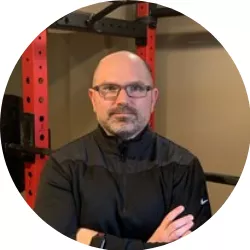
Human Performance Monitoring and Augmentation: Opportunities for Enhancing Health, Wellness, and Performance
Abstract: Over the last 10+ years, a number of key enabling factors have made way for the advancement of research and development in Human Performance including smartphones, microelectronics, flexible electronics, biosensors, cloud computing, and data analytics tools. These technologies have created the ability to pervasively measure physiological parameters 24/7, which allows for an incredible number of opportunities for optimizing Human Performance. However, many challenges remain. Monitoring: many of these tools (i.e., commercial wearable sensors) are not federally regulated, which creates a continuous need for validation assessments to understand the quality of data that is generated. Understanding: humans are very complex organisms, so a single model to understand “readiness” or “performance” is extremely unlikely. Despite those challenges, many of these tools are being used for that exact scenario, which creates a wealth of opportunities in the applied research domain.
In this seminar, we will discuss the current state of Human Performance Monitoring and Augmentation, near term research and opportunities in elite athletic and military performance, and future efforts in improving health and wellness for the general and clinical populations.
Biography: Josh Hagen received his B.S. in Chemical Engineering in 2000, M.S./Ph.D in Materials Science and Engineering in 2004/2006 all from the University of Cincinnati. Josh executed his graduate research in bioelectronics at the Materials and Manufacturing Directorate at Air Force Research Labs, and shortly after joined the 711th Human Performance Wing where he began his current research thrust in Human Performance Monitoring and Augmentation. At the 711th, Josh started and led the STRONG Team and focused on measuring physiology utilizing wearable sensors and blood biomarkers, developed novel architectures for correlating, modeling, and visualizing the data, all with the end goal to optimize performance in elite military and athletics populations.
In 2018, Josh became the Director of the Human Performance Innovation Center at the Rockefeller Neuroscience Institute at West Virginia University, as well as Assistant Professor in the Department of Neuroscience. Here he leads a multidisciplinary team focused on optimizing the performance of military, athletics, and clinical patient populations. Notable research programs include: work in designing and launching a Human Performance platform for several services in the DoD as well as multiple NCAA and NFL organizations, continued validation assessment of commercial physiological monitoring technologies, and controlled human subjects research to understand the physiological benefits of next generation recovery modalities.