downloadGroupGroupnoun_press release_995423_000000 copyGroupnoun_Feed_96767_000000Group 19noun_pictures_1817522_000000Member company iconResource item iconStore item iconGroup 19Group 19noun_Photo_2085192_000000 Copynoun_presentation_2096081_000000Group 19Group Copy 7noun_webinar_692730_000000Path
Skip to main content
Default Banner Image

Supply chain

Cybersecurity vulnerabilities within the semiconductor supply chain are a growing concern, ranging from individual threats to whole supply chain cyber resilience. It is imperative that the semiconductor industry addresses these risks. Last year, the Semiconductor Manufacturing Cybersecurity Consortium (SMCC) at SEMI introduced Semiconductor Supplier Cybersecurity Assessment (SSCA), providing a streamlined framework allowing suppliers to complete one standardized questionnaire to comply efficiently. The assessment process involves suppliers presenting evidence to support their claims of security controls and measures put in place. Such a body of evidence is critical to establish confidence in the suppliers’ ability to manage risk and comply with standards. The SSCA is a free, open-access resource for the semiconductor industry. This is intentionally made openly available to support SMCC’s mission to strengthen cybersecurity across the semiconductor manufacturing ecosystem. The questionnaire aligns with the six functions of the National Institute of Standards and Technology (NIST) cybersecurity framework 2.0: Govern, Identify, Protect, Detect, Respond and Recover. A recent project led by Swansea University’s Systems Security Group (SSG), in close collaboration with SEMI SMCC, is mapping the evidence requirements necessary for SSCA assurance. The project is funded by the UK Research and Innovation (UKRI) as part of seed funding to support UK/US/Germany collaborative research and innovation projects in the field of semiconductor security. UKRI supports such collaboration in the interest of “maintaining confidence in security throughout the design and manufacturing processes,” and particularly to support research addressing “what tools and techniques could help to reduce the risks associated with third-party hardware design and manufacturing services?”.The project ensures that the global ecosystem is engaged so that evidence requirements developed are acceptable, cost-effective, in line with the latest standards and practice, and ultimately suitable for adoption. As part of this project, two workshops are being organized, one in Germany at Bavarian Chip Alliance, Nuremberg on Tuesday, March 10 and one in the UK at Swansea University on Thursday, March 12, aiming to introduce SSCA and the evidence requirements, gather feedback and inspire early adoption. Join either of these workshops to help shape the evidence requirements and help prepare for effective supply chain security assurance. Participants must download the SSCA framework prior to the workshop.Register for the Germany Workshop on March 10Register for the UK Workshop on March 12Key TopicsIntroduction to Semiconductor Manufacturing Cybersecurity Consortium (SMCC)Standardized Semiconductor Cybersecurity Assessment (SSCA)Supply chain assurance and evidence mappingGroup discussion to feedback on evidence requirementsOpen Q A with cybersecurity and compliance expertsWho Should AttendCybersecurity and compliance professionalsSemiconductor suppliersLegal and regulatory affairs professionalsFabless chip designers and foundriesTesting, packaging, design software, R D tools and IPManufacturing/assembly equipment and ancillary fab servicesIntegrated device manufacturersAbout the authors:Siraj Shaikh is a Professor in Systems Security at Swansea University (UK). His research interests lie at the intersection of cybersecurity, systems engineering, and computer science addressing cyber-physical systems security for automotive and transport systems. He is also Co-Founder and Chief Scientist at CyberOwl, which is dedicated to risk analytics and security monitoring for the maritime sector.Mayura Padmanabhan is a Technical Project Manager at SEMI who manages the Cybersecurity Technology Coalition and Traceability activities.
Read More
The CxO Summit at SEMICON Europa 2025 spotlighted Europe’s ongoing efforts to build a resilient and globally competitive semiconductor industry, while calling for greater ambition, speed, and unity in execution. Following global disruptions with the automotive supply chain crisis, the European Union launched a continent-wide strategy through the EU Chips Act. While the Act has already spurred significant developments, including construction of the new ESMC fab in Dresden, Europe remains far from its goal of achieving a 20% share of global semiconductor production by 2030. The CxO Summit, part of the SEMICON Europa event in Munich, provided an opportunity for industry leaders to share ideas about how to catalyze the next phase of the European industry’s growth.Ajit Manocha, President and CEO of SEMI opened the summit by describing today’s industry landscape with one word: “unprecedented.” Manocha said, “The global growth of the industry is unprecedented, with 107 new fabs set to come online by 2028, but the uncertainties are unprecedented, from geopolitics to the talent shortage to environmental concerns. So we need unprecedented solutions.” Ajit Manocha, President and CEO, SEMILaith Altimime, President of SEMI Europe echoed the mood of uncertainty, describing Europe as caught “in a perfect storm.” Altimime said, “As we face a combination of internal challenges and intensifying external competition, collaboration is not optional — it is mission critical.” Laith Altimime, President, SEMI EuropePierre Chastenet, Head of the Unit for Microelectronics and Photonics, European Commission, highlighted the tangible progress made under the EU Chips Act. “We now have a proper toolbox to handle a future crisis in the supply chain. The Chips for Europe initiative has led to the creation of five pilot lines for advanced technologies such as FD-SOI and wide bandgap semiconductors.” Chastenet added, “Europe must now capitalize on its strengths, from materials and equipment to design tools and cutting-edge research emerging from our RTOs.”Pierre Chastanet, Head of the Unit for Microelectronics and Photonics, European CommissionEchoing the call for action, Oliver Schenk, Member of the European Parliament, urged stronger regional unity. “Europe must act together, act faster, and act with much bigger ambition,” Schenk said, reinforcing the need for cross-border commitment to strengthen the continent’s semiconductor position.Oliver Schenk, Member of the European Parliament, European ParliamentHighlighting Europe’s most critical technology gap, Luc Van den hove, President and CEO of imec, unveiled plans for a new advanced fab backed by €2.5 billion in investment from the EU, the Flemish government, and ASML. Van den hove urged Europe to commit wholeheartedly to advanced technologies: “We must be more ambitious, and focus on disruptive breakthroughs rather than incremental change if we want to ensure a prosperous future.”Luc Van den hove, President CEO, imecAt the CxO Summit, CEA-Leti and ASML signed a memorandum of understanding (MoU) to deepen their collaboration and accelerate innovation in mainstream semiconductor technologies. Building on promising results in hybrid bonding, the partnership will now target 'More-than-Moore' innovations, including heterogeneous integration and novel substrates like SiC and GaN. “We aim to combine ASML’s world-class lithography expertise with CEA-Leti’s system-level innovation,” said Sébastien Dauvé, CEO of CEA-Leti. The collaboration is set to strengthen Europe’s ecosystem by shortening the path from early research to industrial impact.Left: Anne Hidma, Senior Vice President EUR US, ASML; Right: Sébastien Dauvé, CEO, CEA-LetiTurning to Europe’s industrial base, Christian Senger, CEO of Volkswagen Autonomous Mobility, emphasized the need to shift from risk-aversion to opportunity. While the region’s automotive sector faces intense global competition, particularly from China, Senger highlighted that Europe has the potential to lead in new mobility markets. “The market for autonomous roboshuttles for people transport in large cities is forecast to be worth €400 billion in the US and Europe alone,” he said. With American firms like Waymo and Uber leading the robotaxi space, Senger stressed that Europe must “act swiftly to create an environment that supports an autonomous mobility industry here.”Christian Senger, Member of the Board for Fully Autonomous Mobility and Transport CEO of ADMT GmbH, VolkswagenEurope’s Potential to Create Advanced TechnologyOne of these RTOs, CEA-Leti, is responsible for the FAMES pilot line for FD-SOI technology. Sébastien Dauvé, CEO of CEA-Leti, agreed with Pierre Chastenet that the pilot lines show great promise. He said, “FD-SOI is a big trend in semiconductors, because it enables very low power consumption in embedded devices. We think that adoption of the technology will grow in the coming years, and that is good, because most of the technology is produced in Europe.”Sébastien Dauvé, CEO, CEA-LetiEurope is also widely recognized to be the leading global voice on sustainability – a huge issue of concern to the semiconductor industry. Henri Berthe, President of the Semiconductor and Battery Segment at Scheider Electric, told the summit that 500 million tonnes of CO2 emissions per year are attributable to the semiconductor industry – “more than the whole of Mexico emits!” he said. “We need to make fabs more efficient, and that is why Schneider Electric has launched a new playbook with Applied Materials for sustainable energy abundance for the industry.”Henri Berthe, President of the Semiconductor Segment, Schneider ElectricAnother aspect of Europe’s playbook is support for new fabs. The flagship is ESMC, the joint venture between TSMC, NXP Semiconductors, Bosch, and Infineon. Christian Koitzsch, president and managing director of ESMC, reported to the summit that the project to build in Dresden a 12nm FinFET foundry and a 28nm CMOS line, requiring a total investment of €10bn, is on schedule. “We are now developing local supply chains, hosting a series of ESMC Supplier Days which are open not only to German but generally to European suppliers,” said Koitzsch.Christian Koitzsch, President and Managing Director, European Semiconductor Manufacturing Company (ESMC)As Manfred Horstmann, General Manager and Senior Vice President of Global Foundries, pointed out, the building of the ESMC fab means that Dresden is established as the center of a cluster of semiconductor industry companies. “Global Foundries has its Fab 1 and a mask center in Dresden. In fact, one-third of the chips produced throughout the whole of Europe now comes from Dresden.”Manfred Horstmann, General Manager and Senior Vice President, GlobalFoundriesAn example of ambition was given by Terence Gan, Executive Director of the Institute of Microelectronics of Singapore. Gan told the summit how Singapore has used pilot lines to stimulate research and development in new technologies. He said: “We started research into advanced packaging as long ago as 2011. Most people thought we were mad! But today, there is strong demand for our advanced packaging capabilities because of the rise of AI and its need for high-performance computing.”Terence Gan, Executive Director, Institute of MicroelectronicsBreaking Barriers to ProgressDespite momentum, bureaucratic inefficiencies continue to hamper progress. Narjiss Haddaoui, Managing Director of European Economics called for faster decision-making: “In global competition, speed is a decisive factor. To act fast enough, the EU must change its ‘software’ - the processes by which it considers and makes decisions.” Narjiss Haddaoui, Managing Director, European economicsThe stifling character of European bureaucracy is reflected in the region’s approach to building fabs. Herbert Blaschitz, Executive Vice President of Advanced Technology Facilities at Exyte, compared fab construction timelines: 20 months in Taiwan, 34 in Europe, and 38 in the U.S., attributing delays in Europe to paperwork bottlenecks.Herbert Blaschitz, Executive VP of Advanced Technology Facilities, ExyteFabio Gualandris, President for Quality, Manufacturing and Technology at STMicroelectronics raised another concern — 100% of raw materials used in European fabs come from outside the region. Christophe Frey, Vice-President for EU Engagements at Arm France, added that geopolitical tensions are clouding the path forward: “We are a bit lost in the smoke from the big fire in the world’s semiconductor industry.” Fabio Gualandris, President Quality, Manufacturing Technology, STMicroelectronics Christophe Frey, Vice-President of EU Engagements, Arm FrancePlaybooks For Future SuccessSo amid the uncertainty and global tension, what lessons can the industry learn from successful regional examples? Tuomas Korpela, Business Development Senior Manager at Nokia, credited Finland’s strategic procurement and policy tools with enabling a vibrant semiconductor ecosystem: “Finland creates demand for advanced chips using industrial policy tools, alongside strategic procurement in sectors such as defense and aerospace, and connectivity.” Tuomas Korpela, Business Development Senior Manager - Corporate Development Organization, NokiaAt a regional level, Joerg Schulze, Director of the Bavarian Chips Alliance, said that his organization was supported by the Bavarian State Ministry of Economic Affairs, as well as by companies and universities. “We help semiconductor companies to establish themselves and grow here through help with site searches, networking and contacts, funding and support, and talent acquisition,” said Schulze.Joerg Schulze, Spokesperson for the Bavarian Chips Alliance, Director of the Fraunhofer IISB, Bayern Innovativ GmbHCompanies in the European semiconductor supply chain also provided the summit with their insights into the roots of global success. André Grede, Chief Technology Officer of Comet, described how his company’s strategy is not to wait for customers to tell it what they need, but to be “ahead of the curve.” Grede said: “Is staying in sync with the customer enough? Not for us - we are deeply embedded with our customers, and constantly looking to broaden our relevance to them.”André Grede, CTO, CometChristophe Maleville, Chief Technology Officer of Soitec, provided a real-world example of how this is done. He said: “Our engineered substrates using RF-SOI technology reduce the drain on a mobile phone’s battery power, and cut our customers’ board footprint thanks to RF front end integration. As a result, our products are now in 100% of 5G smartphones.”Christophe Maleville, CTO, SoitecAnne Hidma, Senior Vice-President for Europe and the US at ASML, shared the company’s success formula: “The reasons for ASML’s success include customer focus – decide which markets you are going to be in, and which you are not. We are also all-in on innovation. We nurture an ecosystem, which for us includes imec and CEA-Leti, as well as partnerships with academia. And lastly, we have a strong supply base, which is a core strength of Europe.” In a time marked by both uncertainty and opportunity, the example of ASML shows how the European semiconductor supply chain can survive and thrive.Anne Hidma, Senior Vice President EUR US, ASMLEurope’s Path ForwardThe CxO Summit made one thing clear: Europe has world-class innovation, policy momentum, and industrial commitment. What’s needed now is faster execution, deeper collaboration, and the courage to invest in the technologies of tomorrow. As the industry heads toward the $1 trillion milestone, the decisions made today will shape Europe’s place in the semiconductor world for decades to come.On behalf of SEMI, the SEMI Europe team would like to express appreciation to the industry leaders for sharing their visions and readiness to collaborate during the CxO Summit.SEMI ContactLaith Altimime, President SEMI [email protected]
Read More
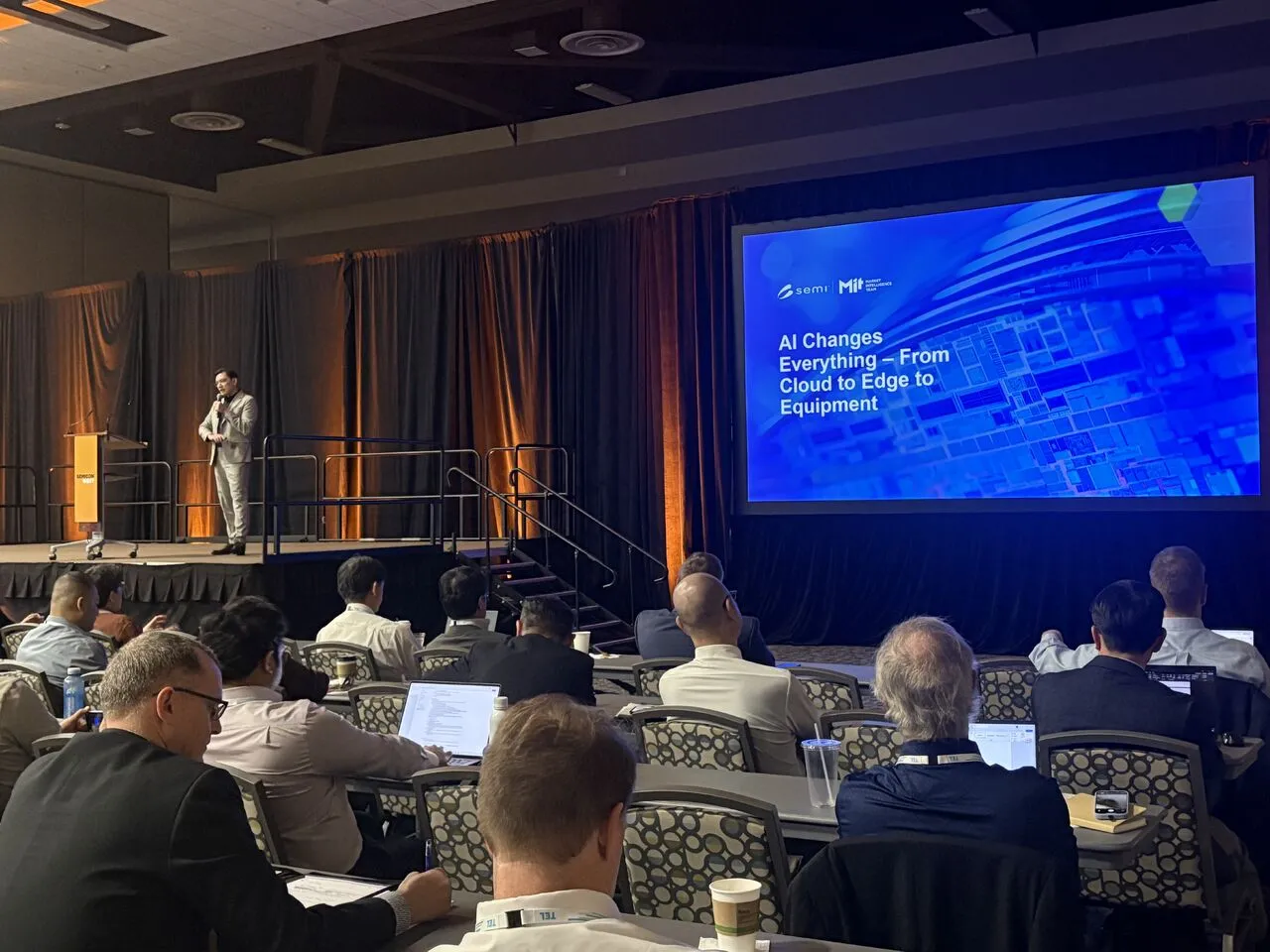
The 2025 SEMICON West Market Symposium brought together leading analysts and strategists to decode the powerful forces shaping the global semiconductor market. Building on last year’s focus on fabless growth and workforce initiatives, this year’s sessions centered on the rising influence of geopolitics, trade policy, and AI-driven investment. Experts from SEMI, Integrated Insights, Boston Consulting Group, Kearney, PwC, WSTS and TechSearch shared perspectives on how global shifts from tariffs to technology races are redefining supply chain resilience and regional competitiveness.On October 6 in Phoenix, Arizona, Clark Tseng, Senior Director of SEMI Market Intelligence, hosted the symposium and presented along with industry experts on the current trade environment from various angles. Discussions ranged from the effects of U.S. tariffs across the globe, to sector-specific considerations and market growth areas. US Trade Dynamics in Semiconductors As the geopolitical landscape in the U.S. becomes more complex, Iacob Koch-Weser, Associate Director, Global Trade Investment at Boston Consulting Group outlined the impact that tariffs are having on the U.S. industry. The average American tariff, he said, is higher than any time in the last 75 years. Although the semiconductor industry is less affected by high tariffs than other sectors, Koch-Weser noted that might change with the administration’s expanded Section 232 Tariff that imposes 50% tariffs on steel, aluminum, and their derivatives on nearly all trading partners. To explain, he described four potential Section 232 tariff scenarios, underscoring limited Section 232 enforcement as the ideal approach.Tariffs may be deprioritized in favor of chips incentivesThere may be targeted carveouts for alliesThe administration may impose high tariffs with limited exceptionsThere may be a 100% tariff rate To cope with tariff uncertainty, Koch-Weser recommended that companies consider reshaping policies, mastering trade compliance, and reconfiguring supply chains if possible. He also shared four potential outcomes for the future of U.S. trade that could take effect within the next 18-24 months. The U.S. may run its own system while the rest of the world aligns to World Trade Organization (WTO) rules.North American countries may form a stronghold, leaving all other countries to choose between the North American alliance and WTO standards.Countries may form new blocs and preferential agreements, creating multiple economic spheres worldwide.Global cooperation could break down, forcing countries to fend for themselves.With everything considered, he reinforced that the U.S. is still an attractive place for semiconductor investment. The current administration, he said, recognizes the importance of bringing advanced technologies back to the U.S. Navigating Uncertainty: AI-Driven Growth and the U.S. Semiconductor Manufacturing RenaissanceContinuing discussions on tariffs, SEMI’s Clark Tseng painted a picture of the current U.S. semiconductor industry. He divided his presentation into four key areas: near-term economic uncertainty, AI changes everything, semiconductor market equipment forecast, and material market outlook.Near-term economic uncertainty: U.S. tariff policies are contributing to inflationary pressures and altering global trade patterns, leading to cross-border uncertainty that is slowing investment. U.S. tariff revenue, he said, has expanded from $7 billion in January 2025 to $29.5 billion by August, forcing companies to sacrifice margins to compensate. AI changes everything: By 2030, Tseng noted that nearly half of the semiconductor industry’s capital expenditure will be driven by AI, pointing to sustained growth in AI-driven cloud infrastructure spending through 2028 forecasts. AI is also moving beyond data centers into edge computing and endpoint devices.Semiconductor market equipment forecast: Tseng reported that the outlook for the equipment market remains strong over the next three years. However, the biggest risk to the market is a potential slowdown in AI investment and adoption. Additionally, U.S. export controls and changes in regional supply chains present some challenges. Last year, China was the largest market for semiconductor equipment, but Tseng expects continued normalization amid broader market adjustments. Taiwan and South Korea experienced the strongest year-over-year growth, driven by demand for AI chips and high-bandwidth memory (HBM). Material market outlook: Silicon wafer shipments grew strongly in Q2 of 2025, but Tseng flagged this as unexpected and cited tariffs as a possible explanation. He noted the 300mm wafer segment is expected to grow 7% in 2025, while 200mm is projected to decline. The total wafer material market, he said, is also expected to grow by 6% this year. Additionally, wet chemicals experienced a 16% expansion in 2025, while silicon wafers, photolithography materials, and CMP materials are in recovery. Semiconductor Market – Status Outlook Tobias Pröttel (or Proettel), CEO of World Semiconductor Trade Statistics (WSTS), reported that the industry’s rebound remains firmly on track, with the latest WSTS statistics confirming a 19% year-over-year increase in global semiconductor sales during the first half of 2025. Total revenue reached $346 billion over the period, supported by strong demand for AI-driven infrastructure and next-generation data centers. Based on this solid first-half performance, WSTS has raised its full-year 2025 forecast to $728 billion, representing 15% annual growth, and now expects the market to reach around $800 billion in 2026, keeping the industry on course toward the $1 trillion milestone before the decade’s end.Logic and Memory continue to lead the expansion, driven by GPUs, AI accelerators, and high-bandwidth memory (HBM), while other product categories are showing steady recovery after the recent downturn. Pröttel noted that this growth is not confined to a single region: the Americas, China, and Asia Pacific are all posting double-digit gains, reflecting strong global momentum across the semiconductor value chain.Strategic Approaches to Semiconductors by Major Economies Following Pröttel, Kearney’s Vice President, PERLab, Sanjay Kumar outlined the semiconductor investment climates in South Korea, Japan, Taiwan, and India. South Korea is currently focused on maintaining its lead in memory, diversifying into logic, localizing its supply chain, developing advanced packaging capabilities, and investing in startups. Kumar also noted the Korean approach of offering loans, as opposed to the U.S. strategy of providing direct grants. In addition, Kumar said the Korean government plays an active role in how it wants its companies to grow, whereas the U.S. takes a more passive approach in this regard.Japan is also honing its leadership in key areas like materials and memory, and Kumar also pointed to the country’s efforts to build additional advanced packaging capacity. Japan, he said, aims to grow its industry though a mix of grants, loans, and tax credits. Among the country’s notable subsidies include a 50% subsidy for TSMC – its largest so far – as well as a $4 billion subsidy for Rapidus. Taiwan’s semiconductor industry is critical for protecting its national security. As a region with limited land, power, and water, Kumar noted that Taiwan is currently focused on developing its talent base. Its government is offering tax credits for R D and equipment and up to a 50% cost share for R D projects. India, he said, has one of the most ambitious incentive programs in the world. Through its India Semiconductor Mission (ISM), the country offers a 50% federal subsidy, in addition to a 20-30% state subsidy in its quest to cover the entire semiconductor ecosystem. Kumar also spotlighted some of India’s successes – like the joint venture between Renesas, CG Power and Industrial Solutions, and Stars Microelectronics – to build a new OSAT facility.Adapting to New Policy and Navigating the U.S. Semiconductor Landscape – Insights from Taiwan Taiwan is a critical trade partner of the U.S., ranking fourth in total trade volume as of July 2025. With Taiwan’s stronghold on the U.S. chip ecosystem, Paul Poliakov, Senior Manager, International Tax Services, CPA at PwC Taiwan detailed both the bottlenecks and developments regarding Taiwan companies’ investments in the U.S. Among the investment bottlenecks he highlighted were higher costs of building facilities in the U.S., multiple layers of compliance requirements that may be intimidating for new market entrants, and complex visa and tax regulations. In addition, Section 232 investigations on semiconductors are ongoing, with several potential policy changes that could take effect. The pending United States-Taiwan Expedited Double-Tax Relief Act could help ease burdens, he said, but it has yet to pass in the U.S. Senate as of October 2025. If it passes, it will integrate benefits for Taiwanese individuals and businesses into the U.S. tax code, which could substantially benefit Taiwanese investment in the U.S., including manufacturing, services, distribution, and a wide variety of other industries. Furthermore, Poliakov suggested that businesses maintain flexibility in their investment strategies, engage with U.S. state and local governments that can offer investment incentives, and work with professionals to ensure regulatory compliance. Geopolitical Shifts in Advanced Packaging AssemblyIn the final presentation of the 2025 Market Symposium, Jan Vardaman, Founder and President of TechSearch International provided an overview of the current advanced packaging market. Although advanced packaging represents the highest growth area in the industry, Vardaman highlighted that packaging complexity is also soaring. R D, testing, and equipment support infrastructure, she said, are becoming more critical for meeting future packaging needs. Even though assembly is mostly done in Asia, new U.S.-based advanced packaging facilities from Amkor, TSMC, and others represent signs of change. Still, Vardaman noted that the U.S. has almost no capability to produce advanced IC substrates using build-up film, which are needed to support high density applications. In addition, she highlighted that building more silicon fabs on U.S. soil won’t solve its national security or supply chain concerns.For the U.S. to create a sustainable packaging ecosystem, Vardaman concluded that support of assembly facilities is crucial. Ultimately, businesses must be willing to pay more for U.S.-based packaging in favor of potential supply chain resilience and national security benefits. SEMI would like to thank all speakers, sponsors, and attendees for the success of this year’s Market Symposium. Explore the latest SEMI Market Intelligence reports, covering historical reporting, actionable foresight into emerging trends and technology investments to make confident, forward-looking decisions across the semiconductor and microelectronics value chain.Clark Tseng is Senior Director, Market Intelligence Team at SEMI. Nishita Rao is Director, Product Marketing at SEMI.
Read More
The New Reality of Semiconductor Supply ChainsThe semiconductor industry is one of the most globally connected and time-sensitive sectors in existence. From design and wafer fabrication to testing, assembly, and delivery, every step depends on flawless coordination across borders, suppliers, and time zones. More than 1 trillion chips move through global supply chains each year[1], connecting suppliers, foundries, and fabs across continents.But as the world becomes more complex and unpredictable – with trade tensions, capacity shortages, shifting technology cycles, and driven by increasing AI and energy demand – that coordination is increasingly under pressure. Even a minor delay in one place can halt production in another. A single missed component, delayed shipment, or grounded flight can trigger line-down costs that can exceed $4 million per hour in advanced fabs[2].That’s why logistics is no longer a background process; it’s a strategic function that directly influences performance, reputation, and profitability.Figure 1 - We live in a complex and unpredictable world where global events have significant impacts. When Every Hour MattersFew industries feel the impact of delays as directly as semiconductors. One missing component, a grounded flight, or a customs delay can trigger a chain reaction that stops production lines, delays product launches or breaks contractual commitments.Time-critical logistics plays a distinct role in safeguarding supply chain performance, staying in control and enabling companies to recover in hours instead of days. It serves as the system’s shock absorbers when conventional routes are disrupted, timelines collapse, or customer commitments are at risk.The ROI of UrgencyTime-critical shipments are costly—but in the semiconductor world, not acting fast is far more expensive and pose significant consequences. A single line-down event can cost millions of euros per day, depending on the process stage and the customer involved. Compared to that, the premium for a same-day or next-flight shipment is minimal.When companies integrate time-critical logistics as a planned capability, the ROI becomes tangible.Avoided downtime: Faster recovery after supply interruptions directly protects production yield and customer commitments.Reduced inventory buffers: If rapid response capacity is available, less working capital is tied up in safety stock.Customer retention: Reliable continuity strengthens trust and long-term business relationships.In this sense, time-critical logistics isn’t just an operational expense – it’s a continuity investment. It protects revenue streams and reputation and gives manufacturers the agility to respond to whatever the next disruption brings.Example scenarios include:A single fab tool delay can idle an entire production line, costing millions per hour. During the 2024 Taiwan earthquake, a single supplier delay triggered hundreds of millions in global production losses.A next-flight-out or onboard courier shipment typically represents less than 1% of that downtime cost.Rapid recovery also prevents ripple effects such as delayed customer deliveries.The companies that embed time-critical logistics as a strategic capability gain not only cost protection, but competitive agility.From Efficiency to AgilityTraditional supply chains were built for stability and scale: move high volumes, keep costs low, and plan far ahead. But in the semiconductor industry, speed and adaptability now define competitiveness.Agility means having the systems, partners, and mindset in place to act decisively when the unexpected happens. Leading companies are now integrating dedicated control towers, predictive data insights, and predefined emergency logistics playbooks – turning reaction time into a measurable performance indicator. However, agility is not only a matter of infrastructure – it depends on data-driven visibility and cross-industry collaboration.Collaboration as the Real DifferentiatorNo company can face disruption alone. Semiconductor supply chains depend on the combined coordination of equipment makers, material suppliers, foundries, logistics providers, and government agencies.Collaboration is therefore the new competitive edge. Shared standards, visibility tools, and coordinated crisis response frameworks – like those developed under the SEMI Supply Chain Management Initiative – are helping the industry build collective resilience. These cross-functional efforts are where innovation scales.Looking AheadThe semiconductor industry will continue to expand into new regions and technologies. Each step adds complexity and, with it, vulnerability. The next decade will test not just how fast companies can produce, but how fast they can recover. Future disruptions – whether geopolitical, environmental, or digital – are inevitable. The question is not how to avoid them, but how to respond faster and smarter when they occur.That’s where time-critical logistics will continue to make its mark. It is more than just a transport solution. It gives companies the ability to act decisively in moments that matter most – transforming time from a constraint into a competitive advantage that ensures business continuity.Key TakeawaysSemiconductor supply chains are uniquely time-sensitive — a single delay can halt multimillion-dollar production lines.Integrating time-critical logistics improves responsiveness, reduces inventory needs, and safeguards business continuity.Agility, not efficiency, will define the next decade of semiconductor competitiveness.Collaborative industry frameworks like the SEMI Supply Chain Management Initiative are key to building resilience.How ready is your supply chain?Learn more about time:matters’ tailored logistics solutions at SEMICON Europa 2025 (Hall C2, Booth 433), November 18-21 in Munich and attend the company’s presentation on the TechARENA stage on November 19. For more information or to schedule a meeting at SEMICON Europa, click here to contact Remy Schoenzetter.Remy Schoenzetter is Global Head of Business Unit High Tech Semicon at time:matters.[1] Statista: Global semiconductor unit shipments 2021; SIA/WSTS Annual Reports[2] McKinsey: "Need to boost semiconductor fab efficiency?" (2023); LinkedIn Air Monitor analysis (2025); Critical Manufacturing Industry Blog (2024)
Read More
The semiconductor and electronics industries are at a turning point. Once defined by efficiency and scale, supply chains now face a convergence of pressures—from geopolitical tensions and climate risks to accelerating innovation cycles. The stakes are higher than ever, but so are the opportunities to reimagine how this global ecosystem operates.The End of “Just-in-Time” as We Knew ItIn 2025, one thing is clear: the old “just-in-time, globally concentrated” supply chain model can no longer carry the industry forward. Trade policies are tightening, export controls are multiplying, and tariff investigations are fragmenting markets that once felt seamlessly connected.At the same time, natural resource risks are mounting. PwC estimates that by 2035, nearly one-third of global semiconductor production could face copper supply disruptions caused by climate change. That figure rises to nearly 60% by 2050 if emissions remain unchecked. Add to this the growing maze of regulatory barriers and import restrictions on raw materials, and the industry faces rising procurement challenges and relentless cost volatility.Demand Isn’t WaitingWhile supply chains struggle with constraints, demand continues its upward climb. Global chip sales are rebounding, driven by innovation cycles in AI, automotive electronics, 5G, and renewable energy. Bringing new manufacturing capacity online takes years. The imbalance is widening, and companies can’t afford to rely on outdated, reactive supply chain models.Resiliency has become mission critical. And as the saying goes: you can’t respond to risks you can’t see. Guesswork isn’t a strategy—especially when disruptions are systemic.Fragility in a Fragmented EcosystemSemiconductor production is specialized and geographically fragmented. A disruption at a single node—whether a mine, a fab, or a logistics hub—can ripple through the ecosystem in days or even hours.Recent shocks have only reinforced this fragility:Trade restrictions are pushing manufacturers to rethink supply chain design.Climate change is endangering raw materials like copper and quartz, both highly water- and energy-intensive to produce.Market volatility is being driven by the explosive rise of AI and data center demand.The lesson is simple: resilience is no longer optional—it’s an existential requirement. And the path to resilience runs through visibility, agility, and collective intelligence.Real-Time Intelligence: From Luxury to NecessityIn today’s environment, quarterly or even monthly reporting cycles are dangerously slow. By the time a shortage, tariff, or logistics reroute appears on the radar, the window to act may have already closed. The cost of waiting—or doing nothing—is steep, and the damage can be lasting.Real-time data and AI-driven insights aren’t “nice-to-have” tools anymore. They are strategic imperatives for supply chains under constant stress. They allow companies to anticipate risks, respond faster, and align more effectively with partners across the ecosystem.Collaboration Is the New CurrencyNo company can go it alone. A chipmaker depends on its suppliers, just as a rare earth miner depends on transport partners. The global supply chain is a living system—and its resilience depends on the strength of its interconnections.Deeper supplier relationships, visibility into Tier 2 and Tier 3 suppliers, and shared intelligence on geopolitical and regulatory shifts are all critical. Resiliency isn’t built in silos; it’s forged through collective action.Building the Future TogetherThe semiconductor and electronics industries stand at the threshold of a new era—one of collective risk but also shared potential. Companies that embrace transparency, real-time intelligence, and collaboration will not just survive shocks, but emerge stronger, more agile, and better prepared to lead.In this new chapter, collaboration is the currency of resilience.That’s where Conductor™ comes in: a real-time intelligence platform built to help industry players anticipate, adapt, and act – together. Conductor weaves all those threads together, delivering not just data, but a shared situational awareness, helping the industry to think and act as a system rather than a collection of silos.What Conductor Enables - and What It Could Lead ToSmarter, faster decisionsA platform like Conductor, which uses near real time data, AI-powered news and alerts, and community-driven insights, turns reactive “damage control” into proactive “risk management.”By bringing together cross-segment, critical KPIs, curated AI news, expert analysis, and peer-community intelligence, Conductor helps teams understand what’s happening now, assess the likely impact on their business, and decide how to respond - faster, and with more context.Over time, this could shift the default mode of the industry from “fire-fighting” to “anticipatory steering.”A more adaptive supply chainAs more organizations adopt the platform, the collective visibility improves. Conductor can power scenario planning, enable early warning systems, and foster agile “micro-pivot” strategies: reroute logistics, adapt sourcing, or reallocate production before a disruption becomes a crisis.New models of ecosystem resilienceWith consistent, shared intelligence, industry players can identify common vulnerabilities and coordinate mitigation for mutual gain. Over time, this could lead to more resilient operations through diversified sourcing strategies, and even shared contingency mechanisms.In short: Conductor is a building block toward a more distributed, more transparent, more resilient global semiconductor ecosystem.Accelerated innovation cyclesWhen the risk of disruption is better managed, companies can operate with more confidence, investing in new capacity, experimenting with new chip architectures, or integrating new markets more aggressively. Technology diffusion accelerates when the fear of “what-if” is reduced.Where We Go From HereConductor is already in early-access pilot phase, and feedback from the SEMI Supply Chain Management Initiative’s Industry Advisory Council is actively shaping its evolution.As adoption spreads, network effects will increase the platform’s predictive power, making it more valuable for everyone involved.In an industry that’s increasingly defined by fast change and high stakes, tools like Conductor shift the balance: from reactive scramble to informed strategy, opaque fragility to visible resilience, and from isolated action to ecosystem collaboration.The future of supply chain resilience starts here. Sign up for early access to Conductor today and help drive the new era of trade.Talal Abu-Issa is Co-CEO and Co-Founder of Beebolt.Krish Dharma is Strategic Advisor, SEMI Supply Chain Initiative.
Read More
Political leaders worldwide are investing hundreds of billions to reduce semiconductor dependencies and secure their positions in this nearly $630 billion market, according to the World Semiconductor Trade Statistics (WSTS). Yet the extreme specialization and geographic concentration of the semiconductor supply chain makes complete self-sufficiency economically impractical and strategically questionable.After decades building an intricate global production network optimized for cost and innovation, the industry now faces pressure to splinter into regional blocks. But this raises important questions: Can any nation truly achieve chip self-sufficiency? And would disconnecting from the global ecosystem ultimately hurt competitiveness more than help security?The Independence IllusionThe global semiconductor industry has carved itself into specialized kingdoms. The United States dominates chip design and certain equipment categories, representing about 50% of global revenue. Taiwan controls roughly 67% of global foundry capacity through TSMC—so much so that semiconductors represent one-sixth of Taiwan's total GDP. Europe's strength lies in ASML's advanced EUV lithography technologies, the machines everyone needs but only one company currently makes.China plays an interesting double role too: it's both the largest semiconductor consumer at 50% of the global market and an important producer, holding 31% of total global foundry capacity in 2023.So far, every "independence" initiative has deepened interdependence. The US needs the Netherlands for lithography equipment. Europe needs Asia for high-end chip production. China develops much of its own equipment but remains dependent in key areas. The House of Cards ProblemFor decades, the semiconductor industry perfected making incredibly complex products cheaper every year through extreme specialization. Each company focused on one slice of the supply chain and became world-class at it. But nobody talked about what we built: a house of cards. The entire global economy now depends on a supply chain so specialized that losing even one supplier can shut down entire industries.The COVID pandemic exposed what industry insiders had warned about for years: the chip supply chain works brilliantly until it doesn't. When it fails, it fails spectacularly. The automotive industry alone lost $210 billion in 2021, and some manufacturers still haven't fully recovered.This 2021 chip shortage wasn't just a pandemic problem. Currently, rising geopolitical tensions are changing a supply crisis into a strategic nightmare, forcing countries to rethink their entire approach to semiconductors and their production.The Barriers to IndependenceThe semiconductor industry faces serious barriers that make true independence incredibly difficult for any single nation.First, the supply chain depends on chokepoints controlled by just a few companies in specific regions. Electronic Design Automation tools—essential software for designing any chip—come mostly from three US companies: Synopsys (~31%), Cadence Design Systems (~30%), and Siemens EDA (~13%). Without these design tools, you simply cannot create modern semiconductors. Manufacturing equipment presents an even tighter bottleneck, with ASML holding 100% control of EUV lithography machines needed for advanced chips. Second, the talent shortage makes building new capabilities nearly impossible. By 2030, semiconductor companies will need 1 million additional skilled workers. Developing semiconductor expertise takes a decade of hands-on experience, and most skilled professionals already work in established industry clusters like Taiwan, South Korea, and Silicon Valley. You can't simply relocate these engineers or train new ones quickly enough to staff multiple new regional semiconductor industries.Third and finally, resource requirements exceed what most countries can realistically provide. Building advanced semiconductor chip plants costs $20-30 billion each and they take years to construct before producing a single chip. These facilities consume up to 15 million litres of ultra-pure water daily and large facilities require up to 100 megawatt-hours of power per hour. Beyond the physical infrastructure, technical complexity has made first-time silicon success rates drop to just 14%, while 40% of semiconductor demand still comes from older process nodes, requiring completely separate supply chains for different chip generations.The Trillion-Dollar Investment RaceConcerns about supply chain security have triggered government interventions worldwide. The United States committed $52.7 billion through the CHIPS Act plus additional tax credits. While President Trump initially called for eliminating the program in March 2025, he instead signed an executive order on March 31, 2025, creating the "United States Investment Accelerator" to take over CHIPS Act implementation. TSMC also announced a new $100 billion investment to build five additional chip facilities in the US.Countries across the globe are racing to establish or strengthen their semiconductor capabilities. India has entered the semiconductor competition with its $10 billion Semiconductor Mission and secured investment from Micron Technology, which is constructing a $2.75 billion assembly and test facility. Japan has intensified its semiconductor strategy by establishing Rapidus Corporation with a government support package that is estimated to reach $11.46 billion aimed at revitalizing its domestic chip industry. Meanwhile, the European Union has established a €43 billion Chips Act through 2030, China launched its third "Big Fund" phase in May 2024 with $47.5 billion, and South Korea has developed a $450 billion K-Semiconductor strategy through 2030.These initiatives are changing the semiconductor industry on a global scale. However, complete self-sufficiency would require significant additional global investment and result in 35-65% semiconductor price increases due to suboptimal scale and inefficiencies.What Comes NextThe quest for chip self-sufficiency has become a trillion-dollar global endeavor, with countries placing enormous bets on facilities that may not pay off for years. Complete semiconductor independence remains financially prohibitive for any country, but strategic resilience is achievable.The winners will be those who build the most resilient networks and manage interdependence best. Rather than chasing impossible independence, nations should focus on strengthening their existing advantages while addressing their most vulnerable dependencies. Full independence remains a fantasy, but smart interdependence offers a realistic approach to semiconductor security.Click here to read the full white paper.About the AuthorsJan-Bart Smits is a Managing Partner at Stanton Chase Amsterdam. He began his career in executive search in 1990. At Stanton Chase, he has held several leadership roles, including Chair of the Board, Global Sector Leader for Technology, and Global Sector Leader for Professional Services. He currently serves as Stanton Chase’s Global Subsector Leader for the Semiconductor industry. He holds an M.Sc. in Astrophysics from Leiden University in the Netherlands. David Harap is a Managing Director at Stanton Chase Austin, bringing over 25 years of executive search experience to his role. He has successfully placed hundreds of senior executives and functional leaders across various industries. A Cornell University graduate and Father Kelly Scholar, Harap lectures at the University of Texas at Austin. He is a certified Ambassador for Hofstede Insights, bringing unique insights on organizational culture to his work.
Read More
SEMICON West in Phoenix, Arizona, will bring together all of the SEMI Sustainability efforts and programs under one roof over three days. With back-to-back sessions from October 7-9, this year’s Sustainability EHS Program will offer expert insights on the most pressing sustainability topics facing the microelectronics industry. Tuesday will kick off the program and focus on the business aspects of driving to sustainability in the semiconductor sector. On Wednesday, the Pavilion hosts discussions on water risk, water management, circular economy solutions and the needs for innovation from startups. Finally, Thursday will highlight the current emissions landscape, milestones and achievements, and solutions developed by the SEMI Semiconductor Climate Consortium (SCC). The 2025 event also marks the first public discussions of the full scope, findings and status of the SCC’s direction.All three days of the Sustainability EHS Program are sponsored by Edwards, Schneider Electric, TEL, SCREEN, Sundt and the Greater Sacramento Economic Council. Here’s a sneak peek at what the 2025 program has to offer. Registration for SEMICON West is open.The Business of Sustainability – Tuesday, October 7 Sustainability Panel: Path to Success Sustainability hits the keynote stage with Tuesday afternoon with a panel discussion detailing a plan for meaningful sustainability progress. The panel, titled Sustainability Panel: Path to Success—The Semiconductor Industry Leads the Way for a Resilient Future, will take place on the CEO Summit Keynote Stage from 2:35-3:35 p.m. Experts from Applied Materials, BASF, Micron, Google, and Qualcomm will cover strategies on how collaboration, supplier engagement, and clean technology investments are reducing emissions and propelling the industry closer to its sustainability goals. Attendees will discover what’s working, what’s still to come, and how the industry will forge its way toward a more sustainable future.A Musical Performance by Ay YoungIn anticipation of the Path to Success panel discussion, Tuesday will also spotlight an exciting musical guest. AY Young is a singer, songwriter, and the founder of the longest-running clean energy concert series in the U.S. At 2:20 p.m., he’ll take to the CEO Summit Keynote Stage for a memorable performance and give a glimpse into how important sustainability has become to attract a new generation of talent. Through his musical talent and deep commitment to clean energy, Young was appointed as a United Nations (UN) Young World Leader in 2020, helping the organization further its 17 Sustainable Development Goals. His Project17 initiative is a 17-song album, with each song centering on a different goal and backed by a corporate sponsor that aligns with it. Young will also attend the Sustainability Reception from 5-6:30 p.m. at the Sustainability Pavilion Theater.EHS Regulatory OverviewThe wide range of regulatory topics will be showcased in the first session on Tuesday at the Sustainability Pavilion. Expert speakers and advocacy groups will deliver key insights on the threats and challenges, and the research and collaboration opportunities currently at play in the regulatory environment, with special focus on keeping electronics manufacturing strong. Climate Equity Social Impact Workgroup (CESI) Aligning with the theme of the UN Sustainable Development Goals, the SEMI Climate Equity Social Impact (CESI) Working Group will highlight how its members are progressing real-world outcomes for climate, education, and global cooperation. This session will run from 3-4 p.m. at the Sustainability Pavilion Stage, and it’s ideal for anyone in the industry who’s passionate about sustainable partnerships. Innovations Enabling Reduce, Reuse, Repurpose and Recover – Wednesday, October 8Resource Use and Circular EconomyWednesday’s 10:15-11:30 a.m. session, Resource Use and Circular Economy will offer tactical solutions to help fabs reach up to 80-90% circularity. The goal of this session is to lay a foundation for transforming the industry’s circularity concerns into practical opportunities, which will be achieved over two panel discussions. Discussion 1, A Circular Value Chain: Challenges and Leading-Edge Solutions, will highlight solutions for eliminating waste and reducing manufacturing costs through circular technologies. This panel will feature experts from Edwards, Syensqo, and ElectraMet and will be moderated by Subgeni’s Taimur Burki. These subject matter experts will highlight their company solutions, but also other areas they see in need of consideration from a circularity lens, as well as best known practices across fabs. Water is a precious resource, and how the industry manages it is crucial for its long-term success. Discussion 2, Tactical Maturity Scales for Water Management, will unveil two new guides developed by SEMI’s Water Management Working Group. Both products are designed to move manufacturers from both large and small fabs and manufacturing operations to assess their water needs and most efficiently improve water reuse by up to 80%. This panel will be led by speakers from Aquatech, SCREEN, Sundt, Ovivo, and C2MI. Water Resilience Starting at 11:30 a.m. at the Sustainability Pavilion Stage, attendees will hear from the SEMI Environmental Risk Mitigation and Reporting Working Group lead - Senior Sustainable Program Manager – Alua Suleimenova – as she shares her insights and findings from a recently completed study by WaterPlan on industry water risks within the semiconductor value chain. The topic and findings will then be addressed by a panel, where Suleimenova will engage leaders from ASM, Waterplan, ERM, and the Alliance for Water Stewardship, in a conversation about water, nature, and associated corporate risks. Although companies are making strides to protect water access, it’s becoming clear that a focus on internal activities will not move the needle significantly enough for achieving long-term resilience. This panel will offer solutions for adapting water-related risks to the supply chain, with a focus on North America, Asia Pacific, and Europe.Other Wednesday AttractionsSEMI S3 – Startups for Sustainable Semiconductors: SEMI S3, or Startups for Sustainable Semiconductors, is an annual program by the industry’s venture capital divisions designed to boost awareness of semiconductor industry needs by inviting promising startups to be mentored and pitch their solutions to our industry. Earlier this year, 145 candidates submitted applications. Now, it’s down to 15 finalists, who will present at SEMICON West from 2-4:40 p.m. at the Sustainability Pavilion, following a Fireside Chat from experienced innovation experts from 1-2pm.Accelerating Sustainability with Smart Manufacturing – Presentations Poster Session: Technical papers and posters focused on sustainability solutions – from water to energy – will also be presented in the Smart Manufacturing Pavilion from 2-5:15 p.m., providing an opportunity to network with industry leaders and discover the latest best practices for how machine learning and AI can reduce water and waste in fabs.Reducing Emissions – Thursday, October 9SCC – Tackling Emissions Across the IndustryExpect a full-house at Thursday’s all-day session featuring SCC – Tackling Emissions Across the Industry. From 10:15 a.m. to 3:00 p.m., the SEMI SCC leaders and experts will detail its findings and projects addressing the industry’s emissions. SCC has been focusing on ensuring consistent and measurable progress in decarbonizing from 2021 levels. Key topics include: Reporting and aligningBaseline, ambition, and roadmapAbatementLow Global Warming Potential (GWP) gases workLow Carbon Economy (LCE) access and procurementEnergy efficienciesScope 3 upstreamSEMICON West also features SEMI U courses to learn more about sustainability in our industry. For example, on Thursday, SEMI U: PFAS Compounds in Semiconductor Environment, is being offered from 8 a.m. to noon. This course is available for purchase. Support the SEMI Forest community effort to reforest our planet by funding a range of certified carbon avoidance and tree planting projects. Our goal for SEMICON West is to fund planting for 100,000 trees. Scan the QR code below to contribute and help us meet our goal.Learn more about the 2025 SEMICON West Sustainability EHS Program. Follow SEMI Sustainability on LinkedIn for regular updates on sustainability initiatives. Saifi Usmani is Vice President for Sustainability at SEMI.
Read More
“Critical minerals our world needs for electric vehicles and semiconductors can be found here. Clean energy we need to power artificial intelligence data centers and economic growth can be built here.”[1] This statement was made by former US President Joseph Biden during his visit to Angola in December 2024 to support a US-funded railroad project called the Lobito Corridor. The railroad would connect mining areas in the Democratic Republic of Congo (DRC) and Zambia to a port on the western coast of Africa, an important step towards expanding access to critical minerals needed for growth of the semiconductor and energy industry in the west. According to the Intergovernmental Forum on Mining, Minerals, Metals and Sustainable Development (IGF), “there is no universally agreed upon definition of what ‘criticality’ means…criticality is also very country- and context-specific, particularly with respect to mineral endowment, the relative importance of the minerals to industrial and economic development, and a strategic assessment of supply risks and volatility.”[2] In other words, the term “critical mineral” may vary by location, application, and current events. Many countries have generated their own lists of critical minerals to help guide legislation, budgetary allocations and diplomatic efforts. For example, the United States Geological Survey released a list of “50 mineral commodities critical to the US economy and national security” in 2022 which included 10 minerals that were directly linked to semiconductors and electronics.[3] These included arsenic, dysprosium, gallium, lutetium, rhodium, ruthenium, tantalum, terbium, tin, and tungsten. Other lists might include cobalt, copper, and sometimes uranium. For most countries that make chips and electronics, critical minerals are both essential for supporting their industry and also hard to find within their own borders.While downstream electronics and semiconductor manufacturers are often located in countries with robust labor protections, the extraction of raw minerals too often takes place under less humane circumstances. In April 2024, the UN Secretary General launched the Panel on Critical Energy Transition Minerals to address the challenges associated with responsible extraction of critical minerals. One of the motivations for the formation of the panel was the concern about human rights violations related to mineral extraction. “Mining, at all scales, large and small, has too often been linked with human rights abuses, environmental degradation and conflict.”[4] The term “conflict mineral” has a much narrower definition than critical mineral, and usually only refers to tin, tantalum, tungsten and gold, also known as ‘3TG’. This definition is often used in policy frameworks, such as the US Dodd-Frank 1502 Act[5] and the European Union (EU) Regulation 2017/821[6]. These four minerals were identified as a major source of income for armed groups in the DRC, fueling a decades long war that has claimed more than 6 million lives since the start of the Second Congo War in 1996.[7] For example, in May 2024, armed groups from Rwanda captured a town in the Congo with the largest coltan mine in the country, which is the second largest producer in the world of the ore that is refined to make tantalum - a key component of capacitors. The incursion helped to finance the armed group, collecting at least $800,000 per month in taxes.[8] Over the past 15 years, several frameworks have emerged to address the conflicts and tensions stemming from extraction of critical minerals. A common framework within the semiconductor industry was written by the Organization for Cooperation and Development (OECD), which is an intergovernmental economic organization founded in 1948 (then known as OEEC) to “build better policies for better lives.” The organization publishes several guidelines, including the OECD Due Diligence Guidance for Responsible Business Conduct[9] (see suggested measures in Figure 1) and the OECD Due Diligence Guidance for Responsible Supply Chains of Minerals from Conflict-Affected and High-Risk Areas with focuses specifically on 3TG minerals.[10] These guidelines provide a structure through which companies and organizations might address human rights and environmental issues that may arise from their or their suppliers’ operations. Figure 1: Due Diligence Process and Supporting Measures from the OECD Due Diligence Guidance for Responsible Business Conduct (2018)Several regulations have been implemented by governing bodies to prevent financing of armed groups through procurement of conflict minerals. In the United States, Section 1502 of the Dodd-Frank Wall Street Reform and Consumer Protection Act requires certain companies to “publicly disclose their use of conflict minerals that originated in the Democratic Republic of the Congo or an adjoining country.”[11] Also known as the “Disclosure Rule,” a company must file a report to the Securities and Exchange Commission (SEC) describing the source and chain of custody of its conflict minerals, and must also conform to a nationally or internationally recognized due diligence standard such as the OECD guidelines. Similarly, the EU Regulation 2017/821 refers to the OECD Due Diligence Guidelines and calls on companies within the EU to monitor, audit and disclose procurement of conflict minerals. In 2024, the EU furthered its efforts to address human rights and environmental issues by adopting the EU Corporate Sustainability Due Diligence Directive (EU CSDDD). This directive will require all companies that do business within the EU, regardless of country of origin, to monitor their supply chains for labor and environmental violations or risk penalty.Given the tremendous effort by the industry to address the conflict associated with 3TG minerals, it is unclear whether these efforts have had an effect. The U.S. Government Accountability Office (GAO), which serves as the federal government’s watchdog agency and is tasked with providing Congress with independent, nonpartisan information, has been reporting on issues related to conflict minerals in the DRC since 2010. Kimberly Gianopoulos, Managing Director of GAO’s International Affairs and Trade Team, has led this body of work over time, including GAO’s most recent report, which was published in October 2024. Gianopoulos stated that, “although it has been over a decade since the SEC issued its conflict minerals disclosure rule in 2012, GAO’s most recent report found that there is no empirical evidence that the rule has decreased violence in the eastern DRC, where many mines and armed groups are located, and that a majority of companies that conduct due diligence on their mineral supply chains continue to report being unable to determine the origins of minerals used in their products.” The 2024 Conflict Minerals report can be found here: https://www.gao.gov/products/gao-25-107018.Regulatory approaches are only one way in which the semiconductor industry interacts with conflict mineral issues. Many companies and industry associations have implemented their own initiatives and formed associations to share resources to trace materials and collect supplier information. One such industry association is the Responsible Business Alliance’s Responsible Minerals Initiative (RMI). Jennifer Peyser, the executive director of the RMI, stated that the initiative “supports over 500 downstream, midstream, and upstream member companies with a suite of due diligence standards and tools, data, guidance, training, and other resources for global responsible sourcing and regulatory compliance. Our facility and supply chain due diligence standards are rooted in longstanding international norms while reflecting emerging corporate and stakeholder priorities for regulatory compliance, managing sustainability risks and impacts, and fostering responsible mineral supply chains.” More information about the RMI can be found here: www.responsiblemineralsinitiative.org.Recently, SEMI has formed a new Responsible Supply Chain (RSC) working group under its Supply Chain Management initiative to provide a platform for enabling traceability and provenance across the supply chain to meet government regulations on conflict minerals and unfair labor practices. This new working group aims to bring together SEMI member companies to raise awareness of key issues, share resources, and advocate effective regulations and standards. The working group is comprised of SEMI member company employees from a wide range of backgrounds, including sustainability managers, supply chain experts and process engineers. If you are interested in joining our discussions, please visit our website for more information: https://www.semi.org/en/industry-groups/supply-chain-management. On July 9 at 8am Pacific/11am Eastern, the SEMI Responsible Supply Chain working group will host a webinar featuring a roundtable discussion with Jennifer Peyser, Executive Director of the Responsible Business Alliance’s Responsible Minerals Initiative, and Kimberly Gianopoulos, Managing Director of the International Affairs and Trade Team at the US Government Accountability Office, including Q A for attendees to join the discussion. Visit https://www.semi.org/en/event/critical-minerals-due-diligence-and-semiconductor-supply-chain to register.Other upcoming events include a panel discussion at SEMICON West, October 7-9, 2025 in Phoenix, Arizona!Author Bio:Dr. Kimberly Harrison Ph.D is a Senior MEMS Designer with AMFitzgerald Associates, a design firm located in the Bay Area California. She has a doctoral degree in mechanical engineering from Stanford University, and has worked as a designer and process engineer in the semiconductor industry for 10 years. She was nominated as a 2022 MEMS Sensors Industry Group Emerging Leader. As a founding member and leader of the SEMI Responsible Supply Chain Working Group, she hopes to bring SEMI members together to discuss solutions to human rights issues in the semiconductor supply chain.References:[1] Remarks by President Biden Participating in the Lobito Corridor Trans-Africa Summit in Benguela, Angola (December 4, 2024). https://bidenwhitehouse.archives.gov/briefing-room/speeches-remarks/2024/12/04/remarks-by-president-biden-participating-in-the-lobito-corridor-trans-africa-summit-benguela-angola/[2] Critical Minerals: A Primer (November 1, 2022). https://www.igfmining.org/resource/critical-minerals-primer/[3] https://www.usgs.gov/news/national-news-release/us-geological-survey-releases-2022-list-critical-minerals[4] Resourcing the Energy Transition: Principles to Guide Critical Energy Transition Minerals Towards Equity and Justice (April 11, 2024). https://www.un.org/en/climatechange/critical-minerals[5] https://www.sec.gov/resources-small-businesses/small-business-compliance-guides/conflict-minerals-disclosure[6] https://eur-lex.europa.eu/eli/reg/2017/821/oj/eng[7] Conflict in the Democratic Republic of Congo (March 20, 2025). https://www.cfr.org/global-conflict-tracker/conflict/violence-democratic-republic-congo[8] The Evidence that Shows Rwanda is Backing Rebels in DR Congo (January 29, 2025) https://www.bbc.com/news/articles/ckgyzl1mlkvo[9] OECD Due Diligence Guidance for Responsible Business Conduct (February 1, 2018). https://www.oecd.org/en/publications/oecd-due-diligence-guidance-for-responsible-business-conduct_15f5f4b3-en.html[10] OECD Due Diligence Guidance for Responsible Supply Chains of Minerals from Conflict-Affected and High-Risk Areas, 3rd edition (April 6, 2016). https://www.oecd.org/en/publications/oecd-due-diligence-guidance-for-responsible-supply-chains-of-minerals-from-conflict-affected-and-high-risk-areas_9789264252479-en.html[11] https://www.sec.gov/resources-small-businesses/small-business-compliance-guides/conflict-minerals-disclosure
Read More
Congress has committed billions of dollars to expand America’s domestic advanced manufacturing capacity in semiconductors and related technologies. To speed up the reshoring process, President Trump established the office of Investment Accelerator in the Commerce Department to streamline government rules on investment, permitting, and site selection that historically have caused inordinate construction delays. The Investment Accelerator is a major step in rebuilding our nation’s technological manufacturing infrastructure. Equally critical is a skilled workforce to build trusted tech supply chains. The semiconductor industry worries that there won’t be enough workers to fill the supply chains. Shari Liss, Vice President, Global Workforce Development Initiatives, has said “my biggest fear is investing in all this infrastructure and not having the people to work there.” The fear appears warranted. A 2022 McKinsey Company report cited a projected shortfall of 300,000 engineers and 90,000 skilled technicians by 2030. To fill those jobs, workers need to know where to find them. Federal, state, and local governments can help promote such opportunities through various job centers and agency websites. But an essential piece of the puzzle are private-sector staffing firms that know how to find, place, and manage the talent supply chains manufacturers need. The staffing industry is uniquely qualified to meet this challenge. For more than eighty years, staffing firms have been the nation’s premier experts in recruiting, screening, and onboarding trusted talent, both temporary and permanent, in every job category. The last point is important because in addition to engineers and other STEM occupations, the construction and operation of advanced chip manufacturing plants requires large numbers of workers in ancillary and support roles, including managerial, administrative, human resources, legal, finance and accounting, health care, and industrial. The staffing industry has a proven track record of helping businesses quickly gain access to qualified talent. During the COVID-19 crisis, companies turned to staffing firms to supply workers to produce and deliver food, drugs, and other necessities, and nurses to augment overstressed hospital and nursing home staffs. The American Staffing Association partnered with retailers to fill openings for store clerks, warehouse workers, and forklift drivers at essential businesses like grocery stores and pharmacies. The Investment Accelerator will transform our technological infrastructure and create hundreds of thousands of great new jobs. Staffing firms’ demonstrated expertise in finding trusted talent makes them an essential partner in achieving President Trump’s goal of bringing those jobs back home. Matt Vuckov is the founder and CEO of TalentCraft, a strategic staffing partner based in the Chicagoland area, specializing in talent solutions for industries including healthcare, technology, government policy, and life sciences and biotech. With a strong focus on reshoring and semiconductor innovation, TalentCraft connects organizations with top talent to drive digital transformation and workforce development.In addition to leading TalentCraft, Matthew serves as Chair of the Engineering, IT, and Scientific Section Council and leads the ASA Reshoring Task Force, advocating for workforce strategies to support critical manufacturing and technology sectors in the U.S.Passionate about the future of work, Matthew leverages strategic partnerships with organizations like Purdue University’s Krach Institute for Tech Diplomacy to help companies scale through skilled talent that fuels business growth and national impact.
Read More