

For years, quantum computing has lived almost entirely in the research lab, but that is changing fast. The clearest sign of change came in spring of 2026, when IBM announced it would spin off Anderon as a standalone quantum foundry, separating its fabless chip design work from dedicated 300mm manufacturing. A company that had kept quantum fabrication tightly in house for over a decade realized that external demand now justified building a business around supplying wafers to others. When such a dominant incumbent decides to build a foundry business, that is a good indication the rest of the industry is not far behind.
Over the past year, ATREG has spoken directly with a wide range of quantum hardware companies about their facility strategies. Nearly all of them are actively planning some form of scale-up, whether that means leasing cleanroom space, acquiring tools, or exploring options with existing fab operators. Alongside these conversations, we have tracked a wave of public funding rounds and cleanroom expansions from companies like QuantWare, IonQ, and IQM. Taken together, the pattern is unmistakable. Quantum computing is transitioning from a research curiosity into a manufacturing capacity question, and the companies driving this shift are bifurcating into two camps. These include vertically integrated players building or owning captive cleanrooms, and fabless designers routing wafers through commercial foundries. Both segments are now generating real fab transaction demand, which is relatively new.
Why Now?
Three forces are converging, with the first being government money. The U.S. Department of Commerce has signed letters of intent to invest roughly $2 billion into nine quantum computing companies in exchange for minority equity stakes. IBM’s Anderon spin-off and GlobalFoundries’ new quantum-focused business unit were granted the biggest incentives, while seven other venture-backed quantum hardware makers were granted smaller sums. Europe is moving in parallel, with France recently adding over €1 billion to its National Quantum Plan and Denmark building dedicated nanofabrication capacity for quantum chips near Copenhagen.
Second, private capital is moving just as fast. Quantinuum's Nasdaq listing valued the company at over $15 billion. PsiQuantum's most recent raise pushed its valuation past $10 billion, and finally, IonQ's move to acquire SkyWater signaled that some fabless players are now willing to buy foundry capacity rather than wait for it.
Third, although quantum computing is moving toward commercial production, the few specialized foundries capable of making quantum chips have already reached capacity with semiconductor demand. In discussions with foundry partners, we’ve learned that the U.S. Department of Commerce has received several proposals from companies looking for an industrialization partner and fab capacity for quantum manufacturing. Even before considering how many proposals ultimately get funded, the space available to absorb new quantum programs is limited. Separately, early company engagement is already happening well ahead of any formal facility buildout. This is a sign that demand is running ahead of infrastructure, and that latent demand is becoming active demand in real time.
How Quantum Cleanroom Needs Compare to Traditional Fab Cleanroom Requirements
 The overlap with conventional semiconductor manufacturing exists, but it is narrower than the marketing suggests. Silicon-spin and superconducting modalities (the two furthest along commercially) map fairly directly onto standard 200mm-to-300mm wafer lines, running at mature nodes (16–28nm class) with no need for EUV lithography. While a qualified 200mm or 300mm metal deposition and etch line is one of the stronger brownfield fits available in the market today, quantum divergences can be seen in the following three areas.
First, contamination control runs almost backwards from what logic manufacturers expect. For example, quantum fabs typically only need ISO 6 to 8 cleanroom classes. This is looser than what is standard for leading-edge logic, but specific materials like niobium, titanium nitride, and cobalt introduce isolation requirements that have nothing to do with particle counts. For instance, quantum hardware makers report that cobalt use in particular, creates friction with fabs built around conventional CMOS material rules. In addition, one major foundry noted that certain existing 300mm lines simply can't be converted for quantum work because of contamination risk from these non-standard materials.
Second, packaging and assembly, not front-end fabrication, appears to be the primary roadblock. Bonding qubit chips to interposers, wiring for cryostats, and hybrid bonding require different tooling and tolerances than a front-end fab. In conversations with both foundry executives and quantum hardware companies, this stage was consistently described as the most fragmented and least mature part of the supply chain.
Third, cryogenics and system integration are facilities problems, not cleanroom problems. Dilution refrigerators, cryostats, and helium supply require power capacity and vibration isolation more than particle control. In some cases, ISO 8 warehouse-grade space is sufficient. That reframes what "quantum-ready" facility space needs to look like, and it opens the door to buildings that wouldn't traditionally register as fab candidates.
Where the Competitive Landscape is Headed
Fewer than 100 meaningfully-funded quantum hardware companies exist today, but the small number of foundries qualified to serve them (including GlobalFoundries, imec, STMicroelectronics, Infineon, Tower, and SkyWater) are already seeing demand concentrate quickly. GlobalFoundries specifically, has emerged as an early plurality winner across multiple modalities. Whether that concentration holds, or whether scale-up costs push more players toward the SkyWater/IonQ model of outright acquisition, is one of the more consequential open questions in this space.
What we are seeing in the market supports both scenarios simultaneously. Some companies are doing multi-year capacity planning well ahead of actual need, treating facility strategy as a long-lead problem to be solved early. Others are already outgrowing prototype-scale fabs and are looking to consolidate into shared or leased capacity. Both point to the same underlying reality: demand is forming faster than supply, and the packaging and assembly layer of the value chain remains particularly underserved.
For a global industry built on brokering semiconductor fabrication assets, this is a familiar scenario with new variables. Brownfield capacity is a strong match for two of quantum computing's leading modalities today, with photonics and advanced packaging representing the next frontier. Ultimately, evaluating capacity gaps and moving before the rest of the market will be the next major opportunity for quantum computing's cleanroom moment.
About Stephen M. Rothrock
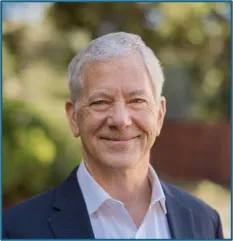 Stephen Rothrock is founder and CEO of ATREG, Inc. He founded ATREG in 2000 to help advanced technology companies divest and acquire infrastructure-rich manufacturing assets, including wafer fabs (front-and back-end) as well as MEMS, solar, display, and R&D facilities. Over the last 25 years, ATREG has completed 40% of all global operational wafer fab sales in the semiconductor industry, representing a total of 60 transactions. Recent global acquisitions and dispositions have involved Allegro MicroSystems, Bosch, Elmos, Fujitsu, GlobalFoundries, IBM, Infineon, JDI, Maxim, Micron, Nexperia, NXP, onsemi, Plessey, Qualcomm, Renesas, Sony, Texas Instruments, TSI, VIS and more. Prior to founding ATREG, Rothrock established Colliers International’s Global Corporate Services initiative and headed the company’s U.S. division based in Seattle, Washington.
Previously, he worked as director for Savills International real estate brokerage in London. There, he established the company’s corporate services platform serving large multinationals, many of whom were leading technology companies. Stephen also served on the U.K.-listed property company’s international board. He spent four years near Paris working for an international NGO. Stephen holds an MA degree in Political Theology from the University of Hull, UK and a B.A. in Business Commerce from the University of Washington in Seattle.


