

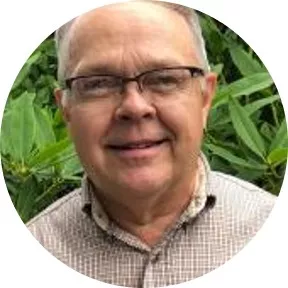
Mark Bohr | Consultant| Intel
Bio: Mark Bohr was an Intel Senior Fellow and Director of Process Architecture and Integration up until his retirement in February of 2019. Since then, he has rejoined Intel as a consultant reporting to EVP Ann Kelleher. Mark joined Intel in 1978 after graduating from the University of Illinois and was a member of the Intel’s Logic Technology Development group located in Hillsboro, Oregon. While a member of LTD, he worked on the development of 20 generations of logic and memory technologies up to Intel’s 5 nm generation logic technology. He is an IEEE Fellow, recipient of the 2003 IEEE Andrew S. Grove Award, recipient of the 2012 IEEE Jun-ichi Nishizawa Medal, and a member of the U.S. National Academy of Engineering. He holds 98 patents in the area of integrated circuit processing and has authored or co-authored 51 published papers.
Abstract: Intel proposes to form an industry-wide Sustainable Semiconductor Manufacturing program to address the growing list of environmental concerns with the chemicals and materials used in semiconductor and package manufacturing. Funding would come primarily from government agencies in Asia, the US and Europe, with coordination provided by SEMI and the Semiconductor Research Corporation. The initial response to this proposal is positive, but much more work is needed to make this urgent effort a reality.

Nancy B. Beck | Director of Regulatory Science | Hunton Andrews Kurth LLP
Bio: Nancy is a PhD toxicologist with over twenty-five years of applied public health experience. She has held senior leadership positions at the White House and at the U.S. Environmental Protection Agency (EPA) and is a recognized authority on regulatory policy and process. As a principal executive and policy advisor to the EPA Administrator in the Office of Chemical Safety and Pollution Prevention, Nancy played a key role in implementing bipartisan legislation to improve federal government assurance of chemical safety.
Nancy is currently serving as the Director of Regulatory Science at Hunton Andrews Kurth. Nancy provides advice to her clients on regulatory processes, chemicals, pesticides, contaminants, and consumer product safety issues. Nancy applies her experiences and knowledge to help clients address high-level regulatory and compliance issues, as well as concerns related to environmental policy and chemical and pesticide risk evaluations and regulations.
Nancy is a board certified toxicologist and has a PhD and Masters degree in Environmental Health from the University of Washington and has a B.S. from Cornell University.
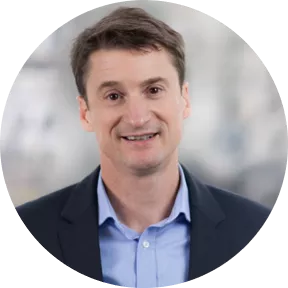
Russell LaMotte | Principal | Beveridge & Diamond, P.C,
Bio: Russ LaMotte is a lawyer who helps global companies navigate product and chemical-related regulatory regimes. His work includes:
-
Advising companies in the chemicals, plastics, and electronics sectors about regulatory and non-regulatory drivers for “circular economy” initiatives.
-
Advising on chemicals-related market access regulations, including REACH; RoHS; TSCA; as well as projects involving market access and compliance challenges for products overseas.
-
Advising on requirements under to the Stockholm Convention on Persistent Organic Pollutants, the Rotterdam Convention on Prior Informed Consent, and the Basel Convention.
-
Representing companies on regulatory requirements for products containing or made with ozone-depleting substances or HFCs under the Montreal Protocol, Clean Air Act, and AIM Act.
-
Advising on supply chain risk management relating to conflict minerals, raw materials, ethical sourcing, and human rights due diligence.
He served for over ten years as an international lawyer at the U.S. Department of State, designing, negotiating or implementing most of the major multilateral environmental agreements. He served as a clerk for Judith Rogers, U.S. Court of Appeals for the D.C. Circuit. Russ holds a J.D. from Harvard Law School and an A.B. from Cornell University.

Colin Brough | Product Compliance and Advocacy | Tokyo Electron
Bio: Following a career in research and the defense electronics industry I joined TEL in 1994 heading up the customer support team. In 2013 I took on the responsibility for Product Compliance and Advocacy based in Europe, as part of the TEL Corporate teams.
This has proved to be an interesting and challenging role given the number and diversity of the emerging EU regulations linked to the European Green Deal initiatives.

Dawn Graunke | Supply Chain Sustainability Regulatory Manager | Intel Corporation
Bio: Dawn has over 25 years of Environmental Health Safety and sustainability experience. She has held various positions in the EH&S field and currently manages Intel’s global supply chain responsible chemicals group. Her team works to ensure Intel’s supply chain is complaint to all global chemical regulatory requirements and that they are meeting their sustainability commitments. Prior to this, Dawn was on assignment at International SEMATECH where she projects managed various global chemical initiatives and the ESH assessments of new materials and processes for the advanced technologies. She helped in the initial writing of SEMI S2 and is currently very active in many industry consortia and professional associations. ( SIA, SIA PFAS, WSC, SEMI, RBA, SESHA, etc ). She also has managed Fab Construction Safety projects from the design phase & tool installation to de-install and demolition. She has a B.S. degree from Tulane University and a M.S. degree from the University of Massachusetts at Amherst. Dawn is a certified Industrial Hygienist and Safety Professional. Outside of work, Dawn enjoys travelling and spending time with her family (Husband Scott & Twin 12 yr old girls, Sofia & Gabriella) Dawn loves the outdoors, fishing in Alaska, camping, the beach…. Now Hiking in Sedona AZ
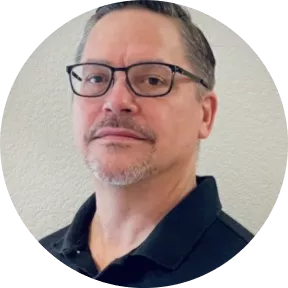
Lauren Crane | Product Safety/Environmental Regulatory Compliance Specialist | Lam Research
Bio: Lauren started his career in the semiconductor industry working as a “bar designer” for Texas Instruments as a co-op student in the early 1980’s. Graduating from the University of Texas at Austin in 1985, his first professional job was as an electro-mechanical design engineer doing assembly language programing for an ion implanter company in Austin, Texas. Around 1995 his supervisor told him to investigate something called “CE Marking” for their newest product, and that started his transition into regulatory compliance issues. Lauren connected with SEMI standards in the same year and has been a leading member of the EHS Technical Committee’s North American chapter and SEMI’s EHS Division working groups ever since.
While developing compliance programs and investigating a non-stop parade of regulations that impact the design of semiconductor manufacturing equipment, Lauren has worked for 4 of the top 5 equipment manufacturers, as well as a brief stint writing equipment assessment protocols for a leading product assessment 3rd party.
Lauren has helped lead dozens of technical advocacy campaigns for the industry and has been lead author for many appeals to legislators and responses to public consultations for regulations in development and made many presentations to the industry on the impact and application of a variety of regulatory topics from EU REACH and RoHS to the Machinery and Pressure Equipment Directives.
Lauren is now very pleased to have joined the product safety and compliance team at Lam Research in March of 2022, and is currently Co-leader of SEMI’s S23 and Seismic Global Task Forces (and an active participant in all of the S-standard task forces) as well as leader of the SEMI PFAS working group US campaigns that have recently been striving to bring some considerations of practicality to the California, Maine and Federal PFAS reporting rules. He is also very active in the Machinery Directive and other advocacy working groups.
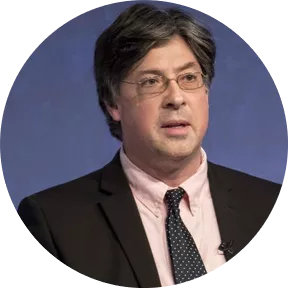
Julian Lageard | Director, Global Government Affairs | Intel Corporation
Bio - Julian was born in England in 1968, holds a Bachelor of Arts Degree from Lancaster University and a Master of Science Degree from Imperial College, University of London. He worked in the European Parliament from 1992-94 and subsequently as a consultant in EU affairs. Since 2000, Julian has been based in the Brussels office of Intel Corporation and is Director, Global Government Affairs. He has worldwide responsibility for ESG and Responsible Business Conduct policy. Julian chairs AmCham EU’s Task Force on Responsible Business Conduct as well as the DigitalEurope and techUK groups on Responsible Business Conduct. He is a member and one of the founding strategic partners of the European Partnership for Responsible Minerals (EPRM), Member of the OECD Multi-Stakeholder Group (MSG) on Responsible Minerals Supply Chain and Member of the Business at OECD Committee on Investment and Responsible Business Conduct.

Eleni Michalopoulou | Research Associate | Stockholm Environment Institute
Bio: Eleni joined SEI’s York Centre in 2020 as a member of the Air Pollution group where she contributes to Climate and Clean Air Coalition (CCAC) projects and the Supporting National Action and Planning (SNAP) on Short-Lived Climate Pollutants (SLCPs) initiative. She is a member of the World Economic Forum's Global Future Council on Clean Air and works with the Alliance for Clean Air, the first coalition of private sector companies working to quantify their air pollutant emissions. She is a co-author of the Global Methane Assessment and the IPCC’s 2019 Refinement to the 2006 IPCC Guidelines for National Greenhouse Gas Inventories working closely with the aluminium, semiconductor and gas abatement industries. Eleni completed her undergraduate studies in the National and Kapodistrian University of Athens where she received a degree on Physics with a major on Environment, Meteorology and Oceanography. In 2019, she completed her PhD on ‘Quantifying perfluorocarbon emissions using bottom-up and top-down methods’ with the Department of Chemistry of the University of Bristol.

Dr. Noorie Rajvanshi | Director, Sustainability and Climate Strategy | Siemens Corporation
Bio: Noorie is responsible for supporting the strategy and execution of the Siemens US region’s decarbonization plan to achieve carbon neutral operations by 2030. In this role she serves as chief data and strategy analyst, working across the Siemens ecosystem of business and corporate units to report on and develop action plans based on data-driven insights.Prior to this role, Noorie served as a Staff Scientist at Siemens Technology, the global corporate research arm of Siemens, focused on the field of environmental sustainability, energy, and urban development. Her work included collaborating across Siemens and University partners to execute various sustainability projects such as modeling and optimizing life cycle environmental impact of emerging products and technologies for novel carbon capture and utilization methods, rare earth materials mining and processing, and additive manufacturing.Noorie graduated from the University of Florida with a PhD in Mechanical Engineering and a minor in Environmental Engineering. Her graduate work was funded through an interdisciplinary NSF-IGERT fellowship program. Following the PhD, Noorie worked as a post-doctoral fellow at the Center for Life Cycle Analysis (CLCA) at Columbia University, studying the impact of crystalline silicone photovoltaics.Noorie served as a Research Fellow for Project Drawdown where she provided technical analysis that served as the foundation for three chapters in The New York Times bestselling book “Drawdown: The most comprehensive plan ever proposed to reverse global warming.” Noorie is also an active member of several organizations including the Corporate Eco Forum where she has been inducted into the CEFNext Community Practice of Leaders.
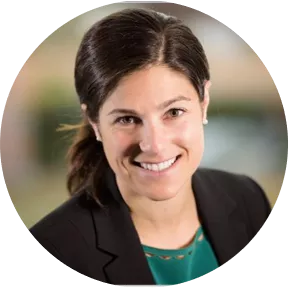
Abby Cohen | Audit Manager | Deloitte & Touche, LLP
Bio: Abby is a Senior Manager in Deloitte & Touche LLP and has more than 11 years of experience in audit and assurance services within the Bay Area practice primarily serving technology companies. She has served clients in both an audit and advisory capacity and has helped clients through IPO’s, SPAC’s, and accounting standard implementations including ESG readiness services.
Abstract: Expectations for consistent, comparable, and transparent climate-related and other environmental, social, and governance (ESG) disclosures continue to increase — driven by investor demand, stakeholder pressures, and more recently, regulatory attention. In this session, we will discuss the ESG landscape, including the pace of regulatory change both in the United States and on the international level, as well as how companies in the semi-conductor industry could think about managing and disclosing information on ESG topics.
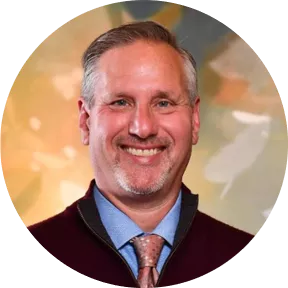
Bruce J Kessler | Multistate Leader for Sustainability-related Credits & Incentives | Deloitte
Bio: Bruce is a Managing Director in Deloitte Tax’s National Multistate practice. Bruce is the West Coast leader of Deloitte’s National Credits and Incentives practice and the Multistate leader for sustainability related credits and incentives. Bruce has focused exclusively on credits and incentives for over 20 years.
Bruce’s experience includes incentive negotiations, site selection, tax advice, incentive compliance, and audit defense. Bruce works with State, Local and Municipal departments along with economic development agencies in connection with ESG investments, structural changes, expansions (including retention), and capital investments to negotiate incentives, typically including financing assistance, income tax credits, job credits, training grants, sales and use tax benefits, property tax abatements and other in-kind benefits.
Education: Bruce attended George Washington University and University of Miami School of Law
Abstract: In August, two important pieces of federal legislation were signed into law: the Creating Helpful Incentives to Produce Semiconductors (CHIPS) Act and the Inflation Reduction Act (IRA). Both the IRA and the CHIPS Act are designed to increase investment in the United States through various federal grants, tax credits, and other incentives. Likewise, many states are seeking to incentivize these same investments. Globally, the tax and incentives landscape is also shifting to compete for semiconductor industry investment and to advance ESG goals. This session will discuss some significant new federal, state, and global incentives (with an EU focus) that may create opportunities throughout the semiconductor ecosystem
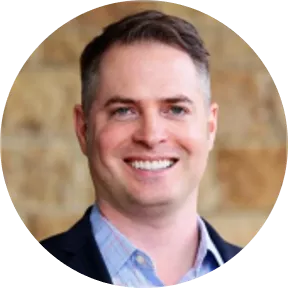
Jeremy N DeMuth | Tax Managing Director in Global Investment & Innovation Incentives | Deloitte
Bio: Jeremy is a Managing Director in Deloitte Tax’s Global Investment & Innovation Incentives (Gi3) practice out of the Chicago office. During his over 19 years of professional experience, Jeremy has worked in federal and state tax consulting for public and private companies. He focuses on ESG/sustainability incentives (including alternative energy, carbon sequestration/utilization, hydrogen, alternative fuels, and energy efficiency), clean manufacturing, and various other federal incentives. Jeremy is a sustainability incentives specialist and leads multiple sustainability offerings for Deloitte Tax including hydrogen and CCUS.
Jeremy has managed several large sustainability tax credit studies, authored several successful applications for competitively awarded credits, and successfully represented clients before the Internal Revenue Service, the Treasury Department, and state tax authorities. Jeremy is also a frequent public speaker and author in the area of federal tax incentives.
Education: He holds a B.S. in Finance from the University of Illinois at Urbana-Champaign and a J.D. from the Chicago-Kent College of Law.
Abstract: In August, two important pieces of federal legislation were signed into law: the Creating Helpful Incentives to Produce Semiconductors (CHIPS) Act and the Inflation Reduction Act (IRA). Both the IRA and the CHIPS Act are designed to increase investment in the United States through various federal grants, tax credits, and other incentives. Likewise, many states are seeking to incentivize these same investments. Globally, the tax and incentives landscape is also shifting to compete for semiconductor industry investment and to advance ESG goals. This session will discuss some significant new federal, state, and global incentives (with an EU focus) that may create opportunities throughout the semiconductor ecosystem
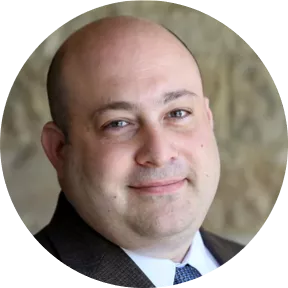
Michael Krajcer | National Multistate Tax Services | Deloitte
Bio: Michael is a Senior Manager in Deloitte’s National Multistate Tax, Credits & Incentives practice. He has more than 25 years of experience, including fourteen years of public accounting experience specializing in incentives and nearly a dozen years of public policy experience. He has experience coordinating global incentives across nearly three dozen countries for Fortune 500 companies.
Michael is on the Sustainability, Climate and Equity team and advises clients on ESG incentives across their global operations. He has supported clients establish governance and strengthen process to optimize securing and monetizing global incentives. He has supported clients across the majority of the US, with recent projects in Arizona, California, Georgia, Illinois, Indiana, Iowa, Kansas, Michigan, Nebraska, New York, Ohio, North Carolina, South Carolina, and Wisconsin.
Academic background: Michael attended Washington University of St. Louis for his undergrad and California State University East Bay for his Master’s. He is CPA licensed in California and Illinois
Abstract: In August, two important pieces of federal legislation were signed into law: the Creating Helpful Incentives to Produce Semiconductors (CHIPS) Act and the Inflation Reduction Act (IRA). Both the IRA and the CHIPS Act are designed to increase investment in the United States through various federal grants, tax credits, and other incentives. Likewise, many states are seeking to incentivize these same investments. Globally, the tax and incentives landscape is also shifting to compete for semiconductor industry investment and to advance ESG goals. This session will discuss some significant new federal, state, and global incentives (with an EU focus) that may create opportunities throughout the semiconductor ecosystem.