

Sweat Without Sweating: Exploring the Possibilities of Biochemical Monitoring with Passive Sweating
Abstract
Sweat is a valuable biofluid for health monitoring as it contains key biomarkers and is easily accessible due to the widespread presence of sweat glands. Traditional sweat devices rely on active perspiration through exercise, heat, or iontophoresis, but these methods can lead to dilution, contamination, and limited functionality in low-humidity conditions or sedentary individuals. This talk will focus on two passive sweat collection techniques—osmotic and diffusion-based sampling—which do not require any prior sweat presence on skin. The osmotic method utilizes hydrogel to extract sweat at rest, and when combined with evaporation-assisted pumping, can enable long-term (~ hours) wearable monitoring of lactate, glucose, and potassium – key biomarkers for oxidative stress and diabetes. The diffusion-based approach leverages natural perspiration, especially in sweat-rich areas like fingertips. A porous hydrogel facilitates biomarker transport via capillarity (in addition to diffusion), enabling rapid and painless monitoring. Uric acid and cortisol sensing will be discussed using this approach due to its linkage with cardiovascular health. Overall, such advancements in epidermal sweat monitoring platforms can pave the way for next-generation wearable devices, offering decentralized and personalized healthcare monitoring.
Biography
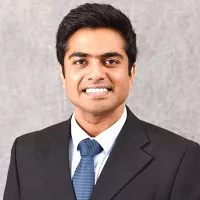
Tamoghna is currently a postdoctoral scholar working with Prof. Joseph Wang at University of California, San Diego since 2022. He did his Ph.D. with Prof. Orlin Velev and Prof. Michael Dickey at North Carolina State University from 2017-2022, where his thesis focused on developing wearable biomedical platforms functioning on novel fluid withdrawing techniques. His research has been published in reputed journals like Nature Electronics, Advanced Science, ACS Sensors, ACS AMI, Lab on a Chip, Nature Reviews Bioengineering, and Chemical Reviews. His research has led to three invention disclosures with two being patent pending. He has also been a finalist of the Biomaterials graduate student award in AIChE 2021. In future, Tamoghna intends on developing a research group working at the intersection of biosensors, biomaterials, nanomaterials, microfluidics, electrochemistry, clinical studies, and device integration.