
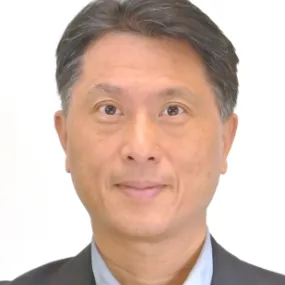
Deputy Director, Facility Supply Chain Management Division, TSMC
Daniel K.T. Kuo is Division Head of the Facility Supply Chain Management at TSMC. Since joining TSMC in 1996, K.T. has built nearly 30 years of experience across semiconductor manufacturing, fab operations, advanced factory development, and strategic supply chain management. His career includes production experience in 6-inch, 8-inch, and 12-inch wafer fabs, as well as involvement in early 18-inch next-generation factory development.
K.T. has held a range of technical, operational, and leadership roles in TSMC and related semiconductor ecosystem organizations. He participated in ISMI / SEMATECH next-generation factory architecture initiatives, including the development of unified 450mm / 300mm Prime Factory Guidelines, with a focus on productivity improvement, equipment maintainability, automation, interoperability, and utility efficiency. He also served as General Manager of Motech Americas, gaining extensive international solar business and manufacturing experience.
In his current role, K.T. focuses on facility supply chain strategy, supplier development, new fab construction readiness, renewable energy procurement, scope 3 upstream decarbonization and low-carbon energy initiatives. He has supported key ESG and supply chain resilience programs, including photoresist supply chain localization, local supplier R&D capability enhancement. His work supports TSMC’s long-term goals in supply chain resilience, sustainable manufacturing, and semiconductor ecosystem competitiveness.
K.T. holds a degree from the Institute of Aeronautics and Astronautics at National Cheng Kung University and an MBA from Boston University.
A brief Abstract of Presentation :
This presentation explores how energy is emerging as the next strategic resource for the semiconductor industry beyond conventional renewable electricity procurement. As AI-driven semiconductor demand accelerates, Taiwan faces growing challenges in renewable energy availability, intermittency, and the need for 24x7 firm, reliable, and low-carbon power. The presentation reframes net zero as an energy security and industrial competitiveness issue, emphasizing that future semiconductor leadership will depend not only on advanced manufacturing capabilities, but also on access to scalable, resilient, and globally sourced clean energy.
It further highlights the strategic role of renewable fuels, including green hydrogen and green methanol, as pathways to transport global renewable resources to Taiwan and support carbon-free semiconductor manufacturing. By developing advanced energy infrastructure and positioning Taiwan as a renewable fuel gateway, the semiconductor ecosystem can strengthen energy resilience, reduce supply chain emissions, and sustain long-term global competitiveness.