downloadGroupGroupnoun_press release_995423_000000 copyGroupnoun_Feed_96767_000000Group 19noun_pictures_1817522_000000Member company iconResource item iconStore item iconGroup 19Group 19noun_Photo_2085192_000000 Copynoun_presentation_2096081_000000Group 19Group Copy 7noun_webinar_692730_000000Path
Skip to main content
Default Banner Image

Technology and Trends

Malaysia’s Semiconductor Industry Outlook Ahead of SEMICON Southeast Asia 2026Malaysia’s semiconductor story is entering a more ambitious phase—one that goes beyond output and asks a sharper question: how does the country capture more value in an industry increasingly shaped by AI, electrification, and supply chain realignment?In 2026, the message coming through is consistent: build on Malaysia’s manufacturing strength, while accelerating higher-value capabilities—especially IP creation and local IC design—and deepening advanced packaging momentum.¹That context matters because SEMICON Southeast Asia 2026 is just around the corner. Taking place 5–7 May 2026 at MITEC, Kuala Lumpur, the show brings the semiconductor ecosystem together under the theme “Transform Tomorrow”. (⁵,⁶)From manufacturing strength to IP-led competitivenessMalaysia has long been recognised for its manufacturing depth—especially in the Assembly, Test and Packaging (ATP) space. But the 2026 narrative is increasingly about something harder—and more valuable—than volume: technology ownership and IP-based advantage.In an interview, Malaysia’s Minister of Economy described the push to move beyond assembly, packaging and testing as an “ultimate test,” underscoring that “the value starts with intellectual property,” while pointing to RMK-13 frameworks intended to help firms access global IP platforms so chips can be designed and developed locally.¹This direction is also showing up more explicitly in the country’s local capability-building agenda. One update noted that Malaysia has identified and is supporting the establishment of more than six local integrated circuit design firms, positioning this as a step toward “Made by Malaysia” technology IP.² More recently, reporting highlighted efforts tied to the MyChipStart and SemiconStart programmes aimed at nurturing local IC design capabilities as Malaysia pushes higher up the value chain.³Seen together, the ambition is straightforward: strengthen what already works—industrial execution—while building the design and IP layers that determine margin capture and long-term competitiveness. (¹,²,³)Advanced packaging momentum is reinforcing Malaysia’s next chapterPolicy ambition needs real capability to match. One of the clearest examples in early 2026 is continued expansion in advanced packaging and OSAT—particularly within Malaysia’s manufacturing clusters.Chipbond Technology Corporation officially opened a new advanced manufacturing facility in Batu Kawan, Penang, with an investment of close to US$200 million. The announcement positions the plant as a reinforcement of Malaysia’s role in the global OSAT value chain and as a hub for advanced semiconductor manufacturing.⁴This matters because advanced packaging is no longer peripheral. It is increasingly central to how performance scales—especially in AI-era compute, heterogeneous integration and high-density systems—making OSAT capability depth a strategic advantage, not just an operational one.Why SEMICON SEA 2026 arrives at exactly the right timeThis is the backdrop against which SEMICON Southeast Asia 2026 lands in Malaysia. The show runs 5–7 May 2026 at MITEC, Kuala Lumpur, and the official programme lays out three days anchored by leadership summits, market outlook discussions, deep technical forums, workforce development programs, energy dialogues and structured business and policy engagements.⁵If Malaysia’s objective is to upgrade while staying globally connected, SEMICON SEA functions as a practical connector—helping leaders and organizations align on roadmaps, accelerate partnerships, and translate capability-building into real commercial outcomes.What to watch at SEMICON Southeast Asia 2026On Day 1 (5 May), SEMICON Southeast Asia 2026 opens with the Opening Ceremony (10:00–11:30) at MAINStage, Level 3 (Ballroom 2), MITEC, featuring welcome remarks by Ms. Linda Tan (President, SEMI Southeast Asia) and opening remarks by Mr. Ajit Manocha (President CEO, SEMI).⁸ The same afternoon, the Executive Leadership Summit (14:00–17:30) brings together senior executive leaders— from AEM Holdings, onsemi, Sandisk, Soitec, GlobalFoundries, and Lam Research—to unpack the strategic priorities shaping the next wave of industry partnerships and growth. (⁹,¹⁰)On Day 2 (6 May), the spotlight shifts to market direction and execution. The Market Industry Outlook Forum (09:30–13:30) at MAINStage features perspectives from BCG, Kearney, McKinsey, SEMI, and The Malaysian Investment Development Authority (MIDA), providing a strategic read on the cycle ahead and what it means for investment and competitiveness. (¹⁰,¹¹) Day 2 also deep-dives into AI adoption through the AI for Manufacturing Forum and AI for Product Testing Forum, reflecting how factories and test strategies are being reshaped by AI-era requirements. (¹²,¹³)By Day 3 (7 May), attention turns to the operational imperatives of scale. The Sustainability Summit (09:30–17:00) focuses on energy, emissions, efficiency, and regulatory readiness as manufacturing footprints expand across Southeast Asia.¹⁴ In parallel, the Cybersecurity Forum (09:30–12:15) highlights the rising need for cybersecurity resilience across fabs, equipment, and supply chains, including industry standards and assessment frameworks such as SSCA.¹⁵Across all three days, the handshake@SEMICON is a focused 1.5-hour networking platform bringing together industry and government agencies, with sessions hosted by MIDA, Business Sweden, and European Union to drive strategic engagement.16 Intelligent Manufacturing ShowcaseA highlight of SEMICON SEA 2026, the Intelligent Manufacturing Showcase—jointly powered by Sandisk and SEMI—offers an immersive guided walkthrough of the evolution of intelligent manufacturing. The experience takes visitors from real-time, mixed‑reality visibility across the production floor, to AI‑enabled assistance with Sandisk ExP and additive manufacturing, and ultimately to a Factory of the Future featuring AI iAssist and Vision AI—demonstrating how digital technologies and AI can accelerate decision-making, resolve issues faster, and redefine how humans work alongside smart manufacturing systems.17A timely moment for Malaysia and a clear next stepMalaysia’s semiconductor landscape in 2026 is entering a more outcome-driven phase. The priority is clear: strengthen what Malaysia already does exceptionally well—industrial execution and scale of the ecosystem— while accelerating the capabilities that determine long-term value capture, including IP ownership, local IC design, advanced packaging depth, and stronger supply chain connectivity.This is where SEMICON Southeast Asia 2026 becomes especially timely. As the region’s flagship platform hosted in Malaysia, it brings the right stakeholders into one place—decision-makers, engineers, technology providers, policy-makers and ecosystem partners— to turn shared priorities into practical collaboration. Across leadership dialogue, market outlooks, AI-enabled manufacturing, sustainability and cybersecurity readiness, supplier sourcing and workforce development, the programme is built to support the conversations and connections that move projects forward. To plan your visit and explore the full program, refer to the official Programs page.⁷References¹ Malaysia’s 10-year chip design goal is facing ‘ultimate test’: economy minister² Miti: Govt has identified IC design firms to develop ‘Made by Malaysia’ technology IP³ Govt to boost IC design capabilities via MyChipStart programme⁴ Chipbond Technology Strengthens Malaysia’s Advanced Semiconductor Ecosystem with New Penang Facility⁵ SEMICON Southeast Asia 2026⁶ SEMICON Southeast Asia 2026 on SEMI.org⁷ Program-at-a-Glance⁸ Opening Ceremony⁹ Executive Leadership Summit¹⁰ SEMICON Southeast Asia 2026 Speakers¹¹ Market Industry Outlook Forum¹² AI for Manufacturing Forum¹³ AI for Product Testing Forum¹⁴ Sustainability Summit: Energy Emissions | Efficiency | Regulatory¹⁵ Cybersecurity Forum¹⁶ handshake@SEMICON¹⁷ Sandisk Intelligent Manufacturing Showcase
Read More
From Leadership to Community in PenangMarch opened on a strong note for SEMI Southeast Asia, as two complementary gatherings in Penang brought the industry together around both leadership and community. On 5 March 2026, SLS: Semiconductor Leadership Summit | Malaysia Edition convened stakeholders for an afternoon of forward-looking discussion, before the momentum carried into the SEMI SEA Members’ Networking Night later that evening. Together, the two events reflected something essential about this industry: progress depends not only on technology roadmaps and market direction, but also on the strength of the relationships that move the ecosystem forward. At the Summit, the conversation centred on a timely and urgent theme: “Beyond Silicon: Power Management Leadership for an AI-Driven World.” As artificial intelligence reshapes data centres, edge computing and high-performance systems, the discussion rightly turned to the technologies and strategies needed to support a future defined by greater performance, energy efficiency, scalability and sustainability. The programme positioned advanced materials, new processing techniques and power management innovation not as peripheral topics, but as core enablers of the next wave of semiconductor leadership in Malaysia and across the region. The strength of the Summit was also shaped by the calibre of voices on stage. Following welcome remarks by Mr. Andrew Goh, attendees heard from Dr. Ty McNutt of Wolfspeed, Mr. Goh Seng Lip of Soitec, Mr. Henry Chu of Advantest Malaysia and Dr. Shafiq Sukiman of onsemi, each bringing a distinct perspective to the broader conversation on power devices, engineered substrates, testing challenges and scalable power solutions. The panel discussion, moderated by Mr. CS Tan and joined by Dr. Ty McNutt, Mr. Goh Seng Lip, Dr. Shafiq Sukiman and Mr. Wilmer Ilmedo, extended that exchange by looking beyond individual technologies toward the wider ecosystem needed to support adoption, innovation and long-term growth. If the Summit created space for strategic discussion, the SEMI SEA Members’ Networking Night created space for connection. Held later that same evening in Penang, the gathering brought members together for a more informal but equally meaningful programme built around networking, celebration and shared momentum. With a welcome speech by Ms. Linda Tan, followed by the New Member On Board Introduction, a toast, group photo, and an evening of networking over buffet, drinks and mini games, the event reflected the value of SEMI membership not only as an industry affiliation, but as a community. A meaningful part of the evening was the recognition of SEMI Southeast Asia’s new member companies. We were pleased to welcome and acknowledge Asec Tech Sdn Bhd, B H S Kinetic Pte Ltd, BioEnergy Projects Sdn Bhd, CAPCON Singapore Pte. Ltd., GLVAC, JorVix Sdn Bhd, Kian Ho Pte Ltd, Kintetsu World Express, Lian Ee Hydraulics Pte Ltd, Maxwell Technology Pte. Ltd., Noah New Material Malaysia Sdn Bhd, STT Solutions Sdn Bhd, SYNAP Technology Pte. Ltd., Tektronix, VEXANIS Pte Ltd, and Welflow Premium Sdn Bhd. Their presence is a reminder that Southeast Asia’s semiconductor ecosystem continues to deepen and diversify, strengthened by companies across the value chain choosing to engage, contribute and grow together.Events like these are made meaningful by the people who shape them. To all our speakers, moderators and panellists who contributed their insights at SLS, thank you. To our members — including those who joined us in Penang and those newly welcomed into the SEMI Southeast Asia community — thank you for helping create an evening defined by openness, energy and shared purpose. Together, these two March gatherings demonstrated that leadership is not confined to the stage, and that some of the industry’s most valuable momentum is built through conversation, connection and continued collaboration.For companies exploring how they can benefit from joining SEMI membership, we welcome the conversation. From stronger industry connections and broader visibility to thought leadership opportunities, business matching, and deeper engagement with the wider semiconductor ecosystem, membership is designed to help companies participate more actively in the markets and discussions shaping the industry. To find out more, contact us at [email protected] began in Penang does not end there. The ideas exchanged at SLS and the relationships strengthened during Members’ Networking Night now carry forward into the region’s next major gathering point: SEMICON Southeast Asia, taking place 5–7 May 2026 at MITEC in Kuala Lumpur, Malaysia. As the industry continues to navigate transformation across technology, supply chains and talent, we look forward to continuing the conversation with the wider community there.
Read More
Southeast Asia’s Semiconductor Pulse — February 2026February opened with a familiar tension for Southeast Asia’s semiconductor landscape: demand-side optimism driven by AI and electrification, set against a trade environment that remains fluid and politically charged.Across the region, the direction of travel is increasingly consistent. Governments and industry players are moving beyond volume manufacturing toward higher-value capabilities—chip design, advanced packaging, workforce development, and deeper cross-border collaboration.Three themes stood out this month. First, “moving up the value chain” is no longer just a slogan; Malaysia and Indonesia are now explicitly framing next steps around intellectual property (IP), chip design, and capability-building. Second, advanced packaging and OSAT (outsourced semiconductor assembly and test) continue to draw investment, with capacity and partnerships expanding from Penang to Cavite and Bangkok/Nonthaburi. Third, policy and talent—often the slowest-moving levers—are being accelerated through new incentives for Singapore and more detailed national frameworks in Vietnam, paired with international partnerships and ecosystem-building.Malaysia: From export strength to IP-led competitivenessMalaysia’s semiconductor position remains formidable. But in February, the conversation shifted from celebrating scale to confronting the next constraint: ownership of IP and the ability to capture higher margins.In an interview, Malaysia’s Economy Minister described the push to move beyond assembly, packaging and testing as an “ultimate test,” emphasizing that “the value starts with intellectual property.” He pointed to new frameworks under the 13th Malaysia Plan (RMK-13) intended to help Malaysian firms access global IP platforms so chips can be designed and developed locally, and signalled expectations that foreign firms seeking to participate will establish a local presence and build Malaysian talent capabilities.¹That policy intent is being reinforced through tangible OSAT capability-building. Chipbond Technology Corporation officially opened a new advanced manufacturing facility in Batu Kawan, Penang, with close to USD 200 million in investment. The facility is positioned to strengthen Malaysia’s advanced packaging and testing footprint—including wafer bumping and wafer-level chip-scale packaging—alongside structured training programs and university collaborations aimed at building local engineering capability.³At the same time, Malaysia’s semiconductor ecosystem is increasingly being shaped by geopolitics and trade dynamics. Reports that India and Malaysia are exploring a multi-layered arrangement to collaborate in semiconductors highlight how “semiconductor diplomacy” is becoming part of supply-chain resilience strategy.² Meanwhile, Malaysian market commentary continues to flag tariff risk and shifting trade pathways as a key uncertainty for 2026 momentum, reinforcing the need to pair industrial upgrading with external risk planning.⁴Singapore: AI incentives as a competitiveness lever for advanced manufacturingSingapore’s semiconductor story this month was less about a single mega-investment and more about enabling conditions—particularly AI adoption, productivity, and innovation capacity that supports high-value manufacturing.In Budget 2026, the Government emphasized that end-to-end AI transformation requires data readiness, system rebuilding, process redesign, and workforce retraining, and announced new measures aimed at scaling adoption.⁷ The direction is clear: competitiveness will increasingly be defined by how quickly companies translate AI into operational advantage—especially in advanced manufacturing environments.Two updates stood out for semiconductor and advanced manufacturing stakeholders. First, the Enterprise Innovation Scheme (EIS) is set to be expanded so businesses can claim 400% tax deductions/allowances on qualifying AI expenditures for Years of Assessment 2027 and 2028, capped at SGD 50,000 per year.⁹ Second, the Budget statement introduced a new “Champions of AI” program to support firms aiming for comprehensive AI-driven transformation, with support expected to include both enterprise transformation and workforce training.⁷Industry commentary has welcomed the direction of travel, while also noting that incentives alone will not deliver outcomes without strong alignment to talent, change management, and sustained innovation investment.¹⁰ The Inland Revenue Authority of Singapore’s EIS documentation also clarifies the scheme structure, indicating that policy design is moving into implementation detail.⁸Vietnam: Policy scaffolding meets global partnerships and ecosystem executionVietnam’s February semiconductor narrative was the clearest example of policy and ecosystem-building moving in parallel.Coverage of Vietnam’s Resolution 57 and related national decisions framed semiconductors as a strategic pillar tied directly to science, technology, innovation and digital transformation. The report highlighted a target to establish 10 advanced testing and packaging plants by 2030, alongside a structured national approach to capability building.¹¹Human capital was positioned as the decisive constraint—and national priority. Vietnam’s approved program aims to train at least 50,000 university-level (and above) semiconductor personnel by 2030, including 15,000 specializing in chip design and 35,000 for manufacturing/packaging/testing, alongside AI expert development and lecturer upskilling.¹¹Beyond policy, engagement continues to deepen internationally. In late February, Vietnamese officials held meetings in Washington with multiple partners—including Arizona State University, Meta, and the Semiconductor Industry Association (SIA)—within the broader context of Vietnam–US cooperation in science, technology, innovation and semiconductor development.¹³ European investor interest also remained visible, with a separate report summarizing European firms signalling interest in expanding investment in Vietnam, including semiconductors and AI.¹²A Vietnam Investment Review commentary adds a pragmatic framing: Vietnam’s near-term advantage may lie less in competing at the frontier of advanced chip design and more in selective positioning within AI and semiconductor value chains, where operational execution and manufacturing discipline matter.¹⁴Indonesia: Partnerships and deal-making signal an ambition shiftIndonesia’s semiconductor news this month was defined by ambition becoming more structured, and by partnerships being treated as an accelerator rather than a dependency.In early February, Indonesia’s Coordinating Minister for Economic Affairs publicly invited Malaysia to collaborate on developing next-generation semiconductor technology. The statement acknowledged Malaysia’s greater maturity in semiconductors while arguing that emerging chip technology markets still offer room for joint growth, outlining a phased direction spanning startup ecosystem development, industrial transformation, and chip development for computing needs.¹⁵Regional collaboration surfaced in additional reporting that highlighted cooperation narratives—positioning Malaysia’s experience as a source of knowledge transfer and supply-chain strengthening as Indonesia builds capabilities.¹⁸ A related angle came from Sarawak, (Malaysia), where leaders discussed the importance of investing in research facilities and skilled workers, and where Indonesia’s upstream raw-material advantage—particularly silica sand—was cited as part of a longer-term value chain progression toward wafers.¹⁷Then, in the second half of the month, deal-making entered the picture. Reuters reported that Indonesia and US firms signed deals valued at USD 38.4 billion, including two semiconductor joint venture agreements—one valued at USD 4.89 billion.¹⁶Philippines: OSAT expansion anchored by workforce developmentThe Philippines’ most notable February semiconductor story centred on OSAT scale-up—and how that expansion is being paired with skills development.BusinessWorld reported that ASE, a major OSAT player, is planning a 26,000-square-meter expansion in the Philippines, with the Philippine Economic Zone Authority (PEZA) describing it as a positive signal of continued investor interest in the electronics and semiconductor sector. The article also highlighted workforce development initiatives connected to ASE’s operations and the broader ecosystem.¹⁹A separate report reiterated the expansion scale and highlighted discussions with PEZA on capability transformation and potential partnerships, including deeper academe–industry linkages.²⁰Thailand: Equipment supply chain ambitions and cross-border OSAT integrationThailand’s February semiconductor story leaned into two connected ideas: becoming more attractive to upstream ecosystem players, and strengthening the resilience of backend capacity through partnerships.One report highlighted Thailand’s perceived strengths in attracting ASML’s supply chain interest, pointing to established electronics industry coverage (including assembly/testing and components such as PCBs), stable infrastructure, and reputation as a trusted production base. It also argued Thailand needs a clearer “Grand Strategy” linking semiconductors to adjacent sectors to secure long-term investment.⁶In parallel, Infineon announced it had completed the sale of its backend manufacturing site in Bangkok/Nonthaburi to Malaysia’s Malaysian Pacific Industries Berhad, while securing a long-term supply agreement. Infineon emphasized continued commitment to Thailand and referenced its ongoing backend investment footprint, including the construction of a new backend fab in Samut Prakan.⁵Regional takeaway: Southeast Asia is becoming a “networked semiconductor hub”Taken together, February’s news points to Southeast Asia behaving less like isolated national plays and more like a networked semiconductor hub—where each market is strengthening a different layer of the value chain, and cross-border partnerships are becoming the default route to speed and scale.Malaysia is explicitly aiming to translate manufacturing scale into IP and design capability, while adding OSAT depth through new advanced packaging investments. Singapore is tightening the innovation flywheel by expanding AI-related incentives that can improve advanced manufacturing productivity—an increasingly decisive factor in semiconductor competitiveness. Vietnam is building policy scaffolding and talent capacity while deepening partnerships with global stakeholders, increasingly framing execution and ecosystem-building as differentiators. Indonesia is signalling intent through both regional collaboration and large-scale international deal-making. The Philippines is reinforcing its OSAT relevance with expansion tied to workforce development. And Thailand is sharpening the narrative around being a trusted production base while connecting more actively to upstream equipment and backend partnership strategies.As the region moves into the rest of 2026, the most important question will not be whether Southeast Asia can attract semiconductor activity—momentum already suggests it can—but whether countries can sustain the “hard parts” of competitiveness: consistent policy execution, deep talent pipelines, reliable infrastructure, and the ability to embed local suppliers into global quality and reliability requirements.References¹ The Business Times, Malaysia’s 10-year chip design goal is facing ‘ultimate test’: economy minister (4 Feb 2026) ² Reuters, India, Malaysia to deepen collaboration on semiconductors (5 Feb 2026)³ MIDA, Chipbond Technology Strengthens Malaysia’s Advanced Semiconductor Ecosystem with New Penang Facility (9 Feb 2026)⁴ The Star, Malaysia’s trade momentum to sustain in 2026 (23 Feb 2026)⁵ Infineon, Infineon completes the sale of its manufacturing site in Bangkok/Nonthaburi, Thailand (4 Feb 2026)⁶ The Nation Thailand, Thailand’s 4 Strengths to Attract ASML: Grand Strategy Needed (7 Feb 2026)⁷ Singapore Budget, C. Harness AI As A Strategic Advantage (12 Feb 2026)⁸ IRAS, Enterprise Innovation Scheme (EIS) ⁹ The Straits Times, Budget 2026: Companies to receive tax deductions on AI spending, more support to employ tools (Feb 2026)¹⁰ The Business Times, Budget 2026: AI boost a shot in the arm, but funding alone won’t drive transformation, says industry (12 Feb 2026)¹¹ VietnamPlus, Resolution 57: Policies paving the way for semiconductor industry (9 Feb 2026)¹² Design Reuse, European firms eye investments in finance, semiconductors, AI in Vietnam (9 Feb 2026)¹³ Viet Nam News, Việt Nam, US enhance cooperation in sci-tech, innovation, digital transformation (21 Feb 2026)¹⁴ Vietnam Investment Review, Vietnam making the leap into AI and semiconductors (20 Feb 2026)¹⁵ ANTARA, Indonesia seeks partnership with Malaysia in semiconductor industry (3 Feb 2026)¹⁶ Reuters, Indonesia, U.S. firms sign deals worth $38.4 bln in textile, energy, tech sectors, Indonesia govt says (19 Feb 2026)¹⁷ Indonesia Business Post, Sarawak eyes semiconductor investment in Indonesia to boost digital economy collaboration (4 Feb 2026)¹⁸ Malay Mail, Indonesia courts Malaysia as partner in drive to develop future semiconductor technologies (4 Feb 2026)¹⁹ BusinessWorld, ASE eyes 26000-sqm expansion in Philippines (5 Feb 2026)²⁰ BusinessMirror, Taiwan firm to expand operations in PHL (4 Feb 2026)
Read More
Thailand at the Crossroads: Connecting Global Semiconductor Value Chains in 2026 As Southeast Asia enters 2026, the Thailand semiconductor industry stands at a critical inflection point. Following a year of strong policy signalling and growing investor attention, the country is now shifting its focus from readiness to ecosystem integration. The next phase of development will depend not only on domestic capability building, but on how effectively Thailand connects into the global semiconductor supply chain¹. Building on insights shared in SEMI Southeast Asia’s October 2025 article on Thailand’s semiconductor prospects, the narrative in 2026 moves beyond early potential toward execution, strategic planning, and global collaboration. From National Momentum to Global Integration At the start of 2026, Thailand made major policy strides with the release of a draft “National Semiconductor Roadmap 2050,” aimed at transforming Thailand from a contract assembler into a technology owner. The strategy — branded under the vision of “Made-in-Thailand Chips” — targets over THB 2.5 trillion in investment and around 230,000 skilled workers by 2050, with a long-term goal of building a complete semiconductor ecosystem that spans from chip design and OSAT (outsourced assembly and testing) to eventually upstream wafer fabrication². The roadmap is designed to focus initial efforts where Thailand already holds advantages — including assembly, test, and IC design — while systematically developing higher-value capabilities in power, sensor, photonics, analogue, and discrete chips that support Thailand’s key industrial pillars such as automotive, telecommunications, AI, and industrial systems². These developments reinforce the shift from tactical projects to strategic, long-term planning that aligns Thailand with evolving global semiconductor demand. In parallel, the government has also set an ambitious 25-year semiconductor and electronics investment goal, aiming to attract USD 79 billion by 2050 to strengthen the country’s high-tech manufacturing base and global competitiveness³. These evolving policy frameworks signal Thailand’s intent to be a proactive participant in global semiconductor trade, not just a downstream assembly location. Thailand’s Strategic Role in a Rebalanced Semiconductor Supply Chain Global semiconductor supply chains are being reshaped by diversification strategies and emerging geopolitical dynamics. Countries are building multi-node ecosystems that balance resilience, cost, technology, and talent. Within this context, Thailand’s strengths — such as its established electronics manufacturing base and strategic importance to sectors like automotive and power electronics — position it to take on a complementary role rather than replicate existing front-end hubs⁴. Instead of solely pursuing cutting-edge wafer fabrication, Thailand’s advantage lies in deepening and integrating its advanced assembly, test, and packaging (ATP) capabilities, while building adjacent competencies such as power semiconductors and system-level integration. These areas are increasingly important as chips become more specialized and embedded in electrification, automation, and AI applications. Why Ecosystem Connectivity Matters Semiconductors today are created not by isolated facilities, but by connected ecosystems that include equipment and materials suppliers, design firms, manufacturers, research institutions, and policymakers. Strengthening Thailand’s position in this global network requires both strategic alignment with international standards and close engagement with global partners on investment, innovation, and workforce development⁵. Thailand’s own industry community has repeatedly voiced the importance of a clear national semiconductor strategy to fully capture the benefits of global manufacturing shifts. Earlier calls from private sector representatives urged policymakers to develop a comprehensive roadmap to boost exports and address global trade uncertainties — emphasizing local innovation, skilled labour development, and long-term policy stability as key enablers⁶. By weaving domestic capabilities into global supply-chain networks, Thailand can strengthen its competitive posture and reduce the risks associated with fragmented planning or inconsistent policy execution. SEMI Southeast Asia’s Role in Connecting Thailand to the World As SEMI Southeast Asia enters 2026, expanding engagement in Thailand aligns with its regional mission of connecting the global semiconductor ecosystem and enabling sustainable growth. SEMI’s role is not to replace national initiatives but to amplify them by providing neutral platforms, global linkages, and industry alignment that help local ecosystems scale faster and more effectively. In Thailand, SEMI Southeast Asia can contribute by bringing leading global semiconductor companies into closer engagement with local stakeholders — enabling early interactions with manufacturers, universities, research labs, and policymakers. This connectivity supports Thailand’s positioning as a trusted regional hub while enhancing its integration with international technology roadmaps and industry best practices. SEMI’s leadership in industry standards and implementation guidance also helps support Thailand’s alignment with global expectations around quality, safety, sustainability, and manufacturing excellence. Workforce development remains another critical pillar. Through coordinated talent programs that span early exposure to upskilling and advanced professional learning, SEMI Southeast Asia can help align Thailand’s workforce efforts with real industry demand across the global semiconductor value chain. A Regional Perspective for Thailand’s Growth Thailand’s semiconductor journey does not occur in isolation — it forms part of a broader ASEAN ecosystem where each economy brings differentiated strengths across the value chain. The country’s long-term competitiveness will come from strategic complementarity rather than duplication, leveraging its position to create value in areas such as advanced packaging, power semiconductor manufacturing, and system integration. SEMI Southeast Asia’s regional perspective supports cross-border collaboration, knowledge-sharing, and coordinated ecosystem development — particularly in workforce readiness, sustainability, and supply-chain resilience. Looking Ahead in 2026 As Thailand enters the next phase of its semiconductor journey, priorities are clear: deepen global engagement, strengthen talent pipelines, and translate policy ambition into industrial execution. These efforts will help the country connect into global semiconductor supply networks and position itself as a reliable, competitive partner in the dynamic global technology landscape. For SEMI Southeast Asia, 2026 offers an opportunity to support Thailand’s ecosystem with bridges to global partners, best practices, and collaborative platforms — enabling local ambition to connect more fully with global opportunity. Thailand is no longer simply preparing to participate in the semiconductor industry. It is preparing to connect, contribute, and collaborate globally — and SEMI Southeast Asia stands ready to support that journey. References ¹ SEMI Southeast Asia, Thailand and the Semiconductor Opportunity (October 2025) ² Thailand sets 25-year Made-in-Thailand Chips roadmap to 2050, The Nation (January 9, 2026) ³ Reuters, Thailand targets investments worth $79 billion in semiconductors and electronics sectors by 2050 (January 8, 2026) ⁴ Fulcrum (ISEAS), Thailand’s New Semiconductor Strategy: Ambitious but Challenging (April 2025) ⁵ Modern Diplomacy, Role of Southeast Asia in the Global Semiconductor Supply Chain (March 2025) ⁶ Private sector urges government to launch national semiconductor strategy amid global trade challenges, The Nation (August 14, 2025)
Read More
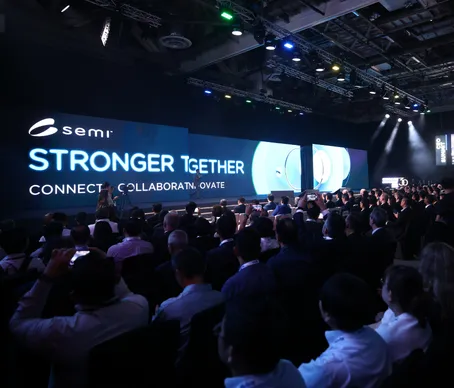
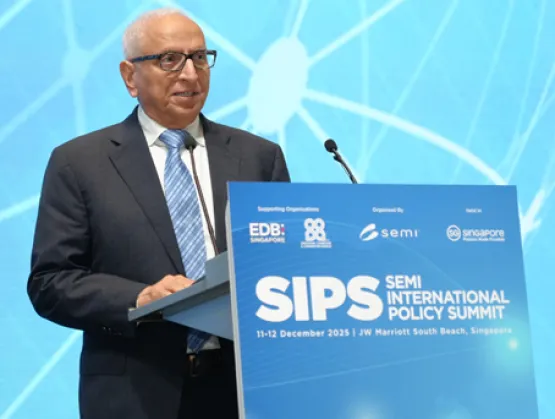
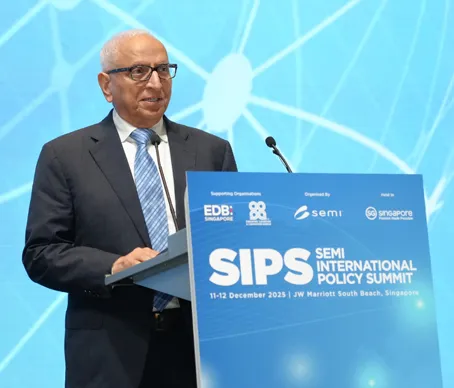
A Year of Momentum and Meaningful Impact for SEMI Southeast AsiaAs Southeast Asia’s semiconductor ecosystem continues to expand in scale, complexity, and strategic importance, 2025 marked a defining year for SEMI Southeast Asia. Across the region, SEMI convened leaders, advancing policy dialogue, enabled collaboration, and strengthened the talent pipeline — reinforcing its role as a neutral, trusted platform for the semiconductor value chain.From thought leadership forums and flagship exhibitions to workforce development initiatives reaching students, engineers, and educators, SEMI Southeast Asia’s effort k this year reflected one clear priority — to build a resilient, connected, and future-ready semiconductor ecosystem for the region. Convening Industry Leadership Across Southeast AsiaSemiconductor Leadership Summit (SLS)The year began with the Semiconductor Leadership Summit, where senior executives gathered for forward-looking discussions on sustainability, energy transition, and operational resilience. Against a backdrop of rising energy demands and increasing expectations for decarbonisation, SLS provided a trusted environment for leaders to exchange perspectives, align priorities, and explore collective industry responses.SEMICON Southeast AsiaCelebrating 30 years of SEMICON Southeast Asia, the 2025 edition marked a milestone for the regional industry. Under the theme “Stronger Together,” SEMICON Southeast Asia underscored the importance of collaboration in navigating geopolitical shifts, supply chain realignment in a rapidly changing technological environment.The event brought together global semiconductor leaders, policymakers, academia, and innovators through exhibitions, CEO-level forums, technical conferences, workforce programs, and curated networking platforms. From IC design and advanced packaging to AI-enabled manufacturing and sustainability, SEMICON Southeast Asia once again served as the region’s flagship platform connecting Southeast Asia to the global semiconductor ecosystem.SEMIEXPO VietnamSEMIEXPO Vietnam further highlighted the region’s growing diversity and momentum. With strong government engagement and industry participation, the event showcased Vietnam’s emergence as an increasingly important node in the global semiconductor supply chain.Through high-level ministerial dialogues, technology showcases, workforce initiatives, and partnership announcements, SEMIEXPO Vietnam demonstrated how Vietnam is moving decisively from ambition to execution — while strengthening linkages between global technology leaders, local companies, academia, and policymakers.SEMI International Policy Summit (SIPS)The year culminated with the 4th edition of the SEMI International Policy Summit (SIPS), hosted in Singapore. As a closed-door, invitation-only platform, SIPS convened senior government officials, global industry leaders, and representatives from academia and civil society.Discussions focused on some of the semiconductor industry’s most pressing global challenges, including energy, emissions and efficiency, PFAS, workforce development, and supply chain resilience. By fostering trusted, policy-level dialogue, SIPS reinforced SEMI’s role in advancing coordinated public-private action across borders. Investing in the Future: Workforce Development InitiativesAlongside its industry-convening role, SEMI Southeast Asia continued to scale its workforce development initiatives, recognising talent as the foundation of long-term industry competitiveness.Chip-on-WheelsChip-on-Wheels brought the semiconductor industry directly to campuses in Malaysia, engaging students through career talks, industry sharing, and hands-on exposure. The initiative helped demystify semiconductor careers and broaden awareness of opportunities across the value chain.Chip-on-AirThrough digital engagement, Chip-on-Air extended SEMI’s outreach beyond physical boundaries in Indonesia, enabling students across the region to gain insights into semiconductor careers, industry trends, and future skill requirements.NTU Semiconductor DayIn partnership with Nanyang Technological University of Singapore, SEMI Southeast Asia supported NTU Semiconductor Day, connecting students, researchers, and industry practitioners for knowledge sharing, career exploration, and industry-academia dialogue.SEMI Smart Manufacturing Learning Journey @ SIMTechThis curated learning journey provided professionals with practical exposure to advanced manufacturing, automation, and digitalisation. Participants gained first-hand insights into smart manufacturing technologies shaping the next phase of semiconductor production.Train-the-Trainers VietnamSEMI Southeast Asia also launched the Train-the-Trainers program in Vietnam, focusing on upskilling educators and trainers. By strengthening teaching capability, the program supports sustainable talent development and reinforces long-term industry-academia alignment.Together, these initiatives reflect SEMI Southeast Asia’s commitment to building talent pipelines at every stage — from early awareness to professional upskilling.ETSI Master Trainer ProgramSEMI Southeast Asia further supported advanced technical upskilling through the ETSI Master Trainer Program on Semiconductor Advanced Packaging and Integration. Delivered under Malaysia’s ETSI initiative, the program strengthened expertise in next-generation packaging technologies, contributing to long-term capability building in one of the industry’s fastest-growing segments.Together, these initiatives reflect SEMI Southeast Asia’s commitment to building talent pipelines at every stage — from early awareness to advanced professional upskilling. A Growing Community: Membership MomentumThe strength of SEMI Southeast Asia lies in its member community. In 2025, membership grew by approximately 14%, reflecting continued confidence in SEMI as a trusted global industry association and convening platform.This growth mirrors the expanding diversity of the membership base — spanning equipment suppliers, materials companies, IC design firms, manufacturers, solution providers, startups, universities, and ecosystem partners across Southeast Asia and beyond. Why Companies Choose SEMI MembershipSEMI Southeast Asia membership delivers both tangible business value and strategic industry influence, including:Priority booth selection at SEMI exhibitions such as SEMICON Southeast Asia and SEMIEXPO VietnamComplimentary tickets to Members’ Networking Nights, held twice annuallyDiscounts averaging 25–30% across SEMI products and services, including exhibition space, conference registration, market reports, and standardsAccess to a global network of SEMI member companiesParticipation in technology communities, committees, working groups, and industry forumsExclusive member-only content, including market research and technical presentationsOpportunities to help shape industry advocacy on issues such as tariffs and workforce developmentSubscription to SEMI newsletters and access to members-only updatesCompany listing in the SEMI online members directory, enhancing global visibility Looking Ahead: Transform Tomorrow at SEMICON Southeast Asia 2026As SEMI Southeast Asia looks ahead, momentum continues with SEMICON Southeast Asia 2026, taking place from 5–7 May 2026 at MITEC, Kuala Lumpur, Malaysia.Under the theme “Transform Tomorrow,” SEMICON Southeast Asia 2026 will bring the end-to-end technology innovation ecosystem together. With expanded programs, global pavilions, and deeper engagement across the value chain, the event will continue to serve as Southeast Asia’s premier semiconductor platform. Moving Forward — TogetherWith the support from our members’ companies, growing regional engagement, and an expanding portfolio of industry and workforce initiatives, SEMI Southeast Asia enters the coming year well-positioned to continue driving impact.As the semiconductor industry evolves, SEMI Southeast Asia remains committed to connecting the ecosystem, advancing collaboration, and supporting sustainable growth — together with the community it serves.
Read More
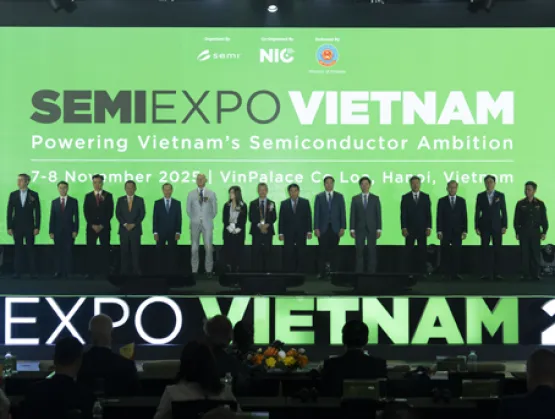
SEMIEXPO Vietnam 2025 Wrap-Up: Powering Vietnam’s Semiconductor AmbitionSEMIEXPO Vietnam 2025 concluded with strong momentum, strengthened partnerships, and renewed confidence in Vietnam’s emerging role in the global semiconductor ecosystem. Held on 7–8 November 2025, the event brought together government leaders, global technology companies, academic institutions, and international delegates for two days of collaboration and strategic exchange — all centered on the theme “Powering Vietnam’s Semiconductor Ambition.”But the week began even earlier.A Significant Prelude: The Prime Minister DialogueOn 6 November, ahead of the event kick-off, the Prime Minister Dialogue with the SEMI delegation set a powerful and symbolic foundation for the week.Prime Minister Pham Minh Chinh reaffirmed Vietnam’s commitment to developing a competitive, innovation-driven semiconductor industry, emphasizing three priorities:Developing a skilled workforceAccelerating infrastructure readinessDeepening global collaborationThe dialogue illustrated Vietnam’s determination to advance from ambition to coordinated action — welcoming international partnerships and aligning government priorities with industry needs. It set an elevated tone that carried into SEMIEXPO Vietnam 2025.A Vibrant Exhibition and Global ParticipationWith strong support from the National Innovation Center (NIC) and the Ministry of Finance, the two-day program brought together more than 2,500 delegates from 20 regions, along with 80 exhibiting companies across 120 booths — showcasing groundbreaking technologies, workforce programs, research capabilities, and supply-chain opportunities across the semiconductor value chain.The exhibition floor brought together global brands, fast-growing Vietnamese companies, and leading universities — representing Vietnam’s increasingly interconnected and fast-evolving semiconductor ecosystem.Day 1: Industry Insights, Policy Alignment MOU Exchange CeremonyDay 1 opened with the session “Vietnam’s Current Landscape – From Ambition to Action,” featuring senior leaders from government agencies, embassies, and industry associations. Speakers discussed Vietnam’s semiconductor roadmap, investment readiness, and policy alignment to advance the country’s long-term semiconductor strategy.MOU Exchange CeremonyA major highlight of Day 1 was the signing of three strategic Memorandum of Understanding (MOUs) — formalizing new partnerships designed to strengthen Vietnam’s semiconductor foundation.1. NIC x SEMI Southeast AsiaThis partnership reinforces the shared vision of fostering Vietnam’s semiconductor development, enhancing global collaboration, and supporting innovation-driven growth across the region.2. NIC x MUFGThis MOU reflects a strong commitment to advancing innovation, promoting investment, and supporting the sustainable development of Vietnam’s high-tech and semiconductor industries.3. NIC x TektronixFocused on research, training, and technology transfer, this agreement aims to expand Vietnam’s engineering capabilities and strengthen innovation capacity for future generations of semiconductor professionals.Together, the three MOUs mark a significant step forward in strengthening Vietnam’s global partnerships and establishing long-term foundations for industry development.Technical Strategic SessionsThroughout the afternoon, in-depth sessions highlighted opportunities in:Supply chain localizationAdvanced manufacturing ecosystemsIndustrial Park readinessInternational collaboration modelsVietnam’s growing supply-chain integrationThese discussions reinforced Vietnam’s expanding role as an attractive destination for semiconductor investment and ecosystem development.Day 2: AI-Driven Manufacturing Workforce DevelopmentDay 2 focused on high-tech innovation and talent — two critical enablers for Vietnam’s long-term success.Keynote Conference: AI and High-Tech ManufacturingThe Keynote Conference on AI: Accelerating Vietnam’s High-Tech Manufacturing Ecosystem featured leaders from Siemens EDA, NVIDIA, Sandisk, Vingroup Robotics, Turner Construction, and more. They explored how AI is reshaping:Semiconductor design EDA workflowsFactory productivity and automationPredictive maintenance and energy optimizationDigital transformation across high-tech manufacturingThe sessions emphasized Vietnam’s opportunity to harness AI to boost competitiveness and accelerate advanced manufacturing readiness.TECH Zoomers Bootcamp TalentCONNECTTECH Zoomers BootcampThe Bootcamp brought together over 300 students from 8 universities for hands-on learning in semiconductor fundamentals, industry workflows, and career pathways. Students participated in expert-led sessions and mentorship activities designed to inspire the next generation of engineers and innovators.TalentCONNECTTalentCONNECT further connected students, educators, and technology leaders through discussions on talent development, academic-industry collaboration, and workforce readiness. Government agencies, universities, and global companies shared practical pathways for strengthening Vietnam’s semiconductor talent pipeline.Networking Moments: Strengthening Regional CollaborationKey networking activities played a major role in building connections across the ecosystem:Welcome Reception for international delegatesIndustry Networking Night, co-hosted with the Embassy of the Kingdom of the NetherlandsGolf@SEMIEXPO Vietnam, offering informal touchpoints for collaborationThese engagements strengthened relationships across government, academia, and industry — creating new foundations for partnership and shared growth.Explore More: Post-Show Resources Now AvailableParticipants and partners can now revisit the event through post-show resources:Download the Official Post-Show ReportExplore detailed insights, program highlights, and ecosystem analysis.Click Here to View the SEMIEXPO Vietnam 2025 Post Show ReportView the SEMIEXPO Vietnam 2025 Photo GalleryRelive the key moments captured throughout the event.ExhibitionConferencesTECH Zoomers BootcampTECHStageGolf@SEMIEXPO VietnamWelcome Reception for International DelegatesIndustry Networking NightLooking Ahead: SEMI International Policy Summit (SIPS) 2025The conversation continues at the SEMI International Policy Summit (SIPS) 2025) — organised by SEMI and taking place on 11–12 December at JW Marriott Singapore South Beach.SIPS is a closed-door, RSVP-only event that convenes global policymakers, senior government officials, and industry leaders for high-level discussions on the semiconductor industry's most press challenges – talent, energy, and PFAS.
Read More
Thailand’s Semiconductor Ambition in 2025: Strategy, Goals, and the Path to a Competitive Hub Thailand is moving decisively in 2025 to elevate its role in the global semiconductor value chain. A dedicated national push—spanning strategy design, workforce development programs, incentives in the Eastern Economic Corridor (EEC), and targeted investment attraction—seeks to shift the country from primarily downstream electronics and legacy back-end work toward higher-value advanced packaging, power electronics (Si/SiC), and selective front-end capacity. The Thailand Board of Investment (BOI) signalled this intent early in the year, saying a semiconductor sector strategic plan would be drafted within 90 days to guide policy, incentives, and ecosystem build-out [1]. Strategy in Motion: Governance, Incentives, and Investment Signals Policy coordination sharpened in 2025. BOI’s investment-promotion playbook for 2025 details long tax holidays, tariff exemptions, and fast-track facilitation for targeted industries—including semiconductors and advanced electronics—while placing these within a broader national competitiveness agenda. The 2025 guide formalizes the pro-investment stance and the administrative mechanisms supporting new fabs, advanced packaging, design/R D centres, and supplier localization [2]. Investment momentum is visible across Thailand’s tech stack. In January, BOI announced a THB126.8 billion (USD3.76 billion) TikTok data-hosting project—a flagship in a wave of approvals that also includes hyperscale Data Centres from global players—accelerating demand for Power electronics and advanced modules that sit adjacent to semiconductor production [3]. In March, authorities approved USD2.7 billion in Data Centre and cloud projects, reinforcing a demand pull for electronics components, test, and power devices [4]. By October, BOI moved to accelerate ~THB300 billion (USD9.2 billion) in priority projects over four months—many tied to electronics—to lift growth and crowd in supply-chain partners [5]. Thailand is also actively courting chipmakers as supply chains rebalance. In February, BOI leadership confirmed a consultancy would be hired to craft the semiconductor roadmap while outreach to global firms intensified. The goal is translating geopolitical diversification into concrete wafer, OSAT, materials, and equipment investments anchored in the EEC [1]. Workforce: 2025 Programs Turn Plans into People Human capital is the binding constraint for any chip strategy—and Thailand’s education and science agencies made 2025 a year of execution. The Ministry of Higher Education, Science, Research and Innovation (MHESI) and the Office of National Higher Education Science Research and Innovation Policy Council (NXPO) launched National Semiconductor Training Centres, with a 2025 target to train at least 1,200 skilled personnel and expand partnerships with more than 10 domestic and international companies and institutions [6]. Complementing this, an NXPO update in January 2025 outlined collaboration with the Asian Development Bank to scale high-skilled workforce development in semiconductors and advanced electronics [7]. Mid-year, Thailand rolled out “sandbox” semiconductor engineering programs across five universities (161 students in the first cohort) to tighten curriculum-to-industry alignment and accelerate job-ready talent [8]. Independent analysis in April 2025 underscores why urgency matters: Thailand’s plan is ambitious, but success will hinge on governance and talent scale-up, with suggestions to target 86,000 engineers and scientists across the semiconductor/advanced-electronics stack through 2030 [9]. Industrial Focus Areas: Where Thailand Is Leaning In Advanced Packaging Back-End Scale: Thailand’s manufacturing depth, logistics, and automotive/electronics base give it an edge to expand the OSAT segment that serve AI/Data Centre, EV/Power Electronics, and Industrial Segments. Officials continue to position Thailand as a complementary location to Malaysia and Vietnam—absorbing overflow and redundancy capacity while differentiating on automotive-centric power modules and high-mix manufacturing [10]. Power Electronics and SiC: Thailand’s EV strategy and strong auto supply chain intersect naturally with power semiconductors. Industry trackers and trade coverage in 2025 highlight initiatives—some JV-based—to localize SiC materials and power device capability over the 2026–2028 window, fitting the regional push toward energy-efficient mobility and grid infrastructure. (Context: BOI and Thai press have repeatedly flagged power electronics as a national priority line item throughout 2025 [11]. Selective Front-End and Supplier Localization: While Thailand is not targeting advanced-node logic in the near term, it is signalling openness to mature-node wafer capacity and supplier base build-out (chemicals, gases, spares/service, test equipment). This is consistent with the 2025 policy toolkit and the EEC’s logistics advantages [2]. Macroeconomic Demand Catalysts Thailand’s tech-adjacent investment wave—particularly in AI-driven Data Centres—is a pivotal demand catalyst for Semiconductors, Power Modules, and Advanced Packaging. The March approvals and January TikTok announcement align with a broader 2025 narrative of digital infrastructure expansion across ASEAN [3][4]. At the same time, policymakers are using accelerated approvals and targeted incentives to counter external headwinds (e.g., tariffs) and keep tech manufacturing onshore [5]. Challenges Thailand Must Navigate Analysts caution that Thailand begins from a smaller base in front-end and design compared to regional peers and will need stable execution, faster permitting, and tight industry-academia coordination to meet its goals. The 2025 commentary argues for doubling down on manufacturing-led upgrading—Advanced Packaging, PCB Assembly, Testing, Power Devices—while gradually building design and IP capacity [9][12]. These realities do not diminish the opportunity; rather, they define a sequenced climb where Thailand can win near-term in OSAT/Power and scale upstream over the decade. A Brief Note on SEMI’s Role As Thailand advances, SEMI can play a role in bringing the local stakeholders into the global ecosystem—through standards adoption, workforce development programs, and industry-government roundtables that align incentives with international best practice. In 2025, with Thailand formalizing its roadmap and firing up training centres, SEMI’s convening power and connections across design, equipment, materials, and manufacturing can accelerate integration—without redirecting the spotlight from Thailand’s national strategy. Outlook: A Credible, Sequenced Play for 2025–2030 The contours of Thailand’s 2025 semiconductor play are clear: A governance framework and promotion regime to pull in investment; workforce programs that turn policy into people; and a focused bet on Advanced Packaging, Power Electronics, and selective front-end that leverages the EEC and the country’s industrial base. If Thailand sustains this execution rhythm—while expanding the domestic supply chain and scaling talent—it can establish itself as a competitive, resilient hub within Southeast Asia’s semiconductor network over the next five years [2][9]. References Reuters — “Thailand lobbies for chip investments as Trump’s trade war with China kicks off” (Feb 6, 2025) https://www.reuters.com/technology/thailand-lobbies-chip-investments-trumps-trade-war-with-china-kicks-off-2025-02-06/ Reuters BOI — Investment Promotion Guide 2025 (Jan 31, 2025, PDF) https://osos.boi.go.th/download/BOI_PDF/BOI_A_Guide2025_EN.pdf OSOS Reuters — “TikTok to invest $3.8 bln in Thailand data hosting project, investment board says” (Jan 29, 2025) https://www.reuters.com/technology/tiktok-invest-38-bln-thailand-data-hosting-project-investment-board-says-2025-01-29/ Reuters Reuters — “Thailand approves $2.7 billion of investments in data centres and cloud services” (Mar 17, 2025) https://www.reuters.com/technology/thailand-approves-27-billion-investments-data-centres-cloud-services-2025-03-17/ Reuters Reuters — “Thailand to speed up $9.2 bln investment projects over next four months, official says” (Oct 17, 2025) https://www.reuters.com/world/asia-pacific/thailand-speed-up-92-bln-investment-projects-over-next-four-months-official-says-2025-10-17/ Reuters NXPO/MHESI — “MHESI-NXPO and ADB plan to collaborate on highly skilled workforce development in semiconductor and advanced electronics” (Jan 25, 2025) https://www.nxpo.or.th/th/en/30958/ สอวช. | NXPO/MHESI — “MHESI launches National Semiconductor Training Centers…” (2025) https://www.nxpo.or.th/th/en/35265/ สอวช. | NXPO/MHESI — “MHESI approves five new sandbox programs” (Aug 5, 2025) https://www.nxpo.or.th/th/en/37588/ สอวช. | Fulcrum (ISEAS) — “Thailand’s New Semiconductor Strategy: Ambitious but Challenging” (Apr 11, 2025) https://fulcrum.sg/thailands-new-semiconductor-strategy-ambitious-but-challenging/ FULCRUM Fulcrum (ISEAS) — “The New Anutin Government Should Reset Thailand’s Trump Tariff Response” (Sep 19, 2025) https://fulcrum.sg/the-new-anutin-government-should-reset-thailands-trump-tariff-response/ FULCRUM Nation Thailand — “BOI to propose new semiconductor board to drive national strategy” (Oct 14, 2025) https://www.nationthailand.com/business/trading-investment/40056765 Fulcrum (ISEAS) — “Thailand Should Not Rush To Be A Service-Based Economy” (May 29, 2025) Thailand Should Not Rush to Be a Service-based Economy | FULCRUM
Read More
Vietnam’s Semiconductor Evolution: From Resources to Global IntegrationThe Vietnam semiconductor industry is accelerating rapidly as the country positions itself as a central player in the global value chain. With the Vietnam semiconductor market projected to reach US $31.28 billion by 2027, growing at a CAGR of 11.6% from 2023 to 2027, Vietnam is moving beyond its foundation in chip assembly and testing toward a full-fledged semiconductor ecosystem. Backed by the National Semiconductor Development Strategy (2024–2050), Vietnam is aligning its resource potential, talent development, infrastructure, and global partnerships to become a competitive force in the semiconductor supply chain.Scaling Infrastructure with National Innovation CenterThe growth of Vietnam chip manufacturing and R D is being supported by the country’s infrastructure push. The National Innovation Center (NIC) and three high-tech zones in Hanoi, Ho Chi Minh City, and Da Nang are emerging as anchors of the Vietnam semiconductor ecosystem. These hubs are being designed to host pilot fabs, advanced packaging labs, and chip design training facilities that connect industry and academia. By fostering innovation and providing facilities for both local and multinational firms, Vietnam is creating the foundation for a semiconductor fabrication and design ecosystem that can compete regionally.Raw Materials: Strategic Assets with Global ImpactVietnam’s raw materials are another critical enabler of the Vietnam semiconductor supply chain. With 3.5 million metric tons of rare-earth reserves, the country ranks among the top global sources of critical minerals. While annual production is currently modest at about 300 tonnes, national strategies aim to scale output to 20,000–60,000 tonnes annually by 2030. With rare earths essential for chip manufacturing, Vietnam’s mineral resources provide not just domestic leverage but also a way to strengthen global supply chain resilience.Talent Development: Building a Semiconductor Workforce in VietnamA skilled semiconductor workforce in Vietnam is at the heart of the country’s strategy. Today, Vietnam counts around 6,000 semiconductor engineers, but the government aims to grow this to 50,000 by 2030, including 15,000 IC design specialists. The NIC, in collaboration with global universities and companies like Intel, Cadence, and Keysight, is ensuring international-standard training for the next generation of chipmakers. With more than 200 institutions expected to offer semiconductor programs by 2030, the Vietnam chip design and packaging sector is poised for a strong expansion supported by a well-prepared talent pool.Global Partnerships Strengthening the Vietnam Semiconductor MarketThe Vietnam semiconductor market is being propelled forward through global partnerships. Qualcomm has launched its third-largest AI R D centre in Vietnam, while NVIDIA has signed agreements with the government to expand AI and semiconductor-focused R D. Meanwhile, global leaders like Amkor, Hana Micron, Intel, and Coherent are deepening their investments in semiconductor packaging and testing in Vietnam, strengthening the country’s integration into the global semiconductor manufacturing supply chain. These alliances are accelerating technology transfer, skills training, and market access, embedding Vietnam more deeply into the global semiconductor ecosystem.Vietnam’s Role in the Global Semiconductor Supply ChainVietnam currently accounts for only 1% of global semiconductor packaging and testing capacity, but this is projected to rise to 8–9% by 2030. With its strategic location, competitive workforce, and stable policy environment, Vietnam is becoming an indispensable partner in the Southeast Asia semiconductor hub. Its semiconductor fabrication projects, combined with growing packaging and testing capabilities, make Vietnam a critical supplement to global supply chains that are diversifying away from overconcentration in traditional hubs.Looking AheadThe Vietnam semiconductor industry is evolving beyond its early ATP foundation to become a semiconductor ecosystem that spans chip design, packaging, testing, and eventually fabrication. With strong policies, strategic investments, and international collaborations, Vietnam is well-positioned to serve as both a growth driver and a stabilizing force in the global semiconductor supply chain.As companies search for reliable partners in a multipolar world, Vietnam offers a compelling proposition: a cost-competitive, talent-ready, and globally connected semiconductor hub at the heart of Southeast Asia. References:US agency slashes estimate of Vietnam’s rare earth reserves in major revision. Mining.com, 2025Vietnam rare earths output drops as China’s grows, US says. Reuters, 2024Vietnam Semiconductor Market Size, Share, Trends and Forecast by Component, Material Type, Application, and Region, 2025-2033. Imarc, 2025Vietnam Semiconductor Market Size Share Analysis – Growth Trends and Forecast (2025-2030). Modor Intelligence, 2025Vietnam’s Strategic Ascent Up the Global Chip Supply Chain. The Diplomat, 2025Vietnam’s Push to Develop IC Design Industry Bears Fruit. EDN Asia, 2025Vietnam’s semiconductor revenue projected to reach #31.28 bln by 2027: Statista. VnEconomy, 2024Vietnam expands chip packaging footprint as investors reduce China links. Reuters, 2024South Korea ramps up Vietnam investments on stronger ties. The Star, 2025Vietnam launches national semiconductor strategy: Roadmap to 2025. Vietnam Net Global, 2024
Read More
A Supply-Chain Realignment Meets National Ambition As the chip industry rewires for resilience, Vietnam has emerged as a magnet for assembly, test, and packaging (ATP) expansion. Now, the country is signalling a bigger leap: front-end wafer fabrication. Fuelled by multi-billion-dollar investments, enabling legislation, and decisive government coordination, Vietnam is aiming to move from “reliable backend” to full-stack semiconductor player over the next 5–10 years. ATP Momentum: The Base Vietnam is Building On Over the past few years, Vietnam has attracted significant back-end investments from global majors – and local companies are also stepping up to build the country’s semiconductor capabilities: Multinational Investments: Amkor Technology invested US$1.6B in an advanced packaging plant—its largest globally—supporting high-performance parts for AI, 5G, and automotive.Hana Micron also invested ~US$930M of investments by 2026 to expand chip-packaging capacity, strengthening Vietnam’s role in OSAT.Intel operates its largest back-end factory in Ho Chi Minh City, underscoring Vietnam’s cost-to-capability advantage for ATP scale-up. Local Vietnamese Companies: FPT Semiconductor (a subsidiary of FPT Corporation) designs and develops integrated circuits for applications in IoT, automotive, and consumer electronics, and partners with local ATP providers for packaging.Viettel High Tech is expanding its chip R D and small-scale packaging/testing capabilities to support defense, telecom, and smart device applications.CMC Corporation is entering the semiconductor value chain through IC design services and exploring collaborations with domestic and overseas ATP facilities. Analysts cited by Reuters expect Vietnam’s share of global ATP to rise from ~1% (2022) to 8–9% by 2032, as multinationals diversify from China and anchor new capacity across ASEAN. Why this matters: An ATP stronghold gives Vietnam immediate revenue and jobs, while building talent, suppliers, and quality systems needed for more advanced manufacturing steps later. The Front-End Turn: Vietnam’s First Fab and Enabling Law The inflection point arrived in March 2025 with approval for Vietnam’s first wafer fabrication plant—a VND 12,800 billion (~US$500M) project targeting completion before 2030. The move signals intent to enter one of the most capital-intensive and capability-dense segments of the industry. Policy is moving in lockstep. Vietnam’s newly passed Law on Science, Technology, and Innovation (effective October 2025) is designed to underpin semiconductor ambitions with R D incentives, IP protection, and collaboration frameworks—a foundation highlighted in The Diplomat’s recent analysis. Coordinated National Push: The 2027 Self-Reliance Goal On Aug 4, 2025, Prime Minister Pham Minh Chinh chaired a national committee meeting and reiterated a high-ambition target: self-reliance in semiconductor design, manufacturing, and testing by 2027. The directive calls for whole-of-government and whole-of-society coordination, accelerating talent, infrastructure, and investment enablement. Initial capacity numbers are encouraging. Vietnam authorities and state media highlight a base of thousands of design engineers and technicians in ATP, with additional programs scaling across universities and industry partnerships to meet coming demand. Strategic FDI: Coherent’s Expansion Showcases Vietnam’s Climb Foreign direct investment is the accelerant. On July 28, 2025, Coherent opened a US$127 million facility in Dong Nai, producing silicon carbide components, optical glass, and precision photonics for AI and cloud datacom chains—an indicator of Vietnam’s maturing footprint beyond classic ATP. Combined with ongoing expansions by Amkor, Hana Micron, and others, Vietnam is weaving itself deeper into the performance-critical parts of the chip supply chain. Risks and Real Talk: Capital, Know-How, and Competition Capital intensity: Fabs require large capital, stable utilities, and deep supply ecosystems. Vietnam’s first wafer fab is a start, but advanced nodes demand long-cycle patient capital.Technology curve: Bridging from mature-node foundry to advanced logic requires hard-won process IP and years of iterative learning. Regional rivalry: ASEAN peers (plus India and the Middle East) are courting the same investors with incentives and infrastructure offers. Mitigation levers: Vietnam’s enabling law, investment promotion, workforce programs, and strategic partnerships (U.S., Japan, Korea, EU) are designed to de-risk and shorten learning curves while securing stable market access. The Outlook: A Fuller-Stack Vietnam by 2030 If policy execution stays on pace, Vietnam could evolve from ATP leader to fuller-stack player—hosting design centres, specialty/SiC lines, analog/mature foundry capacity, and advanced packaging—complementing the broader ASEAN semiconductor map. For global firms, Vietnam offers diversification with momentum—and for the region, a powerful new anchor in the chip value chain. References: Đột phá từ siêu dự án 12.800 tỷ đưa Việt Nam gia nhập cuộc đua trăm tỷ đô toàn cầu. Cafef, 2025PM calls for nationwide synergy to propel Vietnam's semiconductor industry. People’s Army Newspaper, 2025Vietnam’s strategic ascent up the global chip supply chain. The Diplomat, 2025Coherent ramps up Vietnam investment with $127 million Dong Nai factory. Vietnam Investment Review, 2025Vietnam expands chip packaging footprint as investors reduce China links. Reuters, 2024FPT Semiconductor launches its first 'Make in Vietnam' chips. Vietnam Investment Review, 2022Viettel launches 5G chips, affirms R D capability. VietnamPlus, 2023.CMC Corporation steps into semiconductor research and development. Vietnamnet, 2023.
Read More