


Our Global Impact on Semiconductor Supply Chains
SEMI is the leading microelectronics industry association with programs that help members grow their business and address top challenges worldwide.
Empowering the Chip Industry

Our Global Initiatives


NEWSROOM
Discover what’s going on at SEMI and across the global microelectronics industry









SEMI Membership
Member companies saved $15 million total in 2022 on SEMI products and services.

WHY JOIN SEMI
Connect with members worldwide and enjoy discounts and privileges for events, communities, market data and standards.

About SEMI Members
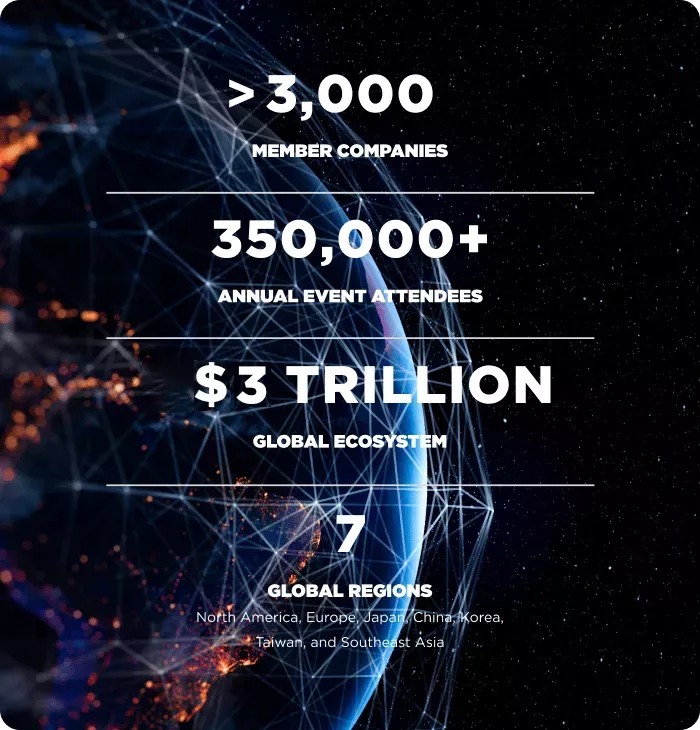
Explore member companies across our 7 regions driving microelectronics innovations in materials, design, equipment, software, devices, services and more.
PRODUCTS & SERVICES
SEMI manufacturing standards and industry market reports support collaboration between partners and competitors, facilitate strategic business decisions, and accelerate product development…
INDUSTRY GROUPS
Collaborate with your peers to identify technology gaps, accelerate collective solutions and tap into high-growth market segments.