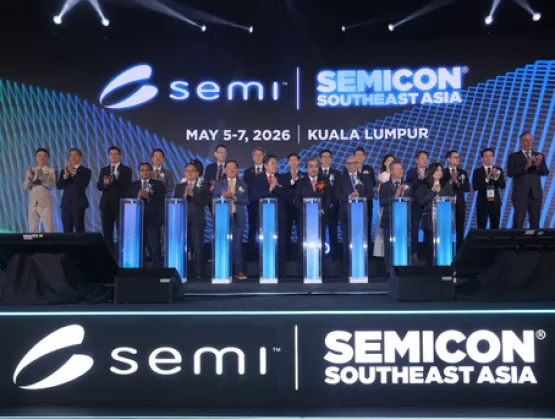
Southeast Asia’s Fab Gap and the Next Chapter of Regional Semiconductor GrowthSoutheast Asia has become one of the most important regions in the global semiconductor value chain. Its strengths are well-known: assembly, test and packaging depth; strong electronics manufacturing clusters; competitive supplier ecosystems; and a growing role in supply chain diversification.But as global semiconductor demand enters a new structural growth phase—driven by AI, data centres, automotive electronics, electrification and industrial digitalisation—the region faces a more complex question: does Southeast Asia have enough front-end wafer fabrication capacity to capture the next wave of industry growth?At SEMICON Southeast Asia 2026, this challenge was highlighted clearly. Across Asia, 64 new fabs are expected to become operational by 2029, but only 6 are planned for Southeast Asia.¹,²,³That imbalance is the region’s “fab gap”—and it matters because front-end wafer fabrication is where much of the semiconductor industry’s capital intensity, technology development and strategic leverage is concentrated. Why the fab gap mattersSoutheast Asia already holds a meaningful position in the global semiconductor value chain, supported by deep manufacturing experience, established electronics clusters, and strong participation across assembly, test, packaging, and related services.Malaysia remains a major centre for outsourced semiconductor assembly and test (OSAT), with capabilities spanning packaging, testing, equipment-related services, and supply chain support. Singapore anchors one of the region’s strongest front-end manufacturing bases, while Vietnam is rapidly scaling its assembly, test and packaging footprint. Thailand also continues to contribute through backend manufacturing and semiconductor-related operations.The next opportunity is to build on this foundation and capture more value as industry growth shifts toward more complex and capital-intensive segments. Wafer fabs do more than manufacture chips. They anchor supplier ecosystems, create demand for specialty materials and gases, deepen engineering capabilities, and attract process, metrology, automation and equipment expertise.For Southeast Asia, a broader front-end manufacturing base would strengthen the region’s position beyond backend activities and improve its ability to participate in the next wave of global semiconductor growth—especially as other regions invest aggressively in wafer capacity.¹,²,³ A regional fab landscape anchored by Singapore and MalaysiaSoutheast Asia’s front-end fab footprint is most visibly anchored by Singapore and Malaysia, each contributing distinct but complementary strengths to the regional semiconductor ecosystem.Singapore remains a key wafer fabrication hub, supported by major investments from companies such as UMC, GlobalFoundries, Micron and Siltronic. Recent fab expansions, including UMC’s new Singapore facility and 22nm wafer fab plans, reinforce the country’s position in high-value manufacturing, wafer fabrication and advanced semiconductor innovation. (⁴,⁵,⁶)Malaysia brings a broader manufacturing base, deep OSAT experience and growing wafer-level capabilities. SilTerra’s wafer foundry operations in Kulim support areas such as CMOS, RF, mixed signal, MEMS, silicon photonics and power-related technologies, while Infineon’s Kulim investment strengthens Malaysia’s position in power semiconductors, particularly silicon carbide applications. (⁷,⁸)This direction aligns with Malaysia’s National Semiconductor Strategy, which focuses on modernising OSAT, expanding advanced packaging, growing existing fabs, strengthening power chip capacity and developing local chip design champions—positioning Malaysia to move further up the semiconductor value chain.⁹ The rest of Southeast Asia is building from backend strengthOutside Singapore and Malaysia, the regional fab picture is more uneven—but still strategically important.Vietnam is one of the fastest-growing examples. Its current momentum is strongest in backend manufacturing, where companies such as Intel, Amkor and Hana Micron have expanded or announced major assembly, test and packaging operations. Reuters reported that Amkor’s Vietnam plant is positioned as one of its most advanced facilities, while Hana Micron has also planned significant investment to expand packaging operations. Intel also operates a major backend chip facility in Vietnam.¹⁰More recently, Reuters reported that Samsung plans a US$1.5 billion chip testing plant in Vietnam, expected to begin operations in November 2027. The facility would be Samsung’s first chip testing factory in the country, reinforcing Vietnam’s role as a growing semiconductor backend hub.¹¹ Vietnam has also expressed ambition to develop front-end capabilities over time, but for now its strongest pathway remains scaling from ATP strength into deeper ecosystem capability.Thailand’s role is also developing through backend and power-related manufacturing. Infineon completed the sale of its Bangkok/Nonthaburi backend manufacturing site to Malaysian Pacific Industries Berhad while securing a long-term supply agreement, and also launched construction of a new backend fab in Samut Prakan.¹² This reflects a broader industry pattern: backend operations are becoming more specialised, networked and partnership-driven.Together, these markets broaden Southeast Asia’s manufacturing base—but they do not yet close the region’s front-end fab gap. The fab gap is also a strategy gapThe fab gap should not be understood simply as a shortage of buildings.Fabs are among the most capital-intensive industrial projects in the world. They require reliable power, water, chemicals, gases, cleanroom infrastructure, equipment ecosystems, engineering talent, environmental approvals, customer commitments and long-term policy certainty.¹,²,³That means the real question is not whether every Southeast Asian country should build a leading-edge fab. The better question is: what type of fab capacity does the region need, where does it make strategic sense, and how can countries coordinate around complementary strengths?For Southeast Asia, the opportunity may not be to replicate Taiwan, South Korea or the United States in leading-edge logic. The more realistic and strategically valuable pathway may be to build targeted capacity in areas such as mature nodes, power semiconductors, specialty foundry processes, silicon photonics, MEMS, analogue and mixed signal, automotive chips, and compound semiconductors.These are not secondary markets. They are critical to AI infrastructure, electric vehicles, industrial automation, energy systems, medical devices and smart manufacturing. As AI demand increases pressure on advanced nodes and high-bandwidth memory, the availability of mature and specialty chips also becomes more important to keep the broader electronics economy moving. Why advanced packaging changes the fab conversationThe fab gap also needs to be viewed alongside another major shift: the rise of advanced packaging and heterogeneous integration.AI-era performance is no longer determined by transistor scaling alone. Increasingly, performance depends on how chips are integrated—through chiplets, high-bandwidth memory, interposers, fan-out technologies, 2.5D and 3D integration, and more complex test and inspection requirements. Industry discussions around SEMICON Southeast Asia have reflected this shift, with SEMI and BCG urging the industry to focus on execution and coordination as AI reshapes the supply chain, while also highlighting the growing importance of advanced packaging and test.¹³This is important for Southeast Asia because the region already has deep backend and packaging strengths. If paired with targeted front-end capacity, stronger design capability and supplier development, advanced packaging can become a bridge between where the region is strong today and where it needs to go next.In other words, closing the fab gap does not only mean building more wafer fabs. It also means strengthening the surrounding ecosystem that makes fabs commercially viable: design, materials, equipment services, advanced packaging, test, automation, sustainability, and workforce readiness. What a coordinated regional fab strategy could look likeSoutheast Asia’s next semiconductor chapter could be shaped by a more coordinated regional approach—one that builds on each market’s strengths while creating stronger links across the value chain.Singapore could continue to anchor high-value front-end manufacturing, wafer substrate capabilities and advanced manufacturing innovation. Malaysia could deepen its position in power semiconductors, specialty processes, advanced packaging and OSAT-to-front-end integration. Vietnam could scale its backend manufacturing base while strengthening the talent, supplier and policy foundations needed for more advanced semiconductor activities. Thailand, in parallel, could continue developing its backend and power-related capabilities as part of a broader regional supply chain. (⁴,⁸,¹⁰,¹²)The opportunity is not for every country to do everything, but for Southeast Asia to function as a more connected and complementary semiconductor network. With stronger regional alignment, the wider semiconductor ecosystem can develop in ways that reinforce one another—allowing each market to build on its strengths while contributing to the region’s overall competitiveness.This is where industry platforms play an important role. By bringing the ecosystem together across borders, SEMI supports the collaboration and alignment needed to turn regional ambition into long-term semiconductor growth. A call to move from participation to capability depthSoutheast Asia already plays a meaningful role in the semiconductor value chain, supported by strong manufacturing clusters, established backend capabilities and growing ecosystem momentum. The next challenge is to deepen that role.The region does not need to close the fab gap overnight. But it does need to move with greater coordination, clearer strategy and stronger execution. More fabs will matter—but only if they are supported by the right talent, suppliers, infrastructure, customers and policy frameworks.As SEMICON Southeast Asia continues to bring the regional and global ecosystem together, this conversation will only become more important. Taking place from 25–27 May 2027, SEMICON Southeast Asia 2027 will provide a timely platform to move that dialogue forward—bringing industry, government and ecosystem partners together to shape how Southeast Asia can build deeper, more connected semiconductor capabilities across the full value chain.The fab gap is not just a warning. It is an invitation to build with intent.If you are keen on attending SEMICON Southeast Asia 2027, please submit your interest here. References¹ Southeast Asia needs more chip fabs, SEMI says² Global trade group SEMI sees robust demand for chips despite geopolitical risks³ South-east Asia risks missing global chip boom as fab investments bypass region⁴ What makes Singapore a prime location for semiconductor companies driving innovation⁵ UMC Unveils New Fab Expansion in Singapore in Grand Opening Ceremony⁶ UMC announces new 22nm wafer fab in Singapore⁷ SilTerra Malaysia Sdn Bhd⁸ Infineon opens the world’s largest and most efficient SiC power semiconductor fab in Malaysia⁹ Malaysia Doubles Down on Chips – The National Semiconductor Strategy¹⁰ Vietnam expands chip packaging footprint as investors reduce China links¹¹ Samsung plans $1.5 billion chip testing plant in Vietnam, document shows¹² Infineon completes the sale of its manufacturing site in Bangkok/Nonthaburi, Thailand¹³ SEMI, BCG urge chip industry to focus on execution, coordination as AI reshapes supply chain